

Notably, Jennifer Aniston net worth conversations almost always start in the wrong place. They start in 2005, in the tabloid version — the sympathetic headline, the borrowed sweater, the woman the world decided had lost something. That framing was compelling. Yet it was also completely wrong.
Instead, the correct place to start is with what she built after. Not despite the divorce. Not in recovery from it. Simply after it — with the ownership-first discipline developed throughout the Friends years, now applied without a partner’s narrative competing for column inches.

Three hundred million dollars later, the accounting is clear. Indeed, the divorce was not the interruption. Ultimately, it was the starting gun.
The Before: Childhood, Struggle, and the Role That Changed Everything
Jennifer Joanna Aniston was born on February 11, 1969, in Sherman Oaks, California. Her father, John Aniston, was a working actor — reliable, respected, never quite a household name. Her mother, Nancy Dow, had acting ambitions that largely went unrealized. The household understood the industry from the inside, which meant it also understood the anxiety of proximity to success without quite arriving there.
Her parents divorced when she was nine. Notably, that detail surfaces in almost every profile, typically as biographical color. However, for a woman who would later build her most significant wealth in the years following her own divorce, it carries a different kind of weight. Consequently, she had already seen what a family restructuring looked like from the inside. Specifically, that history meant she knew it did not have to be the end of anything.
Small Parts, Wrong Rooms, One Right Audition
Performing arts training came next, at the High School of Performing Arts in New York. Her early twenties brought the particular indignity of almost-work. Small parts. Pilots that didn’t get picked up. A brief film career that generated no momentum. By 24, she had a manager telling her to lose weight and an industry signaling, in the way industries signal women, that she was close but not quite.
Then, in 1994, a casting director put her in a room with five other actors for a pilot called Friends. She read for the role of Rachel Green and got it. Notably, nothing about what followed was accidental, though everything about it looked like luck from the outside. Ultimately, that gap — between how a rise appears and how it was constructed — would define her career for thirty years.
The Pivot Moment: What the Friends Contract Actually Taught Her
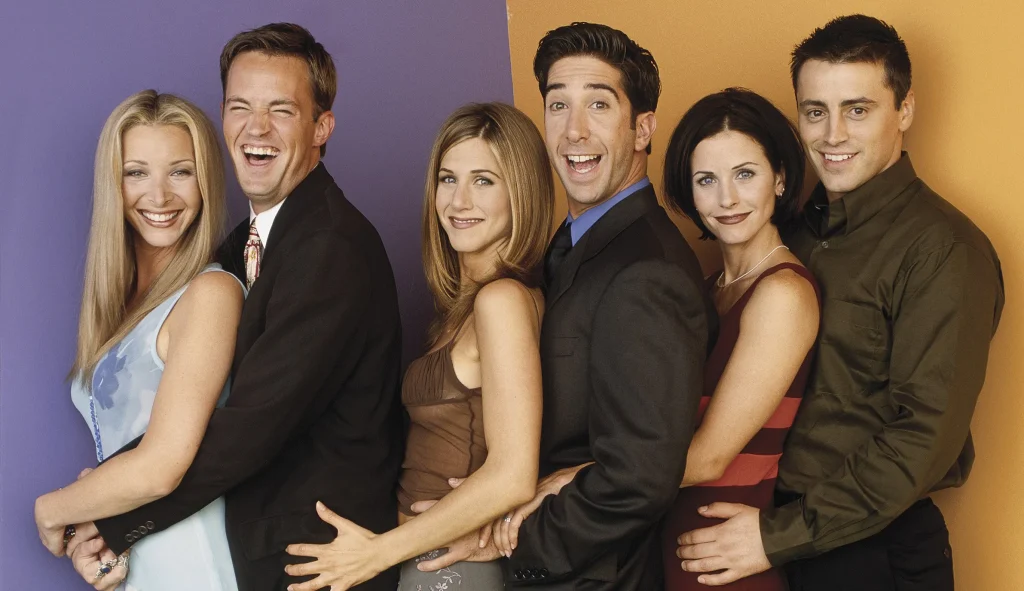
By Season 3, the six principal cast members of Friends had done something unusual in American television history. They negotiated collectively, refusing to allow the network to separate them and drive individual salaries down through competition. By Season 9, each was earning one million dollars per episode.
Indeed, that negotiation is typically discussed as a curiosity of television history. What it actually was is a masterclass in leverage mechanics — one Aniston absorbed at the most formative stage of her career. She learned that individual talent fees are the least efficient way to convert celebrity into wealth. Furthermore, collective positioning and ownership structures compound differently than flat rates. Moreover, the person who controls the terms of the deal accumulates differently than one who simply shows up for it.
The Friends syndication structure meant residuals would continue accumulating long after the cameras stopped rolling. Her per-episode residuals from global syndication reportedly generate between ten and twenty million dollars annually — two decades after the finale. Indeed, that income runs whether she works or not. It is the financial equivalent of a passive index fund built from ten years on a soundstage in Burbank.
The lesson was specific: the goal is not to earn more. Owning more of what you earn was the only equation worth solving.
The Climb: Building the Post-Friends Portfolio
Her marriage to Brad Pitt in July 2000 became its own media ecosystem — photographs, speculation, two extraordinarily famous people choosing each other in front of the world. Moreover, it generated enormous attention. Notably, it generated almost none of her current net worth.
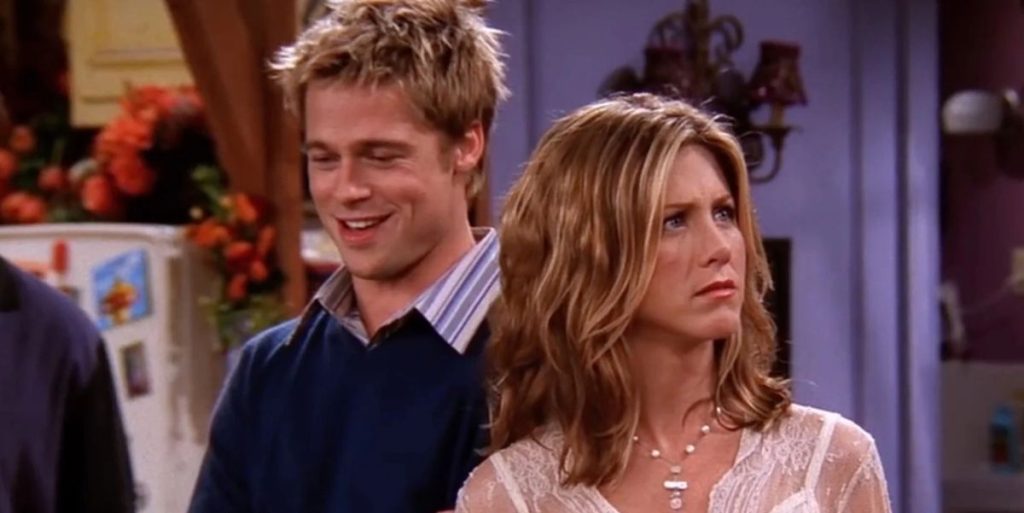
When she filed for divorce in March 2005, the settlement terms remained sealed. No prenuptial agreement was reported. No complex business asset division was required because no joint business architecture existed. Indeed, the split was clean by design, even if it was not clean in the tabloid sense.
Ultimately, what followed was the decade Wall Street would recognize as an accumulation phase. Specifically, her production company, Echo Films, began generating ownership-level returns rather than talent fees. Subsequently, she attached herself as a producer on Dumplin’, The Switch, and The Morning Show. On each project, she collected twice — as performer and rights holder. According to Forbes, her net worth now sits at approximately $300 million, built primarily through ownership rather than flat performance fees.
Additionally, her Vital Proteins partnership positioned her inside the wellness category before celebrity consumer brands became standard wealth-management strategy. She entered early, took equity over flat endorsement fees where possible, and watched the category expand around her investment.
The Streaming Move That Compounded Everything
Her Apple TV+ deal for The Morning Show, launched in 2019, added streaming economics to an income stack already generating passive returns from multiple directions. She negotiated an executive producer credit alongside her acting fee. Consequently, a single project paid her as a performer, rights holder, and production entity simultaneously.
Indeed, that structure is the direct application of what she learned in the Friends collective negotiation. Streaming multiples are considerably larger than network television ever allowed. Consequently, the same strategy compounds faster at this stage of her career than it did at the beginning.
The Hamptons Chapter: What $300M Buys in the East End
Aniston’s relationship with the Hamptons has always been more functional than performative. She has appeared at East Hampton events — the kind of quiet private gatherings that don’t generate Getty coverage. The guest list has too much to lose from publicity to allow it. Her real estate footprint has been concentrated in California. Nevertheless, the Hamptons demographic she represents reads Social Life Magazine from a different zip code and recognizes itself in her financial architecture.
That portfolio includes a Bel Air compound she sold for $21 million in 2021, the same year Hamptons luxury real estate hit record transaction volumes. Before that sale, she had moved from a Beverly Hills estate into a custom Bel Air build she designed herself. That architectural authorship is something the Hamptons market understands implicitly. You do not buy what exists. You build what you need.
Indeed, the Hamptons parallel is not geographical. It is psychological. The East End attracts the same profile Aniston embodies: people who built something independently and need no partner’s platform to access the rooms that matter. Their financial architecture ensures the next chapter is always funded before the current one concludes.
For more on how wealth moves through the East End, explore the Hamptons luxury real estate guide at Social Life Magazine.
What She Built: The Jennifer Aniston Net Worth Breakdown
The current Jennifer Aniston net worth figure of approximately $300 million breaks down across several distinct income streams, each operating semi-independently of her ongoing professional activity.
Friends syndication residuals generate an estimated ten to twenty million dollars annually from global broadcast licensing. Indeed, that figure has remained stable for two decades with no structural reason to decline. Her film career, spanning over thirty features, contributed significant upfront earnings partially reinvested into production infrastructure. Echo Films generates back-end returns on projects she produced but did not necessarily star in — a revenue layer independent of her on-screen presence.
Her endorsement portfolio — including Aveeno, Smartwater, and Vital Proteins — has historically favored long-term equity arrangements over flat fees. Additionally, her Apple TV+ deal added a recurring streaming income component that compounds alongside the syndication base rather than replacing it.
What the breakdown reveals is not a celebrity with a large number. Instead, it reveals an investor who used celebrity as initial capital and ownership as the compounding mechanism. Notably, most actors at her income level in 2005 earned at the same velocity. They accumulated at a fraction of the rate, though, because they were selling time rather than building equity.
The Net Worth vs. The Narrative
The tabloid narrative around Aniston has always centered on what she didn’t have — the marriage that ended, the children that didn’t arrive, the love story that didn’t conclude the way the audience wanted. That narrative ran for twenty years and generated enormous media revenue for everyone who produced it.
Meanwhile, Aniston ran a different story — denominated in ownership percentages, back-end deal structures, and a quietly compounding portfolio. Specifically, the press was occupied with her personal life. The $300 million is therefore not a surprise to anyone watching the correct story. It is only a surprise to those who were reading the other one.
The Soft Landing: What the Jennifer Aniston Blueprint Actually Means
The most useful thing about studying the Jennifer Aniston net worth story is not the number. Numbers change. Markets shift. Streaming valuations correct. What does not change, however, is the structural logic she applied consistently across three decades of one of the most publicly observed careers in American entertainment.
Own what you create. Diversify before you need to. Never allow a single income source — a show, a marriage, a brand deal — to become the architecture rather than a component of it. Take the executive producer credit even when the acting fee is sufficient. Enter the wellness category before it becomes obvious. Negotiate collectively when individual negotiation would undervalue the asset.
Why the Blueprint Travels
Instead, these are not celebrity strategies. They are wealth strategies demonstrated at celebrity scale. Every Hamptons family office understands them. Exit-seeking entrepreneurs recognize them. Meanwhile, the heir building independence from a family dynasty is running the same play at a different entry point.
Aniston’s soft landing is the simplest possible one: she built something the divorce could not touch. Consequently, when the marriage ended, the wealth did not. In the twenty years since, the gap between the tabloid narrative and the balance sheet has only widened.
That gap is worth studying. It is the most expensive lesson in Hollywood that almost nobody paid attention to — because they were too busy reading about Brad and Angelina.
For the full hub on celebrity divorce net worth settlements, read the celebrity divorce net worth settlement hub. For more on Hamptons wealth and lifestyle, explore the celebrity net worth hub and the Hamptons dining guide at Social Life Magazine.
Here is the thing nobody mentions: the people who read this far are, almost without exception, the people who were always going to read this far. That is the water. The fact that you are already in the room — already the kind of person whose attention lands here rather than somewhere else — goes unexamined because it is so thoroughly present it becomes invisible. The way the fish cannot see the water. The way the hedge fund principal cannot see that the party he is at is not a party but a meeting that nobody has called a meeting because calling it a meeting would make it less effective as one.
Social Life Magazine has been operating inside that room for twenty-three years — five summer issues from Westhampton to Montauk, fall delivery to Upper East Side doorman buildings, 25,000 readers who are the demographic every luxury brand is trying to reach by doing things significantly less effective than simply being in the magazine. The brands here are not buying exposure. They are being introduced to people who have already decided to trust the publication that introduced them. If your brand belongs in that introduction: sociallifemagazine.com/contact.
The email list is the year-round version of the same room — 82,000 readers, same zip codes, the winter conversation. Free. Eleven seconds. Join it here.
Polo Hamptons is the event version of the same insight. There are gatherings people attend and gatherings where something actually happens — where the introduction that required six months of mutual adjacency becomes, on a July afternoon, simply a handshake between two people who were always going to meet. Category-exclusive sponsorships from $14,000. Private cabanas from $6,500. One sponsor per category. Most are already claimed. polohamptons.com.
The print subscription is the physical object on the coffee table in the house on Further Lane, handed by the family office principal to the person he is trying to introduce to the concept of your brand before the introduction has technically happened yet. Five summer issues. sociallifemagazine.com/subscription.
And then this, which is the most honest sentence here and therefore the one most likely to be skimmed: independent luxury media with no advertiser leverage and no engagement algorithm is genuinely rare, which is why the judgment, when present, is worth something. You have already formed an opinion about whether it was present here. If yes: paypal.com/donate. The amount is whatever you think that judgment is worth, which is the only honest way to price it.
Author

Written by
Recent Posts

Cailee Spaeny Net Worth — From Springfield, Missouri to A24 and Alien in Three Years Flat

Wagner Moura Net Worth — He Learned Spanish to Play Escobar. Then He Learned English to Take Hollywood.

Robert Eggers Net Worth — He Made a $3.5 Million Film in Puritan English and Hollywood Listened

Brie Larson Net Worth — A $6 Million Indie Film Won Her an Oscar. Marvel Paid Her the Rest.

Jacob Tremblay Net Worth — He Was Nine Years Old and Already Better Than Most Adults in the Room
Categories
- Art
- Articles
- Beauty & Skincare
- Celebrities
- Celebrities|Movies
- Celebrities|The Chronicles
- Chronicles
- Entertainment|Culture
- Event Photos
- Events
- Fashion
- Fashion & Style
- Featured
- Food & Beverage
- Food, Spirits, Wine
- Hamptons
- Hamptons Celebrities
- Hamptons Celebrities|Celebrities|The Chronicles
- Health
- Health & Beauty
- Lifestyle
- Luxury Lifestyle
- Movies|Culture
- Movies|Hamptons Lifestyle
- Press
- Profiles
- Real Estate
- Technology
- The Chronicles
- Travel
- Uncategorized
- Weddings