
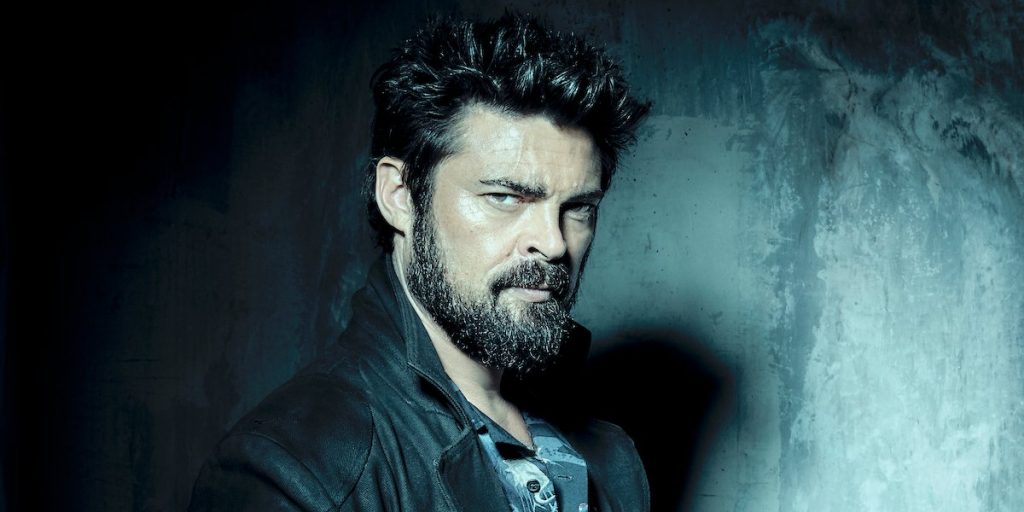
The Wrecking Ball From Wellington
Karl Urban net worth stands at an estimated $20 million. That figure makes him the wealthiest cast member on The Boys by a factor of four. It also represents something unusual in Hollywood — a fortune built almost entirely through acting, accumulated across three decades without a single franchise of his own, no production shingle, no lifestyle brand. Just roles. One after another. Each one requiring him to be someone else entirely.
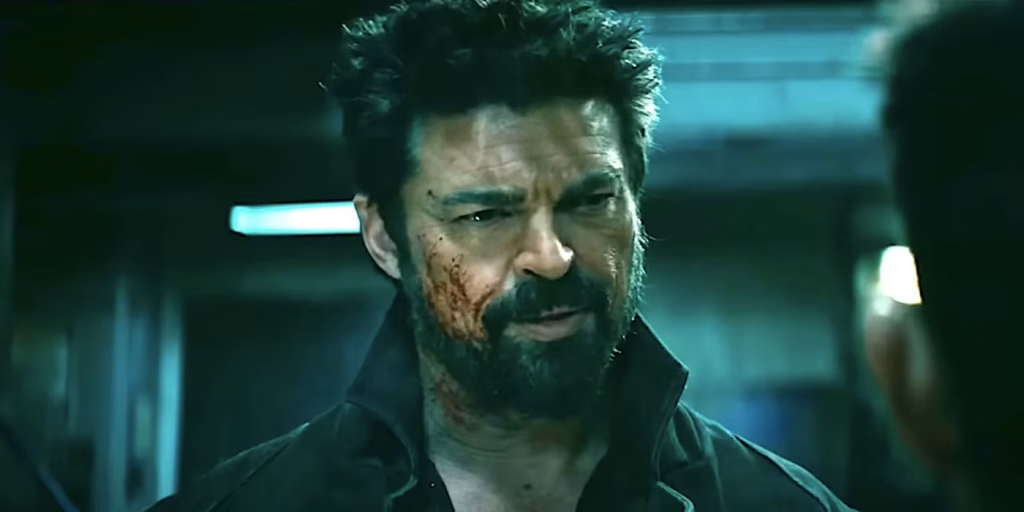
Ultimately, Billy Butcher is the role that will define the obituary, and Urban knows it. Butcher plans to deploy a supe-killing virus in Season 5 that will destroy every super-powered being on Earth. It will also kill him. He’s doing it anyway. That sentence contains everything you need to know about the character and everything that makes Urban the right actor to play him.
For Social Life readers who’ve watched deals implode because someone chose principle over profit — or watched someone destroy themselves proving a point nobody asked them to prove — Butcher is uncomfortably familiar. He’s the partner who’d rather liquidate than compromise. Furthermore, Urban plays him without asking for sympathy, which is precisely why audiences give it.
A Leather Shop, a German Father, and a Decision
Karl-Heinz Urban was born June 7, 1972, in Wellington, New Zealand. Notably, his father was a German immigrant who ran a leather goods store. His mother worked for Wellington’s film facilities — a detail that matters more than it seems, because it means Urban grew up adjacent to an industry without being inside it. He watched films get made the way a butcher’s son watches meat get cut. The process lost its mystery early. What remained was the craft.
As a child, he attended St. Mark’s Church School, where he appeared in school plays with the kind of intensity that teachers either reward or refer to counseling. By age eight, he’d landed his first acting role on the New Zealand television series Pioneer Woman. He moved on to Wellington College, graduated in 1990, and enrolled at Victoria University in a Bachelor of Arts program. He lasted one year. Then he left to act full time.
What followed next was unglamorous by design. Local TV commercials. Theater productions around Wellington. Guest spots on shows nobody outside New Zealand could name. Notably, one of his early roles was playing a heroin addict on a police drama called Shark in the Park. He moved briefly to Bondi Beach in Sydney before returning to New Zealand. The pattern was restless, deliberate, and completely invisible to the global audience that would eventually make him famous.
Middle-Earth and the Karl Urban Net Worth Foundation
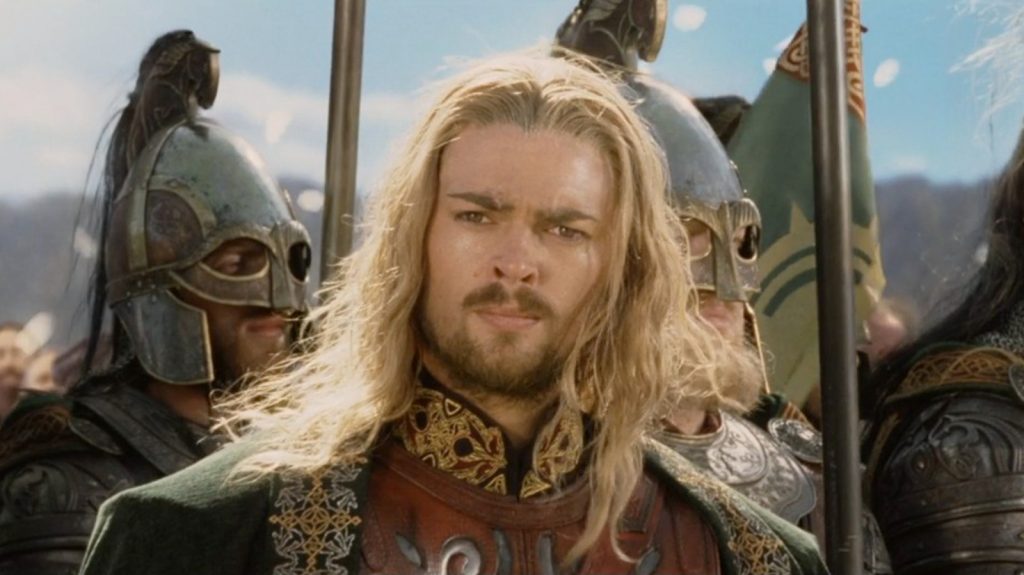
Then, in 2002, Peter Jackson cast Urban as Éomer in The Lord of the Rings: The Two Towers. He reprised the role in The Return of the King a year later. The trilogy grossed over $2 billion combined. Urban’s role wasn’t the lead. It wasn’t even the second lead. But Éomer — the exiled horseman of Rohan, loyal to a fault, willing to ride into battles he knows he’ll lose — established the archetype Urban would spend the next two decades refining.
From there, the Karl Urban net worth trajectory accelerated from there. In 2004, he played Russian FSB agent Kirill in The Bourne Supremacy, which grossed $291 million worldwide. That same year, he took on Vaako in The Chronicles of Riddick. In 2005, he starred in Doom, adapted from the video game franchise. The film underperformed commercially but demonstrated something important about Urban’s range: he could carry a project without a safety net.

However, the role that cemented his franchise credentials came in 2009. J.J. Abrams cast him as Dr. Leonard “Bones” McCoy in the Star Trek reboot. Urban’s performance was embraced by the notoriously demanding Trek fan community for its fidelity to the spirit of DeForest Kelley’s original. He reprised the role in Star Trek Into Darkness (2013) and Star Trek Beyond (2016). Across three films, the franchise grossed over $1.1 billion. Consequently, by the time Amazon came calling for The Boys, Urban had appeared in films with a combined global box office exceeding $4.5 billion.
Dredd, Ragnarok, and the Actor Who Never Coasted
Of course, there’s a version of Karl Urban’s career where he rides the Star Trek franchise indefinitely, collects residual checks, and does convention appearances until retirement. That version doesn’t exist because Urban doesn’t operate that way.
Instead, in 2012, he starred as Judge Dredd in Dredd — a brutal, stripped-down action film that required him to act entirely through his jaw and voice. He never removes the helmet. The audience never sees his eyes. The film underperformed at the box office but earned a cult following that persists to this day and demonstrated Urban’s willingness to subordinate vanity to character. By contrast, most actors at his career stage would’ve demanded the helmet come off.

Subsequently, in 2017, he played Skurge in Marvel’s Thor: Ragnarok, directed by fellow New Zealander Taika Waititi. The film grossed $855 million worldwide. Urban’s performance was a masterclass in comedic timing within a blockbuster framework — further proof that the man could play anything put in front of him without repeating himself. Additionally, he had a cameo as a stormtrooper in Star Wars: The Rise of Skywalker in 2019, meaning Urban has appeared in three of the four largest science fiction franchises in cinema history.
Lord of the Rings. Star Trek. Star Wars. The fourth slot — Marvel — he filled with Thor: Ragnarok. No other living actor can claim all four on a résumé.
Butcher and the Cost of Being Right the Wrong Way
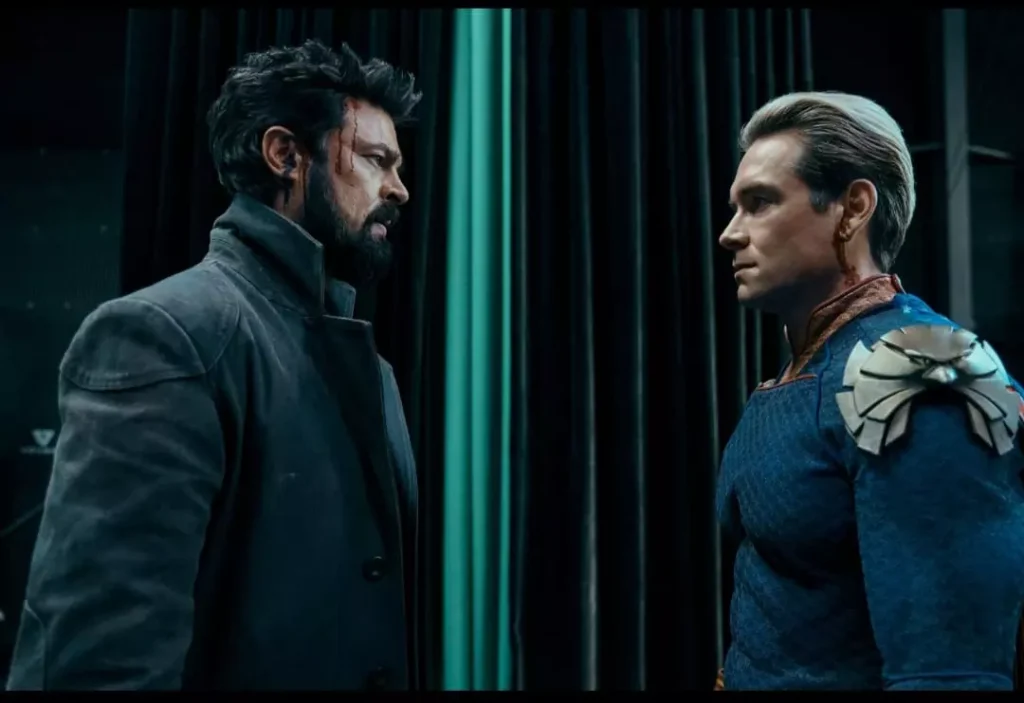
Given that track record, Amazon cast Urban as Billy Butcher in The Boys in 2019, and the role immediately became the gravitational center of the show. Butcher is a former intelligence operative running an underground campaign to destroy all super-powered beings. His methods are brutal. His motivations are personal — grief weaponized into ideology. He lies to his team, manipulates his allies, and makes decisions that guarantee collateral damage.
In practice, Urban plays him like a man who finished grieving years ago and replaced the sadness with velocity. The jaw stays clenched. The eyes stay dead. When tenderness arrives — usually directed at Hughie, the surrogate for everything Butcher lost — it cracks through the surface like water through concrete. Hemingway would’ve recognized this character immediately. The iceberg theory made human: what Butcher doesn’t say carries more weight than every monologue in the show combined.
For Hamptons readers specifically, Butcher represents something more specific than a generic anti-hero. He’s the founder who torches the cap table to prove a point about equity. He’s the board member who votes against the deal everyone else approved because he saw a number that didn’t add up three quarters ago. Ultimately, the show asks whether that kind of conviction — the willingness to burn everything rather than tolerate a corrupted system — constitutes heroism or self-destruction. Five seasons later, it still hasn’t answered. That refusal is the most honest thing the writers ever did.
The Numbers Behind the Karl Urban Net Worth Story
The $20 million Karl Urban net worth figure reflects a career with combined box office receipts exceeding $4.5 billion across franchises that defined their respective decades. His ten highest-grossing films include two Lord of the Rings entries, three Star Trek installments, Thor: Ragnarok, The Bourne Supremacy, and a Star Wars cameo. Reports indicate he earns between $350,000 and $500,000 per season of The Boys, making him the highest-paid cast member on the show.
Off-Screen and Off-Clock
Urban married makeup artist Natalie Wihongi in 2004. They have two sons — Hunter, born in 2000, and Indiana, born in 2005. The couple separated in 2014. He subsequently dated actress Katee Sackhoff from 2014 to 2018. Outside the industry, Urban serves as a celebrity ambassador for KidsCan, a New Zealand charity supporting over 16,000 disadvantaged children. The philanthropy is consistent with everything else about Urban’s public profile: substantive, quiet, and completely disconnected from any branding exercise.
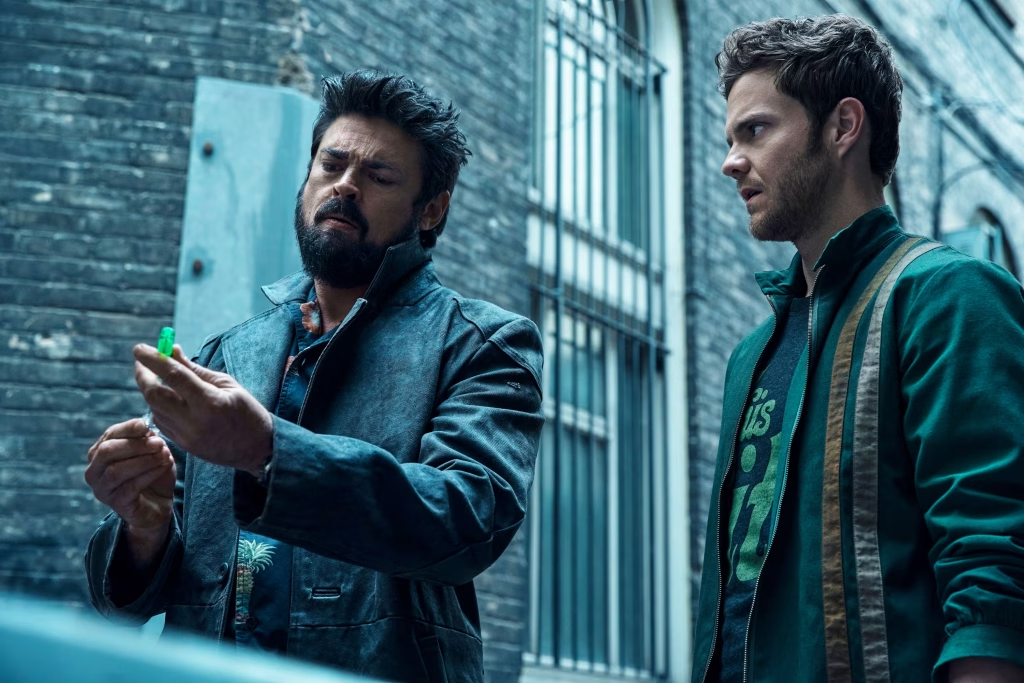
Season 5 of The Boys premieres April 8 on Prime Video. Butcher’s endgame — mutual destruction through a supe-killing virus — gives Urban his final turn with a character who has consumed six years of his career. The weekly releases run through May 20. For an actor who has spent three decades playing men defined by what they’re willing to sacrifice, the role of Butcher is the logical conclusion. The man who would rather die right than live compromised. That’s the final Karl Urban net worth calculation — not dollars, but cost. Urban doesn’t ask the audience to admire that choice. He just shows you what it costs.
The Boys became the most dangerous show on television because it understood that heroes and villains aren’t opposites — they’re the same person making different bets. Antony Starr’s Homelander is the bet that power justifies itself. Urban’s Butcher is the bet that destroying power is worth whatever it costs. Jack Quaid’s Hughie is the bet that maybe — somehow — surviving is enough. The final season decides which bet pays.
Experience the World That Social Life Magazine Covers
There’s a version of your life where you’re swimming in the culture and a version where you’re reading about it secondhand. Social Life Magazine exists for the first version. The stories we tell — from the Hamptons power players reshaping industries to the cultural moments that define how the elite actually live — aren’t available anywhere else. Because we don’t cover the surface. We cover the room behind the room.
If your brand, your business, or your personal story belongs in front of the audience that matters, reach out to our editorial team about being featured in Social Life Magazine. We place the people and brands that define luxury on the East End.
Want guaranteed placement on your terms? Submit a Paid Feature and secure your story in the publication that 82,000 readers trust for the definitive word on Hamptons culture.
Speaking of those 82,000 — our email list delivers exclusive content, event invitations, and insider access directly to the inboxes of the most influential people on the East End. Join the list and stop missing what matters.
Polo Hamptons returns this summer with the most exclusive luxury sporting event on the East End. Sponsorships, VIP cabanas, and brand activations that put you in front of a verified high-net-worth audience. Explore partnership opportunities at polohamptons.com.
Our print edition reaches 25,000 readers per issue across the Hamptons’ most exclusive boutiques, estates, and social venues from Memorial Day through Labor Day — plus 15,000 copies delivered to Upper East Side doorman buildings in fall and winter. Subscribe to the print edition and hold the magazine that holds the culture.
If this publication adds value to your life, consider a small contribution to support independent luxury journalism. Donate $5 and help us keep doing what nobody else will.
Related Reading
Author

Written by
Recent Posts
Jensen Ackles Net Worth: Soldier Boy and the Supes Pipeline

Jack Quaid Net Worth: Hollywood Royalty Playing Normal
Karl Urban Net Worth: The Anti-Hero Who Burns It All Down
Antony Starr Net Worth: The Villain Everyone Loves to Hate
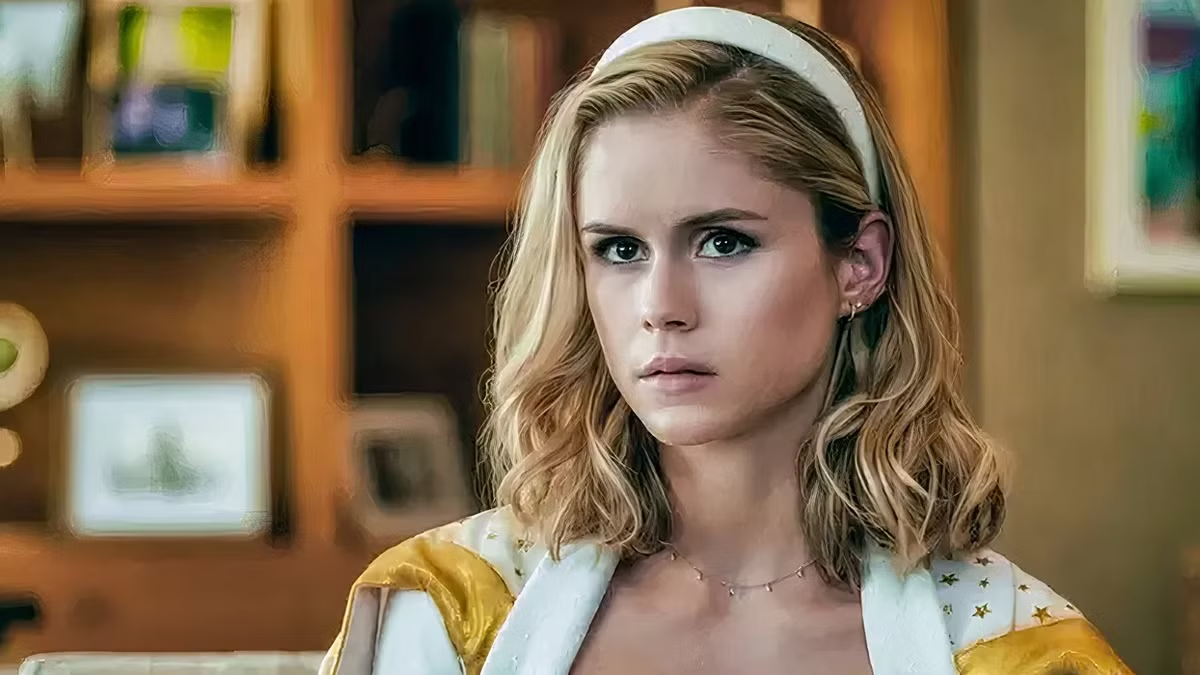
Erin Moriarty Net Worth: Starlight Was the Role She Earned
Categories
- Art
- Articles
- Beauty & Skincare
- Celebrities
- Celebrities|The Chronicles
- Chronicles
- Entertainment|Culture
- Event Photos
- Events
- Fashion
- Fashion & Style
- Featured
- Food & Beverage
- Food, Spirits, Wine
- Hamptons
- Hamptons Celebrities
- Hamptons Celebrities|Celebrities|The Chronicles
- Health
- Health & Beauty
- Lifestyle
- Luxury Lifestyle
- Press
- Profiles
- Real Estate
- Technology
- The Chronicles
- Travel
- Uncategorized
- Weddings