
It did not arrive fully formed. It was assembled over a decade of obscurity, a boarding school intervention, three failed stage names, and one song recorded in a bedroom that changed everything. The distance between Elizabeth Grant from Lake Placid, New York, and the woman Mulberry named a handbag after is the distance between who you are and who you decide to become.
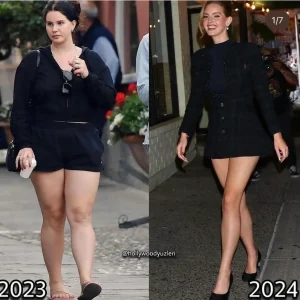
For the chapter on body image, public scrutiny, and the tabloid discourse that consumed her narrative from 2023 onward, visit the Ozempic Reckoning Hub. This spoke covers the full arc: the origin, the climb, the fortune, and where she landed.
The Before: Manhattan, Lake Placid, and the Boarding School Nobody Mentions
Elizabeth Woolridge Grant was born on June 21, 1985, in the Polyclinic Hospital in Manhattan. Her father, Robert England Grant Jr., was a copywriter at Grey Group advertising agency. Her mother, Patricia Ann Hill, worked as an account executive at the same firm. Both were educated, professionally established, and relatively comfortable. This matters because the mythology Lana Del Rey would later build around working-class American longing was assembled by a woman who grew up in a furniture company house in Lake Placid, upstate New York, when her father pivoted from advertising into entrepreneurial domain investing.
The childhood was not a hardship narrative. However, it was specific. Lake Placid in the 1990s was a small town built around a single Olympic legacy and not much else. The winters were long. Moreover, the ambitions that fit the environment were modest. Elizabeth Grant’s ambitions did not fit the environment at all.
Kent School and the Drinking Problem That Redirected Everything
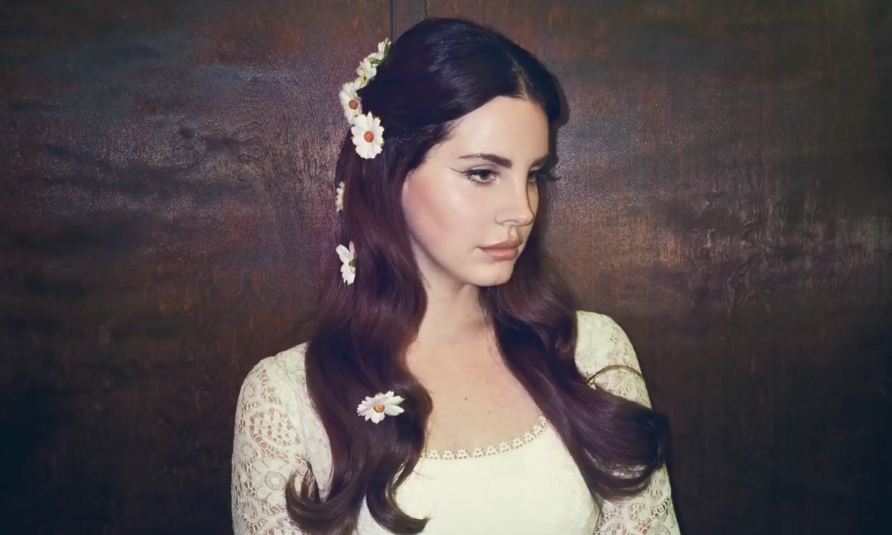
As a teenager, Grant developed a serious problem with alcohol. Her parents made the decision to send her to the Kent School, a prestigious boarding school in Kent, Connecticut, where annual fees exceeded $40,000. The intervention was expensive and, by her own account, necessary. She has described that period as the moment she got serious, not just about sobriety, but about what she actually wanted to do with her life.
After Kent, she spent a year living on Long Island with her aunt and uncle. Her uncle taught her guitar. She started writing songs. Then, in the fall of 2004, she enrolled at Fordham University in the Bronx, where she majored in philosophy. The philosophy degree is not incidental. Her lyrical framework, the meditation on desire and loss, on beauty and its inevitable costs, on the distance between wanting something and having it, reflects a rigorous intellectual training that most pop singers simply have not done. Consequently, the music sounds like it was written by someone who had read Nietzsche at twenty and meant it.
The Pivot Moment: A YouTube Video That Nobody Was Supposed to See
The road to Lana Del Rey was not direct. Grant graduated from Fordham in 2008 and signed with the independent label 5 Points Records. She released a self-titled album in 2010 under the name Lana Del Rey AKA Lizzy Grant. The album generated virtually no commercial traction. Subsequently, she bought back the rights and removed it from streaming platforms entirely. The erasure was deliberate. She was not ready, and she knew it.
The stage name itself arrived through a specific associative logic. Lana Turner for the Old Hollywood glamour. Ford Del Rey for the car that suggested mobility, Americana, the specific romance of driving somewhere you have never been. Together they produced a name that sounded like a character in a Raymond Carver story who had escaped into something more interesting. That was precisely the point.
Video Games and the Viral Moment That Rewrote the Rules
In the summer of 2011, Grant uploaded a self-made music video for “Video Games” to YouTube. She had edited it herself using found footage, vintage clips, and the specific lo-fi aesthetic that would become her visual signature. Within weeks, the video accumulated millions of views. The music press, which had developed a reflex for dismissing anything that went viral before a label manufactured the moment, paid attention anyway.
Stranger Records signed her to release the single. She then secured a joint deal with Interscope Records and Polydor, two of the most significant labels in popular music. According to Billboard, the label investment was immediately validated. The deal positioned her second album, “Born to Die,” for a global launch that no independent release could have achieved. The YouTube moment was not the career. It was the credential that unlocked the infrastructure.
Lana Del Rey Net Worth: The Climb and the Catalog
“Born to Die” was released in January 2012. It reached number one in eleven countries. Within its first year, the album sold 3.4 million copies. Consequently, it introduced Summertime Sadness, National Anthem, and Blue Jeans to a generation waiting for music that treated emotional complexity as a feature rather than a liability. The album also generated one of the most hostile critical receptions of the decade, with reviewers who had praised the YouTube single suddenly questioning the authenticity of the persona behind it.
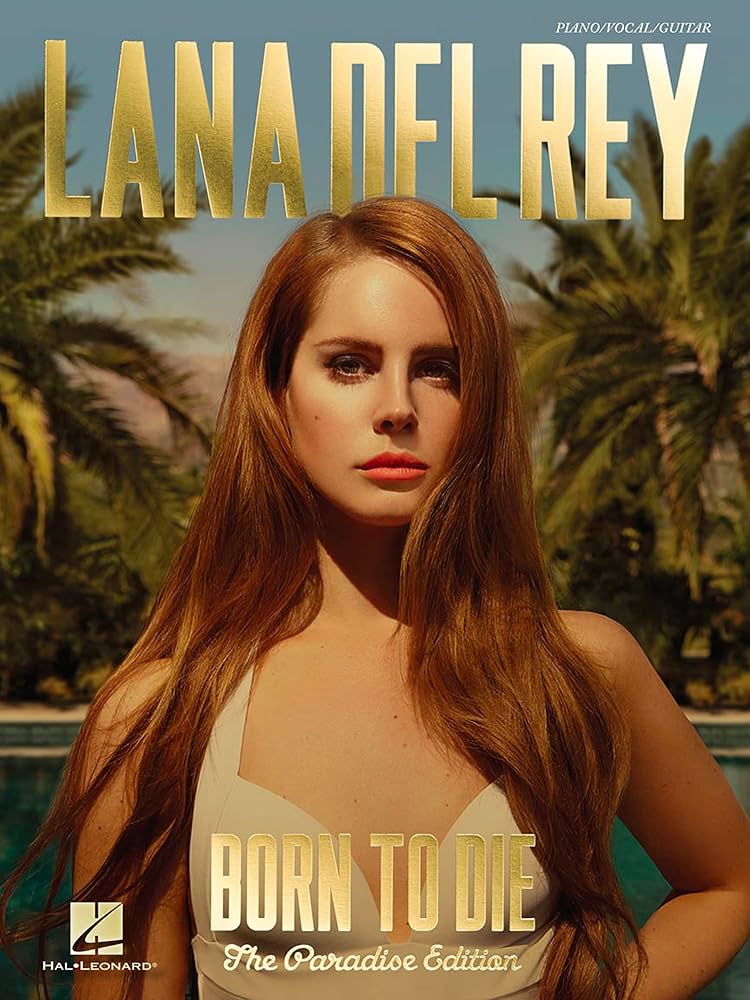
The contradiction did not slow the commercial performance. “Born to Die” became one of the most durable album releases of the 2010s. According to Forbes, it became only the second album by a solo female musician to hit 550 weeks on the Billboard 200. The only other title to achieve that is by Taylor Swift. The company Del Rey keeps in that statistic is instructive.
The Grammy Problem and Why It Does Not Matter Financially
Del Rey received eleven Grammy nominations across her career without a single win. The pattern generated its own cultural discourse, becoming shorthand for the Recording Academy’s complicated relationship with artists who operate outside mainstream pop or country infrastructure. Nevertheless, the Grammy situation clarifies something important about where her financial value actually lives.
Her catalog generates revenue independently of institutional validation. Additionally, album sales exceeded 47 million records worldwide across her nine studio releases. Streaming figures on Spotify alone reach over 62 million monthly listeners, according to Spotify. The Great Gatsby soundtrack placement for “Young and Beautiful” in 2013 introduced her music to the film industry’s commercial ecosystem. Soundtrack licensing generates a different revenue stream than album sales, and Del Rey has been one of the most consistently licensed voices in contemporary film and television.
Tour revenue adds the third pillar. Her 2015 Endless Summer Tour generated $6 million. The 2018 LA to the Moon Tour generated $22.5 million. Her 2025 stadium tour, including a headline slot at Coachella where top-line performers earn upward of $8 million, represented the largest live revenue of her career. According to Pollstar, her live business has grown every cycle, which is not guaranteed for an artist whose commercial identity rests on intimate melancholy rather than spectacle.
The Hamptons Chapter: Where the Mythology Meets the Money
Del Rey’s relationship with the East End of Long Island is structural rather than seasonal. She grew up in upstate New York, spent a formative year on Long Island, and has maintained deep ties to the broader New York cultural geography throughout a career that eventually moved her primary residence to Los Angeles. The Hamptons represent something specific in her cultural vocabulary: the version of American wealth that is old enough to look like landscape.
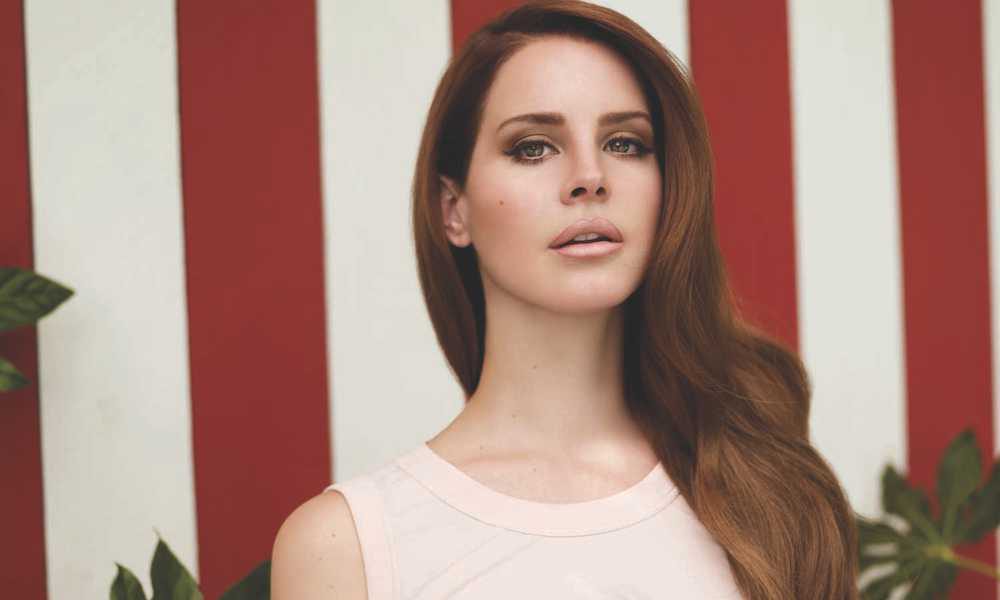
That aesthetic is precisely the one she has built her career around. The Gatsby references, the old money imagery, the specific sadness of beautiful places that contain unhappy people. Rendered through her particular lens, the Hamptons is not a summer destination. Rather, it is a setting for a story about what beauty costs and what it cannot buy. Furthermore, her audience in the East End skews toward exactly the demographic that understands that distinction from personal experience.
The Cultural Geography of Lana Del Rey’s Brand
The brand partnerships that her Hamptons adjacency generates are not incidental. Mulberry created a handbag called the Del Rey. H&M used her for a campaign. Gucci’s aesthetic overlap with her visual world has produced alignment without a formal contract. These are not the deals of a pop star with a PR team pushing placements. They are the organic consequence of an artist whose visual and cultural identity is so coherent that luxury brands seek proximity to it on their own initiative.
That coherence has a dollar value. Brand adjacency at her level generates passive commercial returns that compound alongside the music catalog rather than replacing it. For the best of the East End experience she helped make aspirational, visit the Social Life Magazine Hamptons Restaurant Guide and the Hamptons Real Estate Guide.
What She Built: The $60 Million Architecture
Del Rey’s net worth reflects a diversified revenue structure built over fifteen years of consistent output. Album sales across nine studio releases produced an estimated $47 to $71 million in gross revenue at standard industry rates, with her percentage varying by contract era. Streaming royalties on 58 billion total streams represent a passive income engine that generates revenue without additional creative effort. Tour grosses across three major tours exceed $35 million in documented revenue, with the 2025 stadium cycle representing the highest-earning period of her live career.
Real estate adds a parallel asset class. She assembled a Beverly Hills compound across three separate purchases: $2.5 million for the first parcel in 2013, then $5.9 million for two neighboring properties in 2016. Additionally, she owned a Malibu beachfront home from 2015 to 2018, which she sold for $3.2 million at a profit. An Echo Park cabin rounds out a Los Angeles portfolio worth over $10 million at current market valuations.
The Poetry, the Licensing, and the Creative Control Play
In 2020, Del Rey published “Violet Bent Backwards Over the Grass,” a collection of poetry she self-financed and produced with an accompanying spoken word album. The project was not commercially optimized. It was a statement about the breadth of the creative enterprise she had built. However, it also demonstrated the financial infrastructure available to artists at her level: the ability to fund passion projects without label approval because the catalog revenue covers the overhead.
Soundtrack placements continue generating licensing income across her back catalog. “Young and Beautiful,” “Season of the Witch,” and multiple album tracks appear in film and television productions on a rolling basis. According to industry analysis from Music Business Worldwide, catalog licensing has become one of the most valuable revenue streams for artists with her kind of critical longevity. The older the catalog and the more cinematic the sound, the higher the licensing rates. Del Rey’s catalog meets both criteria precisely.
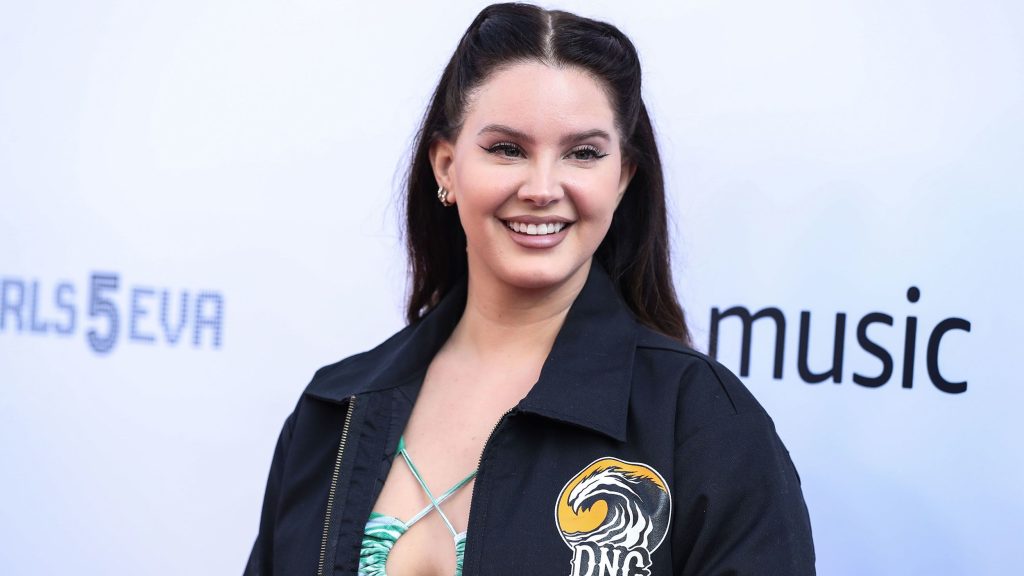
The Soft Landing: Jeremy Dufrene, Louisiana, and the Country Album Nobody Predicted
In September 2024, Elizabeth Woolridge Grant, known to the world as Lana Del Rey, married Jeremy Dufrene. Dufrene is not a music executive, a film director, or a Silicon Valley investor. Instead, he leads swamp tours through the Louisiana bayou for a living. The wedding was small, quiet, and conducted without a press release. The internet discovered it anyway and spent approximately two weeks trying to understand what it meant.
What it meant was this: a woman who had built an entire career on controlled mythology finally chose something that was entirely her own and entirely outside the narrative. Dufrene did not fit the Del Rey story as the industry had constructed it. He fit the actual Elizabeth Grant, who grew up in a small town, studied philosophy, and has always been more interested in authentic experience than in the performance of it.
Stove and the Country Era
Her tenth studio album, currently known as “Stove,” represents the most significant creative pivot of her career. Early singles including “Henry, Come On” and “Bluebird” push into country and Southern Gothic territory, produced alongside Jack Antonoff and Luke Laird. Notably, the pivot is not commercial calculation. Del Rey has never made a commercially calculated creative decision in her public career. Instead, the country direction follows the Louisiana chapter of her life in the way all of her albums have followed the emotional geography of wherever she actually is.
Ultimately, the Lana Del Rey net worth story is a study in what happens when an artist refuses to optimize. She did not write songs for radio. She did not manufacture a persona for streaming. Nor did she make peace with the Grammys, the tabloid discourse, or the years of critical ambivalence. Instead, she built a catalog so specific that it became universal, an audience so loyal it outlasted every cultural trend, and a brand so coherent that luxury houses seek her out. The $60 million is the financial summary of an artistic refusal. It turns out that refusal, sustained long enough, pays extremely well.
Return to the Ozempic Reckoning Hub to read the chapter on how public body scrutiny shaped her narrative from 2023 onward. For the full celebrity net worth universe, visit the Social Life Magazine Celebrity Hub.
Related Reading: Rebel Wilson Net Worth: $22M and How She Built It | It Girls of the Early 2000s: Where Are They Now?
Feature Your Brand in Social Life Magazine: sociallifemagazine.com/contact
Polo Hamptons Sponsorships and VIP Tickets: polohamptons.com
Subscribe to Social Life Magazine: sociallifemagazine.com/subscription
Support Independent Luxury Journalism — Donate $10: Donate Here
Author

Written by
Recent Posts
Rebel Wilson Net Worth: Named the Drug. Wrote the Memoir. Built $22M Anyway.
Celebrities on Ozempic: Six Women, Six Choices, One Brutal Verdict
Lana Del Rey Net Worth: $60M Empire Built on Refusal
Ashley Graham Net Worth: $10M. The Industry Said No. She Said Watch.
How Can You Create a Warm and Inviting Wellness Space at Home?
Categories
- Art
- Articles
- Beauty & Skincare
- Celebrities
- Celebrities|The Chronicles
- Chronicles
- Event Photos
- Events
- Fashion
- Fashion & Style
- Featured
- Food & Beverage
- Food, Spirits, Wine
- Hamptons
- Hamptons Celebrities
- Health
- Health & Beauty
- Lifestyle
- Luxury Lifestyle
- Press
- Profiles
- Real Estate
- Technology
- The Chronicles
- Travel
- Uncategorized
- Weddings