

Every entertainment site will confirm that Lauren Conrad’s net worth sits around
$40 million. What none of them explain is where it actually came from. Reality
television accounts for a fraction of it — a few hundred thousand dollars spread
across six seasons of The Hills. The real number was built in the margins,
during commercial breaks, through decisions that looked ordinary at the time and
turned out to be anything but. Ultimately, the Lauren Conrad net worth story is not
a celebrity story. It is a brand strategy story wearing one as a costume.

The Before: Laguna Beach Wasn’t Hollywood
Lauren Conrad grew up in Laguna Beach, California. Not Malibu. Not Beverly Hills.
Certainly not the version of California that exists on television. Her father, Jim
Conrad, served on the Laguna Beach City Council. Her mother, Kathy, worked as an
interior designer. The family was comfortable. However, they were not industry
people. Nobody in the house was working a development deal or running a talent
roster.
That distinction matters. Conrad arrived at MTV without the assumptions that come
with Hollywood proximity. Instead, she brought a different set of inputs: design
instincts inherited from her mother, a work ethic shaped by a family that built
things rather than performed them, and a pragmatism about what a camera could
actually be used for.
Before Laguna Beach aired in 2004, she had already enrolled at FIDM — the
Fashion Institute of Design and Merchandising in Los Angeles. That detail gets cut
from most profiles. Notably, she was not a girl who wanted to be on television.
She was a girl who wanted to work in fashion, and television offered itself as a
shortcut. Most people take the shortcut and forget the destination. Conrad
did not.

The Pivot Moment: The Call From Kohl’s
In 2008, Lauren Conrad was twenty-two years old and filming season four of
The Hills. Kohl’s reached out about a potential collaboration. The offer
was simple: design a clothing line for a mass-market department store and attach
her name to it. By any conventional fashion industry logic, the answer would have
been no. A mass-market Kohl’s deal was not the move that earned you a slot at NYFW.
Anyone angling for creative legitimacy would have walked.
Conrad said yes immediately.
What she understood at twenty-two — and what took the industry another decade to
fully absorb — was that her audience was not shopping at Barneys. Her audience was
real. They had real budgets. Furthermore, they wanted the aesthetic she was
documenting on camera, and they had nowhere to buy it. Kohl’s was not a
compromise. It was a market gap wearing a department store logo. LC Lauren Conrad
launched in 2009. The rest is the actual story.
The Climb: Building the Architecture Before Anyone Noticed
Between 2009 and 2012, Conrad assembled the infrastructure of a full lifestyle
brand. She launched LC Lauren Conrad at Kohl’s. Simultaneously, she co-founded
Paper Crown — an independent, higher-priced label built with childhood friend Maura
McManus. LaurenConrad.com followed as a genuine editorial destination: not a fan
site, not a promotional vehicle, but a functioning lifestyle platform with original
content and a real editorial calendar.
Then came the books. L.A. Candy hit the New York Times bestseller list
in 2009. Sweet Little Lies followed shortly after. Eventually, the
nonfiction series arrived: Style, Beauty, Celebrate.
Six books total. Multiple bestsellers. A readership that tracked directly to her
existing audience and proved it was not passive.
The Move Nobody Covered
The revealing detail is the simultaneity. Most celebrities sequence their brand
extensions: fame first, then one deal, then the next. Conrad, however, ran multiple
revenue streams in parallel. She built the infrastructure in real time, before she
had the team to support it. By her mid-twenties, she held a mass-market fashion
line, a premium independent label, a lifestyle website, a book deal, and a fanbase
that treated all of it as one integrated world. That is not how reality stars move.
That is how brand operators move.
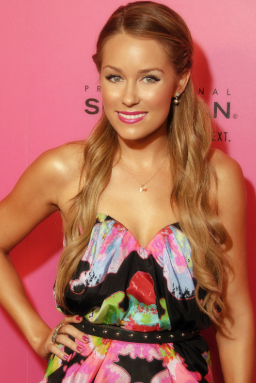
The Human Chapter: What $40 Million Didn’t Solve
Lauren Conrad lives in Bel Air with her husband, William Tell — entertainment
attorney, part-time musician, full-time non-tabloid presence — and their two sons,
Liam James and Charlie Wolf, born in 2017 and 2019. By most visible measures, her
life looks exactly like the brand she has spent fifteen years building: organized,
warm, aesthetically coherent, faintly aspirational without being alienating.
The visible version is not wrong. That is the disorienting part.
The Planner on the Desk
She uses a paper planner. Not an app. Not a digital calendar system. A physical,
color-coded paper planner with cooking scheduled alongside meetings. Her
LaurenConrad.com content is not a curated performance of a lifestyle invented for
the camera. Instead, it is documentation of how she actually lives. That specific
detail makes everything else about her credible.
During the early pandemic, she posted a video of herself making homemade pasta.
No styling team, no ring light, no strategic rollout. Consequently, it generated
more engagement than almost anything she had published in recent memory. The
comments were not “goals.” They were “same.” Her audience recognized the person
behind the brand because, unusually, they are the same person.
You have $40 million and a brand with nine-figure retail reach, and the fashion
press still files you under “reality star turned designer.” Not because the work
doesn’t qualify for a better label. Because the first one arrived first, and the
industry has a long institutional memory.
The Gap the Industry Never Closed
The Kohl’s partnership was strategically brilliant and commercially enormous.
By fashion-world standards, however, it was also the wrong move. Mass accessibility
is antithetical to luxury positioning. Conrad chose reach over prestige. By most
financial metrics, she chose correctly. The fashion industry, meanwhile, grades on
a different curve entirely.
She has never shown at New York Fashion Week. Paper Crown — genuinely
well-designed and chronically underexamined — receives less annual press coverage
than a single celebrity front-row appearance at a Paris show. As a result, the
industry still has not decided what to do with someone who sells two hundred SKUs
at Kohl’s and does it with genuine skill.
Meanwhile, the planner stays full. The line keeps selling. The thing the $40
million was supposed to fix — serious industry respect, the kind that arrives
unsolicited — remains the one thing it has not yet bought. That might not keep her
up at night. It is, however, the only honest tension in an otherwise unusually
coherent life.

Lauren Conrad’s Net Worth: Breaking Down the $40 Million
According to Forbes-adjacent estimates, Lauren Conrad’s net worth sits at
approximately $40 million as of 2026. The internal architecture, though, is more
interesting than the number. The fortune breaks down across four distinct income
categories, each built at a different stage and for a different strategic reason.
The Kohl’s Engine
LC Lauren Conrad at Kohl’s is the financial foundation. The line has been in
continuous production since 2009 — now in its sixteenth year, an extraordinary
run by any retail metric. Industry estimates suggest cumulative retail sales well
into the hundreds of millions of dollars. Even at conservative royalty rates,
this single partnership accounts for the majority of Conrad’s net worth. It is
the deal that looked wrong and turned out to be the whole thing.
Paper Crown and the Independent Play
Paper Crown operates as a premium counterpoint to the Kohl’s volume. Prices are
higher. Production runs are smaller. The brand equity is meaningful and deliberately
protected. Conrad co-founded the label specifically to demonstrate range — to show
that the Kohl’s work was a strategic choice, not a ceiling. By most accounts,
the collections back that argument up. The business is smaller. The creative
contribution, however, is larger.
Books, Digital, and The Little Market
Six published books — including multiple New York Times bestsellers — add a
substantial revenue layer. LaurenConrad.com has operated as a lifestyle media
property for over a decade, generating consistent sponsorship and brand partnership
income. The Little Market, a fair trade nonprofit she co-founded in 2013 with
Hannah Skews-Marx, contributes no direct wealth. Still, it partners with artisans
in more than forty countries and builds the brand equity that makes every other
revenue stream more defensible. Structurally, it is the most sophisticated thing
she has built. The press, consequently, covers it least.

How She Lives Now
The Quiet Version
Bel Air. Farmer’s markets on weekends. The paper planner. Two young boys and a
husband who operates entirely outside the celebrity industrial complex by design.
LaurenConrad.com still publishes. The Kohl’s line still sells. She does limited
press. When she does appear publicly, she looks like the brand — which is to say,
she looks like herself.
The lifestyle she built was not a product invented for the camera. It was a life
documented, then turned into a business. That sequence matters. Most celebrity
brands run it the other direction: build the business, then perform the life.
Conrad built the life and let the business follow. That is a harder thing to fake.
That is also, ultimately, why it lasted.
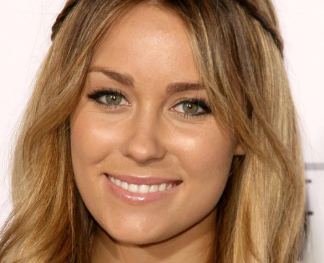
What She’s Still Building
The Little Market continues expanding its global artisan network. LaurenConrad.com
pushes into longer editorial content and original programming. Paper Crown releases
collections without the quarterly pressure of the mass-market calendar. Additionally,
the Kohl’s partnership — sixteen years in — keeps running, because the audience
that showed up in 2009 is now in their mid-thirties with real purchasing power
and genuine loyalty.
Meanwhile, the Hamptons crowd recognized her brand coherence early, as they
usually do. The broader fashion press is still catching up. However, Lauren
Conrad’s net worth does not require the industry’s validation. It was built without
it. It will keep growing the same way — quietly, deliberately, and exactly
on schedule.
Read next:
Tinsley Mortimer’s $35M Net Worth: The Blog, The Brand, The Divorce |
Celebrities Who Stepped Back From Fame and Actually Won
Feature your brand: Contact Social Life Magazine — we connect luxury
brands with the audiences that close.
The East End’s premier sporting event:
Polo Hamptons
— sponsorships, VIP access, and brand activations where the Hamptons actually
convenes.
Get the Hamptons insider list:
Subscribe to Social Life Magazine — 23 years of the East End, delivered to
your door.
Support independent Hamptons journalism:
Donate $10
Author

Written by
Recent Posts
Amanda Peet Net Worth: The Brilliant Dinner Guest Hollywood Forgot to Invite Back
Keanu Reeves Net Worth: Infinite Losses, and the Role That Proved Kindness Compounds
Jack Nicholson Net Worth: Three Oscars, and the Role He Couldn’t Stop Playing

Diane Keaton Net Worth: The Fortune Built on Talent, Turtlenecks, and the Homes She Left Behind
Nancy Meyers Net Worth: A Filmography, an Inheritance, and the Kitchen That Sold the Hamptons
Categories
- Art
- Articles
- Beauty & Skincare
- Celebrities
- Celebrities|The Chronicles
- Chronicles
- Entertainment|Culture
- Event Photos
- Events
- Fashion
- Fashion & Style
- Featured
- Food & Beverage
- Food, Spirits, Wine
- Hamptons
- Hamptons Celebrities
- Hamptons Celebrities|Celebrities|The Chronicles
- Health
- Health & Beauty
- Lifestyle
- Luxury Lifestyle
- Movies|Hamptons Lifestyle
- Press
- Profiles
- Real Estate
- Technology
- The Chronicles
- Travel
- Uncategorized
- Weddings