
Legacy TV and Film Stars: The Deep Cuts That Actually Mattered
There is a specific kind of grief that arrives at 2am, mid-streaming spiral, when the algorithm delivers a face you had completely forgotten you loved. Not grief exactly. Something closer to structural recognition — the sense that a room you sealed off decades ago just opened a crack. A jawline, a line reading, a way of standing in a doorway during a scene that aired when you were eleven. The whole architecture of who you used to be collapses inward for half a second. That is the nostalgia economy at its most neurologically honest. Not the curated version they sell in reboots and reunion specials. The actual version. The faces that populated your peripheral vision for a decade and then simply went somewhere you couldn’t follow.
The Cultural Ledger Nobody Balances
Legacy TV and film stars occupy a strange category in the cultural ledger. They are too famous to be unknown and too absent to be current. Meanwhile, some of them never actually left. Jean Smart has been working continuously since 1986 and only recently received the cultural attention she was owed the entire time. Sean Murray has been watched by 20 million people a week for over two decades. No one in prestige circles has ever said his name at a dinner party. Tracey Walter has appeared in more than 200 films. You have never once spoken his name aloud.
What follows is an honest accounting — of the winners, the pivots, the cautionary tales, and the quiet ghosts who chose a life the cameras couldn’t find.
Explore the full Social Life Magazine celebrity archive for more deep cuts, origin stories, and Hamptons profiles.
Jean Smart and the Architecture of the Second Act
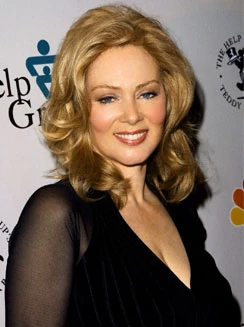
From Designing Women to Dominance
Jean Smart has been one of the finest comic-dramatic actors working in American television since 1987. This is not a controversial statement. It is, however, a recently acknowledged one. Her run on Designing Women as Charlene Frazier established a template for warmth without sentiment, humor without condescension. Then came Frasier, 24, Fargo, Legion, Mare of Easttown — a career so consistent and varied it almost didn’t register as exceptional because it never stopped long enough to be missed.
Then Hacks arrived in 2021, and the industry finally caught up to what attentive viewers had known for thirty years. Two Emmy Awards. A cultural conversation about women, age, ambition, and what it actually means to be brilliant in a room that keeps rearranging its definitions of worth. Smart didn’t have a comeback. She had a witnessing. The camera finally held still long enough for the rest of us to see what was always there.
Additionally, what Smart’s trajectory reveals about the industry is less flattering than it sounds. Talent this obvious required a prestige streaming vehicle before the industry agreed to look. Less-talented men had accumulated the same recognition through sheer occupancy. The lesson is not that Smart succeeded. The lesson is what was required before anyone agreed to notice.
Read the full Jean Smart origin story, net worth, and Hamptons connection →
Lorenzo Lamas: The Cautionary Tale in Real Time
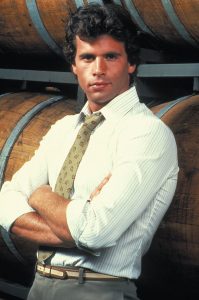
Lorenzo Lamas arrived in 1980 on Falcon Crest carrying the full weight of genetic lottery winnings — son of Fernando Lamas, stepson of Esther Williams, built like an architectural rendering of charisma. The show ran nine seasons. His character Lance Cumson became one of prime-time soap opera’s great recurring provocations: morally incoherent, always arriving on horseback, somehow still compelling. For a specific demographic of American television viewer, Lamas was the organizing principle of Tuesday nights.
By 1992, he had his own show. Renegade ran five seasons in first-run syndication with the kind of viewership that doesn’t generate critical attention but does generate a loyal audience of people who genuinely enjoyed watching a man on a motorcycle solve problems without excessive philosophical complication. However, what followed across the subsequent decades was a more complex story — five marriages, reality television appearances, a willingness to trade on nostalgia that occasionally crossed into territory that nostalgia cannot protect.
What the Tabloid Years Actually Cost
Consequently, Lamas became something rarer and more instructive than a faded star: a cautionary tale that remained fully conscious of its own cautionary status. He appeared on Dancing with the Stars. A season on The Bold and the Beautiful followed. Throughout, his engagement with his own legacy remained public and without apparent embarrassment — which is either admirable or heartbreaking depending on your tolerance for the economics of faded celebrity. Furthermore, the specific quality of his decline suggests less personal failing than structural inevitability — what happens to a certain kind of male star when the genre that created them stops being made.
Read the full Lorenzo Lamas origin story, net worth, and legacy →
Sean Murray and the Invisible Empire
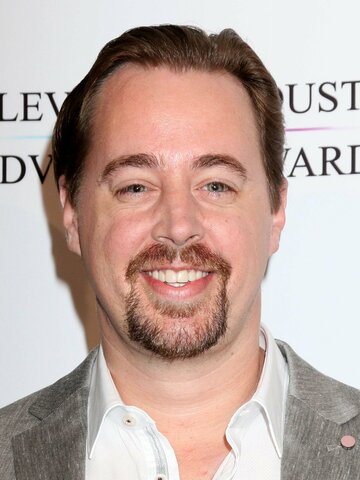
The NCIS Number That Should Embarrass Everyone
Here is a fact that should destabilize something in your understanding of cultural value: NCIS has been one of the most-watched television dramas in America for over twenty years. At its peak it drew 20 million viewers an episode. Sean Murray, who has played Timothy McGee across all of it, is one of the most consistently watched actors in the history of American network television. Nevertheless, his name does not appear in the discourse. Absent from longform criticism. Missing from the award conversation. Not at the kind of dinner parties where people announce their streaming queues like papal decrees.
This is worth sitting with for a moment, because it reveals the precise mechanism by which cultural prestige is manufactured and withheld. NCIS skews older. It airs on CBS. Its audience is enormous and demographically inconvenient for the people who decide what matters. Murray has given two decades of reliable, skilled performance to this show. The critical establishment responded with the specific silence reserved for success it cannot explain on its own terms.
Moreover, Murray’s personal journey adds dimension the ratings don’t capture. His documented health transformation across the show’s run demonstrated a discipline the gossip economy briefly noticed and quickly forgot. A visible, sustained commitment to physical change across years of public exposure — and then nothing. He remains on air. He remains excellent. Nobody cool is watching.
Read the full Sean Murray origin story, NCIS legacy, and net worth →
Telma Hopkins: The Woman Who Reinvented the Pivot
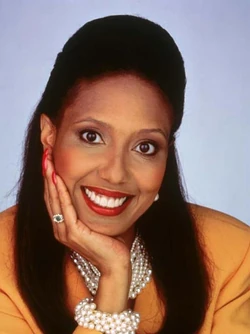
From Six Million Singles to Six Seasons of Television
Before the word “pivot” became a LinkedIn epidemic, Telma Hopkins had already executed the most structurally elegant career transition in American entertainment. She arrived as part of Dawn — Tony Orlando and Dawn — in 1970. One of the most commercially successful pop acts of the early decade. “Knock Three Times” sold over six million copies. “Tie a Yellow Ribbon Round the Ole Oak Tree” sold more than that. The group had a variety show, a devoted audience, and the kind of ubiquitous pop presence that feels inescapable until the moment it doesn’t.
However, Hopkins was already watching the road ahead. By the early 1980s, she had transitioned into acting — not as a legacy vanity project but as a working performer building a second craft from scratch. Gimme a Break! ran six seasons. Family Matters ran nine. Half & Half ran four. These are not the résumé lines of someone coasting on former fame. They are the credits of someone who understood that longevity requires reinvention and that reinvention requires work that isn’t glamorous while you’re doing it.
Additionally, Hopkins’s pivot is instructive because she never appeared to require the cultural permission that reinvention usually demands. She simply kept moving. The audience followed, show by show, across forty years of uninterrupted professional relevance that the nostalgia economy has not yet properly catalogued.
Read the full Telma Hopkins origin story, pivot, and net worth →
Stanley Livingston and the Ghost Economy
My Three Sons and the Art of Disappearing
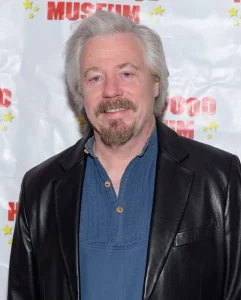
My Three Sons ran from 1960 to 1972 — twelve seasons, 380 episodes, a presence in American living rooms so consistent it became architectural. Stanley Livingston played Chip Douglas from the age of nine. The show was family comedy as cultural wallpaper: reliable, warm, structurally invisible in the way that things are invisible when they are everywhere. Livingston grew up on screen. Millions of people watched him do it. He was, for more than a decade, one of the most familiar faces on American television.
Then the show ended. And Livingston, unlike many child actors who spend subsequent decades in various states of public unraveling, made a choice the industry rarely acknowledges as a choice: he left. Not dramatically. Not with a memoir or a comeback arc or a reality television appearance. He built a career behind the camera and took work where he found it. Along the way, he declined the invitation celebrity keeps extending — the one asking you to be the old version of yourself forever, for whatever the market will pay.
Furthermore, Livingston’s relative absence from the nostalgia circuit carries its own kind of integrity. The ghost economy runs on people who agree to be haunted. Some people simply close the door. His brother Barry took a different path; their divergent trajectories across the same starting point illuminate how much of celebrity survival is temperament rather than talent.
Read the full Stanley Livingston origin story and legacy →
Tracey Walter: The Man Who Was Always There
Two Hundred Films, Zero Name Recognition
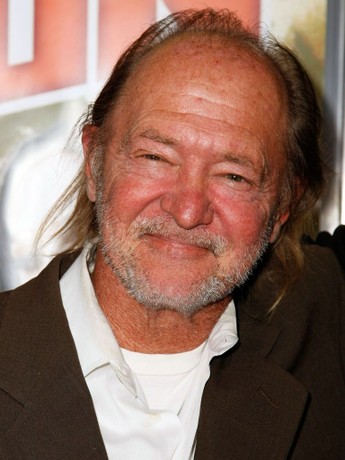
Tracey Walter has appeared in more than 200 films and television productions. Repo Man in 1984 — one of the foundational texts of American independent cinema — was just the beginning. From there came Tim Burton’s Batman in 1989, Silence of the Lambs in 1991, Erin Brockovich in 2000. Directors who pick their supporting players carefully — Jonathan Demme, Tim Burton, Steven Soderbergh, Alex Cox — kept choosing the same face.
Fifty uninterrupted years across virtually every genre American film and television has produced. That is the accounting before you even open his television credits.
Nevertheless, his name does not trigger recognition in most people who have seen his face dozens of times. This is the specific condition of the character actor — not tragic, exactly, but clarifying. Walter’s career suggests that the industry requires a certain type of performer to be invisible even while being indispensable. His presence in a scene signals quality. His absence would be felt as a texture problem even by viewers who could not explain why something felt slightly off.
Consequently, Walter represents something the nostalgia economy struggles to process: a legacy built entirely in the margins, where all the actual work happens. The best supporting performance in a film is often the one that makes the lead look better than they are. Walter has been making leads look better than they are for five decades. The accounting is overdue.
Read the full Tracey Walter character actor deep cut and legacy →
Sandy Mahl and the Story Behind the Story

Before the Hat, Before the Arena Tours
Sandy Mahl married Garth Brooks in 1986, before he was Garth Brooks. Before the hat. Before the arena tours. All of that came later — including the 170 million albums that made him the best-selling solo artist in American music history. Being there at the beginning meant being there for all the decades when presence required something the public story rarely examines. Three daughters. A marriage that became country music mythology. And then, in 2001, a divorce that received approximately one percent of the cultural attention the marriage had.
However, Mahl’s story resists the flattening that celebrity adjacency typically applies. She was not simply a supporting character in someone else’s rise. The documented details of their relationship — the turbulence, the children, the reconciliation attempts, the eventual dissolution — suggest a woman who maintained her own interior life across decades of proximity to fame. Among the most commercially successful country music has produced, his songs about their marriage sold without her voice in them. Yet the woman those songs were written about remained largely unreachable by the machinery that profited from them.
Furthermore, Mahl eventually became a story in her own right — her legal advocacy work, her public statements following the divorce, her navigation of life after a marriage that had been, for millions of listeners, something close to a shared mythology. The ghost economy doesn’t know what to do with women who refuse its terms.
Read the full Sandy Mahl profile, story, and life after the marriage →
Chris Pontius and the Quiet After the Chaos
The One Who Was Actually Joyful
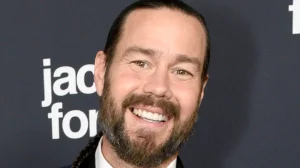
Jackass was, among other things, a philosophical document dressed as a stunt show. The premise landed differently for different audiences: pain could be funny, the body was an instrument for public self-destruction, and there was something clarifying about watching people choose voluntary suffering with enormous good humor. But what the discourse around Jackass consistently undervalued was the specific quality of Chris Pontius within it. Where Johnny Knoxville operated as ringmaster and Bam Margera supplied chaos with an edge of cruelty, Pontius was something stranger: genuinely joyful. Guileless. Present in a way that the format’s inherent irony kept threatening to undercut but never quite did.
The subsequent decades have been quieter. Pontius married. Publicly, he has spoken about choosing a life with less structural noise. That deliberate deceleration reads, from the outside, as either maturity or loss, depending on what you needed him to stay. Meanwhile, the Jackass franchise continued without uniform velocity. The fates of its ensemble became a longitudinal study in what happens to men who built their identity around risk-tolerance and the performance of invulnerability.
Consequently, Pontius’s trajectory is the most purely instructive of the group. Not because it went wrong — by most measures it went right. But because it asks the question that all these legacies eventually ask: what do you become when you stop being the thing the audience needed you to be? What is the self that was there before the character arrived, and can you find it again when the character finally leaves?
Read the full Chris Pontius origin story, Jackass legacy, and what came next →
What the Nostalgia Economy Actually Owes These People
The Highest-Value Demographic Was Watching the Whole Time
The nostalgia economy is a five-billion-dollar industry built on the premise that familiarity is a form of love. Reboots, reunion specials, anniversary editions, prestige documentary rehabilitations — all of it runs on emotional infrastructure. People like Jean Smart, Telma Hopkins, Tracey Walter, and Stanley Livingston spent decades quietly constructing it. The irony is that the same industry now profiting from nostalgia spent years treating these careers as background noise.
Additionally, the most clarifying thing about legacy TV and film stars is what their divergent outcomes reveal about the variables that matter. Talent is not the differentiator — Walter’s technical precision and Hopkins’s dual mastery of two distinct crafts make that plain. Willingness to perform one’s own legend publicly helps. However, the variables that actually matter are less flattering: timing, genre survival, critical fashion, and the demographic that claimed you on the way up all outweigh talent in the final accounting.
They Never Disappeared. You Just Stopped Looking.
Moreover, the “whatever happened to” question that drives the nostalgia search economy assumes a narrative of disappearance. But most of these people never disappeared. They kept working, kept building, kept moving through a cultural landscape that had simply stopped looking in their direction. The faces that appeared in your peripheral vision for a decade and then seemed to stop — they were still there. The camera just pointed somewhere else. Meanwhile, the audience that watched them every week in 1987 or 1993 or 2003 is now the highest-value advertising demographic in American media. The nostalgia economy finally caught up. These are the deep cuts worth cuing up.
Explore the full Social Life Magazine celebrity coverage — including origin stories, net worth profiles, and Hamptons connections for the faces that shaped American culture.
Where These Stories Actually Live
There is a version of the cultural conversation that only covers what premiered last Thursday. You already know it. You’ve sat at those dinners. And then there’s the other version — the one that understands that a face from a Tuesday-night CBS drama in 1991 shaped how forty million people understood ambition, family, and the specific frequency of American aspiration. Social Life Magazine has been covering the second version for twenty-three years. If your brand belongs in that conversation, let’s talk about a feature.
Every week, 82,000 readers open our newsletter because they trust us to find the angle that the algorithm missed. They’re the people with the Hamptons house, the family office, the discretionary budget, and the attention span for something that actually goes somewhere. If you want to be in their inbox, join the list — or get your brand inside it.
The real meetings at Polo Hamptons happen in the spaces between the chukkers, when the right two people end up at the same tent with no particular agenda and suddenly have one. That’s not an accident. That’s what we build. Sponsorships for 2026 are being confirmed now. The people you want access to are already on the field.
Twenty-three summers. Five issues per season. Twenty-five thousand copies, distributed from Westhampton to Montauk through the boutiques, restaurants, and hotel lobbies where the Hamptons actually happens. If you want your name printed in something that people keep, the print edition is Further Lane — and it goes places digital doesn’t reach.
This magazine runs on the people who believe that cultural memory is worth funding. If you’ve read this far, you’re probably one of them. A $5 contribution keeps independent luxury publishing alive in a media landscape that keeps trying to replace it with content.
Author

Written by
Recent Posts
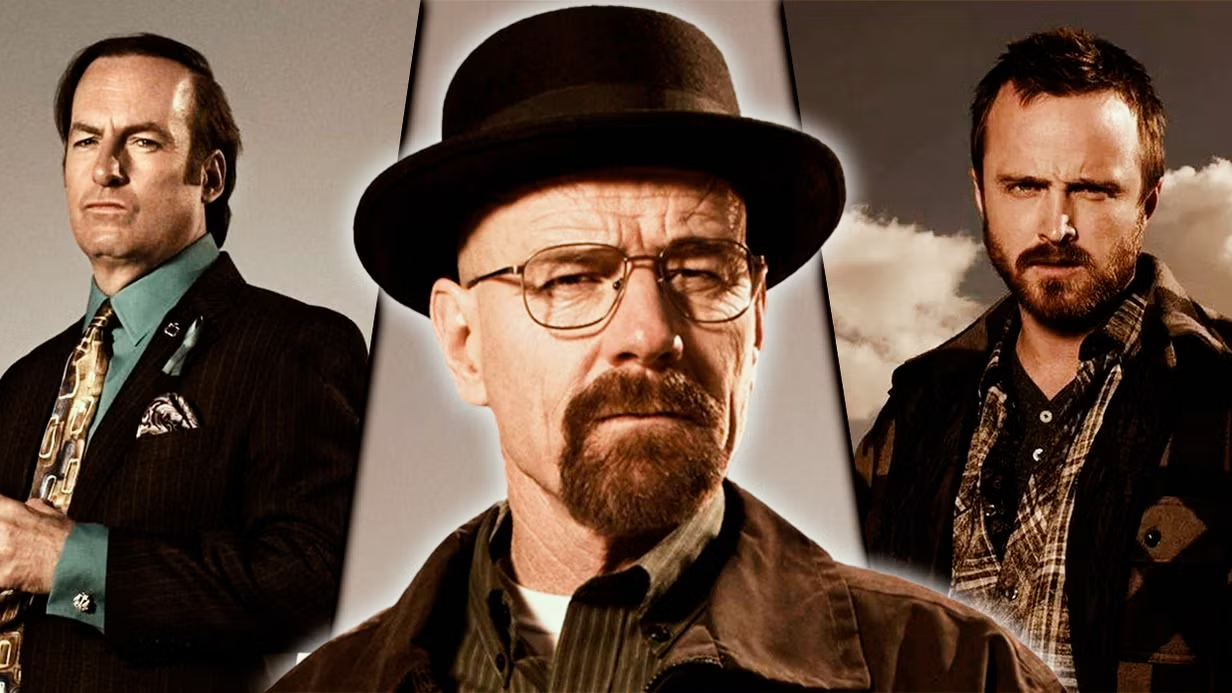
Breaking Bad Cast Net Worth. $130 Million Cooked in Five Seasons of Perfect Television

Cailee Spaeny Net Worth — From Springfield, Missouri to A24 and Alien in Three Years Flat

Wagner Moura Net Worth — He Learned Spanish to Play Escobar. Then He Learned English to Take Hollywood.
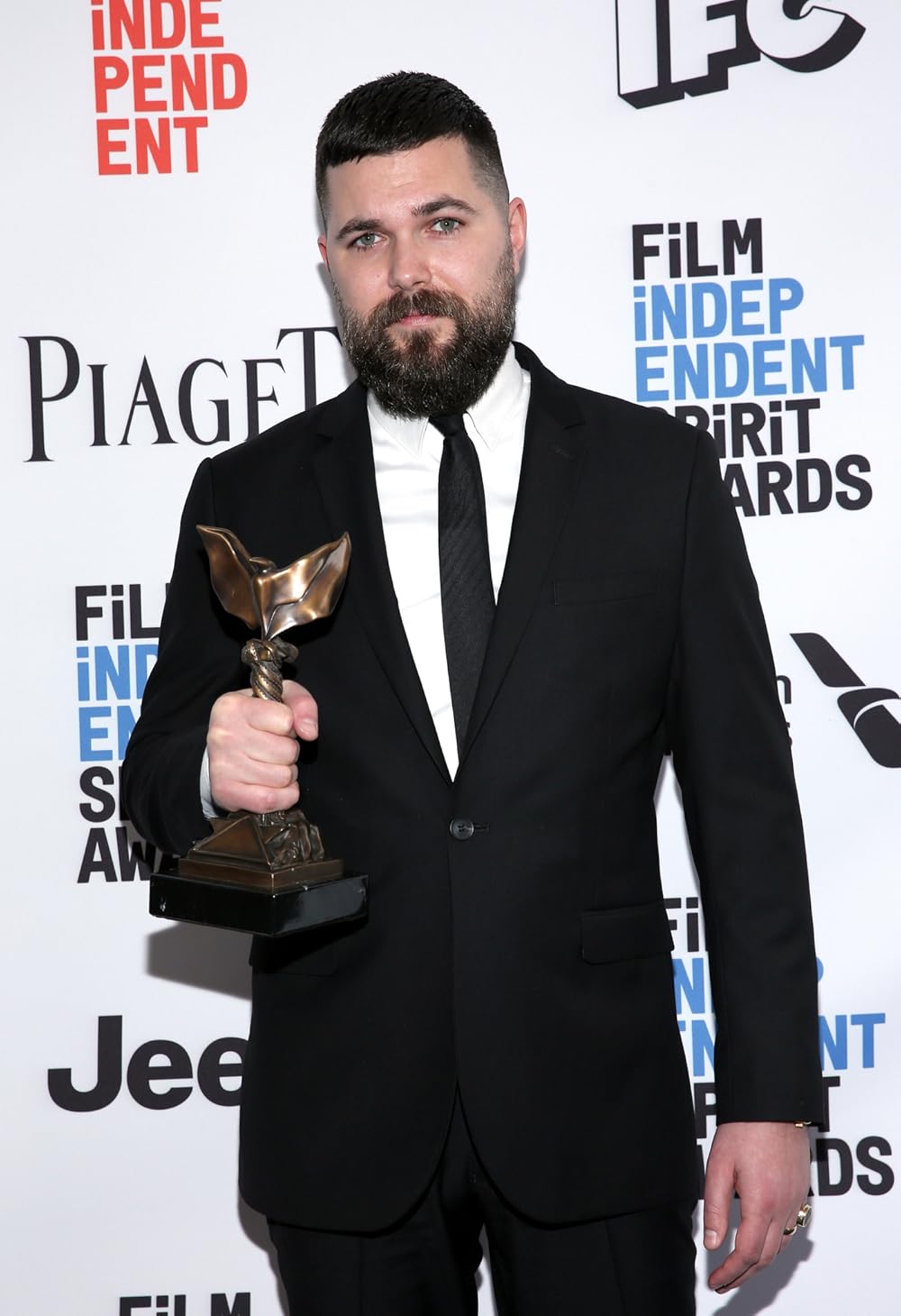
Robert Eggers Net Worth — He Made a $3.5 Million Film in Puritan English and Hollywood Listened

Brie Larson Net Worth — A $6 Million Indie Film Won Her an Oscar. Marvel Paid Her the Rest.
Categories
- Art
- Articles
- Beauty & Skincare
- Celebrities
- Celebrities|Movies
- Celebrities|The Chronicles
- Chronicles
- Entertainment|Culture
- Event Photos
- Events
- Fashion
- Fashion & Style
- Featured
- Food & Beverage
- Food, Spirits, Wine
- Hamptons
- Hamptons Celebrities
- Hamptons Celebrities|Celebrities|The Chronicles
- Health
- Health & Beauty
- Lifestyle
- Luxury Lifestyle
- Movies|Culture
- Movies|Hamptons Lifestyle
- Press
- Profiles
- Real Estate
- Technology
- The Chronicles
- Travel
- TV
- Uncategorized
- Weddings