
Before Maggie Siff played the most psychologically complex character on Showtime’s Billions, she processed paperwork at an actual hedge fund. Not as research. Not as method acting. As a temp. Notably, she needed rent money after graduate school, and a financial firm in Manhattan needed someone to handle administrative tasks. The Maggie Siff net worth story begins in the most Gladwellian way possible: with a small, seemingly irrelevant experience that turned out to explain everything.
Today her net worth sits at an estimated $8 million. She has appeared in three of the most critically acclaimed cable dramas in television history. Furthermore, she has endured a private tragedy that would have derailed most careers. At 51, Siff is making her West End debut in London, quietly proving that the most undervalued assets eventually correct.

The Maggie Siff net worth figure is the lowest among the lead trio of Billions. Paul Giamatti earned $25 million. Damian Lewis earned $25 million. Siff, who appeared in every season of the show, who anchored its most emotionally demanding storylines, who gave the series its moral center, earned a third of what her male co-stars accumulated. The gap isn’t a mystery. It’s a diagnosis. Television compensates spectacle at one rate and emotional labor at another. The person who makes everyone else’s performance possible is always paid less than the person whose performance is made possible. Wendy Rhoades knew this. One suspects Maggie Siff did too.
The Before: The Bronx, the Science School, and the Stage Actor’s Daughter
Margaret Siff was born on June 21, 1974, in the Bronx. Her father was of Ashkenazi Jewish descent and worked as a stage actor. Moreover, that detail matters because it means Siff grew up watching someone she loved try to make a living in an industry designed to break people. She didn’t romanticize acting. She understood its economics from the kitchen table.
Siff attended the Bronx High School of Science, one of New York City’s elite public magnet schools. The student body there skews toward future doctors, engineers, and research scientists. Choosing to pursue acting from that environment required a specific kind of stubbornness. Notably, the school’s most famous alumni include Nobel laureates and tech founders, not performers. Siff was swimming against a current that carried everyone around her toward more quantifiable careers.
She enrolled at Bryn Mawr College, the women’s liberal arts institution outside Philadelphia, and graduated in 1996 with a degree in English. From there, she moved to New York University’s Tisch School of the Arts for a Master of Fine Arts in acting. Furthermore, the MFA provided craft. What it didn’t provide was income. Consequently, Siff did what thousands of aspiring New York actors do after graduation. She temped.
The Chip: Processing Trades and Performing Ibsen
The hedge fund job was unremarkable. Siff has described it without glamour or narrative embellishment. She sat in an office. Paperwork filled her days. Gradually, she began watching financial professionals operate in their natural habitat — the way they held their coffee, the particular silence after a position went wrong, the forced casualness of people performing certainty for clients who were paying for exactly that performance. Years later, when she was cast as Wendy Rhoades on Billions, those unremarkable months became the invisible foundation of a performance that felt different from every other therapist on television.

Wendy Rhoades understood hedge fund culture because Maggie Siff had observed it firsthand. She knew the rhythms. That particular confidence of people who move large amounts of money was instantly recognizable. Moreover, she understood the silence that follows a bad quarter. None of this appeared in any script. Additionally, none of it could have been manufactured by an actress who had only read about finance in preparation for a role.
While temping, Siff worked extensively in regional theater. In 1998, she won a Barrymore Award for Excellence in Theater for her performance in Henrik Ibsen’s Ghosts at the Lantern Theater Company in Philadelphia. Ibsen at 24. A theater award named after the greatest American stage family. Moreover, these early credits established a pattern that would define her entire career: critical recognition without commercial visibility. Furthermore, the Barrymore win demonstrated range that television wouldn’t discover for another decade.
The Rise: Three Shows That Defined Three Eras
Siff’s television career began modestly in 2004 with a single-episode appearance on Third Watch. A 2005 episode of Rescue Me followed, then guest spots on Law & Order: Special Victims Unit, Grey’s Anatomy, and Law & Order. Standard working-actress credits. However, the kind of résumé that pays the bills without generating a Wikipedia page.

Then AMC called. In 2007, Siff was cast as Rachel Menken Katz on Mad Men, the department store heiress who becomes Don Draper’s most intellectually compelling romantic interest. In addition, the role lasted only two seasons, but it announced Siff as someone who could hold the screen against Jon Hamm without flinching. The entire Mad Men cast earned a Screen Actors Guild nomination for Outstanding Ensemble. Siff was part of the ensemble that redefined what prestige television could look like.
FX hired her next. In 2008, Siff joined Sons of Anarchy as Dr. Tara Knowles, a surgeon drawn back into the orbit of a motorcycle gang through her relationship with Jax Teller. Specifically, the role ran for six seasons and earned her two Critics’ Choice Television Award nominations for Best Supporting Actress in a Drama Series. Notably, Sons of Anarchy operated in a completely different register than Mad Men. One was crystalline mid-century sophistication. The other was blood-soaked biker mythology. Siff thrived in both without ever seeming like she was stretching.
The Billions Years and the Complete Trilogy
By the time Billions premiered in 2016, the Maggie Siff net worth had been built across two of the most important cable dramas of the 2000s and 2010s. Her portrayal of Wendy Rhoades completed a trilogy that few actors in television history can claim. Nevertheless, three different networks. As many genres. And three shows that critics and audiences ranked among the best of their respective decades. Additionally, she appeared in every single season of Billions, making her the only cast member other than Giamatti to anchor the entire seven-season run.
The Pivot Moment: When the Real Thing Happened
Paul Ratliff died in 2021. Brain cancer. In fact, he and Siff had married in 2012. Their daughter, Lucy, was born in late 2013. Ratliff worked as a psychological therapist and design consultant, holding graduate degrees in psychology. Notably, he was, by all available accounts, a private person married to a woman who also valued privacy.
The entertainment press covered his death briefly. No magazine covers. Not a single extended profile. Certainly no public grieving arc constructed for content. Siff continued working. Nevertheless, she continued raising Lucy. She did not turn her husband’s death into a narrative device for her career.
This is the section of the Maggie Siff net worth story that resists quantification. What does it cost to lose your partner at 47 while raising a young daughter and maintaining a career on a demanding television production? Notably, what is the economic value of continuing to show up? The financial press doesn’t have a metric for that. Didion would have called it “the year of magical thinking.” Siff seems to have called it Tuesday. Furthermore, her refusal to perform grief publicly stands in stark contrast to an industry that rewards emotional exhibitionism with increased visibility and higher quotes.
The Climb: What $8 Million Actually Represents
The Maggie Siff net worth of $8 million breaks down across several income streams. Television salaries from Mad Men, Sons of Anarchy, and Billions constitute the majority. Notably, while her per-episode rate on Billions has not been publicly confirmed, industry standards for a series regular on a premium cable drama suggest a range between $75,000 and $150,000 per episode. Over 84 episodes across seven seasons, the total gross would fall between $6.3 million and $12.6 million before taxes, agents, managers, and legal fees.
Film work has supplemented but not transformed her earnings. Siff’s feature debut came in 2007’s Michael Clayton with George Clooney. Therefore, she appeared in Push ($49 million box office), Funny People ($71 million), The 5th Wave, and the independent film A Woman, a Part, which gave her a first leading role on the big screen. These are respectable credits. None of them generated the kind of paycheck that reshapes a net worth statement.

Since 2018, Siff has served as a spokesperson for Betterment, the digital financial advisory platform. The endorsement aligns perfectly with her Billions character and likely generates mid-to-high five figures annually. Nevertheless, she also narrated the audiobook of Stephen King and Richard Chizmar’s Gwendy’s Button Box and voiced Polly Platt on Karina Longworth’s acclaimed film history podcast You Must Remember This. Consequently, her income portfolio reflects the diversification strategy of someone who understands that acting careers are inherently volatile. The hedge fund temp learned something after all.
The Hamptons Chapter: Wendy Rhoades as the Audience Surrogate
Every great ensemble drama needs a character who sees both sides. On Billions, that character was Wendy Rhoades. Married to the prosecutor. Employed by the hedge fund manager her husband was trying to destroy. Trusted by both. Manipulated by both. Moreover, the only person in the entire show who understood the psychological architecture of both power camps.
For readers of Social Life Magazine, Wendy Rhoades represents a familiar archetype. The woman at the Hamptons dinner party who has real relationships on both sides of every social fault line. The one who knows which marriages are in trouble, which deals are about to close, and which friendships are purely transactional. She moves between tables without allegiance. Notably, everyone confides in her because she has the one quality that Hamptons social dynamics punish and reward in equal measure: genuine intelligence without visible ambition.
Siff played this character for seven seasons without ever letting Wendy become a victim, a villain, or a saint. That restraint is rare in prestige television. Writers tend to push female characters toward moral clarity. Wendy remained morally murky from the pilot to the finale. Furthermore, Siff’s performance was so precisely calibrated that viewers consistently disagreed about whether Wendy was the show’s hero or its most dangerous character. That ambiguity is a compliment to the actress, not the writing.
The West End Debut: London Calling at 51
In 2026, Maggie Siff made her West End debut at the Aldwych Theatre in London. She plays Joy Davidman in Shadowlands, the story of the relationship between American poet Davidman and British author C.S. Lewis. Ultimately, the casting is surgically precise. An American woman navigating British intellectual society. A sharp mind meeting institutional resistance. A love story built on argument rather than sentiment.
The West End debut represents something the Maggie Siff net worth figure cannot capture: the decision to pursue artistic credibility over commercial momentum at a moment when most actors her age are chasing streaming deals. London theater doesn’t pay television money. However, it pays in the currency that Siff has always valued most. The Barrymore Award at 24. An Ibsen production that nobody saw. All that Shakespeare living in her training but rarely surfacing in her filmography. Additionally, the West End stage is where actors go to prove they don’t need the camera. Siff went at 51, after burying her husband and raising their daughter alone, and proved exactly that.
The East End Verdict
The Maggie Siff net worth of $8 million is the most misleading figure in the entire Billions cast net worth portfolio. Three iconic cable dramas. In fact, two Critics’ Choice nominations. A Screen Actors Guild nomination. Seven seasons as the emotional anchor of Showtime’s most ambitious series. A West End debut at 51. And a net worth that’s less than what Wendy Rhoades received as a single bonus from Bobby Axelrod.
Siff’s fictional character negotiated a $10 million bonus on screen. The actress who played her is worth $8 million after a 22-year career. Specifically, that ratio tells you everything about the economics of being a woman in prestige television. It tells you even more about the economics of being a woman who refuses to monetize tragedy, who doesn’t leverage personal loss for public sympathy, and who responds to widowhood by taking her daughter to London and stepping onto the West End stage.
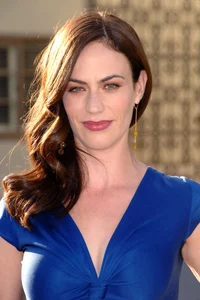
She temped at a hedge fund. Won a Barrymore for Ibsen. Survived three shows that would have defined any single career. Then buried her husband and kept working. Nevertheless, the Maggie Siff net worth says $8 million. The market is wrong.
Related Reading
Billions Cast Net Worth 2026: What the Stars of Wall Street’s Favorite Show Actually Earned
Paul Giamatti Net Worth 2026: The Yale Legacy, Brooklyn Heights, and an Oscar Nomination
Asia Kate Dillon Net Worth 2026: The Pioneer TV Forgot
Hamptons Hedge Fund Billionaires Net Worth 2026: The Real Bobby Axelrods
There are people who watch shows about wealth. Then there are people who build it, manage it, and summer alongside it. If you’re reading this, you already know which category you belong to.
Social Life Magazine has been the Hamptons’ definitive luxury publication for over two decades. To feature your brand, business, or personal story in our pages, reach out to our editorial team.
Looking for maximum visibility among the East End’s most affluent audience? Submit a Paid Feature and position yourself where 25,000 readers per issue are already looking.
Our email list reaches 82,000 subscribers who care about luxury lifestyle, real estate, and social capital. Join the list and stay ahead of the conversation.
Polo Hamptons returns summer 2026 with the most exclusive brand activation opportunity on the East End. VIP cabanas, sponsor tents, and access to a guest demographic averaging $3.62 million in net worth. Explore sponsorship at polohamptons.com.
Want Social Life Magazine delivered to your door? Five summer issues plus fall and winter editions. Subscribe here.
If this article gave you something — insight, recognition, a reason to revisit Wendy’s scenes — consider supporting independent luxury journalism. Donate $5 here.
Author

Written by
Recent Posts

David Costabile Net Worth: Television’s Most Valuable Player You Can’t Name

Asia Kate Dillon Net Worth: The Pioneer Who Rewrote Television’s Rules

Corey Stoll Net Worth: The Actor Who Inherited a Throne Nobody Wanted

Maggie Siff Net Worth: The Woman Who Worked at a Hedge Fund Before Playing One on TV

Paul Giamatti Net Worth: The Institutional Man Who Played Power From the Inside
Categories
- Art
- Articles
- Beauty & Skincare
- Celebrities
- Celebrities|The Chronicles
- Chronicles
- Entertainment|Culture
- Event Photos
- Events
- Fashion
- Fashion & Style
- Featured
- Food & Beverage
- Food, Spirits, Wine
- Hamptons
- Hamptons Celebrities
- Hamptons Celebrities|Celebrities|The Chronicles
- Health
- Health & Beauty
- Lifestyle
- Luxury Lifestyle
- Movies|Hamptons Lifestyle
- Press
- Profiles
- Real Estate
- Technology
- The Chronicles
- Travel
- Uncategorized
- Weddings