
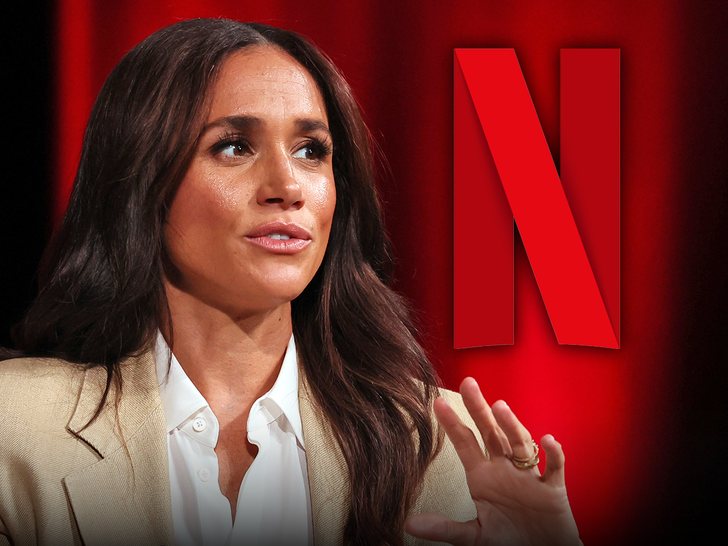
There is a version of this story where everything worked. Meghan Markle’s net worth — estimated at approximately $60 million — reflects deals and assets that would constitute a serious career for any entrepreneur who hadn’t previously been fourth in line to a throne. The Netflix partnership. The Archewell Foundation. American Riviera Orchard, her lifestyle brand. By conventional measures, she built something real. By the measure of what the exit promised, something stalled. Understanding the gap between those two sentences is the more interesting project — and the one nobody in the coverage has been honest enough to pursue.
The Before: A Career Built on Likability
Before the palace, there was Suits. Rachel Zane, the paralegal with the photographic memory and the complicated feelings about belonging — it was, in retrospect, a more autobiographical role than anyone recognized at the time. Meghan Markle worked for seven seasons on a cable legal drama that skewed young, smart, and aspirational. She built a modest celebrity: a lifestyle blog called The Tig, a UN Women’s Ambassador appointment, a quietly cultivated reputation as thoughtful and accessible.
That reputation was her real asset. Not the television credit. Not the ambassador title. The asset was the impression she made on people who met her — that she was warm, grounded, and genuinely interested. Additionally, the blog demonstrated something important: she understood content before content was a strategy. The Tig covered food, travel, wellness, and culture with the ease of someone who actually lived that way. Notably, she shut it down in April 2017, weeks after the relationship with Prince Harry became public. The first exit came before anyone noticed she was leaving.
The Pivot Moment: The Interview Heard Everywhere

The formal break from the Royal Family came in January 2020. Meghan and Harry announced they would step back as senior royals, split time between the UK and North America, and pursue financial independence. The institution responded with controlled fury. The tabloids responded with uncontrolled fury. Meanwhile, the audience — particularly in the United States — responded with something closer to fascination.
The CBS interview with Oprah Winfrey in March 2021 was the pivot’s defining moment. An estimated 17 million Americans watched it live. The conversation covered racism within the institution, mental health struggles, and the mechanics of royal protocol in enough detail to feel genuinely revelatory. BCG’s research on narrative-dependent brands identifies a specific risk here: brands built on a single defining story become prisoners of that story. Every subsequent chapter gets measured against it. Consequently, the Oprah interview was both the brand’s highest point and the ceiling it has struggled to grow past.
What the Oprah moment actually cost
The interview delivered exactly what it promised: global attention, sympathetic framing, and a narrative the couple controlled entirely for the first time. However, it also set an impossible standard for everything that followed. Each new project would be compared not to other celebrity content ventures, but to a sit-down that rewrote the public understanding of the British monarchy. Furthermore, the audience primed by the interview wanted more revelation — more institutional critique, more emotional access. Building a lifestyle brand on top of that appetite is a structural mismatch. One of those things scales. The other depletes.

The Climb: $100M, Two Platforms, One Story
Forbes reported the Sussex deal with Netflix at a value north of $100 million across production and content commitments. The Spotify podcast deal added reported eight-figure fees for Archetypes, a series in which Meghan interviewed high-profile women about the labels society assigns them. The deals were real. The platform commitments were real. McKinsey’s research on media brand equity identifies audience loyalty as the metric that separates sustainable content businesses from single-season phenomena. Archetypes debuted at the top of the Spotify charts. By the second season, there was no second season.
The Spotify problem
Spotify did not renew. That is the sentence that rewrote the brand narrative. The Netflix documentary series — also titled Harry & Meghan — performed strongly at launch and set viewership records in its first week. It also covered the exit. The same exit the Oprah interview covered. The same territory the book covered. Meanwhile, the audience that had followed the story from the beginning was looking for the next chapter. Instead, they received additional detail on the chapter they already knew.
That pattern — returning to the foundational story rather than building beyond it — is the core structural problem. Among celebrities who built brands after leaving institutions, the ones who succeeded moved decisively toward what they were building next. The ones who struggled kept explaining what they had left and why. The explanation is compelling once. By the third iteration, it reads differently.
The Hamptons Chapter: A Strategic Absence

The Sussexes’ relationship with the East End is intermittent and deliberately low-profile. Montauk has appeared in their orbit — the eastern tip’s combination of natural beauty and social prestige without the visibility of Southampton or East Hampton suits the brand logic they are trying to establish. Beyond that, the Hamptons offers something the Los Angeles media environment cannot: genuine off-grid social capital. Relationships built here carry a different weight than those built in rooms with cameras.
That dynamic is worth noting for what it reveals about the brand’s actual needs. Hamptons real estate and the social infrastructure surrounding it run on exactly the kind of long-term relationship capital that a media brand cannot purchase. The families and operators who matter here did not discover each other through a Netflix documentary. Consequently, the East End represents the slower, more durable network-building that Phase Two of this reinvention will require — if Phase Two materializes.
What She Built: The Meghan Markle Net Worth Breakdown
The Meghan Markle net worth figure of approximately $60 million reflects several distinct streams. The Netflix deal contributed the majority. Speaking engagements — both Sussexes command significant fees on the circuit — add a meaningful layer. Additionally, Harry’s memoir advance and royalties, their shared production infrastructure, and Meghan’s separate Archewell ventures all contribute to the household asset picture.
Archewell and the second chapter gap
American Riviera Orchard, her lifestyle brand announced in early 2024, is the most interesting recent development. Jams, home goods, wellness products — the aesthetic is warm California domestic luxury, close in register to early Goop. Harvard Business Review’s work on personal brand architecture is precise about the challenge here: a brand built on a singular dramatic narrative must eventually transition to a brand built on ongoing value delivery. Gwyneth Paltrow’s Goop playbook took eight years to cross that threshold — and Paltrow entered the wellness space without a competing narrative pulling attention backward.
Meghan’s deeper challenge is that the exit story is not finished. Royal coverage continues. Family dynamics generate headlines. Each new development invites the audience back to the foundational chapter. Among celebrities who stepped back from fame and won, the ones who completed the move did so cleanly. The institutional narrative they left stopped generating content independently. That condition does not currently apply here — and building a lifestyle brand while the previous chapter keeps publishing new pages is genuinely hard.
The Soft Landing: Still in Progress
The honest read on where this stands is not failure. It is incompletion. The assets are real. The audience is real. The brand recognition — globally, not just in English-speaking markets — is a genuine competitive advantage that most lifestyle entrepreneurs spend careers trying to acquire. What the brand lacks is not attention. Attention has never been the problem. What it lacks is a sustained second story that audiences can follow independent of the royal narrative.
Bain’s research on luxury brand second acts documents a consistent pattern. The brands that complete the transition invest heavily in product quality and community before they invest in narrative. They let the thing speak before they let the story explain it. American Riviera Orchard could do that. The question is whether the content apparatus around the brand will give the product room to breathe — or whether the story will arrive before the substance.
What the brand needs next
The soft exit demands one thing above everything else: a credible next chapter that the audience can adopt as its primary mental model of who you are. Paltrow gave the audience Goop. Conrad gave them LC Lauren Conrad. Both arrived before the exit narrative fully closed. Meghan’s sequence was reversed. The exit came first, loudly and in extraordinary detail, and the next chapter is still in production. That is not fatal. However, it is the precise gap between the brand she built and the Meghan Markle net worth she could reasonably be building toward — if the second story arrives before the audience stops waiting for it.
Related Articles:
Author

Written by
Recent Posts

Meghan Markle Net Worth: Swapped the Crown for $60M in Deals. Then What?

Gwyneth Paltrow Net Worth: How Goop Outgrew the Oscars

Celebrities Who Stepped Back From Fame and Actually Won

Bridgehampton Polo 2026: Where New Money Meets Old Access

Polo Hamptons 2026: The Room That Defines the Season
Categories
- Art
- Articles
- Beauty & Skincare
- Celebrities
- Celebrities|The Chronicles
- Chronicles
- Event Photos
- Events
- Fashion
- Fashion & Style
- Featured
- Food & Beverage
- Food, Spirits, Wine
- Hamptons
- Hamptons Celebrities
- Health
- Health & Beauty
- Lifestyle
- Luxury Lifestyle
- Press
- Profiles
- Real Estate
- Technology
- The Chronicles
- Travel
- Uncategorized
- Weddings