
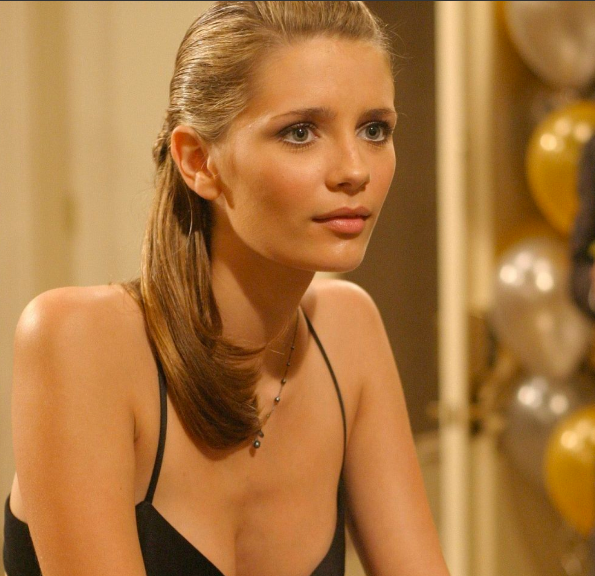
Rachel Zoe. Perez Hilton. The paparazzi industrial complex. How she made it out and what it actually cost.

Most websites will tell you Mischa Barton’s net worth is $2.5 million — a modest figure for someone who appeared in two films that grossed over a billion dollars combined before she turned eighteen. However, that number only makes sense once you understand what the early-2000s celebrity machine extracted from her first. She earned serious money. The machine took serious money back. What remains is not a failure story. It is an invoice from an era that routinely charged young women its full operating costs while calling it fame.
The Hamptons social circuit ran on the same fuel. The East End saw the wreckage up close — and watched what happened after the cameras eventually, finally, moved on.
The Before: Hammersmith, Lincoln Center, and a Career That Started at Nine

Mischa Anne Marsden Barton was born on January 24, 1986, in Hammersmith, London. However, New York City formed her. Her mother Nuala was an Irish photographer. Her father Paul worked as a foreign exchange broker. The family relocated to Manhattan when Mischa was young, and she enrolled in the Professional Children’s School — the institution that has educated working child performers since 1914.
At nine, she landed a role in Tony Kushner’s Slavs! Off-Broadway. The New York Times called her performance “chillingly authoritative.” That is not the language critics use for child actors they are being polite about. Shortly after, she took the lead in James Lapine’s Twelve Dreams at Lincoln Center, alongside Marisa Tomei. New York magazine praised her as possessing “consummate charm.” The credentials, by age ten, were legitimate.
The Sixth Sense, Notting Hill, and the Iceberg Nobody Talks About
In 1999, at thirteen, she appeared in both Notting Hill and The Sixth Sense. Together, those two films grossed over $1 billion at the global box office. Her roles were supporting, not starring. Still, the industry had identified her. By 2001, she held a recurring role on ABC’s Once and Again as Evan Rachel Wood’s girlfriend — a storyline ABC initially had reservations about. Mischa Barton was fifteen. She told Harper’s Bazaar in 2021 that she had already felt sexualized in film roles by thirteen. That is the detail most origin stories skip. It is also the most structurally important one.
The Pivot Moment: August 2003, Newport Beach, and the It Girl Crown

Fox’s The O.C. premiered on August 5, 2003. Mischa Barton played Marissa Cooper — the blonde, tragic, impeccably dressed daughter of Newport Beach’s most dysfunctional family. The show drew 7.4 million viewers in its first episode. By episode four, it had become a cultural phenomenon. Entertainment Weekly named Marissa Cooper their “It Girl” of 2003. At seventeen, Barton was the most photographed teenager in America.
Rachel Zoe entered her orbit shortly after. The stylist who dressed Nicole Richie, Lindsay Lohan, and the wider tabloid ecosystem in the same ultra-thin silhouette now dressed Marissa Cooper’s real-world counterpart. Perez Hilton launched his blog in 2004. TMZ followed in 2005. Both needed content. Mischa Barton, young and visible and without the protective infrastructure that older celebrities had built over years, provided it daily.
The Year the Industry Decided Her Body Was a Story
By 2005, tabloid coverage of Barton’s weight ran alongside coverage of her career. Perez Hilton documented her appearance with the specific cruelty his platform had made its business model. The O.C. creator Josh Schwartz later told interviewers that she was “stalked by photographers and treated unkindly by online bloggers.” That framing — passive, historical, distancing — understates what actually happened. The industry built infrastructure around surveilling her body. Then it ran that infrastructure at full capacity for three years.
Meanwhile, she was earning approximately $60,000 per episode during The O.C.’s later seasons. Over four seasons and seventy-six episodes, her acting income from the show alone ran into the millions. The machine took the money alongside everything else. It rarely distinguishes between the two.
The Climb: What Thirteen Years of Rebuilding Looks Like From the Outside
In 2006, Marissa Cooper died in a car crash in the season three finale. Mischa Barton did not return for season four. The tabloid narrative immediately reframed her departure as a fall — the It Girl losing her footing. However, the actual sequence of events is more complicated. She told People magazine in 2013 that she had experienced a “full-on breakdown.” In 2009, she had a psychiatric hospitalization. These are not signs of someone who lost the game. They are signs of someone who absorbed the full cost of a system that charged it to her without asking.
The Lawsuit, the Fashion Line, and the Quiet Rebuild
In 2012, she launched a fashion line called Mischa. That same year, she appeared in an Irish stage production of Steel Magnolias — a deliberate return to the theatrical roots that predated the fame. In 2017, an ex-boyfriend attempted to sell intimate photographs and footage. Barton took him to court. The judge barred distribution and ordered a restraining order. She did not perform distress for the press. She filed the injunction, won, and moved on.
In 2019, she joined the cast of The Hills: New Beginnings on MTV. By contrast to her early fame, the appearance was strategic — controlled visibility rather than the involuntary overexposure of the 2005 era. In October 2025, production announced her UK stage debut in a touring production of James M. Cain’s Double Indemnity, opening in early 2026. She plays the female lead — Phyllis Dietrichson, a woman who engineers her own freedom through a system that underestimated her. The casting choice is either accidental or very deliberate. Given her track record, the smart money is on deliberate.
The Human Chapter: What the Tabloids Were Too Busy Covering to Notice
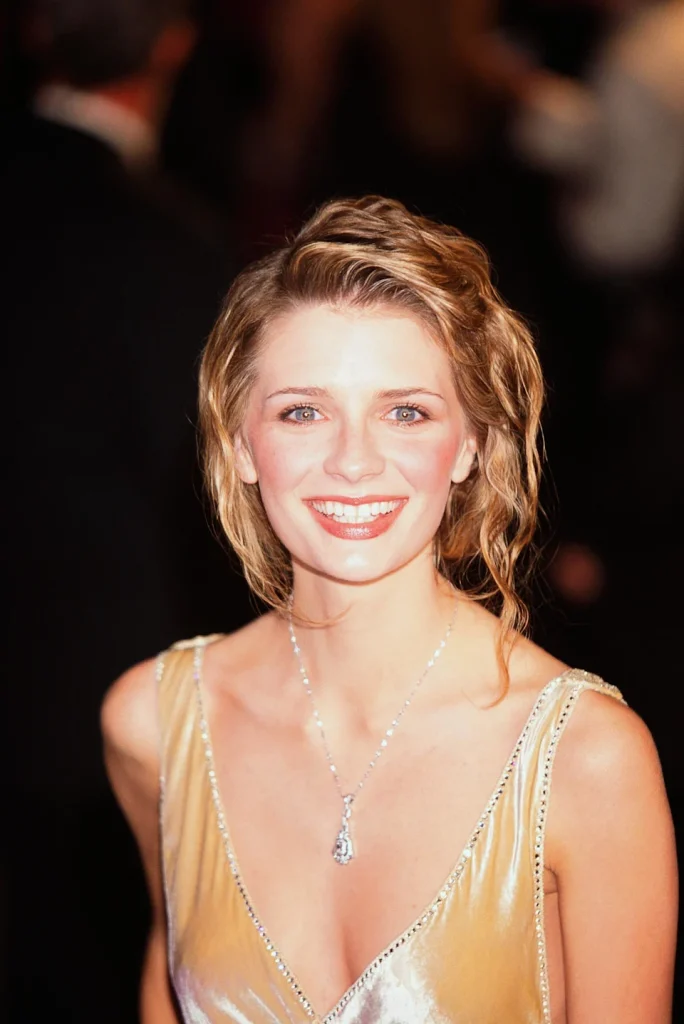
What the early-2000s press cycle never covered about Mischa Barton is the simplest thing: she had been a serious actress since she was nine years old. Not a Disney product. Not a reality show creation. A child who had performed Tony Kushner at Lincoln Center and earned the New York Times’ attention before she could drive. The O.C. was not her discovery. It was her commercial peak, arrived at via a decade of actual craft that the tabloid machine was structurally unable to value.
The Specific Cost of Being Watched That Closely
In 2021, she wrote in Harper’s Bazaar about developing PTSD from the paparazzi years. She also described the pressure she felt to lose her virginity at eighteen because her character on The O.C. was sexually active. You are seventeen years old. Your character’s sex life generates press coverage. Someone in a production meeting is deciding how your body reads on camera. The entire culture has an opinion about how much you weigh. That is not a difficult environment. That is an environment specifically designed to extract maximum productivity from a person while discharging zero responsibility for the consequences.
The remarkable thing about Mischa Barton is not that she broke down. It is that she rebuilt. The Harper’s Bazaar essay was not a victim narrative. It was a clinical accounting — precise, undramatic, aimed at structures rather than individuals. That tone is the Didion register applied from the inside. Most people who lived through what she did either avoid the subject entirely or perform it for sympathy. She did neither. She documented it. That is a different thing.
The Gap Between What She Lost and What She Kept
The Beverly Hills mansion — six bedrooms, 7,607 square feet, purchased for $6.4 million in 2005 — eventually sold for $7.05 million in 2016 after years of financial difficulty. The modest gain on the sale does not account for missed mortgage payments, carrying costs, and the legal fees that accumulated across a decade of personal and professional turbulence. Real estate was not her store of value. However, the stage was. The theater career she built at nine, the craft she honed at Lincoln Center before any of this happened — that infrastructure survived everything the tabloid years threw at it. It is, in fact, what she is using now to build the next chapter in London.

What Mischa Barton Built: The Wealth Audit
According to Celebrity Net Worth, Mischa Barton’s net worth sits at approximately $2.5 million as of 2025. However, that number requires context to mean anything. At the peak of The O.C., she earned an estimated $60,000–$100,000 per episode. Over four seasons and seventy-six episodes, her acting income from the show alone placed her well into seven figures before she turned twenty-one.
The O.C. and Early Career Income
Per-episode fees at the upper range across the full O.C. run would place her total television income at approximately $4–7 million from the show. Her earlier film work — Notting Hill, The Sixth Sense, various independent productions — added a meaningful but more modest income layer. By her early twenties, she had earned substantially more than her current net worth reflects. The gap is the story.
The Real Estate Loss and Legal Costs
The Beverly Hills property purchase at $6.4 million in 2005 consumed a significant portion of her peak earnings. The eventual 2016 sale at $7.05 million looks like a gain. However, a decade of mortgage payments, property taxes, and carrying costs on a house that spent years listed for rent without takers represents a meaningful net negative position. Legal costs across multiple proceedings — the 2007 DUI, the 2017 intimate image case, and an ongoing dispute with her mother over career earnings — added further drain to the asset column.
Modeling, Fashion, and Endorsements
Barton’s endorsement portfolio during the O.C. years was substantial. She served as spokesperson for Neutrogena, Keds, Aéropostale, and Calvin Klein at various points. According to Forbes’ analysis of early-2000s teen endorsement structures, at-peak deals for talent at her profile level ran $500,000–$2 million annually. Her 2012 fashion line Mischa added a smaller but meaningful revenue stream through handbags and accessories. Together, modeling and fashion income likely accounts for $3–5 million in career earnings beyond acting.
The Stage Return and the 2026 Position
The Double Indemnity UK tour in early 2026 represents the most significant career move of her post-O.C. years. Stage work at this level — a touring production of a name property with her as female lead — pays in the range of £5,000–£15,000 per week for a recognized name, per WSJ’s analysis of West End and touring production pay structures. More importantly, the booking signals industry confidence in her name as a draw. That confidence is a brand equity event. It does not show on a balance sheet immediately. However, it compounds.

Where Mischa Barton Is Now
Los Angeles, London, and the Career She Actually Wanted
On a morning in Los Angeles in early 2026, Mischa Barton is preparing for a UK stage tour. She lives quietly with her dogs. Her social media runs on a narrow, controlled frequency — none of the involuntary overexposure that defined the O.C. years. She does not perform recovery. She simply continues, which is a considerably harder thing to sustain over twenty years than any single dramatic gesture.
The Double Indemnity casting is worth sitting with. Phyllis Dietrichson is one of American fiction’s great manipulators — a woman who uses the tools available to her in a system that offers her no legitimate ones. Mischa Barton, at thirty-nine, playing that role in London, after everything the industry put her through: that is not accidental. Sir Richard Attenborough recommended she study at the Royal Academy of Dramatic Art back in 2006, when the tabloid machine was at its most relentless. She went. That choice, made quietly in the middle of the worst years, is the one that explains everything that comes after.
What the Era Owes Her
The Mischa Barton story is not a cautionary tale. It is a structural critique, delivered slowly and without sentimentality, by the person who lived it. The early-2000s celebrity machine built its business model on young women’s bodies, charged the women for the exposure, and took no responsibility for the costs. She paid the invoice. Then she went back to what she was doing before any of it started: serious acting, on serious stages, in serious work. For more on the women who shaped this era, explore our It Girls of the Early 2000s hub, our Nicole Richie net worth profile, and our Hamptons Real Estate Guide.
Feature your brand: Contact Social Life Magazine — we connect luxury properties with the audiences that close.
The East End’s premier sporting event: Polo Hamptons — sponsorships, VIP access, and brand activations where the Hamptons actually convenes.
Get the Hamptons insider list: Subscribe to Social Life Magazine — 23 years of the East End, delivered to your door.
Support independent Hamptons journalism: Donate $10
Related:
Lindsay Lohan Net Worth: Dubai Fixed What Hollywood Broke
Carolyn Bessette-Kennedy: More Famous Dead Than Alive
Author

Written by
Recent Posts
Amanda Peet Net Worth: The Brilliant Dinner Guest Hollywood Forgot to Invite Back
Keanu Reeves Net Worth: Infinite Losses, and the Role That Proved Kindness Compounds
Jack Nicholson Net Worth: Three Oscars, and the Role He Couldn’t Stop Playing

Diane Keaton Net Worth: The Fortune Built on Talent, Turtlenecks, and the Homes She Left Behind
Nancy Meyers Net Worth: A Filmography, an Inheritance, and the Kitchen That Sold the Hamptons
Categories
- Art
- Articles
- Beauty & Skincare
- Celebrities
- Celebrities|The Chronicles
- Chronicles
- Entertainment|Culture
- Event Photos
- Events
- Fashion
- Fashion & Style
- Featured
- Food & Beverage
- Food, Spirits, Wine
- Hamptons
- Hamptons Celebrities
- Hamptons Celebrities|Celebrities|The Chronicles
- Health
- Health & Beauty
- Lifestyle
- Luxury Lifestyle
- Movies|Hamptons Lifestyle
- Press
- Profiles
- Real Estate
- Technology
- The Chronicles
- Travel
- Uncategorized
- Weddings