
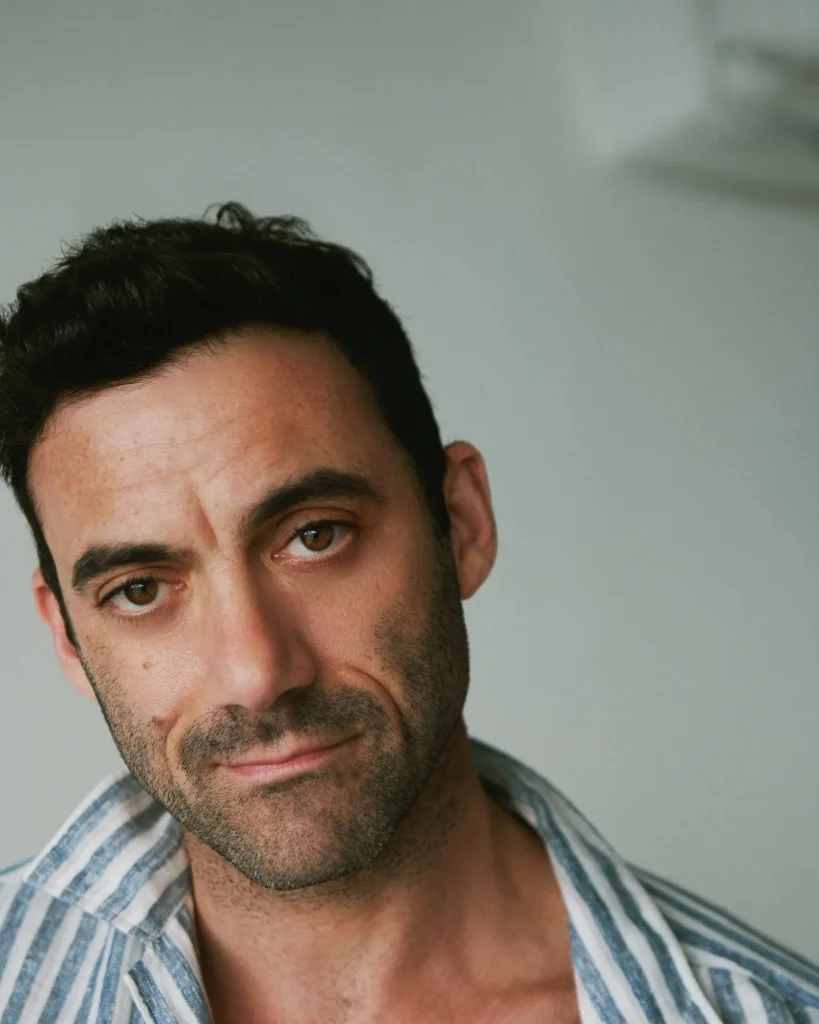
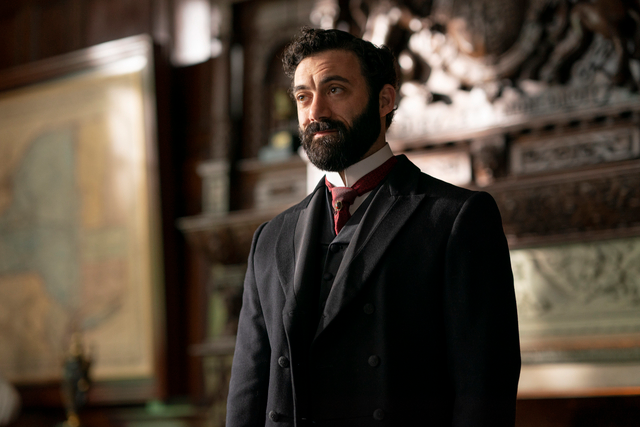
Walk into any restaurant in Bridgehampton and say the name George Russell. Half the room will lean forward. The ruthless railroad tycoon reshaping 1880s Manhattan on The Gilded Age has become a permanent topic at dinner tables where people understand what power costs. Now ask those same people to name the actor who plays him. Silence. Morgan Spector net worth is estimated at roughly $3 million, and the anonymity that number implies is the entire point. He is the best actor on the most-watched period drama on television, married to the daughter of the man who founded the Royal Shakespeare Company, and virtually invisible outside the frame. That invisibility isn’t a failure of marketing. It’s the signature of someone who decided, early and permanently, that the work is the only thing that matters.
The Before: Redwoods, Reed College, and a Grandmother in the Yiddish Theater
Spector grew up in Guerneville, California — a small town in Sonoma County surrounded by redwood forests and vineyards. His father was an attorney. His mother worked in public education, first as a teacher, then as an administrator. The household valued education over entertainment. Nothing about Guerneville suggests a future that includes HBO period dramas and Broadway stages.
However, performance was in the blood. Spector’s paternal grandmother was an actress in the New York Yiddish Theatre District — a world of immigrant artistry that thrived in the Lower East Side before Hollywood consumed American entertainment. His father is Jewish. His mother is of mostly Irish Catholic descent. The combination produced someone who understood, from childhood, that art and survival are related disciplines. He first acted in community theater at eight years old. He tried to quit multiple times. A high school teacher at El Molino High eventually convinced him to play Danny Zuko in Grease, and the quit attempts stopped.
Spector enrolled at Reed College in Portland, Oregon — one of the most academically rigorous liberal arts colleges in the country — where he initially studied philosophy before switching to theater. He graduated in 2002. Notably, the philosophy training shows in every performance. George Russell doesn’t just make decisions. He processes them through a framework that accounts for consequences three moves ahead. That’s not acting technique. That’s a philosopher’s reflex wearing a top hat.
The Pivot: An Injury, a Broadway Debut, and the Woman Who Changed Everything
After Reed, Spector earned his MFA from the American Conservatory Theater in San Francisco. He toured in The Lion King. He moved to New York in 2006 and spent four years doing what every serious theater actor does: waiting, auditioning, and learning the city. Then, in 2010, he caught the break that wasn’t supposed to be his.
Gregory Mosher cast him in a bit part in the Broadway revival of Arthur Miller’s A View from the Bridge. During previews, the actor cast as Rodolpho — one of the play’s central roles — was injured. Spector stepped in. Overnight, his bit part became a Broadway debut in a major Arthur Miller role at the Cort Theatre. Most careers are built on preparation meeting opportunity. Spector’s was built on preparation meeting someone else’s misfortune. He was ready. That’s the part that wasn’t luck.
In 2012, he earned a Drama Desk Award nomination for Russian Transport Off-Broadway. Then came 2014 and the production that reshaped his life on two fronts. He co-starred with Rebecca Hall in the Broadway revival of Machinal. The play demanded emotional vulnerability and intense physical collaboration. By September 2015, they were married. Furthermore, Hall brought her own dynasty into the partnership: her father was Sir Peter Hall, founder of the Royal Shakespeare Company, and her mother was the opera singer Maria Ewing. Spector — the attorney’s son from Guerneville — had married into British theatrical royalty. Another Gilded Age cast member navigating someone else’s legacy while building his own.
The Screen Career: Homeland, Philip Roth, and the Roles Nobody Remembers
Spector’s television career reads like a résumé designed to impress casting directors rather than audiences. He appeared in Boardwalk Empire, Person of Interest, and Suits — always in supporting roles, always making an impression without staying long enough to register with mainstream viewers. In 2018, he played Dante Allen in Homeland, a role that earned critical respect without crossing into public recognition.

His most significant pre-Gilded Age role came in 2020 with HBO’s The Plot Against America, David Simon’s adaptation of Philip Roth’s alternate-history novel. Spector played Herman Levin, a Jewish insurance agent watching American democracy slide toward fascism. The role required him to carry the emotional weight of an entire family’s fear without ever raising his voice. He did it with a stillness that critics praised but audiences, distracted by 2020’s own crises, largely missed. Consequently, the performance became the kind of credit that other actors mention with respect but the public doesn’t associate with his face.
On film, Spector appeared alongside his wife in Christine (2016) and Permission (2017), and opposite Olivia Wilde in A Vigilante (2018). He had a role in Boston Strangler (2023). None of these made him a household name. All of them sharpened the instrument.
George Russell: The Role That Earned the Anonymity
Julian Fellowes cast Spector as George Russell — the self-made railroad magnate who moves his family across the street from old-money Manhattan and proceeds to dismantle the social order through sheer economic force. The character is loosely based on the real robber barons of the 1880s: Vanderbilt, Carnegie, Rockefeller. Men who built empires and then purchased respectability.
Spector plays George with a calm that makes your stomach drop. He delivers threats the way most people order coffee. While Carrie Coon‘s Bertha schemes and socializes in full view, George operates in the background — boardrooms, private offices, quiet conversations where the real damage gets done. Season 3 pushed George into riskier territory: a railroad gambit that could either revolutionize the industry or ruin the family. Spector made you believe both outcomes simultaneously, in the same scene, sometimes in the same sentence.
The show drew a series-high 4 million viewers in Season 3 and earned a fourth-season renewal. Spector’s face was on the screen for much of that viewership. His name was on almost none of the conversation about it. That paradox is the Morgan Spector net worth story in miniature: maximum impact, minimum recognition, total control over the gap between them.
What Morgan Spector Net Worth Says About the Economics of Invisibility
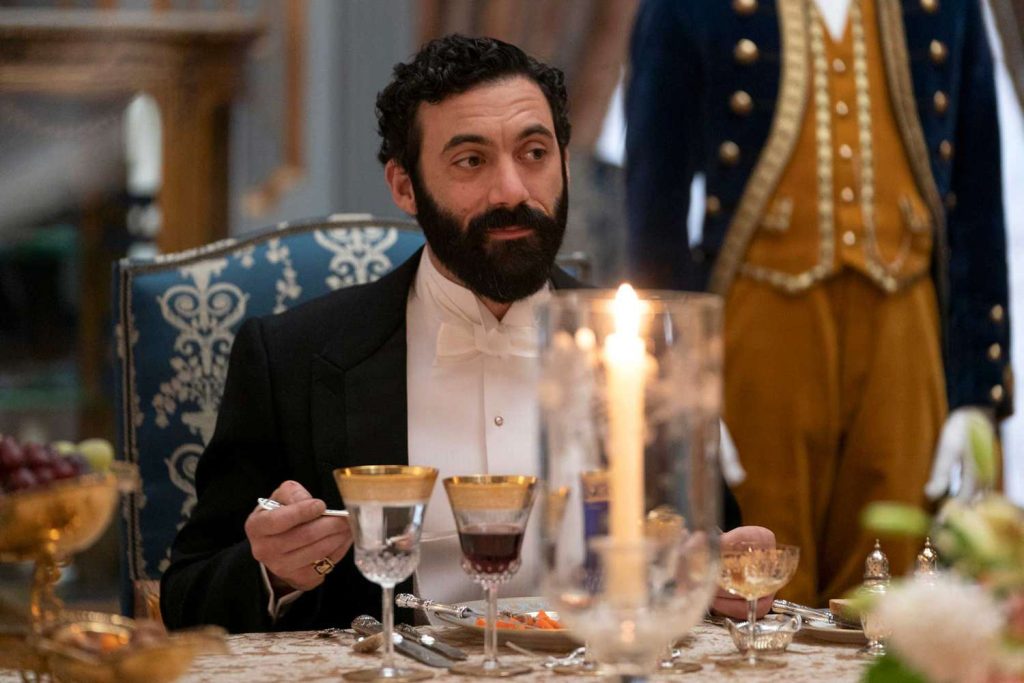
The estimated $3 million reflects the mathematics of a career built in theater and ensemble television. Broadway doesn’t create wealth unless you’re above the title in a long-running hit. Supporting roles on premium cable pay well but not transformatively. The Gilded Age distributes its budget across one of the largest ensemble casts on television — 40-plus actors, plus costumes, sets, and historical consultants that eat through production money before the leads get paid.
Additionally, Spector and Hall live quietly in the countryside with their daughter Ida, born in 2018. They deliberately shield their private life from public attention. Spector plays guitar. He has a black belt in Taekwondo. He reads voraciously and shares book recommendations. Asked what he’d do if he weren’t an actor, he once said he’d be “a treasure hunter — just a dude with a metal detector searching for buried relics.” The answer is disarming, funny, and revealing. He’s already doing a version of that: digging through scripts for something buried, something most people would walk right past.
His political life reflects the same intensity he brings to performance. He’s a member of the Democratic Socialists of America and helped produce the documentary The Big Scary “S” Word. The man who plays a ruthless capitalist on television is a democratic socialist in real life. That contradiction doesn’t bother him. It probably fuels the performance. Understanding what you oppose is the fastest way to play it convincingly.
The Soft Landing: The Career That Doesn’t Need Your Recognition
Spector will return as George Russell for The Gilded Age Season 4 in 2026. The role continues to grow — George is increasingly central to the show’s narrative engine, the force that drives every other character to react. Meanwhile, his wife Rebecca Hall has expanded into directing, with her 2021 film Passing earning wide acclaim. Two artists in one household, each building independently, each operating at a level that their combined public visibility doesn’t reflect.
The dark horse doesn’t announce itself. It runs the same race as everyone else, carries the same weight, and finishes ahead while the crowd watches the horse with the shinier name. Spector has been doing this for 20 years — from community theater in Guerneville to a bit part that became a Broadway debut to a television role that defines an era. He tried to quit acting multiple times as a kid. A high school teacher talked him out of it. If that teacher watches The Gilded Age on Sunday nights, they know exactly what they saved.
Morgan Spector net worth will grow as the show expands and as his profile slowly, reluctantly, catches up to his talent. But the number will always trail the work, because the work was never designed to produce a number. It was designed to produce a performance so controlled, so precise, so terrifyingly calm that you remember the character long after you’ve forgotten the actor’s name. George Russell doesn’t need you to know who Morgan Spector is. Morgan Spector doesn’t either. And that refusal is worth more than anything a bank can hold.
Related Reading
- The Gilded Age Cast Net Worth: The Cast HBO Doesn’t Want You to Google
- Carrie Coon Net Worth: The Quiet Fortune of Television’s Most Nominated Actress
- Louisa Jacobson Net Worth: Inside the Dynasty Meryl Streep’s Daughter Is Quietly Escaping
You know the feeling. You’re watching something unfold — a room shifting, a conversation turning, a door opening that wasn’t open before — and you realize you’re not just observing. You’re recognizing it. That’s what the best stories do. They hold up a mirror so polished you forget it’s glass. That’s what we do at Social Life Magazine. Twenty-three years of holding up that mirror to the most interesting people, places, and moments between the Shinnecock Canal and Montauk Point.
If your brand, your business, or your story belongs in front of the Hamptons’ most influential audience, we should talk. Visit sociallifemagazine.com/contact to explore editorial features, advertising partnerships, and custom brand activations with Social Life Magazine.
Ready to tell your story on your terms? Submit a Paid Feature and position yourself alongside the tastemakers, founders, and cultural architects who define the season.
Join 82,000+ readers who get our insider briefings on Hamptons lifestyle, luxury real estate, and the people shaping the conversation. Subscribe to the Social Life email list here.
Experience the Hamptons’ premier luxury sporting and social event. Polo Hamptons brings together the most discerning audience on the East End for world-class polo, brand activations, and the kind of afternoon that turns introductions into partnerships.
Never miss an issue. Subscribe to Social Life Magazine in print — five summer issues delivered to your door from Memorial Day through Labor Day, plus Fall and Winter editions distributed to Upper East Side doorman buildings.
Love what we do? Support Social Life Magazine with a $5 donation and help us keep delivering the stories, profiles, and cultural coverage that make the Hamptons worth paying attention to.
Author

Written by
Recent Posts
Christine Baranski Net Worth: Four Decades, 15 Emmy Nominations, and the Price of Being Undeniable
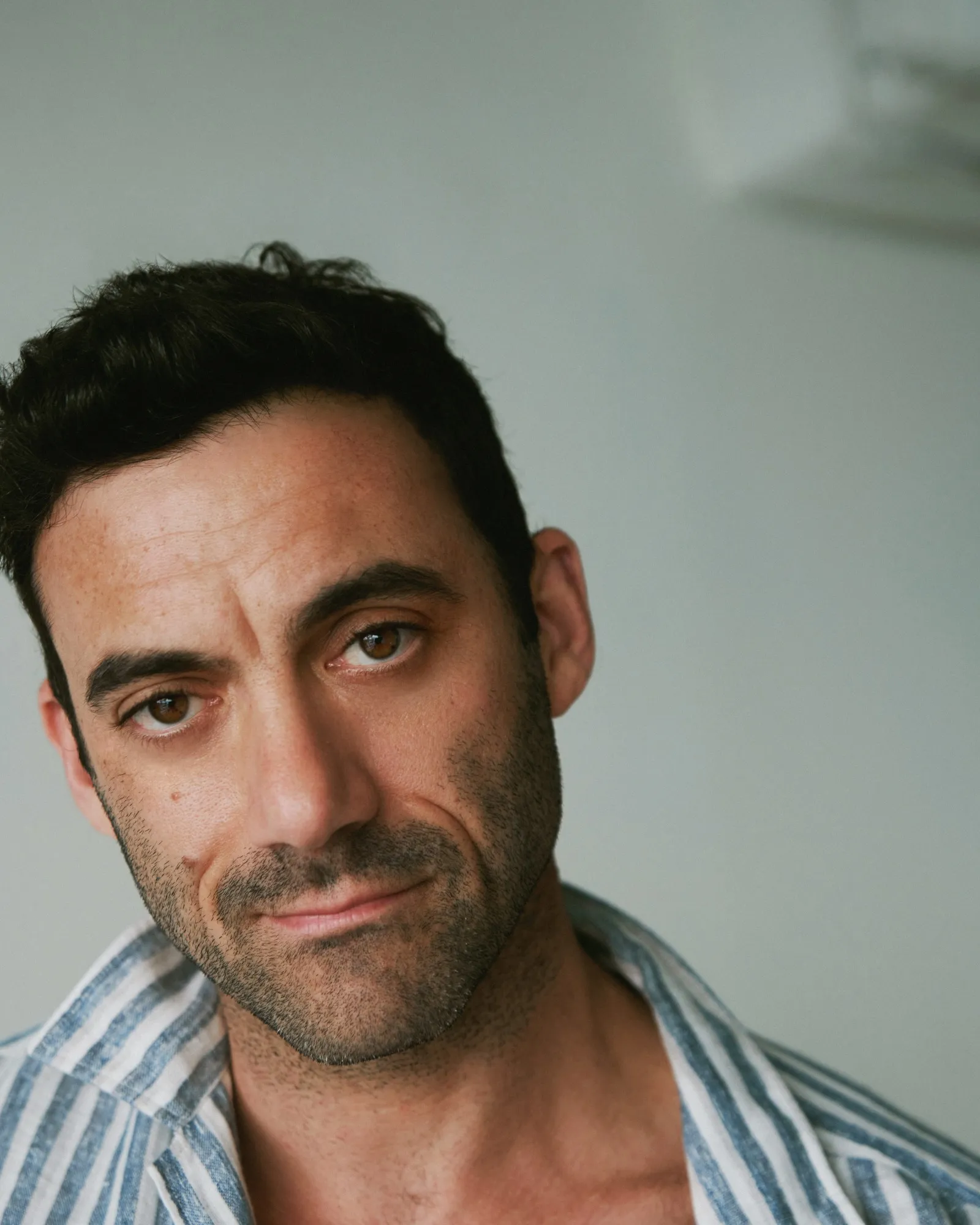
Morgan Spector Net Worth: The Most Terrifying Man on Television That Nobody Can Name
Cynthia Nixon Net Worth: The $20 Million Fortune That Bought the Freedom to Lose
Smart Travel Tips for a Hassle-Free Airport Commute

Carrie Coon Net Worth: The Quiet Fortune of Television’s Most Nominated Actress
Categories
- Art
- Articles
- Beauty & Skincare
- Celebrities
- Celebrities|Entertainment
- Celebrities|Television
- Celebrities|The Chronicles
- celebrities|the-archive
- Celebrities|TV Shows
- Chronicles
- Entertainment|Culture
- Event Photos
- Events
- Fashion
- Fashion & Style
- Featured
- Food & Beverage
- Food, Spirits, Wine
- Hamptons
- Hamptons Celebrities
- Hamptons Celebrities|Celebrities|The Chronicles
- Health
- Health & Beauty
- Lifestyle
- Luxury Lifestyle
- Movies
- Press
- Profiles
- Real Estate
- Technology
- The Chronicles
- Travel
- Uncategorized
- Weddings