

Rachel Zoe dressed her for destruction. She used the attention to build something they couldn’t take back.

Every celebrity gossip archive from 2005 will tell you exactly what Nicole Richie’s net worth story is about. What those archives won’t tell you is that the tabloid era — the weight obsession, the Rachel Zoe styling, the DUI, the Very Public Decline — was not a detour from her success. It was the raw material. The $40 million fortune she has now was built from the exact wreckage that was supposed to finish her. Most people watched the spectacle. Nicole Richie was watching the mechanism.
That gap — between what the press was covering and what she was actually doing — is the most instructive story in early-2000s celebrity culture. The Hamptons crowd figured it out before Los Angeles did. It usually does.
The Before: The Girl Nobody Expected to Survive This
Nicole Camille Escovedo was born on September 21, 1981, in Berkeley, California. However, the biography most people know starts too late and in the wrong city. Her biological father was Peter Michael Escovedo, a musician and brother of Sheila E. Her biological mother was Karen Moss. Neither could afford to raise her. As a result, at three years old, Nicole was placed with Lionel Richie and his then-wife, Brenda Harvey.
Lionel Richie wrote his 1986 song “Ballerina Girl” for her. That detail is not sentimental context. Instead, it is structural. Nicole grew up not just in wealth but inside the specific emotional geography of a man who loved her loudly and publicly — and a marriage that eventually collapsed loudly and publicly, too. At nine, Lionel and Brenda officially adopted her. By her early teens, their bitter divorce was granting her a freedom that most Beverly Hills prep school girls simply did not have.
Bel Air, the Divorce, and the Education Nobody Planned For
That freedom is the seed of everything that followed. Richie attended Beverly Hills High School, then the University of Arizona. Eventually, she left without a degree. Still, the education happening in parallel — in celebrity-adjacent Los Angeles, in rooms her famous last name opened before she understood what rooms were worth opening — was considerably more formative than any curriculum.
By the late 1990s, she was embedded in the specific social world that Paris Hilton was also navigating. Childhood friends, they moved through the same circuits. Meanwhile, Nicole was developing a fashion instinct that had nothing to do with either of their famous families. She would later say she noticed how clothes communicated power long before she understood how to use that. Consequently, that observation — stored early — paid out much later.
The Pivot Moment: 2005, and the Year That Should Have Ended Everything
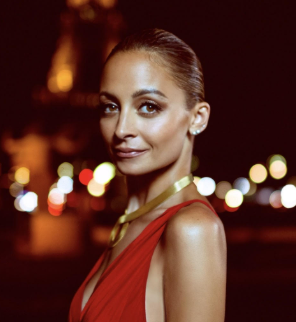
By 2005, The Simple Life had made Nicole Richie one of the most photographed women in America. That was not, by itself, a pivot. Instead, the pivot was what happened to her body that year — and what the tabloid ecosystem did with it. Rachel Zoe had become the stylist of record for the early-2000s It Girl set. Her aesthetic required a specific silhouette. Nicole Richie delivered it. By 2006, she was visibly unwell in the way that the culture had, grotesquely, decided was aspirational.
The tabloids called it a crisis. Perez Hilton documented it daily. Us Weekly ran the weight comparisons. In May 2006, she told Vanity Fair directly: “I know I’m too thin right now.” The admission was rare. Most subjects in her position denied everything. That choice — to name the thing rather than perform around it — was the first signal that she was operating on a different frequency than her contemporaries.
The Decision Nobody Covered at the Time
In October 2006, she entered treatment. In December, she announced she was pregnant with her daughter Harlow. The tabloid narrative pivoted instantly to bump watch. However, Nicole had already made the decision that mattered: she was done being a subject. She intended to become an owner.
House of Harlow 1960 launched in 2008. Notably, the timing was not an accident. Harlow was born in January of that year. By the time the press was still discussing Nicole Richie’s personal life, she had already incorporated a business that would eventually report $55 million in combined line sales. The tabloid era had purchased her approximately four years of uninterrupted public attention. In turn, she used every minute of it to study the market she was about to enter.

The Climb: What She Built While Nobody Was Watching
The launch strategy for House of Harlow 1960 was specifically un-Paris. No headline fragrance. No reality show tie-in. Instead, she started with jewelry — bohemian-inspired pieces at accessible price points, stocked at Bergdorf Goodman, Neiman Marcus, and Nordstrom simultaneously. The distribution choices signaled something deliberate: she wanted the product on shelves that required editorial credibility to access.
The Brand Architecture Most Profiles Skip
By 2010, the brand had won Glamour’s Entrepreneur of the Year. That same year, she married Joel Madden at Lionel Richie’s estate. The wedding was private. The contrast with her earlier public years was unmissable — and intentional. Meanwhile, the Winter Kate clothing line launched alongside House of Harlow. By 2012, combined sales across both lines were estimated at $55 million. According to The Hollywood Reporter’s 2012 analysis, Richie’s royalty structure captured approximately 5% of revenues — placing her personal take in the range of $2–3 million annually from licensing alone at that stage.
The number looks modest against the sales figure. However, it does not include the brand equity accumulation — the thing that, in 2024, allowed her to relaunch House of Harlow as a full luxury jewelry house with natural diamonds, structured collections, and distribution through select high-end retailers. That relaunch did not happen because of television fame. It happened because of sixteen years of consistent brand building in the background of a more dramatic public story.

The Human Chapter: Who Nicole Richie Actually Is
What most profiles skip is this: Nicole Richie is genuinely funny. Not celebrity-funny, where the publicist has approved three adjectives and the interviewer nods. Actually funny. Her Tina Fey-produced sitcom Great News (NBC, 2017–2018) asked her to play a self-absorbed television anchor with a catastrophic relationship to self-awareness. Critics noticed that she played it without vanity. That is a harder thing to do than it looks, particularly for someone playing a version of what the tabloids had spent years insisting she was.
The Contradiction That Explains Everything
Here is the contradiction at the center of her story. Nicole Richie was the most watched wild child of her generation — DUI, drug history, eating disorder headlines, the whole tabloid inventory. Now, by every observable account, she is exceptionally deliberate. Her Instagram is curated to a fare-thee-well. Brand communications follow the same discipline. Meanwhile, her children — Harlow, now eighteen and going by her middle name Kate on social media, and Sparrow, sixteen — are largely absent from her public presence.
You have watched someone be destroyed by visibility, and then you spend the next fifteen years building something that requires visibility to sustain. That is not irony. That is a very specific kind of intelligence about the difference between exposure you control and exposure that controls you.
The tell is in how she talks about money. In the rare interviews where financial specifics come up, she routes the conversation immediately to the work — the design process, the diamond sourcing for the relaunched line, the specific customer she is building for. The fortune does not appear to be the point. Building something that outlasts the original reason anyone cared about her: that appears to be the point. Whether that fills the space the early years hollowed out is a question no interviewer has successfully answered. Possibly because she does not let them close enough to ask it cleanly.
The Version of Her That Made It Out
In early 2026, her daughter Harlow — now Kate — got a tattoo matching one of Nicole’s. The detail is small. Still, something in it is worth noting. The woman who was photographed at her most destructive by every gossip outlet in America raised a daughter who chose to mark her own body with the same design as her mother’s. That is not a tabloid story. Instead, it is the story underneath the tabloid story. The one that was always there.

What Nicole Richie Built: The Wealth Audit
According to Celebrity Net Worth’s most recent estimate, Nicole Richie’s net worth sits at approximately $40 million as of 2025–2026. However, that figure is typically reported as a combined number with her husband Joel Madden’s earnings. Breaking down what is specifically attributable to her requires a more precise read.
The Simple Life and Early Television
The Simple Life ran five seasons across Fox and E!, from 2003 to 2007. Per-episode talent fees for reality television at that tier and era would place her total take in the range of $500,000 to $1.5 million over the run. Meaningful, but modest. Additionally, television income across subsequent projects — Fashion Star, Candidly Nicole, Great News, Making the Cut — adds another estimated $3–5 million in aggregate. Television was the platform. It was never the business.
House of Harlow 1960 and the Licensing Stack
House of Harlow launched in 2008 as a jewelry line. By 2011, it had expanded to handbags available at Bergdorf Goodman and Neiman Marcus. By 2012, combined sales across House of Harlow and Winter Kate reached $55 million, per The Hollywood Reporter. At a 5% royalty rate, that places her take at approximately $2.75 million for that year alone. Extrapolating across a decade-plus of consistent brand activity, the licensing income likely accounts for $15–20 million of her total wealth figure.
The 2024 relaunch as a luxury jewelry house — with natural diamond collections and high-end retail distribution — represents a deliberate move upmarket. According to Forbes’ analysis of celebrity brand relaunches, the luxury repositioning strategy typically increases per-unit margin by 300–500% while reducing volume requirements. For House of Harlow, the move trades mass accessibility for the kind of margins that compound quietly over time.
Joel Madden, Real Estate, and the Combined Figure
Joel Madden’s earnings from Good Charlotte — record sales, touring, production work — are substantial in their own right. The couple’s shared real estate portfolio in Los Angeles adds a meaningful asset layer. Together, these components push the combined figure toward the $40 million estimate. However, Nicole’s individual career earnings, parsed separately, likely land in the $20–25 million range. That figure is the consequence of deliberate brand architecture over eighteen years. It has almost nothing to do with Lionel Richie’s money.
The Endorsement and Publishing Layer
Early endorsements — Bongo Jeans, Jimmy Choo, Urban Decay — provided income during the Simple Life years. Additionally, two published novels contributed a smaller but meaningful stream. Her first, The Truth About Diamonds (2005), was semi-autobiographical and moved enough copies to establish her as a writer with an actual audience, not merely a celebrity with a book deal. Her second, Priceless (2010), built on that credibility. Neither made her fortune. Both, however, built her brand’s authority in ways that the fashion business later monetized.
Where Nicole Richie Is Now
The Tuesday Nobody Writes About
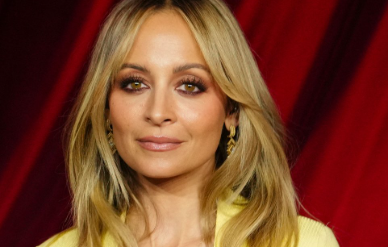
On a Tuesday in Los Angeles in early 2026, Nicole Richie is not doing anything the tabloids would cover. She is running a jewelry brand. Harlow is eighteen and choosing her own identity. Sparrow is sixteen. Meanwhile, Joel is making music. The couple marked their fifteenth wedding anniversary in December 2025. That private ceremony feels, in retrospect, like the first clearly stated version of who she actually intended to be.
House of Harlow’s current collections — the Nova fine jewelry line with natural diamonds, the Hathor line with bold stones and gold — are aimed at a customer who does not need a celebrity co-sign to make a purchase. That customer buys the piece because the piece is worth buying. As a result, this is a materially different business than anything the early-2000s tabloid years could have produced. It took sixteen years of compounding decisions to build it.
The Long Play
Rachel Zoe dressed her for destruction. The tabloids photographed the result on a weekly basis. Meanwhile, Nicole Richie was storing observations about what attention could build and what it could not. The fashion empire she built is not despite the tabloid era. It is made from its raw materials — repurposed, recut, and sold back to a market that had forgotten it was the one that paid for them. The $40 million is not an apology from the culture that tried to bury her. It is the invoice.
For more on the women who defined the early-2000s social landscape — and what they built from it — explore our It Girls of the Early 2000s hub. For the full East End social and real estate landscape, visit our Hamptons Real Estate Guide and our East End Dining Guide.
Feature your brand: Contact Social Life Magazine — we connect luxury properties with the audiences that close.
The East End’s premier sporting event: Polo Hamptons — sponsorships, VIP access, and brand activations where the Hamptons actually convenes.
Get the Hamptons insider list: Subscribe to Social Life Magazine — 23 years of the East End, delivered to your door.
Support independent Hamptons journalism: Donate $10
Related:
Paris Hilton Net Worth: The $300M Move Nobody Copied
Tinsley Mortimer Net Worth: The Blog, The Brand, The Divorce — and the $35M Exit
Author

Written by
Recent Posts
Amanda Peet Net Worth: The Brilliant Dinner Guest Hollywood Forgot to Invite Back
Keanu Reeves Net Worth: Infinite Losses, and the Role That Proved Kindness Compounds
Jack Nicholson Net Worth: Three Oscars, and the Role He Couldn’t Stop Playing
Diane Keaton Net Worth: The Fortune Built on Talent, Turtlenecks, and the Homes She Left Behind
Nancy Meyers Net Worth: A Filmography, an Inheritance, and the Kitchen That Sold the Hamptons
Categories
- Art
- Articles
- Beauty & Skincare
- Celebrities
- Celebrities|The Chronicles
- Chronicles
- Entertainment|Culture
- Event Photos
- Events
- Fashion
- Fashion & Style
- Featured
- Food & Beverage
- Food, Spirits, Wine
- Hamptons
- Hamptons Celebrities
- Hamptons Celebrities|Celebrities|The Chronicles
- Health
- Health & Beauty
- Lifestyle
- Luxury Lifestyle
- Movies|Hamptons Lifestyle
- Press
- Profiles
- Real Estate
- Technology
- The Chronicles
- Travel
- Uncategorized
- Weddings