
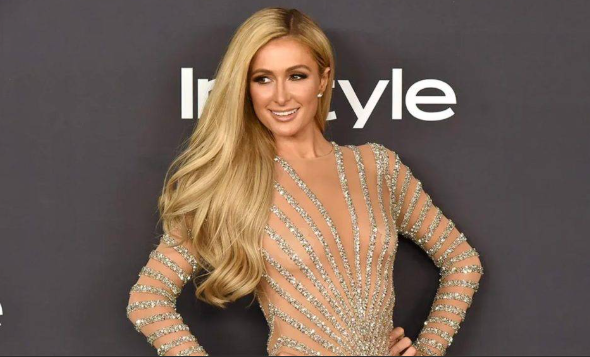
From sex tape to Skims campaign to Senate teshttps://sociallifemagazine.com/hamptons-celebrities/paris-hilton-net…-nobody-gave-her/timony. The East End watched the whole arc play out.
Every tabloid from 2004 will tell you exactly what Paris Hilton’s net worth is built on. What those tabloids won’t tell you is that the thing they used to mock her — the relentless, unblinking performance of wealth, beauty, and manufactured scandal — turned out to be the most sophisticated personal brand strategy of the pre-social-media era. The number is $300 million. The story behind it is considerably more uncomfortable for everyone who laughed.
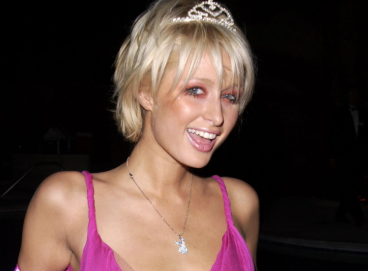
She was not lucky. Fame was not an accident. From a very young age, she operated with a clarity about attention economics that Wall Street didn’t have a framework for yet. The Hamptons figured it out eventually. The rest of the country is still catching up.
The Before: A Girl Who Grew Up Inside the Product
Paris Whitney Hilton was born on February 17, 1981, in New York City. However, the relevant detail is not the city — it is the building. Her family lived at the Waldorf Astoria. That was the flagship property of the Hilton Hotels empire, built by her great-grandfather Conrad Hilton into one of the most recognized hospitality brands on earth. She did not grow up near wealth. She grew up inside it — the way a child raised in a department store learns retail without anyone teaching her.
Her father, Richard Hilton, ran Hilton and Hyland real estate. Her mother, Kathy Richards Hilton, came from her own stratified world — her sisters are Kyle and Kim Richards of Real Housewives of Beverly Hills. Meanwhile, the extended Hilton family network wove through the social architecture of New York and Los Angeles. It is the kind of thread that is invisible until you tug it and half the room moves.
The family relocated frequently. By her teen years, Paris had cycled through the Waldorf, several Hamptons properties, and Beverly Hills. Consequently, she developed an early, almost instinctive fluency in how rooms work — who holds power, who performs it, and what the difference looks like from across a lobby.
She attended the Dwight School in New York and Buckley School in Los Angeles, among others. She did not finish. Still, the education she was getting happened in corridors and ballrooms and poolside conversations that no accredited institution was offering.
The Pivot Moment: 2003, and the Decision That Changed Everything
In November 2003, a private tape featuring Paris Hilton was released without her consent. She was twenty-two years old. The tape spread through the early internet with a velocity that the culture had no precedent for and no language to describe. Within weeks, it had been seen by millions of people. Within months, it had been monetized by everyone except her.
That specific moment — not the tape itself, but what she did in the eighteen months that followed — is the actual origin story of Paris Hilton’s $300 million fortune. Most people in her position retreated. Many careers ended in quieter circumstances than this one. Instead, she debuted The Simple Life on Fox in December 2003. That was one month after the tape went public. The premiere delivered twelve million viewers.
She understood something critical: the attention was already paid. The only question was who would collect it. By contrast, her contemporaries in similar situations — and there were several — spent their energy on damage control. She spent hers on infrastructure. That divergence, across those eighteen months, compounded into approximately $300 million over the following two decades.
The Simple Life ran five seasons. By season two, “That’s hot” had entered the cultural lexicon. By season three, she had licensed her name to a fragrance line. The first perfume, simply called Paris Hilton, launched in 2004 and generated $2 billion in cumulative sales over the following decade. The tape was never her story. It was the accelerant.
The Climb: What She Built When Nobody Was Watching
Between 2004 and 2012, Paris Hilton built a licensing empire so quietly that the tabloids covering her weekly didn’t notice until the numbers became impossible to ignore. The fragrance line expanded to eighteen distinct products. Meanwhile, she launched clothing lines, jewelry, handbags, sunglasses, and footwear. She opened 45 branded retail stores across the Middle East and Asia — markets that American media wasn’t covering and American competitors weren’t prioritizing.
Furthermore, she signed DJ residency deals in Ibiza and Las Vegas before celebrity DJing became an industry. In 2012, she earned an estimated $6 million from DJ appearances alone. Venues paid the fee specifically because she was the brand walking through the door. Her music output was secondary. The performance was the product.
The Gap Between the Story and the Balance Sheet
By contrast, press coverage of this period focused almost entirely on her social life, her relationships, and her 45-day jail sentence in 2007. The sustained tabloid narrative was one of a socialite in accelerating decline. Simultaneously, she was building what a McKinsey analyst might clinically describe as a fully diversified personal brand asset portfolio. The gap between the public narrative and the private balance sheet is the most instructive thing about her.
The DJ career alone deserves its own paragraph. She learned to DJ seriously, not performatively. By 2014, she was headlining international music festivals at fees that ranked her among the top-earning DJs globally. That achievement required genuine technical skill in a field where social proof is merciless. Nobody books a bad DJ twice, regardless of the name on the marquee.

The Hamptons Chapter: What the East End Knew First
The Family Roots: Before Paris Was Famous
The Hilton family’s relationship with the Hamptons predates Paris’s fame by a generation. Her father Richard summered in Southampton through the 1980s and 1990s. That established the family’s presence in the East End’s social geography long before his eldest daughter became its most photographed resident. Paris grew up in these summers. For her, the Hamptons was never a destination — it was infrastructure. The place where New York’s financial and social networks relocate in July and stay through Labor Day.
By 2004, she was among the most visible figures on the Hamptons summer circuit. However, visible in a specific way: not at every party, but at the ones that generated the photographs that ran in the places that mattered. She understood the East End’s social economy with the precision of someone who had been studying it since childhood — which parties to attend, which to be seen leaving, and which to skip entirely.

The Shift: After the Documentary Changed Everything
Her Hamptons presence shifted meaningfully after 2020. Following the release of This Is Paris — which reframed her public narrative from socialite to survivor — she married Carter Reum in November 2021. The ceremony drew her family’s social network rather than the tabloid circus her earlier years would have attracted. The guest list read like a private index of authentic connections the public version of Paris Hilton had always obscured.
Now she summers with her husband and their two children, Phoenix and London, in the register of Hamptons life that wealth eventually graduates toward: quieter, more deliberate, and focused on the children’s experience rather than the social column. At Polo Hamptons, where the East End’s summer calendar reaches its annual apex, the evolution is visible to anyone who knew the earlier chapter. The brand is the same. The person inside it is not.
The specific thing the Hamptons understood before anywhere else: Paris Hilton was always working. The socialite performance was the labor. The parties were the office. The photographs were the deliverables. When she stopped performing the role, she had already extracted everything it had to offer.

What Paris Hilton Built: The Wealth Audit
According to Forbes’ most recent estimates, Paris Hilton’s net worth sits at approximately $300 million as of 2026. However, the composition of that number is more instructive than the headline, and considerably more interesting than the inheritance narrative that most profiles substitute for actual analysis.
The Fragrance and Licensing Empire
The fragrance line — launched in 2004 — generated over $2 billion in retail sales across eighteen products by the mid-2010s. Based on standard celebrity licensing structures, Paris’s take would place in the range of $100–$150 million over the life of the contracts. Furthermore, the licensing model extended across fashion, accessories, and home goods in international markets. At its peak, 56 branded retail locations were operating simultaneously.
This is the portion of her wealth that analysts consistently undercount. It was built in Asian and Middle Eastern markets that American entertainment press rarely covered. By contrast, the tabloid-era narrative focused on the domestic nightclub circuit — strategically lucrative, but financially minor compared to the international licensing machine running in parallel.
The DJ and Entertainment Income
DJ residency fees at her peak — 2012 to 2018 — generated an estimated $40–$60 million in accumulated earnings. Vegas residencies, Ibiza seasons, and international festival bookings at rates that routinely exceeded $100,000 per appearance. Additionally, her entertainment output included television productions, a podcast, and ongoing brand campaign fees that collectively represent a meaningful income stream independent of the legacy licensing business.

The Media and Production Infrastructure
In 2021, she launched 11:11 Media, a production company operating under a two-year development deal with Warner Bros. Unscripted Television. The company develops content across formats — documentary, reality, scripted — with Paris as both producer and talent. This structure converts her attention economics from licensing passive to production active: she now owns upside on content that the previous era would have licensed away.
The Hilton Inheritance Layer
The Hilton family fortune is frequently cited in Paris Hilton profiles as the source of her wealth. This requires correction. Conrad Hilton’s 1979 will left the majority of his estate to a Catholic charitable foundation. Richard Hilton’s real estate business represents a separate, substantial, and private family asset. Paris’s working wealth was built independently of inheritance. That makes the $300 million figure more interesting, not less. As Bloomberg’s Wealth analysis framework notes, the most architecturally complex fortunes are those built alongside inherited social capital rather than directly from it. That is precisely her structure.
The Senate Testimony and Advocacy Premium
In April 2021, Paris Hilton testified before the Utah state legislature about abuse she suffered at Provo Canyon School — a residential treatment facility she attended as a teenager. The testimony was delivered without a publicist’s framing or a strategic rollout. In a single afternoon, it recontextualized two decades of public narrative. Subsequently, she became a leading advocate for the Break the Cycle Act, federal legislation targeting abuse at youth residential treatment facilities.
This is not a wealth line item. However, it is a brand equity event of a magnitude that cannot be purchased. The credibility she earned in 2021 compounds everything else — the production company, future partnership deals, legacy licensing renewals. Sincerity, it turns out, is the one thing that no amount of prior performance can replicate.

Where Paris Hilton Is Now — and What $300M Looks Like From the Inside
The Saturday Morning the Tabloids Never Covered
On a Saturday morning in the Hamptons in summer 2025, Paris Hilton is not at the party. She is at home with Phoenix and London — the two children she had via surrogate with her husband Carter Reum. The couple’s life operates at a remove from the social calendar she once ran. East Hampton in summer, Los Angeles the rest of the year. She told the Wall Street Journal in 2021 that she had left the club circuit behind. The statement reads differently knowing the clubs were always infrastructure, not identity.
The 11:11 Media company is in active production. The fragrance line continues generating passive income from international markets. Her podcast, This Is Paris, maintains a loyal audience that skews younger and more global than her original fan base — a demographic that discovered her through TikTok’s Y2K revival, not through the tabloids.
The Work That Outlasted the Persona
She contributed to the passage of the Eliminating Restraint and Seclusion Act in Utah. She continues advocating for the federal Break the Cycle legislation. These are not image rehabilitation exercises. They are the work of someone who survived an experience and decided the survival had a purpose.
There is a version of Paris Hilton that the early 2000s manufactured — pink, performative, decorative. And there is the person underneath it who was running spreadsheets while everyone else was writing the punchline. The Hamptons knew the difference before anyone else did. It usually does.
The one move nobody copied was the simplest one: she decided the attention, however it arrived, was hers to use. For twenty years she used it with more precision than anyone running a conventional business. The $300 million is not the story. It is the receipt.
Feature your brand: Contact Social Life Magazine — we connect luxury properties with the audiences that close.
The East End’s premier sporting event: Polo Hamptons — sponsorships, VIP access, and brand activations where the Hamptons actually convenes.
Get the Hamptons insider list: Subscribe to Social Life Magazine — 23 years of the East End, delivered to your door.
Support independent Hamptons journalism: Donate $10
Related:
It Girls of the Early 2000s: The Women Who Ruled It All
Tinsley Mortimer Net Worth: The Blog, The Brand, The Divorce — and the $35M Exit
Author

Written by
Recent Posts
Amanda Peet Net Worth: The Brilliant Dinner Guest Hollywood Forgot to Invite Back
Keanu Reeves Net Worth: Infinite Losses, and the Role That Proved Kindness Compounds
Jack Nicholson Net Worth: Three Oscars, and the Role He Couldn’t Stop Playing

Diane Keaton Net Worth: The Fortune Built on Talent, Turtlenecks, and the Homes She Left Behind
Nancy Meyers Net Worth: A Filmography, an Inheritance, and the Kitchen That Sold the Hamptons
Categories
- Art
- Articles
- Beauty & Skincare
- Celebrities
- Celebrities|The Chronicles
- Chronicles
- Entertainment|Culture
- Event Photos
- Events
- Fashion
- Fashion & Style
- Featured
- Food & Beverage
- Food, Spirits, Wine
- Hamptons
- Hamptons Celebrities
- Hamptons Celebrities|Celebrities|The Chronicles
- Health
- Health & Beauty
- Lifestyle
- Luxury Lifestyle
- Movies|Hamptons Lifestyle
- Press
- Profiles
- Real Estate
- Technology
- The Chronicles
- Travel
- Uncategorized
- Weddings