
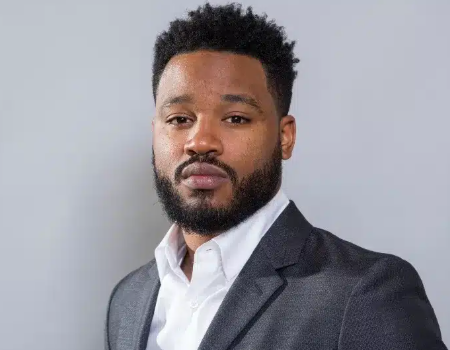
His father, Ira Coogler, spent his career as a juvenile hall probation counselor in Oakland. His mother, Joselyn, was a community organizer. Together they worked the exact seam where American institutional failure meets human resilience — the place where the system decides what happens to people it has already written off. Ryan Coogler grew up watching both of them try to complicate that decision.
Ryan Coogler net worth in 2026 stands at $25 million. However, that number — which every other publication will recite and move past — is almost beside the point. What matters is the Warner Bros. deal he negotiated for Sinners, a contractual arrangement so structurally unusual that entertainment lawyers are still parsing its implications. More on that shortly.
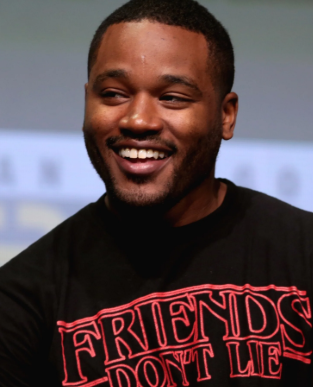
Oakland, 1986: The City That Built the Filmmaker
Born on May 23, 1986, in Oakland, California, Coogler was the middle child between brothers Keenan and Noah. The East Bay of the late 1980s and early 1990s carried a specific civic character — not the tech-adjacent version that arrived two decades later. This was the Oakland that produced the Black Panthers, longshoremen unions, and a relationship between community and survival that required no outside validation.
His uncle, Clarence Thomas, served as a third-generation Oakland longshoreman and former secretary treasurer of the International Longshore and Warehouse Union. Consequently, organized labor, organized resistance, organized community were dinner table vocabulary in the Coogler home — not abstract theory.
Richmond, Catholic Schools, and the Plan That Changed
When Ryan was eight, the family moved to Richmond — Oakland’s smaller, harder neighbor, where the refinery sits at the edge of the bay and the air sometimes smells like it. He attended Catholic schools across the East Bay, played football, ran track, and excelled in math and science. Ultimately, he fully intended to become a doctor. Then a professor at Saint Mary’s College handed him a screenwriting textbook. The intention dissolved into something he couldn’t talk himself out of.
The Professor Who Changed the Plan
Coogler arrived at Saint Mary’s College of California in Moraga on a football scholarship, intending to major in chemistry. When Saint Mary’s ended its program in early 2004, Sacramento State offered him a scholarship to keep playing. He transferred, spent four years in Division I football, and graduated with a bachelor’s degree in finance. Nevertheless, none of this looks like the biography of a filmmaker. That is because it isn’t, yet.
The Creative Writing Class That Redirected Everything
The pivot happened in a creative writing class — a moment Coogler has described but never dramatized, which is itself a kind of discipline. A professor looked at what he was writing and said, essentially: you should be writing screenplays. The professor recognized something before Coogler had consciously named it.
That recognition redirected a finance graduate with a football scholarship toward the USC School of Cinematic Arts MFA program. One of the most competitive graduate film programs in the world. He got there by accident. He stayed on purpose.
Living in His Car and Learning the Cost of Leverage
USC accepted him. During portions of his time there, Coogler lived out of his car — a detail that surfaces in profiles and gets quickly passed over. As if it were merely colorful background. It is not. Indeed, it explains every financial decision he has made since. A man who lived in his car while learning his craft understands, at a level no business school teaches, exactly what leverage looks like and what it costs to surrender.
Four Short Films and a $900,000 Proof of Concept
At USC, he made four short films. One, Fig, won HBO’s Short Film Competition and the DGA Student Film Award. Another, Locks, won the Dana and Albert R. Broccoli Award. As a result, the industry took notice. Forest Whitaker agreed to produce Coogler’s first feature for $900,000. That number reads less like a budget and more like a proof of concept — an argument Coogler was making about what Black stories were worth making at any cost.
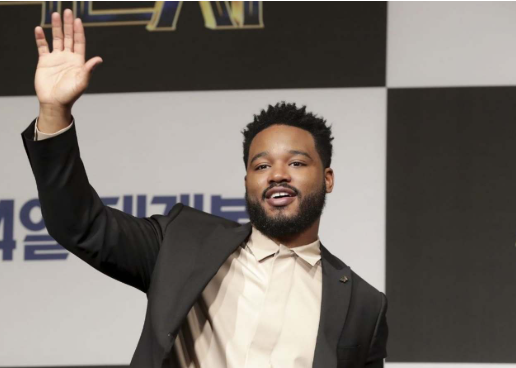
Fruitvale Station, Creed, and the Mathematics of Trust
Fruitvale Station premiered at Sundance in January 2013 and won both the Grand Jury Prize and the Audience Award. At Cannes, it additionally took the Un Certain Regard prize. Against a $900,000 budget, the film grossed $17.4 million.
More importantly, it established something no box office figure could quantify. Coogler made films about Oakland, about Black lives, about the intersection of race and institutional power — with a formal precision that placed him in conversation with the Dardenne brothers. Not the social-issue-film tradition Hollywood uses to signal virtue without requiring rigor.
He called Michael B. Jordan. Jordan, who had played Oscar Grant in Fruitvale Station, said yes to Creed before the script was finished. Creed grossed $173.6 million worldwide on a $35 million budget. Warner Bros. noticed. Marvel noticed. Kevin Feige called.
Black Panther and the Billion-Dollar Breakthrough
Coogler became the youngest director ever to helm a Marvel film when he took Black Panther in 2018. The film grossed $1.347 billion worldwide. Furthermore, the Academy nominated it for Best Picture — the first superhero film to earn that distinction — and it became the highest-grossing film any Black filmmaker had directed. All of this while remaining, by any serious formal analysis, a genuinely good film. Coherent, emotionally precise, and built with a clarity of purpose that most franchise films abandon for spectacle.
The Work That Never Stopped
Throughout all of it, Coogler kept volunteering as a counselor at San Francisco’s Juvenile Hall — the same kind of institution where his father had built his career. He started at twenty-one. The work continued through Black Panther, through Wakanda Forever, and on to the present. Notably, the $25 million net worth and the juvenile hall counseling coexist in the same biography without contradiction, because neither one performs identity. Both are simply what the man does.
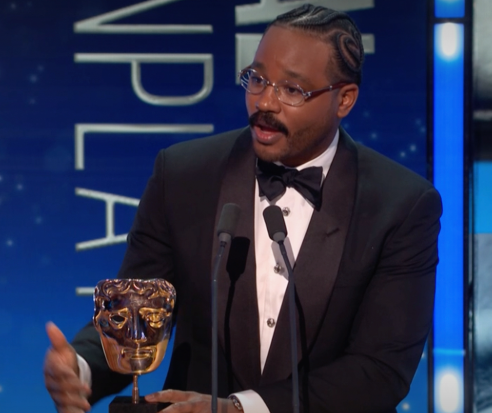
The Human Chapter: What Oakland Builds That Los Angeles Cannot Buy
There is a specific and overlooked fact about Ryan Coogler’s relationship to place. Every film he has made — Fruitvale Station, Creed, Black Panther, Sinners — is set somewhere other than Los Angeles. Oakland. Philadelphia. Wakanda. The Jim Crow South. He makes films about somewhere, and the somewhere is always load-bearing. The geography is not backdrop. It is argument.
Hollywood makes films about everywhere as though everywhere were the same place, lit by the same light, populated by the same version of human experience. By contrast, Oakland produces something different — people who understand that place is the first fact. Any story told without it is already missing something essential. The refinery. The longshoremen. That juvenile hall. These are not atmosphere. They are the argument itself.
Proximity Media: Control by Design
Coogler married Zinzi Evans in 2016. A producer in her own right, Evans co-founded Proximity Media alongside Coogler and Sev Ohanian. Proximity is not a vanity production company. It is the operational entity through which Coogler controls what gets made, who makes it, and on what terms. Evans runs it as a full equal in its architecture — not a titular credit appended to a husband’s letterhead.
The $25M Gap Worth Understanding
Consider where things stand. Coogler directed the highest-grossing film any Black filmmaker had made. Sinners crossed $200 million at the global box office and earned nominations for Best Picture and Best Director. His net worth sits at $25 million — less than some of his cast members made on individual projects.
He knows this. The contract for Sinners reflects that knowledge directly — most lawyers said it couldn’t exist, and Coogler negotiated it not because he needed the money. He did it because the money was never the point. The point was what came after.
The Question That Started in Oakland
What the fortune hasn’t resolved is the oldest problem in Black creative history in America: who owns the work after the work is done. The contract addresses that directly. Coogler’s father counseled kids the system had already failed — kids who never designed the institutions that trapped them.
Similarly, Coogler’s films document communities that institutions exploited — communities with no say over the entities extracting value from their culture. The 25-year reversion clause in the Warner Bros. deal is the filmmaker’s answer to a question Oakland, Richmond, and every place his films inhabit have asked for longer than the film industry has existed.
Building Toward Ownership
Some people make art. Some people make art and then ensure their grandchildren still own it. Coogler is building toward the second category — patiently, from a $25 million base. He works with the discipline of a man who watched his father counsel kids the system had already written off. His father knew they weren’t done. Ultimately, Coogler knows the same about his films.
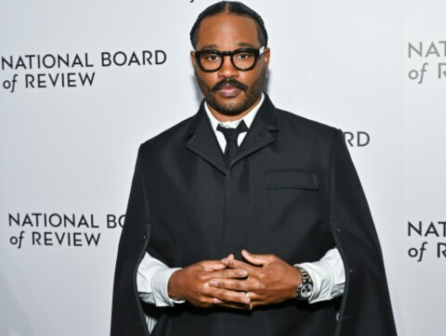
Ryan Coogler Net Worth: The Wealth Audit and the Warner Bros. Deal
Celebrity Net Worth’s 2026 estimate puts Ryan Coogler’s net worth at approximately $25 million. For the director of the highest-grossing film any Black filmmaker had made, that number demands explanation — and the explanation is the most important financial story of his career.
Breaking Down the $25 Million
The breakdown looks like this:
- Directing fees (career): Fruitvale Station ($900K budget — minimal director fee), Creed ($35M budget — approximately $1–2M), Black Panther ($200M budget — approximately $5–10M), Black Panther: Wakanda Forever (similar scale), Sinners ($90M budget — fee plus participation). Career total: approximately $20–30M before taxes.
- Producing fees: Judas and the Black Messiah, Space Jam: A New Legacy, Ironheart (Disney+), and multiple Proximity Media projects run simultaneously with his directing work, each generating producer fees.
- Disney+ overall deal: In February 2021, Proximity Media signed an exclusive five-year deal with Disney covering the Wakanda-based Disney+ series. Deals of this structure typically guarantee $5–15M annually depending on scope and output, plus production overhead and project-level fees.
- Proximity Media equity: As co-founder, Coogler holds equity in Proximity. Hollywood values production companies on content library depth, active slate breadth, and platform relationships — all three of which Proximity continues to build.
The Warner Bros. Sinners Deal: Three Provisions Nobody Gets
The most significant number on Coogler’s balance sheet does not appear in that list. According to Business Insider’s reporting on the Sinners deal structure, Coogler secured three provisions Warner Bros. almost never grants: full ownership reversion 25 years after release, first-dollar gross participation, and final cut. First-dollar gross means he earns a percentage of every ticket sold before the studio recoups a cent. The reversion clause means that in 2050, Sinners — its licensing rights, sequel rights, and all derivative works — transfers entirely to Coogler and his heirs.
What he has already earned sits at $25 million. The Warner Bros. deal reflects what he is building. Those are different numbers, measured in different currencies, on a timeline extending well past any Oscar ceremony.
Where Ryan Coogler Is Now
On Sunday night, March 15, 2026, Ryan Coogler enters the 98th Academy Awards as the Best Director and Best Picture alternate. Sinners leads all films with a record 16 nominations. Most predictors favor Paul Thomas Anderson’s One Battle After Another for Best Director following its DGA sweep — but the consensus has been wrong before. Moreover, Coogler’s SAG ensemble win signals that the Academy’s largest voting bloc is paying close attention.
Win or lose, the architecture he is building does not depend on the statue. Black Panther 3 is confirmed as his next feature. Additionally, Coogler is developing an X-Files reboot. He chose it, by his own account, because his mother loved the original series. That is either the most disarming reason any $200 million filmmaker has cited for a creative decision — or proof that the Oakland instinct runs all the way to the root: family first, institution second.
2050: When the Work Comes Home
In 2050, the reversion clause triggers and Sinners comes home. Coogler will be sixty-three years old. His children will be adults. Oakland will be whatever Oakland becomes. The probation counselor’s son will own the work his father’s world inspired — the vampire musical set in the Jim Crow South. The film about what it costs a community when its culture gets extracted by people who were never part of it.
The $25 Million Story, Told Correctly
That is the $25 million story. Not the number. The architecture around it — built deliberately and quietly by a man from Richmond who lived in his car at USC. A man who never forgot what his father’s job taught him about what happens when the system decides your story is over.
Ryan Coogler has decided his story — and the story of his films — is not over. He put it in writing. Warner Bros. signed it.
Read Next & Stay Connected
Feature your brand: Contact Social Life Magazine — we connect luxury brands with the audiences that move markets.
The East End’s premier sporting event: Polo Hamptons — sponsorships, VIP access, and brand activations where the Hamptons actually convenes.
Get the Hamptons insider list: Subscribe to Social Life Magazine — 23 years of the East End, delivered to your door.
Support independent Hamptons journalism: Donate $5
Read next:
Michael B. Jordan Net Worth: The Newark Origin Story Behind the $50M Fortune
Celebrity Net Worth 2026: The Ultimate Guide to Hollywood Wealth
Author

Written by
Recent Posts

2026 Oscars Net Worth: Every Nominee Ranked

Michael B. Jordan’s $50M Net Worth: The Newark Origin Story

Jessie Buckley Net Worth: The $3M Number Nobody Talks About
6 Tips To Turn Your Dog’s Nap Time Into A Chic, Comfort-Filled Experience
Casual Fashion Tips To Elevate Your Everyday Style
Categories
- 2025 Social Life Events
- Access to Digital + Physical Magazine
- Art
- Articles
- Beauty & Skincare
- Beauty & Wellness
- Business Strategy
- Celebrities
- Celebrities|The Chronicles
- Chronicles
- Design History
- Design History|Design Trends
- Design History|Hamptons
- Design Process
- Design Process|Luxury Living
- Design Trends
- Design Trends|Hamptons
- Event Photos
- Events
- Family
- Fashion
- Fashion & Style
- Featured
- Food & Beverage
- Food, Spirits, Wine
- Hamptons
- Hamptons Celebrities
- Hamptons Design
- Hamptons Design|Design Process
- Hamptons Design|Luxury Living
- Hamptons|Luxury Living
- Health
- Health & Beauty
- Home & Design
- Home & Living
- Lifestyle
- Luxury Home Design|Design Process
- Luxury Home Design|Design Trends
- Luxury Home Design|Hamptons Design
- Luxury Home Design|Interior Design
- Luxury Lifestyle
- Luxury Living
- Luxury Living|Design Process
- Luxury Living|Hamptons
- Luxury Living|Hamptons Design
- Press
- Profiles
- Real Estate
- Technology
- The Chronicles
- Travel
- Trending
- Uncategorized
- Weddings
- Wellness