

Here is a provocation worth sitting with: Sean Murray net worth is estimated at $8 million, earned across more than twenty years as a lead actor on one of the most-watched television dramas in American history. He has played Timothy McGee on NCIS since 2003. At the show’s peak, 20 million people watched him work every week. Not one of those people works at a publication that covers prestige television. This is not a coincidence. It is a policy.
The policy works like this: certain kinds of success do not qualify as cultural achievement regardless of their scale. Network drama on CBS, skewing toward viewers over fifty, drawing audiences the advertising industry has spent two decades undervaluing — this success is real, measurable, and large. It simply does not count in the rooms where counting happens. Sean Murray built an eight-million-dollar career inside that contradiction. The story of how is more interesting than the contradiction itself.
The Before: A Military Childhood and an Early Start
No Fixed Address, One Consistent Direction
Sean Murray was born on November 15, 1977, in Bethesda, Maryland. His father was a United States Navy officer. Consequently, his childhood followed the geography of military service — a series of relocations that produced the specific adaptability required of people who grow up without a fixed social world. You learn to read rooms fast. You develop an interior life that does not depend on continuity. These are, it turns out, useful qualities for an actor.
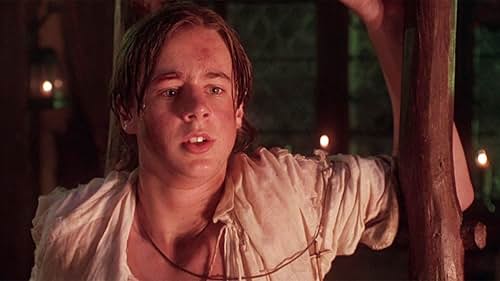
Murray began acting as a child, landing roles in the early 1990s before most performers his age had finished figuring out what they wanted to do. His early credits include Harts of the West, JAG, and a guest appearance in Harts of the West. He appeared in Hocus Pocus in 1993 — the cult Halloween film that has, in the age of Disney+, accumulated a second audience larger than its first. Murray was fifteen. The role required presence without demanding leading-man weight. He delivered it cleanly and moved on.
Notably, the early career establishes a pattern that holds across thirty years: Murray is a performer who serves the material without requiring the material to serve him. That is either a character trait or a craft decision. In the best cases, it is both.
The Pivot Moment: NCIS and the Long Game
In 2003, Murray was cast as Special Agent Timothy McGee in the first season of NCIS on CBS. The show was a spinoff of JAG — a procedural drama about the Naval Criminal Investigative Service, built around Mark Harmon’s Leroy Jethro Gibbs as the organizational center of gravity. Murray’s McGee arrived as the technical specialist: the computer expert, the writer, the youngest and least hardened member of the team.
What Timothy McGee Actually Required
McGee is, on paper, the easiest role in the ensemble. The tech guy. The one who explains the plot. However, playing the exposition character across four hundred episodes without becoming invisible requires a specific discipline that the critical establishment has never developed a vocabulary to acknowledge. Murray kept McGee human across two decades of narrative changes, cast turnover, and audience evolution. He aged the character in real time, from earnest junior agent to senior investigator with institutional authority. That is a sustained technical achievement. Nobody wrote about it.
Furthermore, the show itself became something the industry did not know how to process. By the late 2000s, NCIS was the most-watched drama on American television. Not the most acclaimed. Not the most discussed at industry events or journalism conferences or the Television Critics Association press tour. The most watched. There is a difference, and the entertainment press has spent fifteen years pretending it does not matter.
The Climb: 400 Episodes and the Prestige Silence
Malcolm Gladwell’s 10,000-hour rule argues that mastery comes from accumulated deliberate practice rather than innate talent. By that measure, Sean Murray may be one of the most technically accomplished actors working in American television. He has spent more hours inside a single character than almost any performer of his generation. McGee has changed. Murray has changed him deliberately, episode by episode, across a run that most prestige dramas never approach in total output.
The Number That Ends the Conversation

At its peak around 2011 and 2012, NCIS drew between 19 and 21 million viewers per episode. For context: The Sopranos, at its own peak, drew approximately 12 million. Breaking Bad‘s series finale — its single most-watched episode, the culmination of a five-season prestige arc — drew 10.3 million. NCIS drew more than that on a random Tuesday in November. Twice. Every week.
Meanwhile, the critical apparatus produced thousands of words about Breaking Bad and approximately none about the show drawing double its audience on the same night. This is not a criticism of Breaking Bad, which deserved every word. It is an observation about what the critical apparatus is actually measuring — and the answer is not viewership, not reach, not cultural penetration by any quantifiable metric. It is demographic fit. NCIS viewers are older. They do not subscribe to the publications that generate prestige. The show is therefore invisible, regardless of its scale.
Sean Murray built his career inside that invisibility. He did not complain about it publicly. He showed up, played the role, and cashed the checks. That is either admirable pragmatism or a missed opportunity for advocacy, depending on your appetite for industry grievance. Either way, the work continued.
The Hamptons Chapter: Why This Story Plays on the East End
The Audience That Was Always There
The Social Life Magazine reader watched NCIS. Not all of them — some were occupied with The Wire and Deadwood and the prestige cable canon of the same era. But a significant portion of the affluent, educated, fifty-plus audience summering in the Hamptons spent Tuesday nights with Gibbs and McGee, and they knew perfectly well that what they were watching was good. They simply learned not to say so in the right company.
Additionally, the Sean Murray story resonates on the East End for a structural reason that has nothing to do with television. The Hamptons runs on people who built real things the cultural establishment has not yet figured out how to credit. Founders whose companies do $200 million in revenue in sectors nobody covers. Investors with exceptional track records and zero profiles. Murray is the entertainment industry version of that figure — real achievement, real numbers, structural invisibility.
Explore Hamptons luxury real estate and the celebrity estates of the East End →
What He Built: The Numbers and the Transformation
Sean Murray net worth is estimated at $8 million. That figure reflects two decades of series-regular compensation on a top-ten network drama, with the salary escalations that come from being an original cast member on a show that runs twenty-plus seasons. It does not reflect the kind of backend participation that makes certain performers enormously wealthy. Murray is not that kind of star. He is the kind of star who showed up every day, did the work, and built a life.
The Health Story the Tabloids Missed
Around 2010 and 2011, Murray underwent a visible physical transformation. His weight dropped significantly between seasons. The gossip apparatus noticed briefly, generated a cycle of speculation, and then moved on to something else. What the apparatus missed — because it always misses the quieter story — was the sustained discipline the transformation represented.

Murray has spoken publicly about adopting a vegan diet and making significant lifestyle changes. The result was not a dramatic before-and-after tabloid arc. It was a steady, multi-year recalibration that held. He did not hire a celebrity trainer for a magazine cover shoot. He changed how he lived. The transformation showed up on screen across seasons rather than in a single episode. Consequently, it never produced the kind of content moment the gossip economy requires. It simply happened, visibly, over time — which is how the most durable changes always work.
Explore all celebrity net worth profiles and origin stories at Social Life Magazine →
Where Are They Now: Still On Air, Still Invisible
NCIS remains in production. The show has outlasted its original lead, Mark Harmon, who departed in Season 19. Murray remains. His McGee is now the institutional memory of the team — the character who has been there longest, who carries the show’s continuity across cast changes and narrative reinventions. That is a different role than the one he started with in 2003. He plays it differently. Few people outside the show’s audience have noticed the evolution.
The Gladwell Reveal Nobody Published
Here is the counterintuitive observation that a Malcolm Gladwell piece about Sean Murray would open with: the critical establishment’s twenty-year silence about NCIS has produced, inadvertently, one of the most interesting long-form acting experiments in television history. By removing the show from the prestige conversation, critics freed Murray from the performance anxiety that prestige produces. Not playing for reviews. Not managing a narrative about his career. Simply playing Timothy McGee, every week, for twenty years — and the character became something no one planned.
McGee started as the tech guy. Across four hundred episodes of accumulated small decisions, he became a fully realized human being. Not because a showrunner mapped the arc. Because an actor showed up every day and made choices without anyone important watching — until those choices added up to something.
The 10,000-Hour Thesis, Illustrated
That is the Gladwell thesis in its purest form. Mastery through deliberate repetition, away from the pressure of external validation. Murray had no prestige audience to perform for. Consequently, he performed for the character instead. The result — a McGee who feels, in 2024, like a person rather than a role — is only visible when you step back far enough to see the whole arc at once.

That is also Sean Murray net worth. Not just the dollar figure, but what the dollar figure was built on top of. Twenty years. Four hundred episodes. One character, deepened by choice rather than mandate, in front of an audience of millions that the industry spent two decades pretending did not count.
For the Social Life Magazine reader who spent Tuesday nights with this show and never admitted it at a dinner party: you were right. The room was wrong.
The Hamptons dining guide: where the East End’s most discerning visitors eat →
Related Reading:
Legacy TV and Film Stars: The Deep Cuts That Actually Mattered
Jean Smart Net Worth: The $12M Career Nobody Saw Coming
Where This Story Lives Now
There is a version of the cultural conversation that only covers what the Television Critics Association decided to notice. You already know it. And then there is the version that understands 20 million viewers as a data point worth taking seriously — regardless of whether those viewers are the right demographic. Social Life Magazine has been running that version for twenty-three years. If your brand belongs in that conversation, let’s talk about a feature.
Every week, 82,000 readers open our newsletter because they trust us to find the angle the algorithm missed. Hamptons house. Family office. Discretionary budget. Attention span for something that actually goes somewhere. If you want to be in their inbox, join the list — or get your brand inside it.
The real meetings at Polo Hamptons happen between the chukkers. The right two people end up at the same tent — no agenda, suddenly one. That’s not an accident. That’s what we build. Sponsorships for 2026 are being confirmed now. The people you want access to are already on the field.
Twenty-three summers. Five issues per season. Twenty-five thousand copies from Westhampton to Montauk, through the boutiques, restaurants, and hotel lobbies where the Hamptons actually happens. If you want your name printed in something people keep, the print edition is Further Lane — and it goes places digital doesn’t reach.
This magazine runs on people who believe cultural memory is worth funding. If you’ve read this far, you’re probably one of them. A $5 contribution keeps independent luxury publishing alive in a media landscape that keeps trying to replace it with content.
Author

Written by
Recent Posts
Breaking Bad Cast Net Worth. $130 Million Cooked in Five Seasons of Perfect Television

Cailee Spaeny Net Worth — From Springfield, Missouri to A24 and Alien in Three Years Flat

Wagner Moura Net Worth — He Learned Spanish to Play Escobar. Then He Learned English to Take Hollywood.

Robert Eggers Net Worth — He Made a $3.5 Million Film in Puritan English and Hollywood Listened

Brie Larson Net Worth — A $6 Million Indie Film Won Her an Oscar. Marvel Paid Her the Rest.
Categories
- Art
- Articles
- Beauty & Skincare
- Celebrities
- Celebrities|Movies
- Celebrities|The Chronicles
- Chronicles
- Entertainment|Culture
- Event Photos
- Events
- Fashion
- Fashion & Style
- Featured
- Food & Beverage
- Food, Spirits, Wine
- Hamptons
- Hamptons Celebrities
- Hamptons Celebrities|Celebrities|The Chronicles
- Health
- Health & Beauty
- Lifestyle
- Luxury Lifestyle
- Movies|Culture
- Movies|Hamptons Lifestyle
- Press
- Profiles
- Real Estate
- Technology
- The Chronicles
- Travel
- TV
- Uncategorized
- Weddings