
The Before: Fife Player, Hockey Goalie, Failed Postal Worker
By contrast, steven John Carell was born on August 16, 1962, in Concord, Massachusetts — the same town where the first shot of the American Revolution was fired, a historical fact that would have delighted the boy who grew up obsessed with history and reenactment. His father, Edwin, was an electrical engineer. His mother, Harriet Theresa, was a psychiatric nurse. In particular, he was the youngest of four brothers, raised in Acton, a Boston suburb so aggressively normal that it functioned as a kind of training facility for the career he would eventually build: making extraordinary art out of the ordinary.
The Carell family performed together. Steve played the fife. Specifically, the brothers and their father formed a unit that joined a historical reenactment group portraying the 10th Regiment of Foot, a British infantry regiment.
As a result, the hobby sounds eccentric until you realize it gave Carell two things that would prove essential: a fascination with assuming characters that were not himself, and an understanding that the most interesting performances come from treating absurd situations with absolute sincerity. Similarly, he played ice hockey and lacrosse at Middlesex School. Despite this, he studied history at Denison University in Ohio, where he was a goalie on the Big Red hockey team for four years and a member of Burpee’s Seedy Theatrical Company, a student improv troupe whose name alone suggests the sensibility that would later produce Michael Scott. In fact, he also DJ’d at the campus radio station under the name “Sapphire Steve Carell.”
The Turning Point
In turn, after graduating in 1984 with a history degree, Carell briefly worked as a United States Postal Service mail carrier in Littleton, Massachusetts. He lost his job after seven months. Regardless, his boss told him he wasn’t very good at the job and needed to be faster. Still, the man who would eventually earn $20 million per Despicable Me sequel could not deliver mail with sufficient urgency. Even so, the irony is structural: Carell’s entire career has been built on characters who are slightly too slow for the world they inhabit, who cannot read the room, who persist with devastating sincerity in situations where everyone else has already moved on. He didn’t fail at delivering mail. He was rehearsing.
The Pivot Moment: Second City, The Daily Show, and the Year Everything Happened
That said, carell moved to Chicago after the postal service released him from his obligations. Additionally, he enrolled at The Second City, the improv institution that has produced more comedy careers than any graduate program in the country — Tina Fey, Amy Poehler, Bill Murray, Gilda Radner, John Belushi, Chris Farley. The training was rigorous. You learn to listen. Furthermore, you learn that saying “yes, and” to every premise is not just a comedy technique but a philosophy. Subsequently, you learn that the funniest thing in any scene is not the joke but the character who doesn’t know they’re making one. Carell absorbed these principles so thoroughly that they became invisible. By the time he appeared on the Dana Carvey Show in 1996 — a sketch comedy series that lasted seven episodes and also launched Stephen Colbert — his deadpan sincerity was already fully formed.
The Daily Show with Jon Stewart hired him as a correspondent in 1999. The role required a specific skill: the ability to interview real people while maintaining a fictional persona so committed that the interview subject couldn’t tell whether they were being mocked or celebrated. Carell was exceptional at this. The segments he produced are still studied by comedy writers as examples of how irony and warmth can coexist without canceling each other out. But television journalism was not the destination. It was the runway.
Behind the Numbers
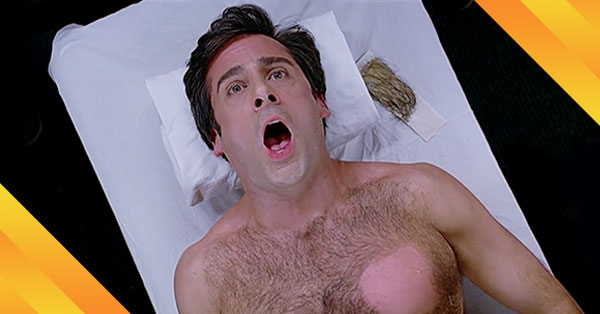
2005 was the year everything happened simultaneously. Judd Apatow, struck by Carell’s performance as Brick Tamland in Anchorman (2004), approached him about creating a film together. Carell pitched an idea about a middle-aged virgin. Apatow said yes. The 40-Year-Old Virgin grossed $175 million worldwide on a modest budget. Carell was paid $500,000. The same year, NBC cast him as Michael Scott in the American adaptation of The Office, a role that more than 35 other actors had been considered for. Paul Giamatti passed. Philip Seymour Hoffman passed. Bob Odenkirk came close. Carell got it. Within twelve months, a failed mailman from Acton, Massachusetts, was the star of the most popular comedy on television and the lead of a $175 million box office hit. The total salary for both projects in that breakout year was less than $1 million. The career they ignited would eventually generate $100 million.
The Climb: Michael Scott, Gru, and the $20 Million Animated Paycheck
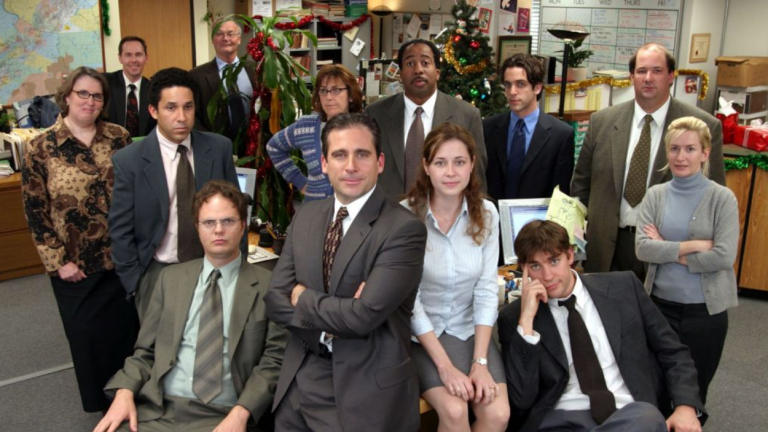
Indeed, the Office ran for nine seasons. Carell appeared in seven. His salary escalated from approximately $87,000 per episode in the first two seasons to $175,000 in season three to roughly $300,000 per episode by his final season — approximately $7 million per year at its peak. The show earned him a Golden Globe, six consecutive Emmy nominations, and a cultural footprint so deep that clips of Michael Scott are still the most shared content on social media platforms that didn’t exist when the show premiered.
Notably, the character’s genius is his sincerity. Michael Scott is not a satirical creation. He is a man who wants desperately to be loved, uses exactly the wrong methods to achieve it, and somehow generates more genuine affection than any character who does things correctly. Carell played him without a millimeter of condescension. That choice — to love the character even when the audience was laughing at him — is the reason the show endures.
What the Record Shows
While The Office was generating cultural capital, Carell was simultaneously building the most lucrative franchise of his career in a recording booth. He voiced Gru, the supervillain-turned-father, in Despicable Me (2010), a film that spawned three sequels and two Minions spinoffs. The franchise has grossed over $5 billion worldwide, making it one of the most commercially successful animated series in history. Carell reportedly earned $500,000 for the first installment. By the sequels, his fee had risen to $15-20 million per film. The math is revealing: his voice work in animated films now earns more per project than his salary for an entire season of the television show that made him famous. The Despicable Me franchise alone has likely generated $60-80 million in career earnings for Carell — more than half his total net worth from a character the audience has never seen his face playing.
The Hamptons Chapter: Massachusetts Values in a Hollywood Fortune
Steve Carell does not behave like a man worth $100 million. He has been married to the same woman since 1995 — Nancy Walls, a fellow comedian and actress whom he met when she was a student in an improv class he was teaching at Second City. They have two children. He does not appear in tabloids. He does not attend events he is not contractually required to attend. His co-stars uniformly describe him as the kindest person they have worked with, a reputation so consistent across decades and projects that it has become its own form of celebrity: Steve Carell is famous for being nice, which in Hollywood is approximately as rare as being famous for being talented.
His real estate portfolio reflects the same disciplined privacy. He maintains a home in the Los Angeles area and has invested in property consistent with his wealth level, but without the compulsive acquisition that characterizes many actors at his income bracket. The family reportedly also owns property in Massachusetts, maintaining the connection to the New England landscape that shaped his sensibility. The Acton kid who played the fife with his father and got fired from the post office has not moved far from that origin, psychologically. He simply added zeros to the bank account while keeping the operating system unchanged.
The lifestyle is anti-Hamptons in its modesty but recognizable in its values: family first, privacy as a luxury, work that means something. The $750,000-per-episode Apple TV+ paychecks for The Morning Show and the $1 million per episode for Netflix’s Space Force flow into a household that, by all available evidence, runs on the same principles as the one in Acton where four brothers played the fife and pretended to be British soldiers.
What He Built: Foxcatcher, The Big Short, and the Dramatic Turn Nobody Expected
In 2014, three years after leaving The Office, Carell did something that should have been impossible. He played John du Pont — the schizophrenic billionaire who murdered Olympic wrestler Dave Schultz on his Pennsylvania estate — and earned an Academy Award nomination for Best Actor. The transformation was not just physical (prosthetic nose, thinning hair, hunched posture) but atmospheric. Carell played du Pont as a man whose wealth had insulated him from every form of human accountability until the insulation itself became the pathology. The performance in Foxcatcher silenced every critic who had categorized him as a comedian. It also proved that the skills developed at Second City — listening, sincerity, committing fully to a character’s reality regardless of how absurd that reality is — translate directly into dramatic work. The difference between Michael Scott and John du Pont is not technique. It is context.
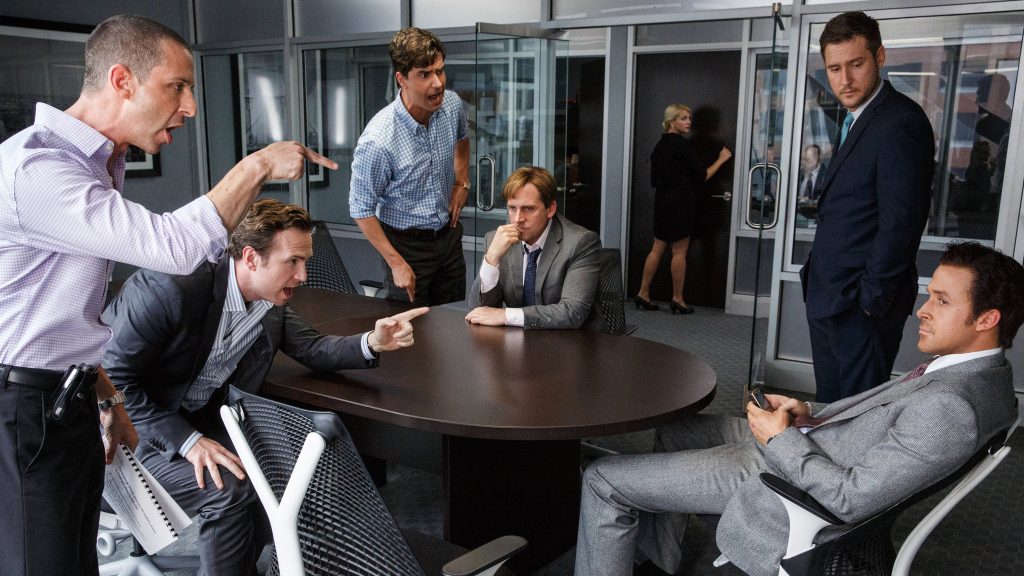
The following year, Adam McKay cast him as Mark Baum in The Big Short — a fictionalized version of Steve Eisman, the hedge fund manager at FrontPoint Partners who bet against the housing market out of moral fury rather than pure financial calculation. Carell met the real Eisman over breakfast and read his published research. The performance runs on controlled rage: Baum is a man who hates the financial system, works inside it, profits from its collapse, and cannot reconcile any of these facts. Carell earned a Golden Globe nomination. Eisman himself initially said the portrayal wasn’t quite accurate — too angry, not funny enough. Years later, after rereading his own Financial Crisis Inquiry Commission testimony from 2010, Eisman changed his mind. “Steve Carell was right,” he said. “I was that angry.”
The Deeper Story
The dramatic turn has continued through Beautiful Boy (2018), where he played the father of a son addicted to methamphetamine, Vice (2018) as Donald Rumsfeld, and his Broadway debut in 2024 as the lead in Lincoln Center Theater’s production of Chekhov’s Uncle Vanya. The man who lost his job from the post office for being too slow is now performing Chekhov on Broadway. Meanwhile, the arc is so clean it reads as fiction.
The Soft Landing: $100 Million and the Virtue of Being Underestimated
Steve Carell’s net worth sits at an estimated $100 million. His films have grossed over $9 billion worldwide. He has been nominated for an Academy Award, nine Golden Globes, and six Emmys. He won the Golden Globe for The Office in 2006. His Despicable Me earnings alone likely exceed $60 million. His television salaries across The Office, The Morning Show, Space Force, and The Patient represent another $30-40 million in career earnings. Film salaries including $12.5 million for Date Night, $15 million for Crazy Stupid Love, and $10 million for Thor: Love and Thunder — wait, that’s Christian Bale. Carell doesn’t play supervillains for Marvel. He voices a cartoon supervillain for Illumination, and it pays better.
The defining financial fact of Steve Carell’s career is not any single paycheck. It is the gap between how the industry initially valued him and what he actually turned out to be worth. He was paid $500,000 for a film that grossed $175 million. He earned $87,000 per episode for a show that now generates hundreds of millions annually in streaming licensing for NBCUniversal.
Indeed, he was the fourth or fifth choice for the role that defined his career. The pattern is consistent: Carell is perpetually underestimated, perpetually underpriced, and perpetually more valuable than the market’s initial assessment. The trait that makes him great — the ability to seem completely ordinary while doing something extraordinary — is the same trait that keeps the opening bids low. Ultimately, the post office fired him for being too slow. Hollywood kept paying him more because it kept realizing, too late, that he was irreplaceable.
Behind the Numbers
The Big Short is the film that crystallizes this principle. Bale disappeared into Burry’s body. Gosling narrated with charisma. Pitt produced with conscience. Carell did something none of them could: he made the audience feel the moral weight of betting against eight million families and winning. He made the money feel heavy. That’s not a comedy skill or a drama skill. It’s something older and rarer. It’s the thing the Second City teaches you and the post office doesn’t: how to stand in someone else’s shoes and mean it.
Related: The Big Short True Story: The Outsiders Who Bet Against America and Won · Christian Bale Net Worth: The Nomad Who Built $120 Million on Transformation · Ryan Gosling Net Worth: The $70M Art of Not Trying · Brad Pitt Net Worth: $400M Empire and Château Miraval · The Wall Street Movies That Rewired How America Thinks About Money
If you’ve ever been the person the room underestimated — the one they passed over, the one who was too slow, the one who turned out to be the most valuable asset in the building — then you already know why Social Life Magazine exists. We cover the people who prove the market wrong. Reach out to our editorial team to be featured.
Want to position your brand alongside the culture that rewards patience over flash? Submit a Paid Feature and let our editors build something worth reading.
Why It Matters
Join 82,000+ subscribers who get our take on luxury, culture, and the Hamptons scene before anyone else. Subscribe to our email list.
Experience the intersection of sport, style, and status at Polo Hamptons — Bridgehampton’s premier luxury polo event, now in its seventh year with BMW as title sponsor.
Never miss a print issue. Subscribe to Social Life Magazine and get five summer issues delivered from Memorial Day to Labor Day.
Love what we do? Support Social Life Magazine and help us keep covering the culture that matters.
Author

Written by
Recent Posts
Frank Langella Net Worth: The Fortune That Four Tony Awards, an Oscar Nomination, and Six Decades of Mastery Could Not Make Larger
Demi Moore Net Worth: The $200 Million Comeback That Hollywood Said Was Impossible
Jeremy Irons Net Worth: The $25 Million Castle Dweller Who Played Power Without Wanting It
Steve Carell Net Worth: The Mailman Who Got Fired and Built a $100 Million Empire
Christian Bale Net Worth: The Nomad Who Destroyed His Body and Built a $120 Million Fortune
Categories
- Art
- Articles
- Beauty & Skincare
- Celebrities
- Celebrities|Movies
- Celebrities|The Chronicles
- Chronicles
- Entertainment|Culture
- Event Photos
- Events
- Fashion
- Fashion & Style
- Featured
- Food & Beverage
- Food, Spirits, Wine
- Hamptons
- Hamptons Celebrities
- Hamptons Celebrities|Celebrities|The Chronicles
- Health
- Health & Beauty
- Lifestyle
- Luxury Lifestyle
- Movies|Culture
- Movies|Hamptons Lifestyle
- Press
- Profiles
- Real Estate
- Technology
- The Chronicles
- Travel
- Uncategorized
- Weddings