
On February 21, Timothée Chalamet told the University of Texas at Austin that “no one cares” about ballet or opera. Three-time Oscar nominee. Face of Dior. LaGuardia High alumnus. He laughed, copped to “taken shots for no reason,” and put the damage at “14 cents in viewership.” He was right about the 14 cents. Everything else requires a longer conversation.
Three weeks later, the internet discovered the clip. What followed was either the most efficient arts marketing campaign of the decade or the most instructive celebrity foot-in-mouth moment of awards season. Arguably both. The Metropolitan Opera posted a production montage that collected 450,000 likes. Seattle Opera launched a promo code — “TIMOTHEE” — for 14 percent off its production of Carmen. London’s English National Opera offered free tickets. The Royal Ballet said its doors were open. Gustavo Dudamel, arguably the most famous conductor alive, took the stage at Lincoln Center’s David Geffen Hall. “Which is the name of that?” he said, feigning ignorance of Chalamet’s identity. Then he dismissed the actor’s remarks as “a little bit of ignorance.” The audience applauded loudly.
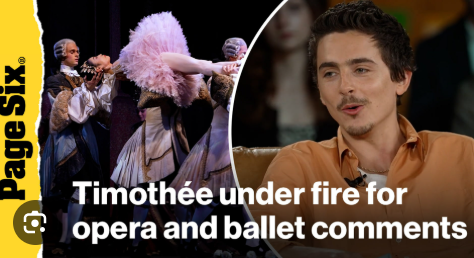
The Family History He Apparently Forgot
Chalamet’s grandmother danced. His mother danced. And his sister danced He grew up attending performances at Lincoln Center. His high school required ballet and opera as core disciplines; principal Deepak Marwah subsequently wrote him an open letter about not ranking art forms. The full quote, in context, is a young man trying to articulate something true about commercial entertainment — and spectacularly fumbling the analogy.
Timothée Chalamet Ballet Comment: What He Said and What He Meant
The comment didn’t emerge from nowhere. Matthew McConaughey asked whether shortened attention spans had changed what studios greenlight — a serious question about theatrical economics. Chalamet’s answer was thoughtful, if meandering. He admires advocates for cinema but believes audiences show up for work they genuinely want — Barbie, Oppenheimer — without being prodded. His point: forced advocacy signals weakness, not strength. Then he reached for an analogy.
Ballet and opera were the analogy. They were not the subject. The argument was: I don’t want to beg people to care. If the work is good, they’ll come. The reference illustrated a worst-case scenario: art surviving on institutional support and ambient cultural obligation rather than genuine demand. It landed as a dismissal of two ancient art forms by a 30-year-old whose most recent film is about professional Ping-Pong.
The Real Argument Worth Rescuing
There’s a genuine point buried in the wreckage of that analogy. The distinction Chalamet was reaching for: audience desire versus institutional patronage. One art form earns its crowd; the other runs on mandates and the ambient guilt of people who feel they ought to attend. He worried about cinema ending up in the second category. The performing arts institutions that responded to him are living in it — and some of them know it.
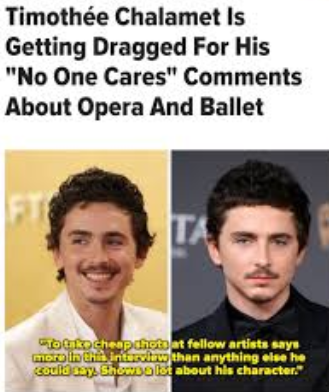
The Data Nobody Wanted to Mention While Being Publicly Outraged
At the Metropolitan Opera, a financial crisis deepens. Salary cuts, layoffs, a drained deficit fund, and a tentative $200 million Saudi Arabia deal for emergency funding all make the Times’ recent coverage. The world’s largest repertory opera house posted a 450,000-like response to Chalamet. It simultaneously negotiates to keep its lights on. That is not a coincidence that improves the narrative.
The Australian Ballet saw attendance fall from 305,364 in 2023 to 225,771 in 2024. Live Performance Australia reported a decline of nearly 30 percent in ballet and dance attendance between 2010 and 2024. Opera Australia bragged about one million seats on sale in 2026. It did not specify how many go to its three scheduled musicals — Anastasia, Phantom, My Fair Lady — versus actual opera. Seattle Opera’s Carmen promo code generated more than 100,000 Instagram likes. Whether it sold more tickets than the organic arts audience already had remains genuinely unclear.
What Dudamel Admitted Without Meaning To
Chalamet said “no one cares.” That is demonstrably false — the response alone proves otherwise. More precisely: the audience for these art forms is smaller than the cultural prestige they command. The gap between institutional importance and popular demand is real and widening. That argument, made carefully, is defensible. Even Dudamel conceded: “We have to open more spaces for people to connect with classical music.” You say that when the existing ones aren’t full.
Misty Copeland, former American Ballet Theatre principal dancer, put her finger on the actual nerve. She noted Chalamet had recently asked her to promote Marty Supreme using her ballet credentials. Finding that request “very interesting” given his comments was, she implied, an understatement. The art form wasn’t irrelevant when it served his press tour. It became irrelevant when he needed a point about cinema. That inconsistency is sharper than anything the Met’s social media team posted.
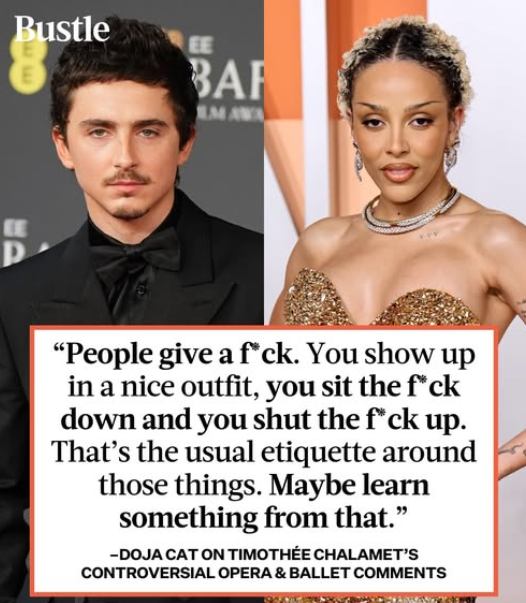
Gustavo Dudamel, Lincoln Center, and the Arts as Status Infrastructure
Dudamel delivered his remarks while announcing his first-season programming as the New York Philharmonic’s music director. It is one of the most significant appointments in American classical music in a generation. After 17 years with the Los Angeles Philharmonic, he arrives at Lincoln Center. His audience included the Philharmonic’s board, major donors, community leaders, and composers. His dismissal of Chalamet drew loud applause from that room.
That room is worth examining. The people applauding Dudamel fund Lincoln Center. They sit on the boards of the Met Opera and the New York City Ballet. They attend Guild Hall galas, write seven-figure checks to the Parrish Art Museum, and sustain these institutions through every cycle of popular indifference. When Chalamet said “no one cares,” they heard themselves erased from the cultural ledger — one they have been financially maintaining for decades.
The Open Invitation as Fundraising Strategy
Social Life Magazine has written about the convening power premium — how the host of any room captures disproportionate value from every gathering they convene. Lincoln Center is one of the country’s most powerful convening institutions, not because of ticket sales, but because of the network density it creates. The donors in that room don’t attend as Netflix-style consumers of classical music. They attend because Lincoln Center is where New York’s cultural leadership convenes and does the relationship-building that flows into every arena of civic life. Saying no one cares about opera is saying no one cares about the network those donors represent. That is the insult they actually felt.
New York Philharmonic CEO Matías Tarnopolsky, seated next to Dudamel, extended his own public invitation. “He can sit with me anytime,” Tarnopolsky said. “I’ll give him a free ticket and he’s invited to come and hear the New York Philharmonic.” This is not outrage. It is a fundraising operation in action. If he attends and posts — he will — the Philharmonic earns more media in one evening than most arts institutions generate all season. Tarnopolsky knows this. Dudamel knows this. The “open invitation” is the week’s smartest arts marketing move.
The Actual Question: What Makes an Art Form Alive
Andrea Bocelli, who has sold more classical recordings than virtually any living artist, offered a response that cut closer to the real issue. Opera, ballet, and filmmaking all draw from the “same source” of human emotion, he said. They are not arts of the past — they are ongoing expressions of the same impulse that has always driven performance. Spielberg, at SXSW, said he wants theaters, ballet, and opera to “go forever.” These aren’t arguments that cinema and ballet attendance are equivalent. They argue that Chalamet’s distinction — popular art versus supported art — collapses when you examine what makes any of it worth making.
Cinema’s Own Debt to Institutional Support
Cinema itself survived on philanthropic and institutional support before becoming a mass entertainment industry. Barbie and Oppenheimer both benefited from tax subsidies, location incentives, and public infrastructure not unlike what the Met Opera receives. The idea that commercial art earns its audience while classical art begs for one is cleaner in a sentence than in reality.
Chalamet is 30 years old. He grew up at LaGuardia watching classmates train for careers paying a fraction of his Dior contract. Those art forms will outlast every film he makes. His grandmother danced, and so did his mother. His sister danced too — all three trained with the New York City Ballet. The women who shaped American cultural life before his career did it without audience metrics. The performing arts institutions that responded to him are not begging for relevance. They are doing exactly what he said he admires: trusting that the audience will show up if the work is good enough. They trust that donors, musicians, board members, the Gustavo Dudamels — know something about longevity that a Ping-Pong movie press tour does not.
“Cinema is a result of opera, of music, of all of these kind of things,” Dudamel said. He’s right. Every art form descends from every other. The question isn’t who cares now. The question is who will still be here in a hundred years. On that timeline, the Met Opera has a longer track record than Marty Supreme.
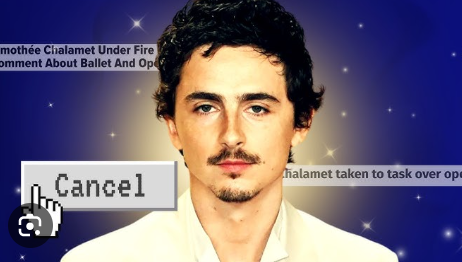
What the Hamptons Circuit Already Knows
For this readership — board members, check-writers, gala hosts — Chalamet’s comment landed as a category error rather than a scandal. Nobody who attends a Met Opera gala or a Guild Hall benefit believes they are doing it because ballet and opera are popular. They do it because these institutions are the infrastructure of cultural leadership. And cultural leadership has always required more than a streaming audience. The wealthiest people in the country have always known the difference between money and position is what you choose to sustain with it.
The Education He’s Still Getting
Chalamet will learn this. He is young, talented, and his family has ballet built into its DNA in a way most actors’ don’t. The day he sits in David Geffen Hall with Tarnopolsky — and it will come — he’ll understand what he missed in February.
In the meantime, Seattle Opera sold some Carmen tickets. The Met got 450,000 likes. Dudamel got a standing ovation from the Lincoln Center donor list. Somewhere in Los Angeles, a 30-year-old with a Ping-Pong movie and three Oscar nominations is learning a useful lesson. The fastest way to make people care about an art form is to publicly suggest no one does.
Related: The Convening Power Premium: Why the Host Controls the Room | Celebrity Net Worth Rankings 2026: How the Biggest Fortunes Are Actually Built
Want your brand featured alongside stories like this? Contact Social Life Magazine about partnerships and editorial opportunities. Join us this summer at Polo Hamptons — where New York’s power players meet in person. Subscribe to the print edition or join our email list for Hamptons insider access delivered first. And if this story moved you, support independent luxury journalism for $5.
Author

Written by
Recent Posts
Netflix Dropped Meghan. She Swears It’s Fine.
Taylor Swift: $2 Billion. A Ring. 89 Days.
Chalamet Called It Dead. Ballet Proved Him Wrong.
Ten Rounds at Her Gate. Rihanna Stood Firm.
Cannes Took 80 Years. Barbra Streisand Didn’t Wait.
Categories
- Art
- Articles
- Beauty & Skincare
- Celebrities
- Chronicles
- Event Photos
- Events
- Fashion
- Fashion & Style
- Featured
- Food & Beverage
- Food, Spirits, Wine
- Hamptons
- Hamptons Celebrities
- Hamptons Design|Luxury Living
- Health
- Health & Beauty
- Lifestyle
- Luxury Lifestyle
- Press
- Profiles
- Real Estate
- Technology
- The Chronicles
- The Chronicles|Celebrities
- Travel
- Uncategorized
- Weddings