
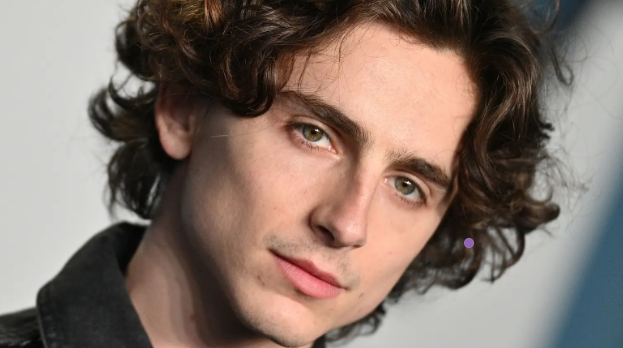
Inside the Timothée Chalamet Net Worth Machine

Timothée Chalamet net worth sits at an estimated $25 to $30 million in 2026 — and that number is about to look quaint. A confirmed $25 million salary for the Paramount heist film High Side makes him the youngest actor since Jennifer Lawrence to command that payday for a single picture. Furthermore, a reported $35 million Bleu de Chanel ambassador deal exceeded all of his film salaries combined at the time of signing. When a fragrance campaign pays more than a decade of movies, you are no longer looking at an actor’s fortune. You are looking at a cultural asset that has been priced accordingly.
However, the interesting thing about Chalamet’s wealth is not the total. It is the architecture. He does not do his own stunts. He does his own outfits. His cultural function is to prove that a certain kind of beautiful, thin, artistic masculinity can anchor a $700 million franchise — and then charge Chanel $35 million for the privilege of standing next to it. Whether this represents progress or simply a rotation in which type of man Hollywood monetizes remains the question his entire career keeps elegantly deferring.
Manhattan Plaza and the Subsidy That Built a Movie Star
The origin story starts where all good New York stories start — in a building that should not have been affordable. Chalamet grew up in Manhattan Plaza, the Hell’s Kitchen housing complex that has produced more artists per square foot than any address in America. Alicia Keys grew up there. So did Kenny Kramer, the real Seinfeld neighbor. The building offers below-market rents to performing artists, which meant Chalamet’s mother — a former Broadway dancer turned real estate agent — could raise her family in midtown Manhattan on a creative-class income.
His father, Marc Chalamet, worked as a journalist and editor for UNICEF. Additionally, his aunt Amy Lippman created the television series Party of Five, and his uncle Rodman Flender directed genre films. The household was not wealthy. It was connected to culture, to the machinery of storytelling, to the casual assumption that making art was a viable way to live. Notably, that is a very different starting position than money. Money buys opportunity. Connection buys context. Chalamet got the context.

He attended LaGuardia Arts — the “Fame” school — and started booking commercials and bit parts as a teenager. A 2009 episode of Law & Order when he was thirteen. Recurring roles on Royal Pains and Homeland. Then a small part in Christopher Nolan’s Interstellar in 2014, playing Matthew McConaughey’s son. He was building a résumé the way a smart investor builds a portfolio — small positions, blue-chip directors, nothing flashy.
Call Me by Your Name and the Pivot That Changed Everything
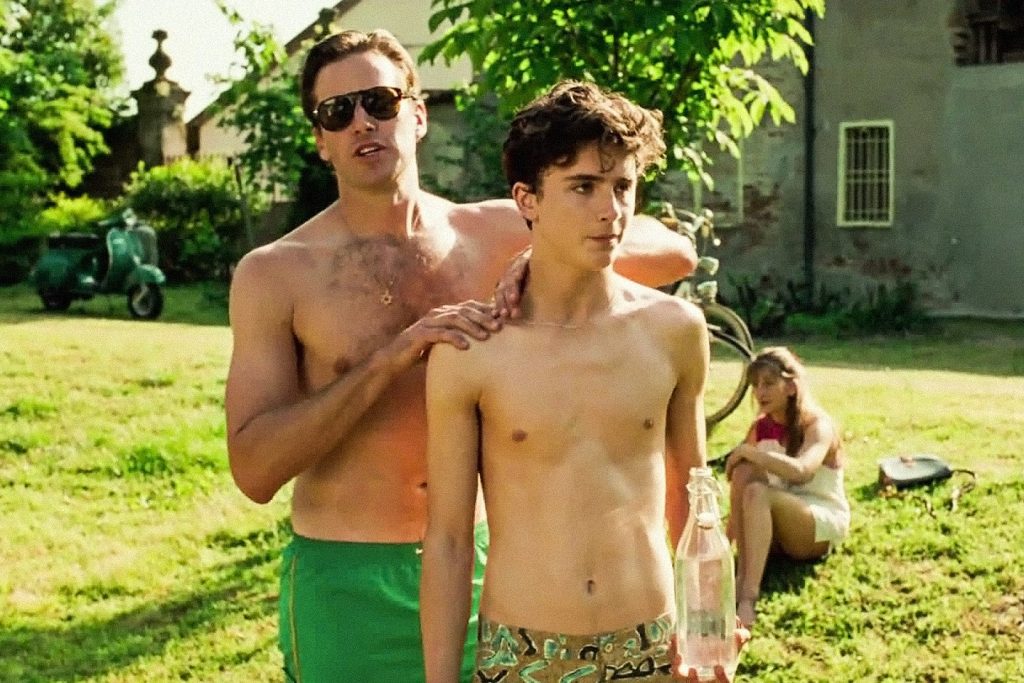
The breakout came in 2017, and the specifics matter. Call Me by Your Name cost almost nothing to make and grossed $42 million worldwide. More importantly, it earned Chalamet his first Academy Award nomination for Best Actor at twenty-two, making him the third-youngest nominee in that category’s history. The film announced something the industry had not seen in a generation — a young male star whose appeal operated through vulnerability rather than power.
Consequently, this was the moment the fashion logic took hold. Previous leading men earned their franchises through action: running, punching, driving, surviving. Chalamet earned his through being looked at. The performance required nothing physical beyond presence, sensitivity, and cheekbones that the camera could not stop finding. Luca Guadagnino understood what he had. GQ would later call Chalamet the best-dressed man in the world. Vogue named him the most influential man in fashion. The Met Gala made him a co-chair in 2021. None of this happened because of Dune. It happened because Call Me by Your Name established him as something movies had not produced since the 1960s — a leading man whose primary offering was beauty rather than force.
The Dune Franchise: Where Fashion Logic Meets $1.3 Billion

Denis Villeneuve handpicked Chalamet for Paul Atreides with a single rationale. “I needed that for the audience to believe this young man will be able to lead a whole planet,” the director explained. The casting was counterintuitive. Paul Atreides is a warrior-messiah. Chalamet is built like a ballet dancer. However, Villeneuve understood something that the traditional action-franchise casting model missed — the 2020s audience does not need their messiah to look like he can fight. They need him to look like he belongs on the cover of a magazine. The distinction is worth $1.3 billion and counting.
The salary trajectory tells the franchise story. Roughly $2.2 million for Dune: Part One in 2021, which grossed $402 million worldwide under the handicap of a simultaneous HBO Max release. A proportional increase for Dune: Part Two, which opened to $82.5 million and finished at $715 million globally. For Dune: Part Three, arriving December 18, 2026, industry analysts expect $10 to $15 million plus backend participation from a franchise that has now proven it can double its own box office with each installment.
Meanwhile, the Chanel deal sits quietly in the background, doing more financial work than any sandworm. The reported $35 million Bleu de Chanel ambassadorship included a short film directed by Martin Scorsese. Read that sentence again. Scorsese directed a perfume commercial for Timothée Chalamet. That is not an endorsement deal. That is a cultural merger.
The Bob Dylan Gamble and the Christmas Strategy

A Complete Unknown opened Christmas Day 2024, and the preparation behind it borders on athletic. Chalamet spent five years learning to sing, play guitar, and play harmonica as Bob Dylan. COVID turned what was supposed to be a four-month prep into a half-decade obsession. He visited Dylan’s former New York apartments. Joel Coen got consulted. The performance earned him a second Oscar nomination — and the reviews praised not just the work but the commitment, which in Hollywood is a word that means “this person took the work more seriously than anyone expected.”
Then came Marty Supreme on Christmas 2025, the Josh Safdie table tennis epic that became A24’s highest-grossing film at $179.3 million worldwide. Nine Oscar nominations. A Golden Globe win for Best Actor. A Critics Choice win. The performance required Chalamet to play a narcissistic hustler — the furthest possible distance from Paul Atreides — and he sold it with the kind of charisma that makes you root for someone you would cross the street to avoid in real life.
Notice the pattern. Three consecutive Christmas releases — Wonka (2023), A Complete Unknown (2024), Marty Supreme (2025). He has essentially claimed December 25 as his annual opening date, the way Will Smith once owned the Fourth of July. That is not luck. That is territory.
The Marketing Genius Nobody Saw Coming

The Marty Supreme promotional campaign revealed a dimension of Chalamet that his films have never shown — the strategist. He produced a staged Zoom call with A24’s marketing team, pitching increasingly absurd promotional ideas in a deadpan satire of corporate culture. GQ called it pitch-perfect. Several of those “absurd” ideas actually happened.
An orange blimp flew across the United States. He became the first person to stand on top of The Sphere in Las Vegas, which A24 had converted into a giant ping-pong ball. The Empire State Building went orange courtesy of the cast. Traditional press got sidestepped entirely, replaced by viral moments that outperformed any magazine profile. Subsequently, the campaign became its own story — a meta-narrative about celebrity marketing that was, itself, a form of celebrity marketing.
At the 2026 Critics’ Choice Awards, Chalamet publicly called Kylie Jenner “my partner of three years” while accepting Best Actor. The acknowledgment was strategic in its casualness. He has learned what previous generations of movie stars never figured out — that controlled transparency creates more mystique than secrecy. You show just enough to make the audience feel included. You withhold just enough to keep them curious. It is the same principle that makes a $35 million Chanel deal work.
Three Oscar Nominations, Zero Wins, and Why It Doesn’t Matter
On March 15, 2026, Chalamet lost the Best Actor Oscar to Michael B. Jordan for Sinners. It was his third nomination. He is thirty years old. The loss dominated headlines for approximately forty-eight hours before the culture moved on to the next thing, which is exactly the correct amount of time for a loss that does not define a career.
The ballet and opera controversy during awards season — Chalamet said he would not want to be involved with an art form “no one cares about” — generated the kind of scrutiny that would have derailed a less secure public figure. Notably, the Oscars telecast referenced the remarks multiple times. He survived it because the work survived it. Marty Supreme earned nine nominations regardless. The controversy became a footnote to the performance, not the other way around.

What remains after the awards dust settles is a career trajectory with almost no precedent. Three Best Actor nominations before thirty. A franchise that has grossed $1.3 billion. A fashion-brand partnership valued higher than most actors’ entire filmographies. A confirmed $25 million salary for a single film. Furthermore, Dune: Part Three arrives in December 2026, which means the man who told Time in 2021 that being called a movie star felt “like death” will spend another Christmas playing the biggest movie star on the planet.
The Timothée Chalamet Net Worth Verdict
The honest assessment of Timothée Chalamet’s net worth requires looking past the $25 to $30 million estimate and asking what the number actually represents. It represents a new species of Hollywood fortune — one built on fashion logic rather than action logic, on being gazed at rather than watching someone perform feats of strength. The Chanel deal pays more than the Dune franchise. The outfits generate more press than the performances. The Christmas release strategy treats box office weekends like luxury product drops.
Additionally, the career one mentor shaped with a single piece of advice — reportedly, “no hard drugs and no superhero movies” — has produced a body of work that includes Villeneuve, Gerwig, Guadagnino, the Safdie brothers, Nolan, and Mangold. Austin Butler collects directors. Florence Pugh collects a range. Chalamet collects both, plus the fragrance deals that make the whole machine self-financing.
By December 2026, when Dune: Part Three closes the franchise and High Side pays out that $25 million salary, the Timothée Chalamet net worth figure will look conservative. Industry analysts predict it could nearly double by 2027 through backend bonuses, new production ventures, and a Chanel renewal that will likely set another record. The kid from Manhattan Plaza has built the first fortune in Hollywood history, where the perfume is worth more than the movies. That is not a criticism. That is the business model of the decade, and he invented it before anyone else understood what it was.
Related Reading
- Dune, Timothée Chalamet, and the New Prestige Blockbuster
- Florence Pugh Net Worth: Building a Career on Refusal
- Austin Butler Net Worth: The Method Actor vs. the Algorithm
- Rebecca Ferguson Net Worth: The Anti-Brand Strategy
- Barbenheimer and the Weekend America Pretended Movies Still Work Like That
There is a particular kind of person who reads an article like this and does not just absorb the information — they see the angles. The positioning. The gap between what the industry says it values and what it actually rewards. If you are that person, you are already operating in the same water we swim in at Social Life Magazine. You just might not have realized we were in the same pool.
If your brand, your business, or your personal story belongs in front of the audience that summers between Westhampton and Montauk — and winters on the Upper East Side — an editorial feature in Social Life is not advertising. It is a strategic placement. Reach out to our editorial team here and let us build something worth reading.
For brands and entrepreneurs seeking elevated visibility with guaranteed placement, our Paid Feature program offers a direct path into the hands of our readership — 25,000 copies per summer issue, distributed to the boutiques, estates, and private clubs where decisions get made. Submit a Paid Feature here.
Our email list reaches 82,000 readers who do not need to Google what a family office is. If you want your name, your brand, or your event in front of that audience, join the list.
Every summer, Polo Hamptons brings together the kind of crowd that turns a weekend afternoon into a three-year business relationship. If you have not been, you are missing the field where the real networking happens — with a polo match as the backdrop.
A print subscription to Social Life Magazine means the issue arrives before the conversation starts. Five summer issues. Two off-season editions. The paper stock alone tells you this is not a newsletter. Subscribe here.
If this article gave you something — a new angle, a sharper read on the culture, a line you will use at dinner — consider a $5 contribution to keep independent luxury journalism alive. Not because we need it. Because you value what we do. Donate here.
Author

Written by
Recent Posts
7 Mindful Meal Prep Tips for Stop Food Waste Day

Rebecca Ferguson Net Worth: The Advantage of Not Being the Lead
What Makes a Dinner Party Truly Unforgettable (Hint: It’s Not the Food)
Tips for Managing Grease and Oil in Everyday Dishwashing
Austin Butler Net Worth: The Method Actor in a Post-Method World
Categories
- Art
- Articles
- Beauty & Skincare
- Celebrities
- Celebrities|Entertainment
- Celebrities|Television
- Celebrities|The Chronicles
- celebrities|the-archive
- Chronicles
- Entertainment|Culture
- Event Photos
- Events
- Fashion
- Fashion & Style
- Featured
- Food & Beverage
- Food, Spirits, Wine
- Hamptons
- Hamptons Celebrities
- Hamptons Celebrities|Celebrities|The Chronicles
- Health
- Health & Beauty
- Lifestyle
- Luxury Lifestyle
- Movies
- Press
- Profiles
- Real Estate
- Technology
- The Chronicles
- Travel
- Uncategorized
- Weddings