
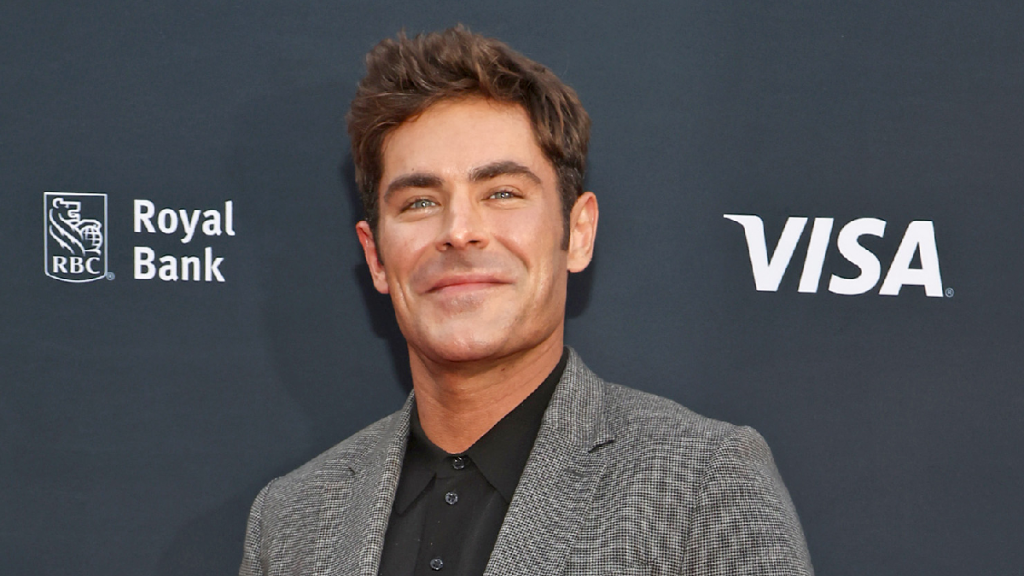
Zac Efron net worth is estimated at $25 million in 2026. That number sounds like a lot until you consider what it represents. Essentially, it is the total accumulated value of a career that began generating revenue before its owner could drive a car. It survived commercial overexposure that would have destroyed most actors. It endured a near-fatal accident that reconstructed his jaw with titanium. Then, against every reasonable expectation, it pivoted into A24 dramatic credibility that the industry reserves for actors who were never teen idols in the first place. The $25 million is not a number that describes a fortune. It is a number that describes a survival.
The Disney machine: High School Musical and what it costs to be loved at 18
Zachary David Alexander Efron was born October 18, 1987, in San Luis Obispo, California, a coastal town whose primary cultural export before Efron was a Cal Poly engineering degree and a vague sense that the Central Coast exists. His father was an electrical engineer at a power station. His mother was a secretary. The family was middle-class in the specific California way that means comfortable but not insulated, aware of wealth without participating in it.

High School Musical premiered on the Disney Channel on January 20, 2006. Efron was 18. Within months, he was the most famous teenager in America. That status comes with contractual obligations, paparazzi protocols, and a merchandising apparatus that converts a human being’s likeness into lunchboxes and concert tour revenue. The sequels followed quickly. High School Musical 2 (2007) drew 17.2 million viewers, the most-watched cable broadcast in American history at the time. High School Musical 3: Senior Year (2008) graduated to theatrical release and grossed $252 million worldwide.
However, the financial yield from this period is estimated at $5 million to $8 million in direct compensation. Significantly more was generated through merchandise and licensing that Efron’s contract almost certainly did not fully capture. Disney’s star contracts in the mid-2000s were notoriously structured to favor the studio. What Efron received instead of full economic participation was a different kind of capital. Specifically, he gained name recognition so total that every casting director in Hollywood knew exactly who he was. This is the Disney trap. They make you famous enough that everyone recognizes you and specific enough that nobody can imagine you as anything else. The fame is the cage. The recognition is the lock.
The wilderness years: trying to outrun Troy Bolton
What followed High School Musical was a decade of strategic miscalculation punctuated by occasional proof of concept. First, Hairspray (2007) was genuine. Efron sang opposite John Travolta in a fat suit and somehow made it work. Then Me and Orson Welles (2008), a Richard Linklater film, demonstrated that he could act without choreography. These were the right instincts. However, the market did not reward them.
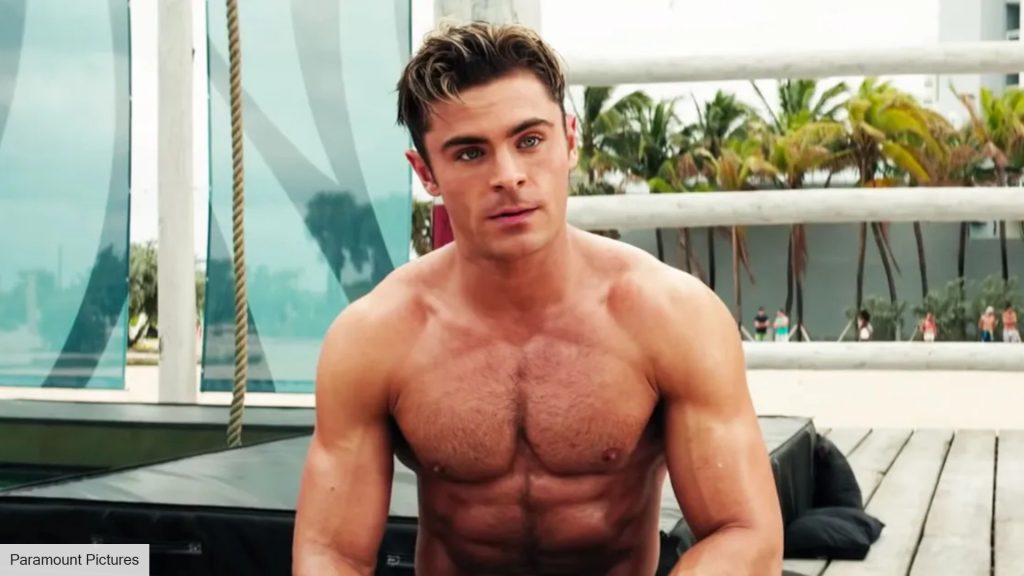
Instead, the market rewarded the comedies. Neighbors (2014) and its sequel paired him with Seth Rogen and grossed over $350 million combined. Dirty Grandpa (2016) with Robert De Niro was critically despised and commercially successful. Baywatch (2017) with Dwayne Johnson was critically despised and commercially adequate. Each of these films used Efron’s physical beauty and comedic timing as the primary assets, which is to say they used the Troy Bolton playbook with slight modifications for an audience that had aged out of Disney Channel but not yet out of the desire to see Zac Efron shirtless.
Ultimately, the problem with this period is not that the films were bad. Several of them were. But they were irrelevant to whether Efron could act in a register that mattered. Critics had written him off. Awards voters ignored him completely. He existed in a commercial tier that generates revenue and a critical tier that generates nothing. That gap was widening every year.
The Greatest Showman and the question of disappearance
Still, The Greatest Showman (2017) complicated the narrative without resolving it. The film grossed over $435 million worldwide and proved Efron could carry musical spectacle as an adult. But it was still a musical. It was still spectacle. More importantly, it still relied on the very skill set that kept him tethered to the image he was trying to escape. The question was not whether Efron could perform. Instead, the question was whether he could disappear. In acting terms, disappearance means subordinating your own recognizability to the character’s reality. Performers perform. Actors disappear. After twelve years, Efron had not yet disappeared once.
The accident, the jaw, and the body as text
In 2022, Efron suffered an accident at his home that shattered his jaw. The reconstruction required titanium implants and resulted in a noticeably altered facial structure. Naturally, the tabloid press covered it without subtlety. Speculation about plastic surgery was immediate and persistent. Eventually, Efron addressed it, confirming the accident and the surgical reconstruction. But the discourse had already calcified into a narrative about vanity. That narrative completely missed the more interesting story: an actor whose entire career had been built on his face now had a different face. And that different face might actually free him from the tyranny of the original one.
Of course, this observation sounds callous until you consider the economics. An actor whose value is primarily physical occupies a depreciating asset class. After all, youth is a wasting asset. Beauty is a wasting asset. Consequently, the actors who build durable fortunes convert physical capital into craft capital before it depletes. Efron’s jaw reconstruction, involuntary as it was, accelerated a transition he had been attempting for a decade: from a face the audience wanted to look at to a body the audience wanted to watch act. The Iron Claw, which required him to add 15 pounds of muscle and portray a man whose physicality was simultaneously his gift and his prison, was the first role where the new face and the new ambition converged.
The Iron Claw and the A24 credibility stamp
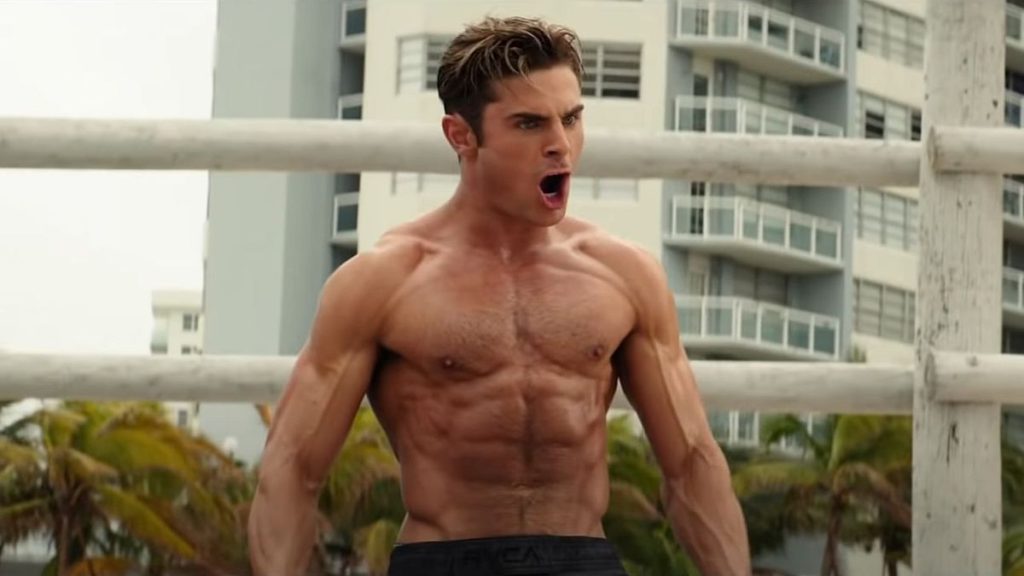
Sean Durkin’s The Iron Claw (2023) cast Efron as Kevin Von Erich, the eldest surviving brother in a professional wrestling dynasty systematically destroyed by tragedy. The performance required physical transformation. Efron trained for months to achieve a wrestler’s build that looked functional rather than decorative. It also demanded emotional exposure, as Kevin watches his brothers die one by one. Above all, it required the complete suppression of charm. Kevin is earnest, simple, and absolutely devoid of the winking self-awareness that had characterized every Efron performance since High School Musical.
Notably, A24 distributed the film. That logo functions like a Michelin star for restaurants seeking culinary legitimacy. In other words, it signals that the quality has been evaluated by people whose judgment the industry respects. Co-starring with Jeremy Allen White (who played Kerry Von Erich) and Harris Dickinson (who played David) placed Efron alongside two actors whose credibility was never in question. White brought prestige-TV authority from The Bear. Dickinson brought Cannes and Palme d’Or weight. Efron brought the name recognition that ensured the film would be seen by an audience larger than the typical A24 release attracts.
The exchange was mutually beneficial. Specifically, White and Dickinson gained commercial visibility. Efron gained critical legitimacy. A24 gained a marketing hook. As a result, the audience gained a film that was better than any individual element of its cast would have predicted. This is how the content mesh works at the industry level: actors from different credibility tiers collaborate, each lending the other something they lack, and the result is a film that no single tier could have produced alone.
Netflix, substance, and the parallel track
Meanwhile, Efron maintained a parallel revenue stream through Netflix. Down to Earth with Zac Efron (2020-2022), a travel docuseries about sustainability and wellness, positioned him as a thoughtful, curious, environmentally conscious celebrity in a format that required no acting at all. The show ran two seasons and demonstrated that Efron’s appeal extends beyond scripted entertainment into the lifestyle and wellness space.

A Family Affair (2024), a romantic comedy opposite Nicole Kidman and Joey King, kept him inside Netflix’s ecosystem at a salary estimated between $3 million and $5 million. The film was not a critical event. Rather, it was a commercial one. And for an actor rebuilding a career, the ability to alternate between A24 credibility and Netflix commercial safety is not a compromise. In fact, it is a strategy. One lane feeds the awards conversation. The other lane feeds the bank account. Both feed the career.
Additionally, Efron has been open about his past struggles with substance abuse. That candor has paradoxically strengthened his public image. The audience that grew up with Troy Bolton wants to root for Efron. They remember him at 18. They feel proprietary about his trajectory. His comeback feels like their own adolescence maturing alongside him. That emotional investment, irrational and parasocial as it may be, is a form of capital that no publicist can manufacture and no scandal has managed to destroy.
Zac Efron net worth: the wealth breakdown
| Income source | Estimated range |
|---|---|
| High School Musical franchise + Disney era | $5M – $8M |
| Studio comedies (Neighbors, Baywatch, Greatest Showman) | $8M – $12M |
| The Iron Claw + A24 dramatic work | $1M – $2M |
| Netflix (Down to Earth, A Family Affair) | $3M – $5M |
| Endorsements, producing, wellness brand | $2M – $3M |
| Residuals, streaming, misc | $1M – $2M |
| Current estimated net worth | $25M |
| Projected 2028 | $30M – $35M |
FAQ: Zac Efron net worth
What is Zac Efron’s net worth in 2026?
Zac Efron’s net worth is estimated at $25 million in 2026, built across two distinct career phases: the Disney/teen-idol era and the post-Iron Claw dramatic reinvention, supplemented by Netflix deals and endorsement partnerships.
Was Zac Efron in The Iron Claw with Jeremy Allen White?
Yes. Efron and White co-starred in Sean Durkin’s The Iron Claw (2023), an A24 film about the Von Erich wrestling dynasty. The film is widely credited with repositioning Efron as a serious dramatic actor.
What happened to Zac Efron’s jaw?
Efron suffered an accident in 2022 that shattered his jaw, requiring surgical reconstruction with titanium implants. The altered facial structure was widely discussed in tabloid media, though Efron has confirmed the cause was an accident rather than elective surgery.
Is Zac Efron still acting?
Yes. Efron remains active in both film and television, alternating between A24 dramatic work, Netflix commercial projects, and potential franchise opportunities.
Where the conversation continues
Zac Efron is the proof that the Disney pipeline does not have to end at the Disney pipeline. A $25 million fortune split between two careers, two audiences, and two completely different skill sets. A kid who danced his way to fame at 18 broke his jaw, packed on muscle, and stood in a wrestling ring at 36 to prove that he was more than the cage the industry built for him. That reinvention is not complete. It may never be complete. The interesting thing about Efron’s career is that the process of escaping Troy Bolton has become, itself, the most compelling thing about him. The destination matters less than the fact that he is still running.
For more profiles on the actors, icons, and power players shaping culture from New York to the East End, visit sociallifemagazine.com/contact.
Subscribe at sociallifemagazine.com. Polo Hamptons 2026: July 18 and 25 at polohamptons.com.
Author

Written by
Recent Posts

AI for personal finance: where PennyGuard fits

How to Pick a Homecoming Dress for Your Body Type (and Feel Amazing in It)

World Cup Injury Attorney for Vancouver Events
What a 3-Carat Engagement Ring Actually Costs in 2026: The Real Numbers
The Skincare Habits That Make a Real Difference Over Time
Categories
- Art
- Articles
- Business of Luxury
- Celebrities
- Culture
- Entertainment
- Events
- Faces of Summer 2026
- Fashion
- Fashion & Style
- Featured
- Finance
- Food, Spirits, Wine
- Hamptons
- Hamptons Celebrities
- Health
- Health & Beauty
- Lifestyle
- Luxury Lifestyle
- Press
- Profiles
- Real Estate
- Technology
- The Chronicles
- Travel
- Uncategorized
- Weddings