
The Before: Cheviot Hills, Guns N’ Roses, and Dustin Hoffman’s Kids
By contrast, Jonah Hill Feldstein grew up in Cheviot Hills, one of the quieter, wealthier enclaves on the Westside of Los Angeles, where the lawns are manicured, and the ambitions are enormous. In particular, his father, Richard Feldstein, was a tour accountant for Guns N’ Roses — a job that sounds glamorous until you realize it means tracking per diems and hotel damage bills while Axl Rose destroys another green room. Specifically, his mother, Sharon Lyn, was a costume designer and fashion stylist. As a result, the household was comfortable, Jewish, entertainment-adjacent, and positioned precisely close enough to Hollywood to make a career seem possible but not inevitable.
Similarly, the Feldstein family produced three children who all ended up in the industry. Jonah was the middle child. Despite this, his older brother Jordan managed Maroon 5 from the band’s inception, building Career Artist Management into one of the most respected boutique firms in the music business. In turn, his younger sister, Beanie Feldstein, would later star in Lady Bird, Booksmart, and a controversial Broadway revival of Funny Girl. Regardless, the family’s proximity to the entertainment business was structural, not accidental. Still, these were people who understood how the machine worked because they helped maintain it. Richard Feldstein’s clients trusted him with their money. Sharon dressed people for the camera. Even so, the children absorbed the lesson that show business is a business first and a show second.
The Turning Point
That said, jonah attended the Crossroads School in Santa Monica, a private school whose alumni list reads like a casting director’s shortlist. He wanted to be a writer. Not an actor. Additionally, his dream was to join the writing staff of The Simpsons or Saturday Night Live. Furthermore, he moved to New York for college, bouncing between several schools without finishing any of them, and started writing plays that he performed in East Village bars. The audiences were small. The material was raw. But something about the kid’s timing caught attention. Moreover, two of Dustin Hoffman’s children saw him perform and mentioned him to their father. Consequently, hoffman helped Hill land an audition for I Heart Huckabees in 2004. He got the part. However, the writing career he’d imagined became an acting career he hadn’t planned.
The Pivot Moment: Superbad and the Invention of a New Kind of Leading Man

Nevertheless, Judd Apatow found Jonah Hill the way Apatow found most of his stable: through proximity and persistence. Notably, hill appeared briefly in The 40-Year-Old Virgin, then in a slightly larger role in Knocked Up. In fact, each time, he demonstrated the quality that would define his early career — an ability to be simultaneously pathetic and magnetic, to make audiences laugh at a character’s desperation while recognizing themselves in it. Subsequently, the quality is harder to manufacture than it looks. Meanwhile, most comedic actors choose one register: likable loser or aggressive jerk. Indeed, Hill played both at once, and the dissonance was funny.
Superbad arrived in 2007 and detonated. Hill starred opposite Michael Cera in a teen comedy written by Seth Rogen and Evan Goldberg, based on their own adolescence. The film grossed $170 million worldwide on a $20 million budget. More importantly, it established Hill as something Hollywood had never quite seen: a leading man who looked like the audience rather than the fantasy. He was overweight, loud, anxious, and completely in command of every scene. The studio system didn’t know what to do with that combination. It cast him in everything anyway. Get Him to the Greek. Funny People. Forgetting Sarah Marshall. The paychecks climbed from five figures to seven. Hill was bankable before anyone had time to decide whether he was a movie star or a character actor. The distinction, it turned out, didn’t matter. He was both.
The Climb: Two Oscar Nominations and the $60,000 That Changed Everything
In 2011, Bennett Miller cast Hill opposite Brad Pitt in Moneyball. The film told the story of Billy Beane’s statistical revolution in baseball, and Hill played Peter Brand, the Yale-educated numbers geek who gave Beane the tools to compete against richer teams. The performance was quiet, precise, and nothing like anything Hill had done before. He earned his first Academy Award nomination for Best Supporting Actor. Hollywood noticed. The fat kid from Superbad could act.
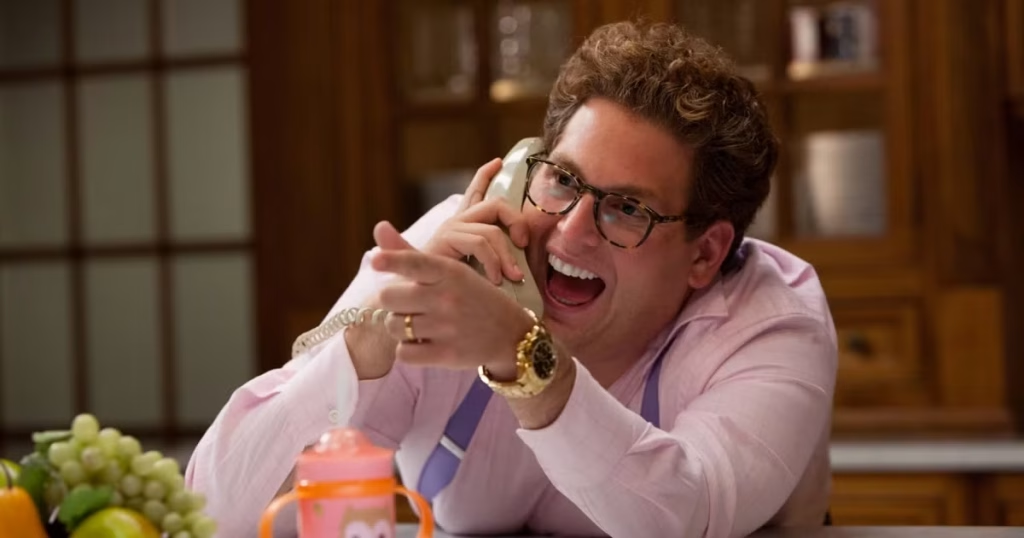
Then came the gamble. Martin Scorsese was casting The Wolf of Wall Street, and the role of Donnie Azoff — Jordan Belfort’s unhinged partner, based on real-life Stratton Oakmont co-conspirator Danny Porush — required an actor who could be simultaneously hilarious, terrifying, and repulsive. Hill wanted the part badly enough to work for SAG minimum: $60,000 for a seven-month shoot. He told Howard Stern the math was simple. You don’t negotiate with Scorsese. You show up and pray he lets you stay.
The performance earned Hill his second Oscar nomination. He gained weight, wore prosthetic teeth, and played Azoff as a man whose loyalty to Belfort was indistinguishable from addiction. The Quaalude scene — in which Hill’s character chokes on a piece of ham while incapacitated — required emergency medical consultants on set. Porush himself objected to the portrayal, claiming it was exaggerated, though he never filed suit. The $60,000 paycheck became one of the most famous salary stories in Hollywood. What it purchased was not money but positioning. After Wolf, every casting director in the industry understood that Jonah Hill was not a comedian who could do drama. He was a dramatic actor who happened to be funny. The distinction is worth about $74 million.
The Hamptons Chapter: Malibu Colony and the Real Estate Portfolio
Jonah Hill’s real estate moves tell the story of a man whose net worth grew faster than his ability to decide where he wanted to live. In 2010, he bought a home in Los Angeles for just under $2 million and sold it five years later for $3.65 million. Around the same time, he spent $9.2 million on a loft in Manhattan’s NoHo neighborhood — the kind of industrial-chic space that signals creative seriousness while also being a phenomenal investment. He sold the NoHo loft in 2022 for $10.6 million, a tidy profit but not a transformative one.
The real action happened in Malibu. In 2021, Hill paid $9 million for a home in the gated Malibu Colony, buying it from Richard and Laurie Stark, the founders of Chrome Hearts. He sold it a year later for $11.1 million, having listed it at $15 million. The same month, he paid $15.5 million for an oceanfront property directly across the street from his former place — a move that suggests either an inability to commit to a neighborhood or, more likely, the recognition that Malibu Colony real estate appreciates faster than movie careers.
He listed that property in 2024 for $16.7 million. The pattern is instructive: buy, hold briefly, sell at a profit, reinvest at a higher price point. It is the same pump-and-dump logic Donnie Azoff practiced at Stratton Oakmont, except Hill’s version is legal, profitable, and conducted in one of the most exclusive zip codes on earth.
Behind the Numbers
While Hill has not established a significant Hamptons presence, his Malibu Colony lifestyle positions him squarely in the same coastal wealth demographic that summers on the East End. The Colony’s resident list overlaps meaningfully with the social circles that anchor Southampton and Bridgehampton each July. When you are buying and selling oceanfront properties at $15 million, the Hamptons are not a destination. They are a peer group.
What He Built: Director, Producer, and the Stutz Documentary
The second act of Jonah Hill’s career began in grief. On December 22, 2017, his older brother Jordan Feldstein died suddenly from a pulmonary embolism at age 40. Jordan collapsed after calling 911 for shortness of breath. By the time paramedics arrived, he was in full cardiac arrest. He left behind two young sons. The loss hit the Feldstein family like a detonation. Beanie would later write that grief brought her and Jonah closer together in ways that were difficult to articulate publicly. Maroon 5 dedicated the music video for their 2019 song “Memories” to Jordan, adding the message “For Jordi” at the end.
Hill channeled the aftermath into two projects that redefined his public identity. Mid90s, his 2018 directorial debut, was a coming-of-age film set in the Los Angeles skateboarding culture of his youth. He wrote the screenplay and directed with control and visual specificity that surprised critics expecting a comedian’s vanity project. The film premiered at the Toronto International Film Festival to strong reviews. A24 distributed it. Hill had proven he could work behind the camera with the same precision he brought in front of it.
What the Record Shows
Then came Stutz, the 2022 Netflix documentary in which Hill films his own therapy sessions with his psychiatrist, Dr. Phil Stutz. The project was unprecedented in its vulnerability. Here was a man worth tens of millions of dollars, with two Oscar nominations and a filmography spanning sixty titles, sitting in a chair and talking openly about anxiety, body image, self-worth, and the loss of his brother. The film was not confessional in the celebrity memoir sense. It was structural — Hill used Stutz’s therapeutic tools as a framework, turning private healing into a public resource. The documentary became one of the most-discussed films of the year and established Hill as something rarer than a movie star: a public figure willing to be genuinely honest about the cost of success.
His production banner, Strong Baby Productions, has continued to develop projects across film and television. In 2021, he landed the role as Jerry Garcia in a Martin Scorsese-directed Grateful Dead biopic, a reunion with the director who had given him his best role for $60,000. His film Outcome, a black comedy he wrote and directed starring Keanu Reeves and Cameron Diaz, is set for Apple TV+ release in April 2026. A second film, Cut Off, starring Kristen Wiig, is scheduled for theatrical release in July 2026. He also launched Meaningful Existence, a satirical lifestyle brand built around a fictional prophet named Ezekiel Profit — a concept so layered in irony it could only come from someone who spent a decade making comedies about men who cannot stop performing.
The Soft Landing: $80 Million and the Question Nobody Asks
Jonah Hill’s net worth sits at an estimated $80 million. The number rests on comedy blockbusters that earned hundreds of millions (the 21 Jump Street franchise alone grossed over $530 million combined), dramatic performances that earned Oscar nominations, voice acting work across multiple animated franchises (How to Train Your Dragon, The Lego Movie, Megamind), and a real estate portfolio that generates returns on every transaction. He ranked 28th on Forbes’s highest-paid actors list in 2015 at $16 million for the year. His 22 Jump Street deal reportedly netted him close to $20 million when story credits, producing fees, and backend participation were factored in.
The controversies have not derailed the fortune. In 2023, ex-girlfriend Sarah Brady publicly shared text exchanges in which Hill allegedly told her he could not continue their relationship if she continued surfing with other men or posting photos of herself in swimwear. The texts sparked widespread criticism and accusations of controlling behavior. During the same period, former child actress Alexa Nikolas accused Hill of inappropriate physical contact when she was 16, and he was 24. Hill has not responded publicly to either allegation. He withdrew from press obligations for his subsequent films, citing mental health priorities. The withdrawal itself became a statement — a man worth $80 million deciding that silence was worth more than defense.
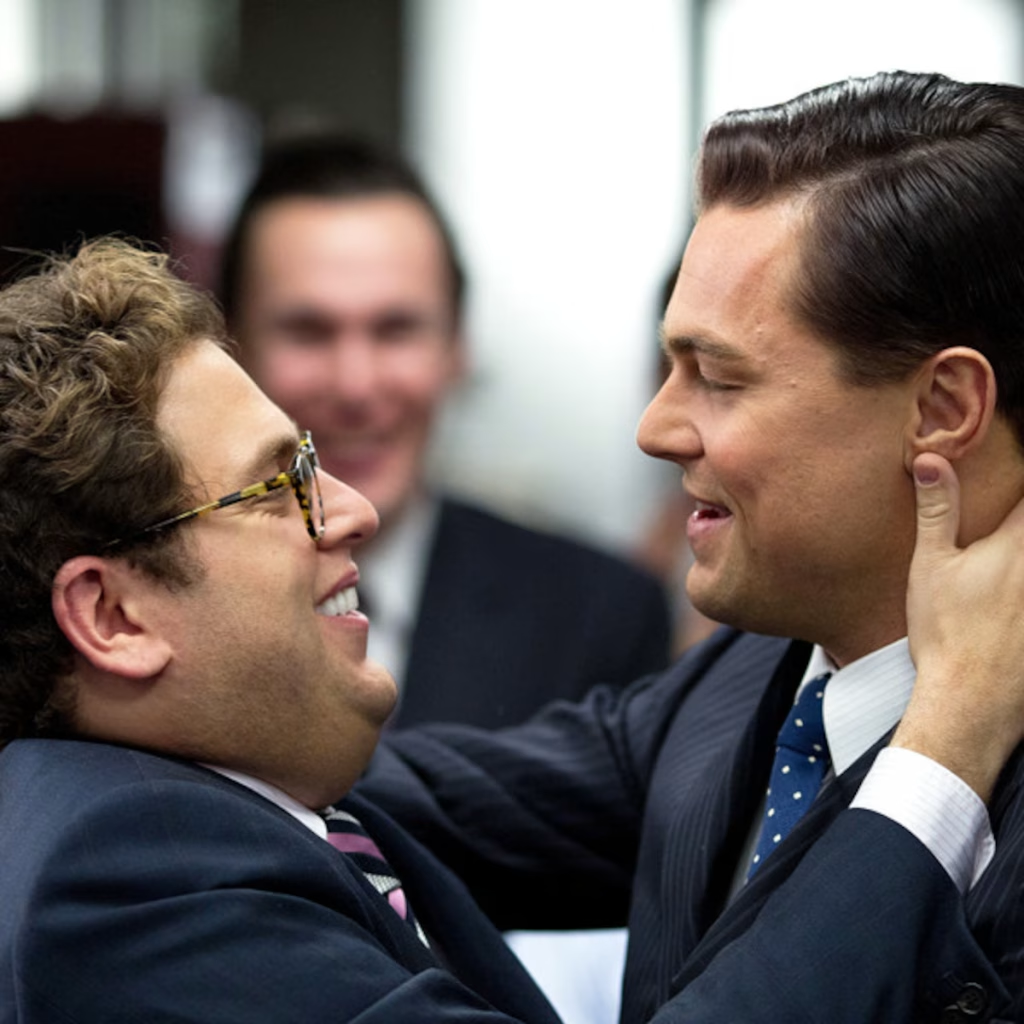
The $60,000 he accepted for The Wolf of Wall Street remains the defining financial decision of his career. Not because it was smart in the traditional sense — working for seven months at minimum wage is objectively insane — but because it revealed something about Hill that no salary negotiation could. He understood that access to Scorsese was worth more than any single paycheck.
Inside the Decision
Ultimately, the performance would compound in value over decades. That the real currency in Hollywood is not the check you deposit but the door that opens next. Leonardo DiCaprio, who became a close friend during the shoot, later called Hill “an absolute genius.” Margot Robbie, whose career launched from the same film, built an $80 million empire of her own. The three of them — DiCaprio, Robbie, Hill — emerged from a movie about fraud and became the most honest argument Hollywood has for the proposition that talent, properly leveraged, is the only asset that never depreciates.
Related: Wolf of Wall Street True Story: How Jordan Belfort Built and Lost a $200 Million Fraud Empire · Leonardo DiCaprio Net Worth: How a Kid From “Scumsville” Built a $300 Million Empire · Margot Robbie Net Worth: From Queensland Farm Girl to $80 Million Power Broker · The Wall Street Movies That Rewired How America Thinks About Money
If you recognize the pattern — the kid who didn’t look the part, who took the room nobody else wanted, who bet on himself when the math said don’t — then you already understand what Social Life Magazine has been covering for 23 years. The people who build things that last. Reach out to our editorial team to be featured.
Want to position your brand inside the culture where talent meets capital? Submit a Paid Feature and let our editors build something worth reading.
The Deeper Story
Join 82,000+ subscribers who get our take on luxury, culture, and the Hamptons scene before anyone else. Subscribe to our email list.
Experience the intersection of sport, style, and status at Polo Hamptons — Bridgehampton’s premier luxury polo event, now in its seventh year with BMW as title sponsor.
Never miss a print issue. Subscribe to Social Life Magazine and get five summer issues delivered from Memorial Day to Labor Day.
Love what we do? Support Social Life Magazine and help us keep covering the culture that matters.
Author

Written by
Recent Posts
Wall Street: Money Never Sleeps — How the 2008 Crash Made Gordon Gekko Irrelevant
The Big Short True Story: The Outsiders Who Bet Against America and Won
Margin Call True Story: The Night Wall Street Decided to Burn It All Down
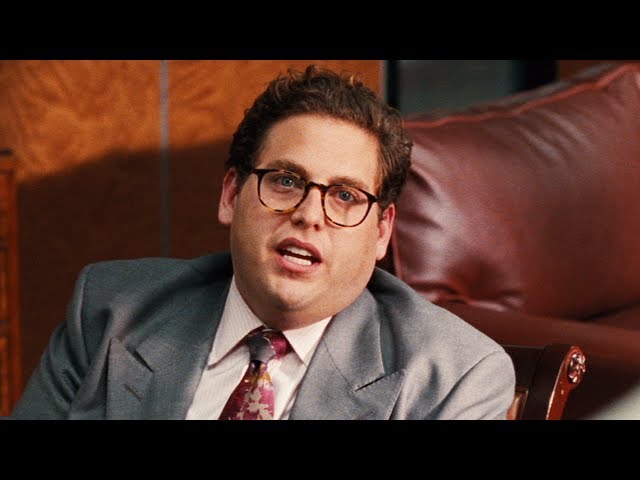
Jonah Hill Net Worth: The $60,000 Gamble That Built an $80 Million Empire
Boiler Room: The Long Island Pump-and-Dump Story Hollywood Told Twice
Categories
- Art
- Articles
- Beauty & Skincare
- Celebrities
- Celebrities|Movies
- Celebrities|The Chronicles
- Chronicles
- Entertainment|Culture
- Event Photos
- Events
- Fashion
- Fashion & Style
- Featured
- Food & Beverage
- Food, Spirits, Wine
- Hamptons
- Hamptons Celebrities
- Hamptons Celebrities|Celebrities|The Chronicles
- Health
- Health & Beauty
- Lifestyle
- Luxury Lifestyle
- Movies|Culture
- Movies|Hamptons Lifestyle
- Press
- Profiles
- Real Estate
- Technology
- The Chronicles
- Travel
- Uncategorized
- Weddings