
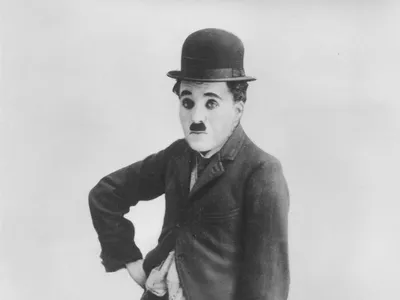
Additionally, the boy is seven years old. His mother cannot feed him. Furthermore, his father has not come home in months. On a grey morning in 1896, Hannah Chaplin walks her son Charles through the iron gates of the Lambeth Workhouse in Kennington, south London.
Notably, they separate him from her at the door, cut his hair, and put him in a uniform. He will remember this as a “forlorn existence.” He will also remember everything else about it. The cold, the shame, the horse cart that carries children away from their mothers, the specific face of poverty when it looks back at you from a mirror. He will spend the next eighty years turning that memory into the most recognized character in the history of cinema.
Additionally, charlie Chaplin’s net worth at his death was $100 million — over $500 million in today’s dollars. The workhouse is where it starts.
The Before: Kennington, London, 1889
Furthermore, charles Spencer Chaplin was born on April 16,. 1889, in Walworth, London, to two music hall performers who could not sustain a life together long enough to raise their children. Additionally, his father, Charles Sr., was a vocalist who preferred public houses to family obligations. His mother, Hannah, earned what she could through dressmaking and occasional nursing.
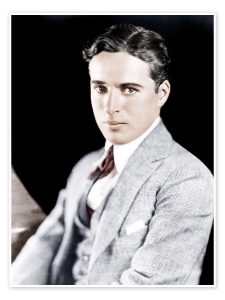
Neither earned enough. Neither stayed.
Additionally, kennington in the 1890s was not the middle-class neighborhood it eventually became.The Booth poverty maps of the era mark the streets around Chaplin’s childhood addresses in light and dark blue — the cartographic language for “poor,” “very poor,” and “chronic want.” Street urchins roamed Methley Street, where Hannah rented rooms next to a slaughterhouse and a pickle factory. The neighbors were real-life Oliver Twists. One of them, a man named Archibald Binks who walked with a rheumatic shuffle, would eventually become the physical foundation of the Little Tramp’s distinctive walk.
By the time Chaplin was seven, the family had run out of options. Hannah checked them into Lambeth Workhouse. Additionally, three weeks later, she and the boys were transferred to the Central London District School for paupers at Hanwell. Transported through the streets by horse-drawn cart, in uniform, past neighbors who knew exactly what the cart meant.
Notably, chaplin later recreated that scene almost exactly in The Kid. He was not writing fiction. He was writing memory.
The Pivot Moment: Cane Hill, 1898
Furthermore, Hannah Chaplin’s mental illness worsened through the late 1890s — a psychosis attributed to syphilis and malnutrition, compounded by years of poverty that left her body as depleted as her circumstances. In September 1898, she was committed to Cane Hill Mental Asylum. Charlie was nine. His brother Sydney, two years older, had joined the Navy.
Consequently, their father, an alcoholic, died of liver disease two years later at thirty-eight.
Consequently, the boy was alone. Additionally, he slept rough for several days before Sydney returned. Food came from wherever he could find it. Nine years old in South London in 1898, and there was genuinely no one coming.
Meanwhile, that fact — the complete and documented absence of rescue — is the engine of everything Charlie Chaplin subsequently built. Not ambition, exactly. Something harder. The cellular certainty that no institution, no family, no government, no system would protect him.
Ultimately, the only protection available was what he could build himself.
Indeed, at nine years old, he started performing on stage. By fourteen, he walked his mother back to the infirmary for the last time. Watched them send her to Cane Hill again; he was already working. Hannah Chaplin spent the rest of her life in psychiatric care.
Additionally, her son spent the rest of his time building something no one could take away.
The Climb: $175 a Week to $10,000 a Week in Three Years
Remarkably, at nineteen, Chaplin signed with Fred Karno’s comedy company in London. By twenty, the company had toured America. At twenty-four, Mack Sennett of Keystone Studios saw him perform and offered him $175 a week to make films. Chaplin accepted.
Additionally, he introduced the Tramp in his second film. By his fifth, the character had become something the medium had never produced before: a global icon built from a Kennington shuffle and a Lambeth workhouse memory.
Notably, the salary negotiations that followed are among the most dramatic in entertainment history. By 1915, Chaplin had moved to Essanay at $1,250 per week — more than seven times his Keystone rate. In 1916, Mutual Film Corporation paid him $10,000 per week plus a $150,000 signing bonus. That figure, adjusted for inflation, equals roughly $237,000 per week in today’s dollars.
Specifically, he was twenty-six years old. His 1918 deal with First National paid $1 million for eight films — the first million-dollar acting contract in Hollywood history. The workhouse boy had made himself the most expensive performer on earth.
However, salary was never the point. Control was the point. In 1919, Chaplin co-founded United Artists with Mary Pickford, Douglas Fairbanks, and D.W. Griffith — a distribution company owned by the artists, designed to give creators direct ownership of their profits and their work.
Subsequently, the child who had owned nothing created the template for artist ownership that Hollywood still operates within a century later. The $175-a-week Keystone comedian had become his own institution before he was thirty.
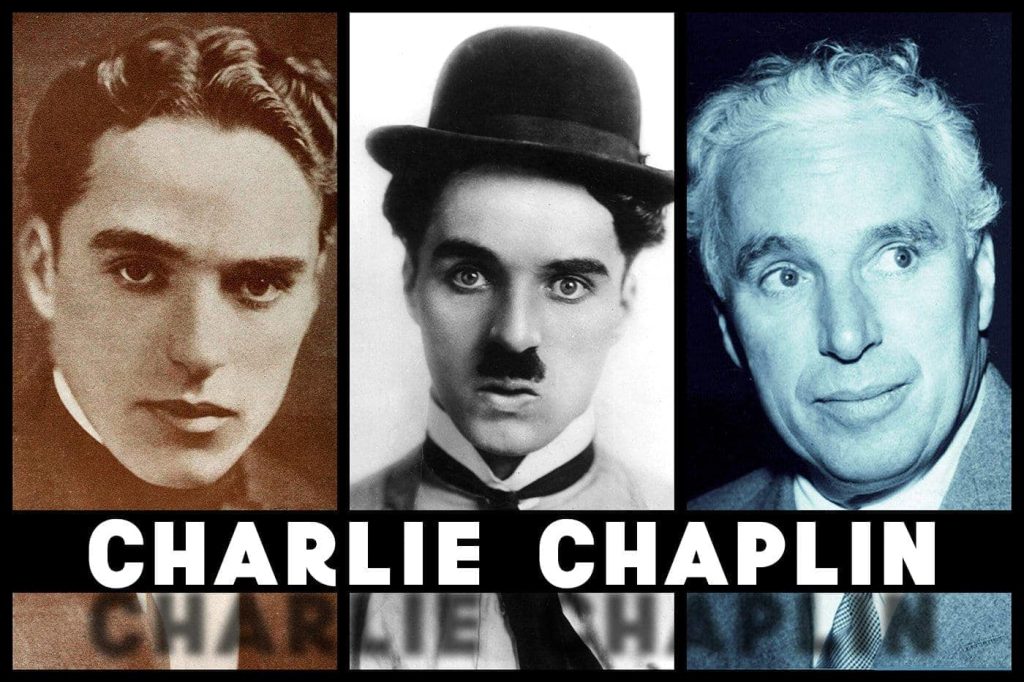
Charlie Chaplin’s Net Worth: What He Built and How He Kept It
Furthermore, by the 1920s, Charlie Chaplin was not merely wealthy. Additionally, he was the most famous person in the world. Notably, a category that barely existed before him and has never been occupied with the same totality since. The Gold Rush.
The Kid. City Lights. Modern Times. The Great Dictator.
Moreover, each film was written, directed, produced, scored,. And starred by the same man who had slept rough in Kennington at nine years old. Each film he owned outright.
Consequently, the estate he accumulated reflected his foundational terror of losing everything. He buried cash in the garden of his Beverly Hills property. He made Oona, his fourth wife, a co-signer on every American account. When the McCarthy era’s political persecution revoked his re-entry permit in 1952 — effectively exiling him from the country where he had built his empire — Oona traveled to America, dug up the buried cash, converted $1 million into thousand-dollar bills, and sewed them into the lining of her mink coat to carry the fortune back to Switzerland.
In fact, the workhouse boy’s contingency plan was always running. He had learned at seven that the worst could happen. He never stopped preparing for it.
Chaplin settled at Manoir de Ban, a 37-acre Swiss estate on the shores of Lake Geneva. Additionally, he lived in baronial comfort until his death on Christmas Day, 1977, at eighty-eight. Furthermore, his estate at death: at least $100 million, equivalent to over $500 million in 2026 dollars. He left it to Oona and their eight children.
The family subsequently converted Manoir de Ban into the Chaplin’s World Museum. Continues to generate revenue alongside the ongoing management of his film rights, compositions, and image. His estate still earns. The Tramp still works.
The Tell: Everything the Tramp Was Really Saying
Sigmund Freud, who watched Chaplin’s films with unusual attention,. Wrote that Chaplin “always plays only himself as he was in his dismal youth.” This observation is more precise than it sounds. The Tramp is not a comic character who occasionally touches on pathos. The Tramp is a poor man who is funny because he refuses to behave as though poverty has defeated him.
Who maintains dignity, desire, and grace inside circumstances designed to strip all three away. That is not a comic archetype. That is Kennington, 1896, reprocessed through genius into something an audience in 1921 could recognize. Love without knowing why it hurt to watch.
Additionally, the Kid’s central scene — the horse cart separating the child from the man who loves him — is the Hanwell transfer, exactly. City Lights’ blind flower girl is Hannah Chaplin,. Unable to see the world that her son could see clearly enough for both of them. Modern Times is the workhouse system at industrial scale.
The Great Dictator is what happens when a boy who grew up with no power finally gets a microphone. The whole world is listening.
Furthermore, the money was always the armor. Each salary negotiation was the seven-year-old in the workhouse uniform demanding that the world acknowledge what it had taken from him. Each contract that broke records was Chaplin placing a number on what Lambeth had cost. He never stopped making them pay.
He just made them laugh while he did it.
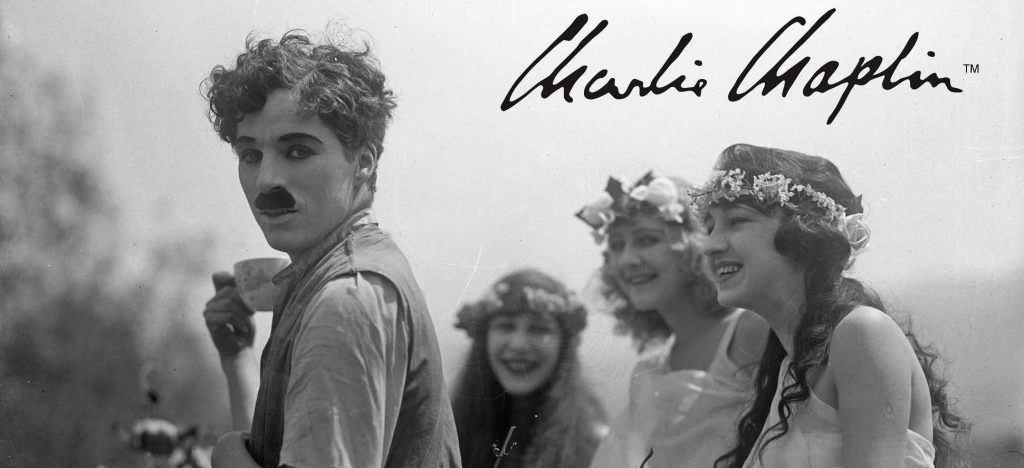
The Legacy: What $500 Million and Zero Oscars Actually Means
Meanwhile, the Academy of Motion Picture Arts and Sciences gave Charlie Chaplin two honorary statuettes and one competitive award for scoring. They never gave him a competitive acting Oscar for a comedic performance. Thefull argument for why that omission represents a century of institutional failure is made elsewhere on this site. Here the simpler point stands: the most financially successful comedian in the history of cinema received the industry’s highest honor in honorary form, at eighty-two, twenty years after his greatest work.
The Films That Outlasted the Institution
Meanwhile, the films remain. City Lights still makes people cry at the end. Nobody who watches it can explain precisely why a silent film made in 1931 does what it does to a contemporary audience. Modern Times still reads as current economic commentary.
Additionally, the Gold Rush still generates the specific laughter that comes from watching someone make joy out of genuine deprivation. These films are not nostalgic artifacts. They are living documents of what a seven-year-old in a workhouse uniform understood about the human condition that most people never figure out at all.
The Accounting That Actually Matters
At his death, Charlie Chaplin was worth $500 million in today’s dollars and had built one of the most durable entertainment empires in Hollywood history. Had created a character that every human being on earth recognized. Additionally, he had done all of it starting from less than nothing. In a system specifically designed to ensure that people who started where he started stayed there.
The workhouse gates opened one morning in 1896 and let a seven-year-old boy in. They had no idea what they were keeping.
You may also enjoy: Oscar’s Snub Comedy: Don’t Laugh — The Case for Two New Academy Award Categories
Related Reading:
- The Wound and the Fortune: What 19 Self-Made Millionaires Have in Common
- Jerry Seinfeld Net Worth: Comedy’s Wealthiest Star
- Robert Downey Jr Net Worth: The $300 Million Comeback King
- Keanu Reeves Net Worth: Hollywood’s Nicest $380 Million Fortune
The East End’s premier sporting event: Polo Hamptons — sponsorships, VIP access, and brand activations where the Hamptons actually convenes.
Get the Hamptons insider list: Subscribe to Social Life Magazine — 23 years of the East End, delivered to your door.
Support independent Hamptons journalism: Donate $10
Author

Written by
Recent Posts
Behind the Scenes of Weddings Involving Long-Distance Relationships
Why Karaoke Is the Ultimate Entertainment Choice for a Hen Party
Easy Recipes That Feed A Crowd Without The Stress
The Influence Of Social Media On Interior Style Trends
Where Can You Find the Best Made-to-Measure Bespoke Suits in NYC
Categories
- Art
- Articles
- Beauty & Skincare
- Celebrities
- Celebrities|Movies
- Celebrities|The Chronicles
- Chronicles
- Entertainment|Culture
- Event Photos
- Events
- Fashion
- Fashion & Style
- Featured
- Food & Beverage
- Food, Spirits, Wine
- Hamptons
- Hamptons Celebrities
- Hamptons Celebrities|Celebrities|The Chronicles
- Health
- Health & Beauty
- Lifestyle
- Luxury Lifestyle
- Movies|Culture
- Movies|Hamptons Lifestyle
- Press
- Profiles
- Real Estate
- Technology
- The Chronicles
- Travel
- Uncategorized
- Weddings