
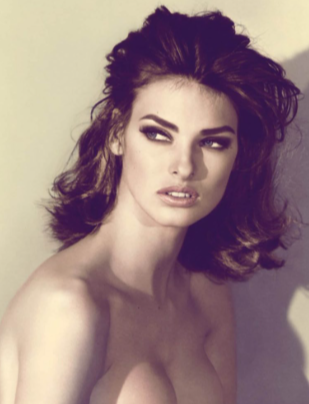
The interview happened in October 1990. Linda Evangelista sat across from a Vogue writer, talking about life at the top of fashion. At some point, the conversation turned to money. What she said next became the most famous sentence in modeling history.
“We don’t wake up for less than $10,000 a day.”
The quote has been called the “Let them eat cake” of the 20th century. Fashion editors were scandalized. Brands reconsidered their budgets. Fellow models winced at the transparency. But something else happened that nobody predicted: rates went up.

Evangelista didn’t just state her price. She changed the economics of an industry by saying out loud what everyone kept quiet.
The Myth and The Reality
The cultural story of Linda Evangelista centers on the chameleon. The haircuts that launched a thousand imitations. The photographer muse who could become anyone a creative team imagined. That story is true. It’s also incomplete.
What the Mythology Obscures
Behind the transformations exists a woman who understood negotiation at a level her contemporaries rarely matched. Unlike Cindy Crawford, who built business empires, or Claudia Schiffer, who compounded in silence, Evangelista changed the game by refusing to play it quietly.
Her $40 million net worth, according to Celebrity Net Worth, represents wealth accumulated through leverage rather than diversification. She didn’t build businesses. She demanded what she was worth, got it, and proved that sometimes the best strategy is stating your price where everyone can hear it.

The St. Catharines Origin
Linda Evangelista was born May 10, 1965, in St. Catharines, Ontario, Canada. Her parents, Marisa and Tomaso, had emigrated from Pignataro Interamna, a small town in Italy’s Frosinone province. Dad worked at General Motors after arriving in 1957. Mom kept the family books.They raised three children in a strict working-class Catholic household.
At twelve, Evangelista enrolled in a self-improvement course at a local modeling school. They taught poise and etiquette. They also suggested she might have a future in the industry. The prediction would prove understated.
The Pageant Discovery
As a teenager, Evangelista participated in the Miss Teen Niagara beauty pageant. She didn’t win. But her presence caught the attention of Elite Model Management representatives in the audience. By 1984, she had signed with Elite and moved to New York City.
The agency moved her to Paris, where she launched her international career at nineteen. Her first major magazine cover came in November 1984 for L’Officiel. Within a few years, she would appear on over 700 covers worldwide.

The Haircut That Changed Everything
In autumn 1988, photographer Peter Lindbergh suggested Evangelista try on a short wig during a photoshoot. She liked the look. He suggested she cut her hair for real.
The Linda
French hairstylist Julien d’Ys gave her a short gamine cut. Lindbergh photographed her the next day, creating an image now known as “the white shirt picture.” The haircut was initially controversial. Evangelista was cancelled from sixteen fashion shows.
By spring 1989, the haircut was the look of the season. The style became known as “The Linda.” A wig called “The Evangelista” appeared in stores. Demi Moore copied it for the film Ghost. Susan Sullivan wore it on Falcon Crest.
The haircut demonstrated something essential about Evangelista’s power: she could make dramatic changes, absorb short-term losses, and emerge more valuable than before.
The Chameleon Value
Throughout her career, Evangelista constantly reinvented her look. Platinum blonde. Shocking red. Ever-changing lengths and colors. The fashion industry called her the “chameleon” for her ability to transform completely from shoot to shoot.
The transformations weren’t vanity. They were business strategy. Each new look generated fresh editorial interest, additional covers, renewed campaign consideration. Where other models aged out as their “look” became familiar, Evangelista stayed novel by refusing to have a single look.
The Leverage Moment
The $10,000 quote wasn’t an accident. It was a calculated statement from someone who understood exactly what she was doing.
The Economics Before
In the 1980s, fashion models operated in genteel obscurity regarding pay. Everyone understood that some models earned more than others. Nobody discussed specific numbers publicly. The ambiguity benefited brands and agencies, not talent.
Evangelista broke the silence. By stating a specific floor, she did several things simultaneously: she established her market position, she gave other models a benchmark, and she shifted negotiating leverage toward talent.
The Economics After
By the 1990s, Evangelista earned $25,000 per day. At her peak, she regularly earned $5-8 million per year from modeling alone. In 1994, she signed a multi-year deal with Clairol worth $5 million per year. In 1996, she landed a $7.75 million contract with Yardley of London.
The quote that scandalized fashion became the foundation for supermodel compensation. Evangelista didn’t just negotiate well for herself. She raised rates for everyone by making the conversation public.
The Muse Relationships
Evangelista’s value extended beyond commercial work through her relationships with fashion’s most influential figures.
The Karl Lagerfeld Partnership
In 1985, she began working with Lagerfeld at Chanel. He became her most vocal champion. “There is not another model in the world as professional as she is,” he once said. The endorsement from Chanel’s creative director elevated her above competitors who might match her looks but couldn’t match her reliability.
The Steven Meisel Connection
Photographer Steven Meisel became her longtime collaborator and muse relationship. Their work together defined the visual language of 1990s fashion. The partnership generated iconic images that command high prices at auction decades later.
The Gianni Versace Years
Versace first featured Evangelista in ad campaigns in 1987. She became central to his visual universe during his most commercially successful period. The designer’s murder in 1997 ended a partnership that had helped define both their legacies.

The Retirement and Comeback
Evangelista chose to retire from modeling in 1998. She moved to the French Riviera and stepped away from the industry that had made her famous. Unlike colleagues who transitioned into business ventures, she simply stopped.
The 2001 Return
In 2001, Evangelista appeared on the cover of Vogue’s September issue, the magazine’s most important publication of the year. The comeback continued with Versace’s 2002 fall/winter collection campaign and selective runway appearances.
She never returned to the intensity of her peak years. She worked sporadically, choosing projects that interested her rather than maximizing income. The approach reflected someone who had already made her fortune and valued selectivity over volume.
The CoolSculpting Crisis
In 2021, Evangelista revealed she had suffered complications from CoolSculpting, a cosmetic fat-reduction procedure. The treatment left her “permanently deformed,” she said, leading to withdrawal from public life and eventually a lawsuit settled in 2022.
The revelation explained years of absence. It also demonstrated the cost of betting on appearance as the primary asset. Unlike Christy Turlington, who diversified into philanthropy, or Crawford, who built businesses, Evangelista’s value remained tied to how she looked.
The Vogue Comeback
In September 2022, she appeared on the cover of Vogue, photographed by longtime collaborator Steven Meisel. The cover represented both a professional triumph and a statement: she could return on her own terms, after her own timeline.
The 2023 Apple TV+ documentary The Super Models, featuring Evangelista alongside Campbell, Crawford, and Turlington, brought renewed attention to her legacy and career.

The Wealth Strategy
Evangelista’s approach to money differed from her contemporaries in ways that explain both her net worth and its limitations.
The Pure Model Path
Wikipedia notes that “unlike her colleagues, Evangelista chose not to diversify into other ventures outside of modelling.” She didn’t build skincare lines or furniture collections. No executive producing films either. Modeling, negotiating hard, investing the proceeds—that was the strategy.
The strategy worked financially—$40 million is wealthy by any standard. But it left her vulnerable when physical changes interrupted her ability to work.
The Real Estate Portfolio
In 1997, Evangelista paid $5.7 million for a penthouse apartment in Manhattan’s Spears building. The property represented both investment and lifestyle, appreciating over decades while providing a base in America’s fashion capital.
She later bought a Chelsea penthouse in 2001, listing it in May 2024 for $9.5 million before reducing to $8.2 million. Real estate became her primary non-modeling wealth vehicle.
The Son’s Father
Evangelista has a son, Augustin James, born October 2006. The father is François-Henri Pinault, the French billionaire who controls the Kering luxury conglomerate (Gucci, Balenciaga, Saint Laurent) and is now married to actress Salma Hayek.
A 2012 child support agreement, whose terms remain private, addressed the financial arrangements for their son. The connection to one of fashion’s most powerful families adds a dimension to Evangelista’s story that net worth estimates can’t capture.
The Hamptons Connection
Evangelista’s connection to the East End runs through the broader supermodel circuit. She met Edward Burns, who would become Christy Turlington’s husband, at a Hamptons party. The social world that flows through Southampton each summer has always included the women who dominated ’90s fashion.
The Relevance to Readers
For Polo Hamptons attendees and Social Life Magazine readers, Evangelista represents a specific lesson: the power of stating your worth publicly. Many wealthy people in Hamptons circles made fortunes by negotiating hard but privately. Evangelista showed that sometimes saying the number out loud changes what’s possible.
The Legacy Architecture
At 59, Evangelista occupies a unique position among the original supermodels. She didn’t diversify or build businesses. Modeling at the highest level, demanding the highest rates, retiring when she chose—that was the whole play.
What She Owns vs. What She Changed
She owns Manhattan real estate, investments accumulated over decades, and the returns from contracts that paid industry-changing rates. But her lasting impact isn’t financial. It’s systemic.
Before Evangelista, models didn’t discuss money publicly. After her, every negotiation happened against the backdrop of “$10,000 a day.” She didn’t just get rich. She changed what rich meant for everyone in her industry.
The Power Negotiator’s Paradox
Evangelista’s approach created both her wealth and her vulnerability. Betting everything on modeling rates meant she earned more per day than any model before her. It also meant that when she couldn’t model, she had fewer fallback positions than colleagues who had diversified.
The CoolSculpting settlement helped address the financial gap. But the episode illustrated that power negotiation as a strategy has limits. Sometimes the best negotiation can’t protect against physical realities.
The Bottom Line
Linda Evangelista’s $40 million net worth represents what happens when someone refuses to accept industry norms as personal limitations. She stated her price when stating prices wasn’t done. Changing her look when changing looks wasn’t safe? Her call. Retirement happened when she wanted, the return came on her terms, and a physical crisis got met with the same directness that defined her career.
The quote that made her famous was never really about $10,000. It was about refusing to pretend that talented people shouldn’t be paid what they’re worth. It was about understanding that sometimes the most powerful move is saying out loud what everyone thinks but nobody says.
One sentence. One haircut. One industry transformed.
That’s the power negotiator’s legacy. Not just the money she made, but the money she made possible for everyone who came after.
Related Articles
- Naomi Campbell Net Worth 2025: The Gatekeeper Who Controls Fashion’s Most Exclusive Rooms
- Christy Turlington Net Worth 2025: The Long-Game Player Who Chose Legacy Over Liquidity
- Cindy Crawford Net Worth 2025: The Brand Machine Who Turned a Face Into a Fortune
For features, advertising, and partnership inquiries, contact Social Life Magazine. Experience luxury networking at Polo Hamptons. Subscribe to our newsletter or support independent journalism with a $5 donation.
Author

Written by
Recent Posts
The Godfather Cast Net Worth: $830M From a Film That Paid Its Star $50K
High Season: Charlie Fox Is the Coolest Stop Out East
Andy Warhol’s Montauk Camera Caught Everything the Hamptons Forgot

The Rooftop Defining Summer Evenings in Manhattan
Create a Wardrobe That’s Anything but Simple with Joseph Ribkoff Jackets and Frank Lyman Dresses
Categories
- Art
- Articles
- Beauty & Skincare
- Celebrities
- Chronicles
- Events
- Fashion
- Fashion & Style
- Featured
- Food & Beverage
- Food, Spirits, Wine
- Hamptons
- Hamptons Celebrities
- Health
- Health & Beauty
- Lifestyle
- Luxury Lifestyle
- Press
- Profiles
- Real Estate
- Technology
- The Chronicles
- Travel
- Uncategorized
- Weddings