

In December 2025, Claudia Schiffer attended a state dinner at Windsor Castle. She was there as the guest of German President Frank-Walter Steinmeier, representing a connection between fashion, film, and German cultural prominence that few others could embody.
But the interesting detail wasn’t the invitation. It was the title. Since her husband Matthew Vaughn was knighted earlier that year, Schiffer now carries the courtesy title Lady Drummond. The girl discovered in a Düsseldorf nightclub had become British aristocracy without anyone quite noticing the transition.
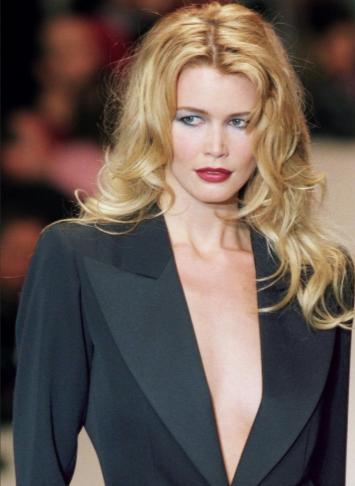
That’s Claudia Schiffer’s genius: building wealth and status while the attention went elsewhere.
The Myth and The Reality
The cultural story of Claudia Schiffer fixates on the Brigitte Bardot comparison. The Chanel campaigns. The thousand magazine covers. The David Copperfield engagement that captivated tabloids for half a decade.
What the Mythology Obscures
Behind the blonde icon exists a strategic mind that chose accumulation over attention. While Naomi Campbell became a gatekeeper and Cindy Crawford became a brand machine, Schiffer became something harder to define: a compounder who let her wealth grow in Suffolk countryside silence.
Her $70 million net worth, according to Celebrity Net Worth, represents the visible portion of a fortune that includes executive producer credits on billion-dollar film franchises, a Tudor manor house, and investments that never generate headlines.
The Rheinberg Origin
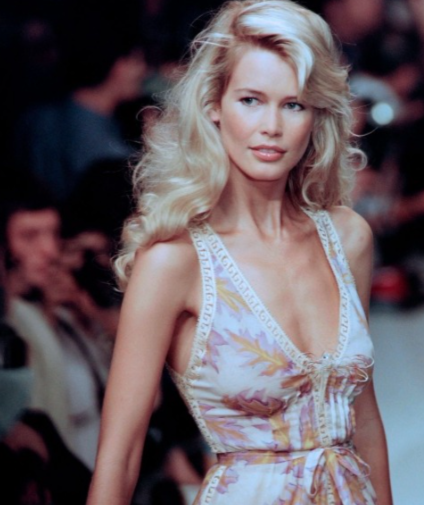
Claudia Maria Schiffer was born August 25, 1970, in Rheinberg, a small town in North Rhine-Westphalia, Germany. Her father, Heinz, was a lawyer. Her mother, Gudrun, raised Claudia and her siblings in comfortable upper-middle-class circumstances.
The legal background matters. Schiffer grew up around contracts, negotiations, and the careful language of binding agreements. She originally intended to join her father’s law firm. The vocabulary of business came before the vocabulary of fashion.
At seventeen, Michel Levaton, head of Metropolitan Model Agency, spotted her at a Düsseldorf nightclub. She left high school, flew to Paris for a trial photo shoot, and soon appeared on the cover of French Elle. The transition from law student to supermodel took weeks.
The Karl Lagerfeld Years
Lagerfeld saw what others missed. The resemblance to Bardot was obvious. Less obvious was the discipline, the reliability, the German precision that would make Schiffer his favorite model to book.
The Chanel Relationship
In 1990, Schiffer became the new face of Chanel. The partnership would last over a decade and define the visual language of the brand during its most expansive commercial period. She wasn’t just modeling clothes. She was becoming synonymous with the double-C logo.
The financial terms were never disclosed, but industry estimates suggested Schiffer commanded $20,000 per runway show in 1992, with campaign fees reaching into millions. More importantly, the Chanel association elevated every other deal she negotiated.
The Cover Record
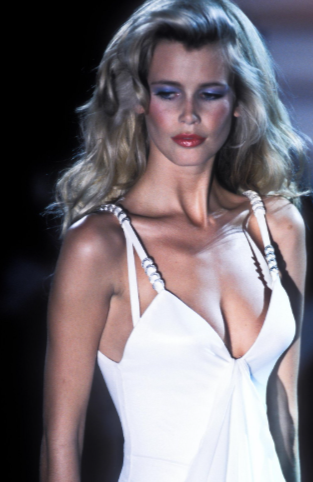
Schiffer has appeared on over 1,000 magazine covers, more than any other model in history according to Guinness World Records. The volume created compounding visibility: each cover made the next one more valuable, created recognition that translated into commercial appeal that justified ever-higher fees.
The Leverage Moment
For most supermodels, the leverage moment comes through negotiation or confrontation. For Schiffer, it came through strategic withdrawal.
The Copperfield Years
From 1994 to 1999, Schiffer was engaged to magician David Copperfield. The relationship generated constant tabloid coverage. She appeared in his illusions, attended his shows, became part of his spectacle.
When the engagement ended, Schiffer could have leveraged the publicity into reality television, tell-all interviews, or scandal-adjacent fame. Instead, she went quiet. The silence wasn’t avoidance. It was strategy.
The Matthew Vaughn Pivot
In 2002, Schiffer married filmmaker Matthew Vaughn. He wasn’t famous in the celebrity sense. He was a producer who had worked on Guy Ritchie’s films and would soon direct Layer Cake, Kick-Ass, and the Kingsman franchise.
The marriage represented a pivot from visibility to production. From appearing on camera to owning what appeared on camera. From celebrity to capital.
The Film Empire
Schiffer’s executive producer credits tell a story that net worth estimates rarely capture.
The Kingsman Franchise
She executive produced Kingsman: The Secret Service (2014), which grossed $414 million worldwide. Kingsman: The Golden Circle (2017) followed with $410 million. The King’s Man (2021) added $126 million during pandemic-restricted theatrical release.
Executive producer credits vary widely in what they represent. Sometimes they’re courtesy titles. Sometimes they’re significant equity positions. Given Vaughn’s role as director and his wife’s involvement from early development, Schiffer’s credits likely represent real financial participation in the franchise’s success.
Additional Productions
Her filmography extends to Kick-Ass 2 (2013), Eddie the Eagle (2015), and Rocketman (2019). The Elton John biopic alone grossed $195 million. Each credit represents potential backend participation in revenues that continue generating returns through streaming, merchandise, and sequel potential.
The Fashion Business Portfolio
Schiffer didn’t abandon fashion. She repositioned within it.
The Cashmere Line
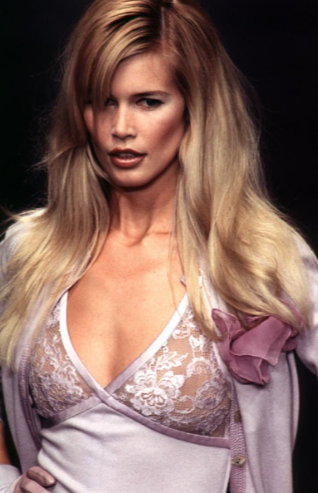
In 2011, she launched her eponymous cashmere collection during Paris Fashion Week, partnering with Iris von Arnim. From 2015, she served as creative director for Claudia Schiffer Made by TSE, another women’s cashmere collection.
The focus on cashmere reveals her positioning: luxury materials, limited production, high margins. Not mass market. Not trend-driven. Timeless products for customers who don’t need to see her face to trust her taste.
The Eyewear Collection
In 2014, Schiffer partnered with Rodenstock on an eyewear collection. In 2017 and 2018, she collaborated with Aquazzura on limited-edition footwear capsules. Each partnership generated revenue without requiring the constant visibility that drains other celebrities’ value.
The Exercise Video Legacy
Her 1996 Claudia Schiffer’s Perfectly Fit exercise videos reached bestseller lists. They continue generating residual income decades later, a reminder that content created once can pay indefinitely.
The Real Estate Strategy
In 2002, Schiffer and Vaughn purchased Coldham Hall, a Tudor manor house in Stanningfield, Suffolk. The property represents everything her public image doesn’t: tradition, discretion, roots.
The Suffolk Lifestyle
They’ve raised three children there: Caspar (2003), Clementine (2004), and Cosima (2010). The countryside location keeps them removed from London media while maintaining access to Pinewood Studios and the film industry infrastructure Vaughn uses professionally.
The property’s value has likely appreciated significantly since 2002, adding to net worth that already included decades of modeling income and growing film revenue participation.
The Security Consciousness
The privacy hasn’t come without incidents. In 2002, an Italian kitchen porter was arrested after making nine visits to Coldham Hall. In 2004, a Canadian man was accused of harassing Schiffer, repeatedly leaving letters at the residence. The experiences reinforced the value of discretion over visibility.
The Offshore Complexity
The 2021 Pandora Papers listed Schiffer among celebrities who have used offshore financial constructs. Such structures aren’t inherently problematic—they’re standard practice for high-net-worth individuals managing international income streams, film participation, and cross-border business interests.
But the mention hints at financial sophistication beyond what magazine covers suggest. Schiffer’s wealth exists within structures designed to optimize tax efficiency and asset protection across multiple jurisdictions.
The Hamptons Connection
Schiffer’s direct connection to the East End is less pronounced than her contemporaries, but her relevance to Social Life Magazine readers runs deeper than geography.
The Archetype She Represents
For Hamptons wealth, Schiffer embodies an aspiration that transcends celebrity: the elegant exit from visibility into quiet accumulation. She demonstrated that fame could be converted to capital, then allowed to compound without the constant maintenance that exhausts other public figures.
The Polo Hamptons crowd understands this logic. Many built fortunes through similar patterns: high visibility during accumulation years, followed by strategic retreat into privacy that protects both wealth and sanity.
The European Connection
Her German origins and British residence connect her to European old money sensibilities that resonate with certain Hamptons demographics. The families who summer in Southampton but winter in St. Moritz recognize the continental discipline Schiffer represents.
The Legacy Architecture
At 55, Lady Drummond occupies a position few supermodels achieve: respected in fashion, embedded in film, titled through marriage, and wealthy through decades of quiet accumulation.
What She Owns vs. What She Represents
She owns the Tudor manor, the film credits, the fashion lines, the offshore structures. But she represents something more valuable to understanding how visibility converts to wealth: the proof that attention isn’t the asset. Position is.
The thousand magazine covers created position. The Chanel campaigns created position. The position allowed her to marry into film production, to executive produce franchises, to let capital compound while tabloids chased younger faces.
The Compounding Ghost Effect
Her visibility shrank as her wealth grew. That’s not coincidence. It’s strategy. Every year out of the spotlight was a year her existing assets appreciated without the drain of maintaining public relevance. Every film that succeeded added to backend participations without requiring her physical presence.
The ghost compounds in silence while the visible scramble for attention.
The Bottom Line
Claudia Schiffer’s $70 million net worth captures only what’s easily measurable. It misses the film participations, the offshore structures, the Tudor manor’s appreciation, the value of carrying “Lady Drummond” into rooms where titles still matter.
The girl who could have become a lawyer understood contracts from childhood. She signed modeling deals while seeing the long game beyond them. Marriage to a filmmaker led to executive producing. Visibility retreated, and wealth compounded in silence.
The Brigitte Bardot resemblance launched her career. The German discipline sustained it. The strategic retreat from attention multiplied it.
That’s the compounding ghost approach: build position, convert visibility to capital, then disappear into the accumulated returns while the world watches someone else.
Schiffer perfected it before anyone named the strategy. That’s why, despite making fewer headlines than any of her contemporaries, she remains worth studying.
The silence was never absence. It was accumulation.
Related Articles
- Cindy Crawford Net Worth 2025: The Brand Machine Who Turned a Face Into a Fortune
- Christy Turlington Net Worth 2025: The Long-Game Player Who Chose Legacy Over Liquidity
- Kate Moss Net Worth 2025: Chaos, Controversy, and Still Somehow Compounding
For features, advertising, and partnership inquiries, contact Social Life Magazine. Experience luxury networking at Polo Hamptons. Subscribe to our newsletter or support independent journalism with a $5 donation.
Author

Written by
Recent Posts

Midsommar A24 Cast Net Worth — The Daylight Horror That Turned Grief Into a Career Launchpad

ZOI NOMAD & TEN11 LOUNGE MARK ONE YEAR

Room A24 Cast Net Worth — The $6 Million Captivity Drama That Set Brie Larson Free

The Witch A24 Cast Net Worth — A $3.5 Million Puritan Nightmare That Created a Queen and a King

A24 Genre Stars Net Worth — The Terrifying Fortunes Behind Horror, Sci-Fi, and Oscar Gold
Categories
- Art
- Articles
- Beauty & Skincare
- Celebrities
- Celebrities|Movies
- Celebrities|The Chronicles
- Chronicles
- Entertainment|Culture
- Event Photos
- Events
- Fashion
- Fashion & Style
- Featured
- Food & Beverage
- Food, Spirits, Wine
- Hamptons
- Hamptons Celebrities
- Hamptons Celebrities|Celebrities|The Chronicles
- Health
- Health & Beauty
- Lifestyle
- Luxury Lifestyle
- Movies
- Movies|Culture
- Movies|Hamptons Lifestyle
- Press
- Profiles
- Real Estate
- Technology
- The Chronicles
- Travel
- Uncategorized
- Weddings