
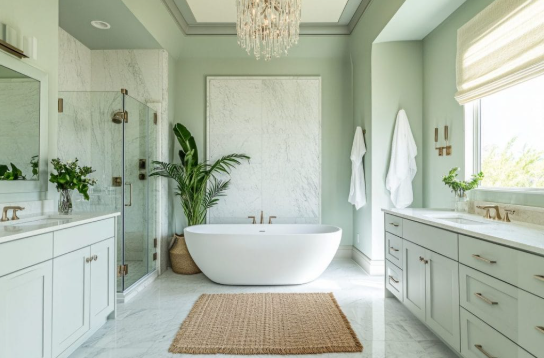
The rules have changed. A decade ago, that shelf would have featured Hermès soap, La Mer moisturizer, and perhaps a Tom Ford fragrance. Logos mattered. Recognition value mattered. The message was simple: I can afford the best, and I want you to know it. Today, the most sophisticated beach house bathrooms tell a different story. The brands are less familiar. The packaging is intentional but not ostentatious. The message has evolved: I’ve done the research. I have values. I understand things you might not.
This shift reflects broader changes in how wealth communicates. According to Bain & Company’s 2025 luxury market analysis, spending is increasingly shifting toward experiences, emotions, and brands that offer something beyond status signaling. The conscious Hamptons set has internalized this evolution. Their bathrooms have become curated collections that balance heritage, technology, and values in ways that require insider knowledge to decode.

What Your Bathroom Shelf Says About You
The bathroom serves as the most intimate display case in any home. Unlike a living room arranged for guests or a kitchen staged for entertaining, the bathroom reveals private choices. What products does someone reach for first thing in the morning? What investments have they made in daily rituals? These decisions accumulate into a portrait.
From Logos to Stories
The old luxury playbook relied on instant recognition. A Chanel compact, a Dior lipstick, an Estée Lauder serum communicated membership in a particular economic class. The products themselves might have been excellent, but their primary function was signaling. Everyone knew what those logos meant.
Younger wealth operates differently. McKinsey research shows that consumers increasingly prefer emotional connections and authenticity over celebrity endorsements or traditional luxury markers. A bottle of Gisou hair oil communicates more than purchasing power. It suggests familiarity with a six-generation beekeeping heritage, appreciation for sustainable sourcing, and enough cultural awareness to have discovered a Dutch-Iranian founder’s passion project.
This knowledge-based signaling requires more effort than simply buying the most expensive option. However, it delivers richer returns. The guest who recognizes the brands in your bathroom becomes a potential kindred spirit. The one who doesn’t might ask questions, initiating conversations that wouldn’t happen over generic luxury products.
The Discernment Display
Discernment differs from mere taste. Taste can be purchased wholesale by hiring a decorator or following Instagram recommendations. Discernment requires synthesis, taking information from multiple sources, evaluating claims critically, and making selections that reflect genuine understanding rather than surface-level appeal.
A bathroom stocked with heritage haircare, Korean beauty technology, and clean body care products demonstrates this synthesis. Each category represents a different value proposition. Together, they communicate someone who understands that luxury in 2025 means more than premium pricing. It means story, efficacy, and alignment with evolving cultural values.
Heritage, Technology, Values: The Conscious Luxury Trifecta
The most thoughtfully curated Hamptons bathrooms organize around three pillars that complement rather than compete with each other. Heritage brands offer provenance and story. Technology brands deliver efficacy and innovation. Values brands provide sustainability and transparency. Understanding each pillar helps explain why certain products have achieved essential status.
The Curation Principle
Effective curation requires restraint alongside selection. A bathroom crowded with products, however impressive individually, suggests consumption without intention. The goal isn’t maximizing brand names per square foot. Instead, it’s assembling a collection where each item earns its place through specific merit.
The trifecta framework provides structure for these decisions. Rather than accumulating products randomly, the conscious curator asks: What represents heritage excellence in this category? What offers genuine technological advantage? What aligns with values I want to express? The answers might include many products or just a few. The thinking matters more than the quantity.
Furthermore, the three pillars serve different purposes in the daily routine. Heritage products anchor the collection with time-tested formulations. Technology products address specific concerns with measurable results. Values products handle basics without compromising ethics. This division of labor ensures comprehensive coverage without redundancy.
Heritage Excellence: The Gisou Story
Every Sunday morning for as long as she could remember, Negin Mirsalehi would follow her father into the family bee garden in Almere, Netherlands. While other children spent weekends elsewhere, she learned to read the hives. Those rituals eventually spawned Gisou, a haircare brand now valued at over €100 million and found in sophisticated bathrooms worldwide.
The Beekeeper’s Daughter
Six generations of Mirsalehi beekeepers preceded Negin. Her father brought the tradition from Iran to the Netherlands in the 1980s, establishing a bee garden that still supplies every drop of honey in Gisou products. The specific wildflowers of that Dutch garden, including thistle, white clover, and fireweed, create a “terroir” that cannot be replicated. Competitors cannot source Mirsalehi honey because only one family produces it.
Negin’s mother, a hairdresser, noticed honey’s potential for haircare and developed DIY treatments that kept her daughters’ hair remarkable. When Negin became one of Instagram’s earliest major influencers, followers kept asking about her hair. She could have endorsed existing products. Instead, she built a brand around her family’s heritage, launching the Honey Infused Hair Oil in 2015 with her partner Maurits Stibbe.
The couple refused acquisition offers from major conglomerates, choosing strategic investment while retaining majority ownership. The brand carried her family’s name and her father’s life work. Some things aren’t for sale regardless of the spreadsheet logic.
What the Amber Bottle Communicates
A Gisou bottle in your bathroom suggests several things simultaneously. You know about the brand, demonstrating cultural awareness beyond mainstream luxury. The choice signals appreciation for sustainability, as the bee-centered approach only harvests surplus honey. It reflects an understanding that efficacy and ethics can coexist. Perhaps most importantly, the selection prioritizes heritage over marketing.
The amber packaging photographs beautifully against white marble, a detail that matters for rental properties competing on visual platforms. However, the real signal operates at a deeper level. This is haircare with a story, a family, a philosophy. The opposite of generic.
Read the full story: Gisou: The Bee-Powered Luxury Brand Taking Over Beach House Bathrooms
Technology Leadership: The Medicube Revolution
The accusation came from a friend who hadn’t seen her in three months: “Did you get Botox?” The answer was no. Just five minutes daily with a silver device that looks like a miniature wand. No appointments, no needles, no $1,200 monthly medspa bills. Medicube had delivered what Korean women have known for years: professional-grade results without professional prices or inconvenience.
The $4 Billion K-Beauty Phenomenon
Medicube’s parent company APR Corp. saw its stock soar 200% in 2025, pushing market value past $4 billion. Founder Kim Byung Hoon, just 36 years old, became South Korea’s newest beauty billionaire. The catalyst was a viral TikTok of Kylie Jenner using the AGE-R Booster Pro device. However, the foundation was years of R&D creating technology that actually works.
The device combines six professional technologies into one handheld unit: EMS, LED light therapy, microcurrent, electroporation, sonic vibration, and ionic technology. Per Medicube’s clinical studies, five-minute daily treatments increase product absorption by 785%. The mechanism isn’t marketing fantasy. Electroporation uses electrical pulses to temporarily increase cell membrane permeability, allowing active ingredients to penetrate far deeper than topical application alone.
South Korea functions as the global R&D lab for skincare innovation. The competition is brutal. Brands that cannot deliver measurable outcomes don’t survive. Medicube emerged from this environment, proving itself in the world’s most demanding beauty market before conquering TikTok.
When Technology Replaces Appointments
A Medicube device charging on your bathroom counter communicates efficiency alongside sophistication. You’ve done the math. Professional treatments delivering similar technologies cost $200-400 per session. Monthly maintenance adds up to $2,400-4,800 annually. The Booster Pro costs approximately $220 once. The economics speak for themselves.
Beyond the financial calculation, the device signals a particular relationship with information. You know what Korean consumers know. You understand that professional-grade results have been democratized. You’re not paying for ambient spa music when you can pay for outcomes. This optimization mindset resonates with high-achievers who apply the same rigor to beauty that they bring to business.
Read the full story: Medicube: The Korean Skincare Technology Your Dermatologist Won’t Tell You About
Values Alignment: The Saltair Standard
She stood in the Sephora aisle doing math that didn’t compute. The “clean” body wash cost $38. The drugstore alternative cost $8 but contained chemicals she couldn’t pronounce. The middle ground apparently didn’t exist. Clean meant expensive. Affordable meant toxic. Saltair founder Iskra Lawrence faced this exact frustration before deciding to fix it.
The Body Positivity Connection
Lawrence built her platform on self-acceptance. As the first model in Aerie’s “Real” campaign eliminating retouching, she became a Forbes 30 Under 30 honoree and one of BBC’s 100 Most Influential Women. Her advocacy encouraged millions to practice self-care. However, the products available to them didn’t align with her values or their budgets.
Saltair launched in 2022 with serum body washes priced at $12, packed with niacinamide and hyaluronic acid, ingredients typically reserved for premium facial skincare. The formulations eliminate parabens, sulfates, and phthalates while delivering active benefits. According to Glossy, the strategy prioritized accessibility over immediate profitability, inverting the celebrity brand playbook that launches expensive and hopes quality justifies repeats.
What $12 Buys You Now
A Saltair bottle in your guest bathroom communicates thoughtfulness about what you provide others. The products aren’t generic drugstore amenities. They’re not wasteful prestige purchases either. They represent the sweet spot: clean, effective, pleasantly fragranced, and priced to share generously.
The brand has since expanded into Ulta Beauty nationwide and Space NK in the UK, earning multiple awards along the way. The market validated Lawrence’s thesis. Consumers wanted clean beauty at honest prices. They didn’t want to choose between values and experience. Given the option, they chose both.
Furthermore, Saltair’s fragrance development rivals fine fragrance while remaining suitable for daily body care. Santal Bloom, Island Orchid, and Pink Beach avoid the “clean beauty smells worthy” trap. Guests notice. They ask about the products. The conversation that follows positions you as someone who’s figured out something others haven’t.
Read the full story: Saltair: Clean Body Care for the Conscious Hamptons Set
Building Your Conscious Luxury Bathroom
Understanding the trifecta provides framework. Implementing it requires practical decisions about what belongs and what doesn’t. The goal isn’t reproducing a showroom or maximizing SKU count. It’s assembling a collection that serves daily needs while communicating intentionality.
The Essential Categories
Every bathroom needs solutions for hair, face, and body. Within each category, the trifecta offers guidance. Haircare benefits from heritage products like Gisou that deliver efficacy alongside story. Facial skincare responds well to technology like Medicube that optimizes active ingredient delivery. Body care gains from values-aligned brands like Saltair that handle daily basics without ethical compromise.
Beyond these foundations, secondary categories include fragrance, tools, and specialty treatments. The same evaluation framework applies. What heritage brand offers the best fragrance? Which technology improves tool performance? Where can values-aligned options handle specialty needs? Answering these questions builds collections with internal logic rather than random accumulation.
The Guest Experience Calculation
For properties on the rental market or frequently hosting guests, bathroom curation directly impacts perceived value. Guests encounter these products daily. They photograph them. They mention them in reviews. The difference between generic amenities and thoughtfully selected products registers consciously and unconsciously.
The investment required is modest relative to the return. Stocking a guest bathroom with heritage haircare, effective body care, and quality basics costs perhaps $150-200 initially, with ongoing replenishment far less. That investment generates elevated guest experiences, improved reviews, enhanced property positioning, and conversations that turn visitors into connections.
Professional stagers have caught on. The presence of specific brands in bathroom staging photographs signals attention to detail that permeates the entire property. Buyers and renters decode these signals even when they can’t articulate what they’re seeing. The feeling of quality precedes the conscious recognition of specific products.
The Bathroom as Values Statement
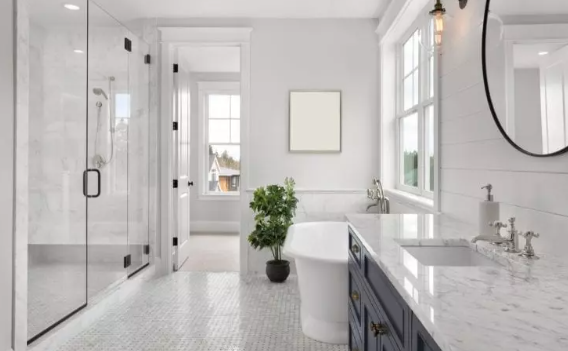
Every curated space tells a story. Kitchens reveal cooking philosophies. Libraries expose intellectual interests. Bathrooms disclose self-care priorities and consumption values. The products you choose represent accumulated decisions about what matters when no one’s watching.
The conscious Hamptons bathroom has evolved beyond status display. It now functions as values statement, demonstrating alignment with sustainability, efficacy, and discernment rather than mere purchasing power. The brands that earn shelf space must deliver on multiple dimensions simultaneously: they must work, they must matter, and they must communicate something true about their owner.
Gisou offers heritage and sustainability. Medicube delivers technology and results. Saltair provides values and accessibility. Together, they represent the trifecta that defines conscious luxury in 2025. Individually, each brand has earned its following through genuine merit. Collectively, they describe a new relationship with consumption, one where knowledge matters more than logos, where stories outweigh status, and where the best products happen to be the most thoughtful ones.
The amber bottle, the silver device, and the clean-beauty body wash sitting on your bathroom shelf aren’t just products. They’re positions. They answer the question wealthy consumers increasingly ask themselves: Who do I want to be when I buy things? The answer has evolved. The bathroom reflects it.
Related Articles
- Gisou: The Bee-Powered Luxury Brand Taking Over Beach House Bathrooms
- Medicube: The Korean Skincare Technology Your Dermatologist Won’t Tell You About
- Saltair: Clean Body Care for the Conscious Hamptons Set
Want to feature your brand in Social Life Magazine’s beauty coverage? Contact our partnerships team about editorial features, sponsored content, and advertising opportunities. For exclusive Hamptons events and lifestyle experiences, visit Polo Hamptons. Subscribe to our print edition for quarterly deep dives into luxury living, or join our newsletter for weekly updates on what the conscious Hamptons set is reading, buying, and doing.
Author

Written by
Recent Posts

Civil War A24 Cast Net Worth — A24 Bet $50 Million on the End of America and Won

Midsommar A24 Cast Net Worth — The Daylight Horror That Turned Grief Into a Career Launchpad

ZOI NOMAD & TEN11 LOUNGE MARK ONE YEAR

Room A24 Cast Net Worth — The $6 Million Captivity Drama That Set Brie Larson Free

The Witch A24 Cast Net Worth — A $3.5 Million Puritan Nightmare That Created a Queen and a King
Categories
- Art
- Articles
- Beauty & Skincare
- Celebrities
- Celebrities|Movies
- Celebrities|The Chronicles
- Chronicles
- Entertainment|Culture
- Event Photos
- Events
- Fashion
- Fashion & Style
- Featured
- Food & Beverage
- Food, Spirits, Wine
- Hamptons
- Hamptons Celebrities
- Hamptons Celebrities|Celebrities|The Chronicles
- Health
- Health & Beauty
- Lifestyle
- Luxury Lifestyle
- Movies
- Movies|Culture
- Movies|Hamptons Lifestyle
- Press
- Profiles
- Real Estate
- Technology
- The Chronicles
- Travel
- Uncategorized
- Weddings