
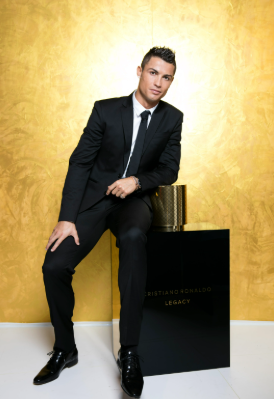
The most-followed human on Instagram built something more valuable than followers. While 600 million people track his posts, a $500 million fortune compounds regardless of whether he ever plays football again. The salary that made sports headlines when he moved to Saudi Arabia wasn’t the story. The CR7 empire positioning for Middle Eastern expansion was the calculation no one reported.
Cristiano Ronaldo didn’t become wealthy by being the best footballer of his generation. He became wealthy by understanding that athletic careers end but brand equity compounds. The trademark he filed at 22 years old now generates more annual revenue than most athletes earn in their entire careers.
Understanding how he built this architecture reveals why his net worth will likely increase after retirement while most athletes’ wealth declines the moment they stop playing.
The Wound: Funchal to Fortune
Cristiano Ronaldo dos Santos Aveiro grew up in a tin-roofed house in Funchal, Madeira, sharing a single room with three siblings. His father worked as a gardener and equipment manager for a local football club. His mother cleaned houses to supplement the family income. Abundance wasn’t a concept the young Ronaldo encountered.
The poverty wasn’t romantic or character-building in the way retrospective profiles often suggest. It was limiting, frustrating, and motivating in ways that shaped his entire approach to wealth and career. Watching his father struggle with alcoholism while the family struggled financially created a specific determination. Talent alone wouldn’t be enough. Control would be necessary.
When Sporting Lisbon signed him at 12 years old, he cried on the flight from Madeira to mainland Portugal. The move separated him from family and everything familiar. It also began an education in professional football economics that would prove more valuable than any single contract or trophy.
The Early Recognition
Even as a teenager, Ronaldo paid attention to the business structures around him. He noticed which players earned the most, which kept their money, and which burned through fortunes despite massive salaries. The patterns were consistent. Players who relied solely on playing contracts struggled after retirement. Players who built businesses and brand equity during their careers maintained wealth afterward.
By 16, he was already thinking about what came after football. Not because he doubted his talent, but because he understood that even the greatest careers eventually end. The planning started decades before most athletes consider their post-playing lives.
The Chip: The Trademark Strategy
In 2007, at 22 years old, Cristiano Ronaldo filed trademark protection for “CR7.” The initials combined his first name with his jersey number. What seemed like a simple branding exercise was actually a sophisticated legal and business strategy that would generate billions in value over the following decades.
Most athletes treat their names as public property. Fans use nicknames freely. Merchandise appears with informal references. The athlete captures none of this value because no legal structure protects it. Ronaldo took a different approach entirely.
The CR7 trademark created a wall around his identity. Anyone wanting to use those initials commercially needed his permission and, more importantly, his participation in the economics. The trademark covers apparel, hotels, gyms, fragrances, restaurants, and virtually any commercial application someone might imagine.
The Licensing Architecture
With trademark protection established, Ronaldo could license CR7 systematically across product categories. Each licensing deal generates revenue without requiring his physical presence or continued athletic performance. The brand exists independently of the man, which means the revenue streams survive regardless of what happens on football pitches.
| CR7 Venture | Structure | Estimated Annual Revenue |
|---|---|---|
| CR7 Underwear | Licensed | $10M+ |
| Pestana CR7 Hotels | Partnership Equity | Growing portfolio |
| CR7 Fitness | Partnership | Expanding |
| CR7 Fragrances | Licensed | $5M+ |
| CR7 Denim/Footwear | Licensed | $5M+ |
The combined CR7 brand portfolio generates an estimated $50 million or more annually in licensing revenue alone. This figure exists independently of his Nike contract, his playing salary, and his social media earnings. The trademark was the foundation. Everything else built upon it.
The Rise: Building the CR7 Fortune
The CR7 trademark provided infrastructure. The Nike lifetime deal provided scale. Signed in 2016, the contract represents the largest athlete endorsement in history, with reported total value exceeding $1 billion over Ronaldo’s lifetime.
The Nike Architecture
What distinguishes the Nike deal from standard endorsement contracts isn’t just size. The structure includes equity components and performance bonuses that align Ronaldo’s wealth with Nike’s success rather than simply his playing time. He doesn’t just represent Nike products. He participates in their economics.
The present value of this lifetime deal contributes approximately $200 million to his current net worth. Future payments will continue regardless of his playing career’s trajectory. Nike bet on Ronaldo’s brand longevity, not just his athletic longevity. The bet appears to be paying off for both parties.
The Social Media Asset
With more than 600 million Instagram followers, Cristiano Ronaldo is the most-followed human on the platform. This audience isn’t vanity. It’s inventory. Distribution channel. Marketing infrastructure that most brands spend billions attempting to build.
Each sponsored post on his Instagram commands an estimated $2.3 million. The theoretical annual value of his social following, if fully monetized, exceeds $85 million. He exercises strategic restraint, limiting sponsored content to preserve per-post value. Scarcity maintains premium pricing.
The social media asset requires minimal maintenance compared to its value. A photo takes minutes to post. The $2.3 million per post represents an hourly rate that makes his football salary look modest by comparison.
The Traditional Endorsement Portfolio
Beyond Nike and his owned CR7 ventures, Ronaldo maintains endorsement relationships with multiple global brands. Clear shampoo, Herbalife, and various regional partnerships contribute additional millions annually. These deals, structured traditionally with appearance requirements and usage rights, supplement rather than anchor his wealth.
The endorsement portfolio demonstrates diversification across categories: athletic wear, personal care, nutrition, and lifestyle products. No single relationship represents excessive concentration risk. The failure of any individual partnership wouldn’t significantly impact his overall financial position.
The Al-Nassr Calculation
When Cristiano Ronaldo signed with Saudi Arabia’s Al-Nassr FC in January 2023, sports media focused on the reported salary. Numbers ranging from $75 million to $200 million annually circulated without clear sourcing. The salary was the story everyone told.
The business calculation was the story almost everyone missed. Saudi Arabia is investing more than $100 billion in sports and entertainment infrastructure as part of its Vision 2030 economic diversification strategy. The kingdom seeks to become a global destination for events, tourism, and luxury experiences.
Ronaldo’s move positioned CR7 for expansion into the fastest-growing luxury market on earth. Middle Eastern wealth, particularly in the Gulf states, represents enormous potential for his hotel, fitness, and lifestyle ventures. The playing contract provided the platform. Market access was the actual value proposition.
The Geographic Arbitrage
European markets where Ronaldo previously played are mature. Growth potential exists but proceeds incrementally. Middle Eastern markets offer exponential expansion potential for brands that establish early credibility.
By relocating to Saudi Arabia, Ronaldo gained access to networks, partnerships, and market positioning that would have taken years to develop from Europe. The salary, whatever its actual amount, was the visible component of a deal whose real value lies in CR7 brand expansion opportunities.
The Complete Net Worth Architecture
| Asset Category | Estimated Value | Percentage of Net Worth |
|---|---|---|
| Nike Lifetime Deal (present value) | $200M | 40% |
| CR7 Brand Portfolio | $150M | 30% |
| Real Estate Holdings | $100M | 20% |
| Liquid Investments | $50M | 10% |
| Total Estimated Net Worth | $500M | 100% |
The distribution reveals a fortune built for durability. Nike provides a backbone of guaranteed future payments. The CR7 portfolio generates current income while appreciating in value. Real estate offers stability and appreciation outside business risk. Liquid investments provide flexibility and opportunity capital.
Notably, current playing salary doesn’t appear as a major net worth component. The salary funds lifestyle and current investment. The net worth components are assets that exist and appreciate independently of whether Ronaldo plays another match.
The Tell: The Saudi Calculation
Understanding Ronaldo’s move to Saudi Arabia as primarily a salary decision misses the strategic sophistication entirely. Watch what he does with CR7 expansion in the Middle East over the coming years. The hotel partnerships, fitness center openings, and lifestyle brand launches will reveal what the playing contract actually purchased.
The salary was the story that satisfied casual observers. Market positioning in a $100 billion infrastructure investment was the strategy that sophisticated observers recognized. He went where his brand had untapped value, not merely where his services commanded the highest wage.
The Retirement Preparation
Every structural decision Ronaldo has made positions his wealth to survive and grow after football ends. The Nike deal pays throughout his lifetime. CR7 licensing generates revenue without his physical presence. Real estate appreciates regardless of his athletic performance.
Most athletes face wealth decline immediately upon retirement. Their earning capacity was their athletic performance. When performance ends, earnings end. Ronaldo constructed the opposite architecture. His earning capacity exists independently of his performance. Retirement will likely increase his net worth as time currently spent on training and matches becomes available for business expansion.
The Connection: What Sophisticated Readers Recognize
Ronaldo’s wealth architecture offers lessons that extend beyond athletics into any context where personal profile creates monetization opportunities. The principles translate directly.
First, trademark protection early and aggressively. Your name, your image, your identifying characteristics represent assets. Without legal protection, you capture none of the value when others use them. The CR7 trademark filed at 22 has generated more value than most people earn in multiple lifetimes.
Second, recognize that audience is inventory. Six hundred million followers represents distribution infrastructure. Brands spend billions building what Ronaldo accumulated through consistent performance and strategic presence. The audience has monetary value independent of any specific monetization decision.
Third, understand that salary represents ceiling while equity represents floor. His Nike deal includes ownership components that align his wealth with company performance. Employment contracts cap upside. Equity participation removes the cap.
Fourth, practice geographic arbitrage. Go where your brand has untapped value rather than where your brand is already saturated. The Saudi move seemed strange to European observers. It made perfect sense from a brand expansion perspective.
Fifth, maintain scarcity to preserve premium. Fewer sponsored posts mean higher per-post value. Fewer endorsement relationships mean higher per-relationship value. Ubiquity commoditizes. Scarcity premiumizes.
The football career made him famous. The business decisions made him wealthy. The distinction explains why his net worth will likely increase after retirement while most athletes watch their fortunes decline. He built ownership structures. They built employment relationships. The outcomes follow inevitably from the architectures.
Related Reading
- From Runway to Rolex: How Celebrity Brand Empires Hit $2B
- Rihanna Net Worth 2025: Inside the $1.4B Fenty Empire
- David Beckham Net Worth 2025: The Brand Blueprint
- The Role of Private Equity in Modern Celebrity Fortunes
Connect With Social Life Magazine
For features, advertising opportunities, and brand partnerships, visit sociallifemagazine.com/contact. Experience the Hamptons’ premier luxury events at Polo Hamptons. Subscribe to our print edition for exclusive content delivered to your door, or join our email list for weekly insights on wealth, culture, and the mechanics of modern fortunes.
Author

Written by
Recent Posts
Where Can You Find the Best Made-to-Measure Bespoke Suits in NYC
The Financial Habits Every Successful Entrepreneur Swears By
What Happens If You Delay Hemorrhoid Treatment in New York City
James Franco Net Worth — A $30 Million Career Interrupted
Selena Gomez Net Worth — How a Disney Kid Built a $1.3 Billion Empire
Categories
- Art
- Articles
- Beauty & Skincare
- Celebrities
- Celebrities|Movies
- Celebrities|The Chronicles
- Chronicles
- Culture|Television
- Entertainment|Culture
- Event Photos
- Events
- Fashion
- Fashion & Style
- Featured
- Food & Beverage
- Food, Spirits, Wine
- Hamptons
- Hamptons Celebrities
- Hamptons Celebrities|Celebrities|The Chronicles
- Health
- Health & Beauty
- Lifestyle
- Luxury Lifestyle
- Movies
- Movies|Culture
- Movies|Hamptons Lifestyle
- Press
- Profiles
- Real Estate
- Technology
- The Chronicles
- Travel
- Uncategorized
- Weddings