
Beauty Without Business
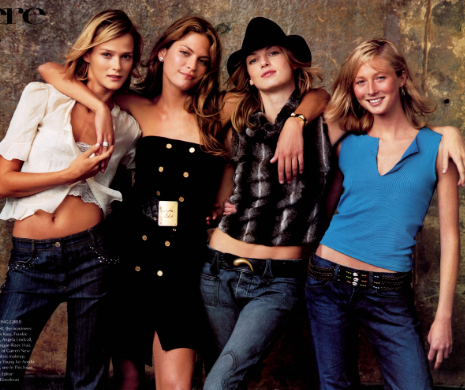
The early 2000s supermodels — where are they now? That question gets asked often and answered poorly. In November 2000, American Vogue ran a cover featuring four models who represented the exact apex of what the industry could produce: Carmen Kass, Maggie Rizer, Angela Lindvall, and Frankie Rayder. They were the hottest faces on earth. Their combined bookings that year could have funded a small country. Their combined business portfolios — the products, the platforms, the equity stakes that would have converted that visibility into lasting wealth — amounted to essentially nothing. Yet within five years, most of them had faded from mainstream visibility. Within ten, they were nostalgia references. Notably, none of them had built anything that outlasted the covers.
Consequently, ask early 2000s supermodels where are they now, and the answer is almost universally: building nothing. This is not a coincidence. It is a pattern, and the pattern is instructive. These years produced an extraordinary concentration of beautiful faces with zero infrastructure behind them — women who peaked at precisely the moment when tools to convert fame into lasting equity were becoming available. However, they either didn’t know to reach for those tools or had no one pointing at the door. Taken together, their stories constitute the clearest argument the modeling industry has ever made against beauty as a standalone strategy.
Indeed, the contrast with the generation that follows is stark. Models who built lasting wealth treated their runway careers as credential phases, not destinations. Meanwhile, women in this piece treated the cover as the finish line. They crossed it — some of them multiple times — and then had nowhere else to go.
Carmen Kass: The Winner Who Didn’t Build
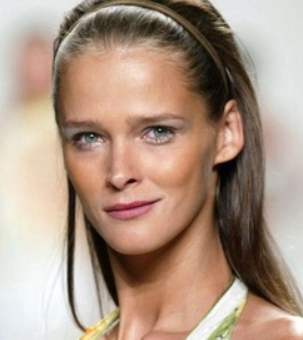
Carmen Kass won the VH1/Vogue Model of the Year award in 2000, which was as close to a formal coronation as the industry offered. The Estonian-born model was everywhere simultaneously: editorials, campaigns, runway. She had the kind of face that photographers described as technically perfect — high cheekbones, precise symmetry, an aristocratic blankness that worked in any context from sportswear to couture. She was also deeply, seriously intelligent, eventually entering Estonian politics and serving in parliament. That last detail is important, and we’ll return to it.
However, on the fashion business side, Kass built almost nothing. She had no product line, no brand partnership with ownership components, no media platform. Her career as a model was genuinely elite. Her transition out of modeling was into politics, not commerce — a pivot that reflects her interests and values accurately but generates no compounding equity. That intelligence she brought to Estonian parliament was always there. Worth asking: why was it never pointed at building something during those years — when her visibility could have funded anything she wanted?
The answer is probably the same one that explains all four women in this piece — ultimately, nobody told her to. After all, the industry’s incentive structure rewards bookings, not business plans. Agencies make money on the former and have no stake in the latter — so they never ask the question. The infrastructure for model-to-mogul conversion — the advisors, the brand partnership lawyers, the product development expertise — was not offered to working models in 2000 the way it is today. Consequently, Kass was operating in an information vacuum, and the industry was comfortable keeping her there.
Maggie Rizer: The Model the Industry Failed Twice
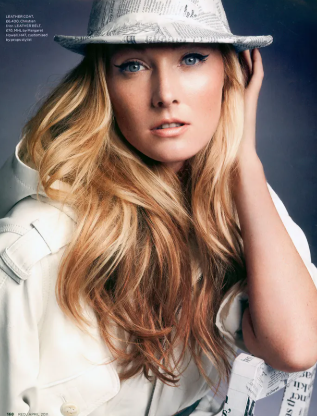
Early 2000s supermodels where are they now stories rarely get darker than Maggie Rizer. Her story is the most structurally revealing of the four, because she actually tried to build the infrastructure — and had it stolen from her before it could function. At 20, at the peak of her earnings, Rizer hired a financial manager. Her stepfather immediately intervened, convincing her the fees were wasteful and that he should handle her money instead. Unfortunately, he had a serious gambling addiction. Over the following years, therefore, he lost everything — her modeling income, her inheritance from her father, every dollar she had earned during one of the most successful early careers of her generation. When the fraud was discovered and prosecuted, Rizer was left with nothing. By the time the fraud surfaced, she was in her mid-twenties, her peak earning years behind her, and broke.
The financial destruction was total. The models who built lasting wealth kept their financial management at arm’s length from family relationships — a separation that feels cold until you understand what mixing the two categories can cost. Subsequently, Rizer’s stepfather was convicted of grand larceny in 2004 and sentenced to prison. The family went briefly on public assistance. Eventually, Rizer returned to modeling, walked for Louis Vuitton and Michael Kors in 2014, and rebuilt a quieter life. She has four children and appears to be genuinely content. But the empire that should have existed — the one her earnings and visibility made possible — was taken from her before she could build it. Her story is not, therefore, a cautionary tale about models. It is a cautionary tale about financial guardianship and what happens when the people closest to you have interests that diverge from yours.
Bridget Hall: The Face That Didn’t Want to Be a Brand

Early 2000s supermodels where are they now? Bridget Hall had the career metrics of someone who should be running a global company. Texas-born, discovered at 14, she became one of the most booked models of the late 1990s — Sports Illustrated, Victoria’s Secret, Ralph Lauren, Versace. That American-girl-next-door quality translated cleanly into commercial appeal — the kind of face that makes both fashion editors and mass-market brand managers feel good simultaneously. In industry terms, that made her maximally versatile.
She married, had children, stepped back from the industry on her own timeline, and largely disappeared from public view. By most personal standards, that’s exactly what success looks like. However, by the standard of what was commercially available to her, it represents a significant unrealized opportunity. The Ralph Lauren relationship alone — one of the most sustained model-brand pairings of the late 90s — had it been structured with equity or licensing components rather than flat fees, could have generated long-term returns independent of her continued appearances. Instead, it was structured as a flat-fee job. It was a job, and when the job ended, it ended cleanly. Hall appeared to prefer it that way, and that preference is entirely legitimate. The preference is entirely legitimate. The result is that her extraordinary peak generated ordinary retirement outcomes.
Estella Warren: When the Pivot Goes Sideways
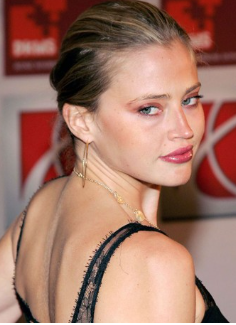
Early 2000s supermodels where are they now: Estella Warren is the most interesting case study in the group because she attempted the obvious post-modeling transition — acting — with genuine credential. She was ranked number one on Maxim’s Hot 100 in 2000, had the Chanel No. 5 campaign, and walked for Victoria’s Secret. When she pivoted to film, she landed a Tim Burton production: the 2001 Planet of the Apes remake, a major studio project. The transition appeared to be executing perfectly.
Then, abruptly, it didn’t. Warren’s acting career generated a Razzie nomination for Planet of the Apes and a series of progressively lower-budget projects that never recaptured the momentum of her modeling peak. By the 2010s she was working primarily in direct-to-video thrillers. Nevertheless, the modeling credibility that opened the Tim Burton door didn’t translate into lasting acting credibility. Both industries assess beauty differently, and the qualities that made Warren extraordinary in one did not automatically generate value in the other.
Above all, one structural lesson stands out: adjacency is not equivalence. Moving from modeling to acting because both involve being photographed is like moving from tennis to chess because both involve strategy. The skills overlap less than they appear to from the outside, and the network effects don’t transfer cleanly. Furthermore, Warren’s modeling network — the photographers, the fashion editors, the brand managers — had no particular influence in Hollywood casting rooms. In effect, she was starting over in a new industry with aging modeling credentials as her primary reference point. It was always going to be harder than it looked.
Early 2000s Supermodels Where Are They Now: The Pattern and What It Means
What All Four Actually Needed
Four women. Four different failure modes. Carmen Kass had the intelligence but pointed it elsewhere. Maggie Rizer had the infrastructure but had it stolen. Bridget Hall had the commercial appeal but preferred privacy over empire. Meanwhile, Estella Warren attempted a pivot into the wrong adjacent market. Nonetheless, none of them built the machine.
Why the Answer Keeps Being the Same
The early 2000s supermodels where-are-they-now question keeps producing the same answer for a reason. The machine — the product, the platform, the compounding asset that generates returns independent of your age or availability — requires a specific kind of intentionality that the modeling industry does not teach and actively disincentivizes. Harvard Business Review research on brand equity conversion has long documented that the window between peak visibility and peak conversion is narrow and finite. Specifically, agencies make money on bookings. Brands make money on campaigns. The financial advisors, brand lawyers, and product development experts who could have converted these careers into lasting wealth are not offered as standard issue to working models. However, they are available only to models who know to ask — which requires information the industry has no incentive to provide.
The Gap Between Potential and Outcome
These early 2000s supermodels — where are they now? The gap between their potential and their outcomes is the real story. They were not less talented, less beautiful, or less commercially valuable than the women who did build empires. Instead, they were less informed, less advised, and operating in a system that had no interest in their long-term financial outcomes. McKinsey’s State of Fashion reports have consistently documented how luxury brand value accrues to the institution rather than the faces who built it. The covers they graced are beautiful. The wealth that those covers should have generated — and didn’t — is the actual story.
Beauty is an asset. Without business, however, it is a depreciating one. Every single time.
Part of Social Life Magazine’s Golden Decade series — the models who defined an era, the decisions that shaped their second acts, and what the industry still doesn’t tell the women walking into it.
Read next: Builder-Class Supermodels: The Women Who Turned Fame Into Empires | Supermodel Net Worth 2025: The Real Figures
Social Life Magazine reaches 25,000 Hamptons readers each summer issue. Feature your brand, book an event partnership, or subscribe to print here. Polo Hamptons 2025 sponsorships at polohamptons.com.
Author

Written by
Recent Posts
Breaking Bad Cast Net Worth. $130 Million Cooked in Five Seasons of Perfect Television

Cailee Spaeny Net Worth — From Springfield, Missouri to A24 and Alien in Three Years Flat

Wagner Moura Net Worth — He Learned Spanish to Play Escobar. Then He Learned English to Take Hollywood.

Robert Eggers Net Worth — He Made a $3.5 Million Film in Puritan English and Hollywood Listened
Brie Larson Net Worth — A $6 Million Indie Film Won Her an Oscar. Marvel Paid Her the Rest.
Categories
- Art
- Articles
- Beauty & Skincare
- Celebrities
- Celebrities|Movies
- Celebrities|The Chronicles
- Chronicles
- Entertainment|Culture
- Event Photos
- Events
- Fashion
- Fashion & Style
- Featured
- Food & Beverage
- Food, Spirits, Wine
- Hamptons
- Hamptons Celebrities
- Hamptons Celebrities|Celebrities|The Chronicles
- Health
- Health & Beauty
- Lifestyle
- Luxury Lifestyle
- Movies|Culture
- Movies|Hamptons Lifestyle
- Press
- Profiles
- Real Estate
- Technology
- The Chronicles
- Travel
- TV
- Uncategorized
- Weddings