

The First Icon Fashion Forgot
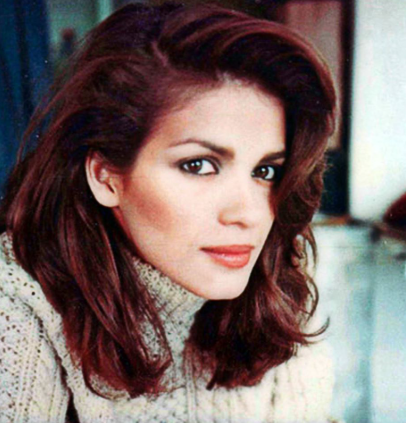
Gia Carangi, supermodel, was a title the industry gave her before anyone had invented the word. She walked into a New York modeling agency at 17 with no portfolio, no training, and no idea what she was walking into. Wilhelmina Cooper took one look at her and signed her on the spot. By the end of Gia Carangi’s first year in the city, Vogue was describing her rise as “meteoric.” By the end of her second, she was the highest-paid model in the world. By the end of her life, she was sleeping on streets in Philadelphia, forgotten by every designer and photographer who had fought for access to her face. She was 26 when she died. Not one person from the fashion world attended her funeral.
That last detail is the whole story of the Gia Carangi supermodel era. Everything else is context.

Gia Carangi didn’t just precede the supermodel era — she invented it. Cindy Crawford has said publicly that she inherited many of Gia’s jobs when Gia became too unreliable to book. The women who defined the 1990s — Crawford, Naomi Campbell, Linda Evangelista — built their empires on ground Gia broke first. They understood something Gia never got the chance to learn: that fame has a window and the window closes fast. Gia lived entirely inside the window. She never thought about what came after. Nobody around her did either.
Philadelphia to Vogue in One Year
To understand the Gia Carangi supermodel story, start in Philadelphia, where she was born in 1960, the youngest child of a restaurant owner and a homemaker whose marriage collapsed early and badly. Her childhood was unstable — her mother eventually left the family, a wound Gia would spend the rest of her short life trying to cauterize with other people’s affection. She was a Bowie kid in high school, loud and androgynous, openly gay at a time when that required real courage, shopping vintage before it had a name. She was also, by every account, the most magnetic person in whatever room she entered.
However, the momentum shifted fast. A local photographer spotted her dancing at a Philadelphia nightclub in 1977, and the photos reached New York within weeks. Within months, Wilhelmina Cooper — the legendary agent whose roster defined the era — signed her sight unseen. Gia arrived in New York at 17 and immediately became one of the city’s most requested faces. She shot for Vogue, Cosmopolitan, and Harper’s Bazaar. She walked for Armani, Versace, Dior, and Yves Saint Laurent. Photographer Francesco Scavullo, who had photographed everyone worth photographing, said of her: “There was something she had that no other girl has got. She had the perfect body for modeling — and, to me, the perfect attitude: I don’t give a damn.”
Indeed, that attitude was the product and the problem simultaneously. Gia had no filter, no performance, no careful management of her public self. What you saw was what she was. In an industry built entirely on manufactured surfaces, her authenticity was intoxicating. It was also completely defenseless against what the industry was about to do to her.
What the Industry Built — and What It Left Unguarded
Then, in 1980, Wilhelmina Cooper died of lung cancer at 40. For Gia, the loss proved catastrophic beyond professional inconvenience. Cooper had been the closest thing to a stable maternal figure in her adult life — an anchor, a protector, the one person in fashion who seemed to care about Gia as a person rather than a booking. Her death left Gia without a buffer between herself and an industry that had no vocabulary for vulnerability.
Consequently, heroin entered the picture almost immediately. Gia had used drugs recreationally for years — cocaine, quaaludes, the standard currency of Studio 54-era New York. After Cooper’s death, heroin became something else: a structural response to grief in the absence of any other structure at all. Nobody intervened. Photographers kept booking her when they could. Agencies collected their percentages. Brands kept using the images. When she became too unreliable to shoot, they moved on and found someone else. The industry’s relationship with Gia was entirely extractive, and extraction doesn’t require the wellbeing of the source.
Moreover, the contrast with the models who came after her is precise and painful. Women who built lasting careers from comparable fame built systems around themselves — managers, lawyers, financial advisors, people whose interests aligned with their longevity. Gia had Wilhelmina Cooper, and then she had no one. Her earnings were substantial at the peak. She had no financial advisor, no investment strategy, no legal protection for her image rights. When the bookings stopped, there was nothing underneath.
The Collapse Was Slow and Then Fast

As a result, Gia’s unreliability became industry legend. She walked out of a Versace shoot with Richard Avedon, telling the crew she was going for cigarettes and never returning. Whole shoots were lost when she fell asleep mid-session. Track marks on her arms required hours of airbrushing. She was dropped by Wilhelmina Models after Cooper’s death, signed briefly with Ford Models, and dropped again. By 1982 she was effectively unemployable in fashion. She was 22 years old — effectively finished in fashion.
Rehab followed multiple times. Clean stretches allowed for brief comeback attempts that never quite reignited. Between attempts she sold jeans at a shopping mall in Pennsylvania, then worked a cafeteria checkout at a nursing home. For a while she had nowhere to sleep at all. Photographers who had competed for access to her face made no calls. Designers whose campaigns had made their seasons with her image offered nothing. Fashion abandoned her completely the moment she stopped being useful.
By 1985, the Gia Carangi supermodel era was over. Doctors admitted her for what appeared to be pneumonia and discovered AIDS-related complex instead. This was the early epidemic — a disease so poorly understood that the nurses and doctors who treated her wore hazmat suits and wiped the phone down with antiseptic after she used it. She spent the last year of her life in a Philadelphia hospital, her mother by her side. The fashion world she had dominated barely noticed. On November 18, 1986, Gia Carangi died. She was 26. Her funeral was held at a small Philadelphia funeral home. No one from fashion came.
What She Left Behind
Twelve years after her death, HBO produced Gia, starring Angelina Jolie in the role that made her a star. Jolie has said of the role that inhabiting Gia’s story changed her understanding of what the industry extracts from the people it uses. The film introduced Gia Carangi to a generation that had never heard her name, transforming a forgotten footnote into a cultural myth. It is a beautiful film. It is also, in some important ways, the first time the fashion industry engaged with her story — at a safe distance, with her already dead and safely past the point of requiring anything.
Furthermore, McKinsey’s ongoing research into the fashion industry’s value chain documents how brand equity accrues systematically to institutions while the individuals who generate it receive only time-limited fees. Gia Carangi generated enormous brand equity for every house and magazine that used her face. None of it compounded on her behalf.
Nevertheless, the structural lesson her story offers remains both obvious and consistently ignored. Gia Carangi had everything the industry claimed to value: an extraordinary face, a completely original energy, the precise quality of magnetism that cannot be manufactured or replicated. What she lacked was everything the industry never provides: a support system that survived her peak, financial infrastructure, someone in her corner whose interests extended past the next booking.
Wilhelmina Cooper’s death was a tragedy. Yet the fact that Gia’s entire structural support collapsed with the loss of one person reveals the fragility of the arrangement. One relationship standing between a person and professional annihilation is not an infrastructure. It is an accident waiting to happen.
The Gia Carangi Supermodel Legacy: An Industry Debt Never Paid

The Balance Sheet: What the Industry Took and Never Gave Back
Ultimately, Gia Carangi was not simply a casualty of the 1980s drug epidemic, though she was that too. She was a casualty of an industry that extracted maximum value from a person with minimum investment in that person’s survival. The designers whose houses she elevated, the photographers whose careers she helped build, the publications whose covers she sold — none of them attended the funeral. None of them visited the hospital. Not one called.
Moreover, she left one piece of writing that survived her. Found among her things near the end of her life, it reads in part: “Life and death, energy and peace. If I stop today it was still worth it. Even the terrible mistakes that I made and would have unmade if I could. The pains that have burned me and scarred my soul — it was worth it, for having been allowed to walk where I’ve walked.”
What She Left Behind — and What It Cost Her
Gia Carangi wrote those words without self-pity, which is remarkable. Furthermore, she wrote them without bitterness toward the industry that used her up and walked away — which is more remarkable still. She lacked the framework to identify what the industry had done to her. Instead, she had only the experience of it, which she bore with a grace the people who left her there did not deserve.
Consequently, the supermodel era she invented generated billions in revenue for the decade that followed her death. Nevertheless, she died with nothing. That is not a cautionary tale about drugs. Above all, it is a cautionary tale about an industry that has never reckoned with what it owes.
Part of Social Life Magazine’s Golden Decade series — examining the models who defined an era, what they built, what was taken from them, and what the industry still refuses to say out loud.
Read next: Builder-Class Supermodels: The Women Who Turned Fame Into Empires | Face to Fortune: How Beauty Converts to Net Worth | The Transcenders: Five Supermodels Who Used the 90s as a Launchpad
Social Life Magazine is distributed across the Hamptons from Memorial Day through Labor Day. Subscribe to the print edition or support independent luxury journalism with a $5 contribution.
Author

Written by
Recent Posts
Breaking Bad Cast Net Worth. $130 Million Cooked in Five Seasons of Perfect Television

Cailee Spaeny Net Worth — From Springfield, Missouri to A24 and Alien in Three Years Flat
Wagner Moura Net Worth — He Learned Spanish to Play Escobar. Then He Learned English to Take Hollywood.

Robert Eggers Net Worth — He Made a $3.5 Million Film in Puritan English and Hollywood Listened
Brie Larson Net Worth — A $6 Million Indie Film Won Her an Oscar. Marvel Paid Her the Rest.
Categories
- Art
- Articles
- Beauty & Skincare
- Celebrities
- Celebrities|Movies
- Celebrities|The Chronicles
- Chronicles
- Entertainment|Culture
- Event Photos
- Events
- Fashion
- Fashion & Style
- Featured
- Food & Beverage
- Food, Spirits, Wine
- Hamptons
- Hamptons Celebrities
- Hamptons Celebrities|Celebrities|The Chronicles
- Health
- Health & Beauty
- Lifestyle
- Luxury Lifestyle
- Movies|Culture
- Movies|Hamptons Lifestyle
- Press
- Profiles
- Real Estate
- Technology
- The Chronicles
- Travel
- TV
- Uncategorized
- Weddings