
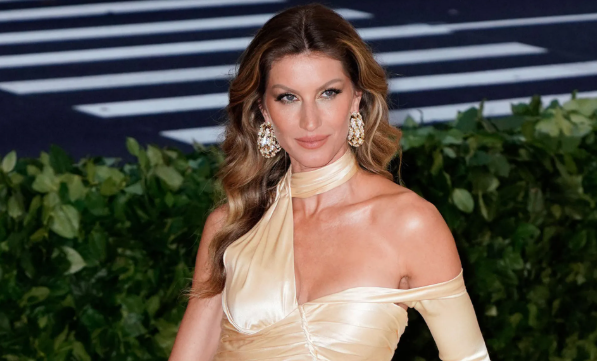
She walked her last runway at 34. The conventional wisdom suggested her earning potential had peaked. Modeling careers don’t survive the mid-thirties, especially for women whose value the industry ties explicitly to youth. What happened next defied every assumption about supermodel economics: her net worth tripled.
When Gisele Bündchen’s 13-year marriage to Tom Brady ended in October 2022, tabloid coverage focused on custody arrangements and emotional speculation. Financial observers noticed something more significant. The divorce revealed a wealth architecture that had been building quietly for two decades, entirely independent of her famous husband’s fortune.
The $400 million net worth didn’t result from divorce settlements or alimony. It resulted from decisions she made in her twenties, when she chose equity stakes over endorsement fees and licensing revenue over labor income. Understanding her playbook reveals why she retired young but got richer anyway.
The Wound: Horizontes to High Fashion
Gisele Caroline Bündchen grew up sixth of six daughters in Horizontes, a small town in Brazil’s southernmost state. Her father wrote textbooks. Her mother worked as a bank clerk. German immigrant heritage shaped a household where modesty was virtue and abundance was suspect.
The Bündchen family wasn’t poor by Brazilian standards. They simply weren’t wealthy. Providing for six daughters on academic and clerical salaries meant careful budgeting, hand-me-down clothes, and an early understanding that security required planning rather than luck.
When a modeling scout discovered her at 13 in a São Paulo shopping mall, she was attending a modeling course her mother had enrolled her in to improve her posture. The career that followed wasn’t destiny finding a beautiful girl. It was a strategic opportunity that she approached with the financial discipline her upbringing had instilled.
The Move to New York
At 16, she moved to New York alone, speaking almost no English, sharing apartments with other aspiring models while sending money home to Brazil. Early earnings went first to her family, then to English lessons, then to building whatever stability a teenage immigrant could construct.
The early years were lean despite increasing bookings. She later described living on $200 per month for food while learning the industry. What she learned mattered more than what she earned. By 18, she understood how modeling agencies, fashion houses, and endorsement structures actually functioned. This knowledge would prove more valuable than any single contract.
The Chip: The Ipanema Equity Play
In 2001, Gisele made a decision that separated her wealth trajectory from every supermodel contemporary. Brazilian footwear company Grendene approached her about endorsing their Ipanema sandals line. The standard deal would have paid a flat fee plus small royalties. She negotiated something different entirely.
Instead of traditional endorsement compensation, she took an equity stake in the Ipanema line bearing her name. The specific terms remain private, but the results became visible over the fifteen-year partnership. Royalty payments reportedly exceeded $25 million annually. The ownership stake appreciated as the brand expanded globally.
While Naomi Campbell, Claudia Schiffer, and Christy Turlington collected endorsement fees that stopped when campaigns ended, Gisele’s Ipanema stake generated revenue every day that someone bought sandals. The compounding difference over two decades is the difference between celebrity income and dynasty wealth.
The Ownership Instinct
The Ipanema deal wasn’t an isolated decision. It reflected an ownership instinct that shaped every subsequent negotiation. When Pantene sought her as a spokesperson, she negotiated long-term licensing structures rather than campaign fees. Sky HDTV in Brazil included ownership components. She founded Sejaa Pure Skincare rather than endorsing someone else’s beauty line.
Each deal followed the same logic. Labor for money is a trade. Ownership for equity is an investment. Beautiful faces depreciate with age. Ownership stakes appreciate with business growth. Understanding this distinction while still in her twenties gave her a two-decade head start on peers who learned it too late or never learned it at all.
The Rise: Building the Bündchen Fortune
Forbes named Gisele the highest-paid model in the world from 2002 through 2016. The title was accurate but misleading. By 2008, her licensing revenue exceeded her modeling income. The runway shows and magazine covers that generated headlines represented a minority of her actual earnings.
The Peak Modeling Years: 2000-2015
Victoria’s Secret signed her as an Angel with a reported $5 million annual salary. Major fashion houses paid $50,000 or more for single runway appearances. Magazine covers commanded fees that most professionals don’t earn annually. These numbers made headlines and attracted tabloid attention.
The numbers that didn’t make headlines mattered more. Ipanema sandals generated consistent royalties. Pantene licensing revenue arrived quarterly without requiring photo shoots. Brazilian media partnerships paid for access to her image and name rather than her time and labor.
| Partnership | Structure | Estimated Annual Value |
|---|---|---|
| Ipanema Sandals | Equity + Royalties | $25M+ |
| Pantene | Long-term Licensing | $4M |
| Victoria’s Secret | Employment Contract | $5M |
| Sky HDTV Brazil | Ownership Component | Undisclosed |
| Sejaa Skincare | Founded/Owned | Variable |
The Retirement Multiplication: 2015-2022
When Gisele announced her runway retirement in 2015, industry observers expected her income to decline. Modeling careers don’t typically survive departure from active work. She had accumulated perhaps $150 million by conventional estimates. A comfortable retirement by any standard.
What happened instead demonstrated why ownership differs categorically from employment. Her licensing revenue continued without interruption. Real estate holdings appreciated without requiring her attention. Investment portfolios compounded regardless of her visibility.
By 2022, when her marriage ended and financial disclosures became necessary, her net worth had grown to approximately $400 million. She had more than doubled her wealth during a period when she dramatically reduced her working hours. The retirement that was supposed to end her earning years instead accelerated her wealth accumulation.
The Real Estate Portfolio
Like many sophisticated wealth-builders, Gisele diversified substantially into real estate. Properties across multiple jurisdictions provided both appreciation potential and lifestyle flexibility.
Her Costa Rica retreat compound represents significant holdings in a jurisdiction favorable to international ownership. Miami waterfront properties benefited from South Florida’s sustained appreciation. New York real estate provided domestic anchoring. Brazilian family estates maintained connection to her origins while offering currency diversification.
The exact portfolio value remains private, but estimates suggest $100 million or more in real estate holdings alone. These assets generate value whether she models, appears publicly, or remains entirely out of sight.
The Brady Years: Parallel Empires
Gisele married Tom Brady in 2009, creating one of sports and fashion’s most prominent power couples. Combined net worth estimates during their marriage exceeded $650 million. Public perception assumed merged finances befitting merged lives.
Reality was more sophisticated. Their financial structures remained parallel rather than combined. Separate business entities. Separate investment vehicles. Separate advisors managing separate portfolios. The architecture wasn’t about distrust. It was about recognizing that two people with independent earning potential and independent public profiles require independent financial management.
The Prenuptial Architecture
Their prenuptial agreement, details of which emerged during divorce proceedings, reflected this parallel structure. Neither party sought the other’s assets because neither party needed them. She didn’t marry up financially. She married laterally, combining households while maintaining separate wealth infrastructure.
This distinction matters enormously when understanding her post-divorce position. She didn’t receive significant settlement payments because the agreement protected her assets as thoroughly as his. The wealth she retained was wealth she built, not wealth she extracted.
The Tell: The Divorce Reveal
When divorce became public in October 2022, tabloid coverage followed predictable patterns. Speculation about infidelity, career conflicts, and custody arrangements dominated headlines. The financial coverage that existed focused on Tom Brady’s NFL earnings and endorsement portfolio.
Sophisticated observers noticed something the tabloids missed. Gisele didn’t fight for his money. She didn’t need to. Her $400 million existed independently of anything Tom Brady had earned or would earn. The divorce revealed not financial dependence but financial architecture that had been building for two decades.
She retained her Ipanema stakes, her real estate portfolio, her licensing agreements, and her investment positions. What she gave up was the marriage. What she kept was everything she had built.
Post-Divorce Positioning: 2022-2025
The years following her divorce demonstrated the durability of her wealth architecture. Licensing revenue continued without interruption. Real estate holdings appreciated with market conditions. Her wellness-focused personal brand positioned for expansion into a market increasingly interested in holistic living.
Tabloids that predicted financial difficulty following the split misunderstood her situation entirely. She wasn’t a dependent spouse losing access to her husband’s income. She was an independent wealth-builder whose marital status had minimal impact on her financial position.
The Complete Net Worth Architecture
| Asset Category | Estimated Value | Percentage of Net Worth |
|---|---|---|
| Licensing Revenue Streams | $150M | 37% |
| Real Estate Portfolio | $100M | 25% |
| Investment Portfolio | $100M | 25% |
| Brand Equity and Active Deals | $50M | 13% |
| Total Estimated Net Worth | $400M | 100% |
The distribution reveals her strategy. Licensing revenue represents the largest category, reflecting decades of equity positions rather than labor fees. Real estate and investments provide appreciation potential and diversification. Active brand equity positions her for continued relevance without requiring return to active modeling.
The Connection: The Independence Blueprint
Gisele’s wealth architecture offers lessons that extend beyond modeling into any context where personal brand creates monetization opportunities. The principles she applied translate directly.
First, licensing exceeds labor as a wealth-building strategy. The runway was always a credentialing mechanism rather than a revenue source. Every walk established credibility that made licensing deals more valuable. The shows made her famous. The licensing made her wealthy.
Second, equity positions matter most before visibility peaks. She negotiated the Ipanema stake while still in demand. Taking equity when leverage is highest captures value that flat fees never approach. Waiting until visibility declines makes equity negotiation nearly impossible.
Third, independent financial structures protect against relationship changes. Her parallel wealth architecture wasn’t cynical preparation for divorce. It was recognition that two successful individuals require separate management of their separate enterprises. The structure proved its value when circumstances changed.
Fourth, real estate compounds quietly while other assets draw attention. Headlines covered her modeling contracts and marriage. Her property portfolio appreciated without fanfare, contributing significantly to her total wealth without requiring publicity or appearances.
Fifth, retirement multiplies wealth when infrastructure exists. She stopped working intensively at 34. Her net worth more than doubled in the decade that followed. The infrastructure she built during her active years generated returns during her inactive years. Labor stops. Ownership compounds.
The richest supermodel in history didn’t rely on her face to stay wealthy. She relied on decisions made twenty years earlier, when she chose ownership over fees and infrastructure over income. The face got her into rooms. The business acumen built the fortune.
Related Reading
- From Runway to Rolex: How Celebrity Brand Empires Hit $2B
- Rihanna Net Worth 2025: Inside the $1.4B Fenty Empire
- How Supermodels Really Build Wealth (Not Just Modeling Paychecks)
- Tom Brady Net Worth 2025: The GOAT’s Portfolio
Connect With Social Life Magazine
For features, advertising opportunities, and brand partnerships, visit sociallifemagazine.com/contact. Experience the Hamptons’ premier luxury events at Polo Hamptons. Subscribe to our print edition for exclusive content delivered to your door, or join our email list for weekly insights on wealth, culture, and the mechanics of modern fortunes.
Author

Written by
Recent Posts

Midsommar A24 Cast Net Worth — The Daylight Horror That Turned Grief Into a Career Launchpad
ZOI NOMAD & TEN11 LOUNGE MARK ONE YEAR

Room A24 Cast Net Worth — The $6 Million Captivity Drama That Set Brie Larson Free

The Witch A24 Cast Net Worth — A $3.5 Million Puritan Nightmare That Created a Queen and a King

A24 Genre Stars Net Worth — The Terrifying Fortunes Behind Horror, Sci-Fi, and Oscar Gold
Categories
- Art
- Articles
- Beauty & Skincare
- Celebrities
- Celebrities|Movies
- Celebrities|The Chronicles
- Chronicles
- Entertainment|Culture
- Event Photos
- Events
- Fashion
- Fashion & Style
- Featured
- Food & Beverage
- Food, Spirits, Wine
- Hamptons
- Hamptons Celebrities
- Hamptons Celebrities|Celebrities|The Chronicles
- Health
- Health & Beauty
- Lifestyle
- Luxury Lifestyle
- Movies
- Movies|Culture
- Movies|Hamptons Lifestyle
- Press
- Profiles
- Real Estate
- Technology
- The Chronicles
- Travel
- Uncategorized
- Weddings