

On the Mongolian steppes, winter temperatures drop to forty degrees below zero. Summer brings scorching heat. The goats that survive these extremes develop something remarkable: an undercoat so fine and insulating that no synthetic material has successfully replicated it. This is where cashmere comes from, and why the best cashmere in the world originates in Mongolia.
Every major cashmere brand knows this. They source raw fiber from Mongolian herders, ship it to factories in Italy or Scotland, and sell finished products under European labels. The supply chain extracts value from Mongolia while building brand equity elsewhere. For decades, this arrangement seemed natural. Global trade meant specialization. Manufacturing happened where infrastructure existed.
Gobi Cashmere operates differently. Founded in 1981 with Japanese government support, the company built Mongolia’s first modern cashmere processing facility. Today, everything stays in country: harvesting, processing, design, manufacturing, and distribution. When you buy Gobi, you’re supporting Mongolian herders, Mongolian workers, and Mongolian communities directly. This vertical integration changes what cashmere can mean.
The Gap: Why Supply Chain Transparency Matters Now
Sophisticated buyers have developed new questions about their purchases. Where did this come from? Who made it? What happens to the communities involved in production? These questions aren’t driven by performative ethics. They reflect genuine curiosity about the stories embedded in objects.
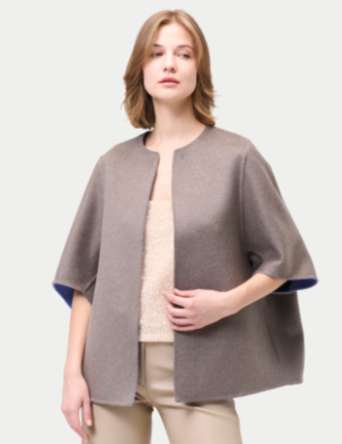
Cashmere presents particular transparency challenges. The raw fiber changes hands multiple times between goat and garment. Herders sell to aggregators who sell to processors who sell to manufacturers who sell to brands who sell to retailers. At each transition, provenance becomes harder to verify. By the time a sweater reaches a department store, its origin story has typically been obscured.
The Problem With Imported Manufacturing
Most cashmere brands that market themselves as “Italian” or “Scottish” are actually referring to final manufacturing location, not fiber origin. The goats are Mongolian. The processing may happen anywhere. The “Italian cashmere” label communicates manufacturing prestige rather than material source.
According to WIPO’s case study on Gobi, around half of all cashmere produced in Mongolia is illegally smuggled out of the country. This gray market deprives Mongolia of tens of millions of dollars in potential revenue while undermining the livelihoods of legitimate herders. For buyers who care about impact, the opacity of conventional cashmere supply chains creates uncomfortable uncertainty.
The Gobi Obsession: Building Vertical Integration in Mongolia
Gobi’s founding story begins with international development rather than fashion entrepreneurship. In 1976, the United Nations Industrial Development Organization established a pilot plant for processing goat cashmere and camel wool in Mongolia. The following year, the Japanese government provided a 5 billion yen grant to build a full-scale facility in Ulaanbaatar.
The operation that became Gobi Cashmere launched in 1981. For its first decades, the company operated as a state-owned enterprise. Privatization in 2007 brought new ownership but preserved the founding commitment: everything would happen in Mongolia. The decision to maintain vertical integration wasn’t just philosophical. It created genuine differentiation in a market where most competitors essentially arbitraged geography.
What “Truly Mongolian” Actually Means
In 2024, Gobi completed a comprehensive rebrand around the concept “Truly Mongolian.” According to the company’s announcement, this positioning underscores that every stage of production occurs in Mongolia. The new brand identity includes a symbol representing the unity of goats, herders, employees, and customers in a continuous cycle.
The company introduced “Truly Traceable Cashmere,” allowing buyers to understand which herding community produced their garment. This traceability system addresses skepticism that accompanies sustainability claims. Rather than asking customers to trust marketing assertions, Gobi provides verifiable information. The approach mirrors how innovative jewelry brands use warranties to back performance claims with accountability.
The Craft: Why Mongolian Cashmere Differs
Climate determines cashmere quality. The extreme temperature variations on Mongolian steppes force goats to develop particularly fine, long undercoat fibers. This natural adaptation produces cashmere that measures finer in diameter and longer in staple length than fiber from milder climates.
Gobi’s primary factory has capacity to process approximately 1,200 tons of raw cashmere annually. This material becomes roughly 1,300 tons of yarn, which is then knitted into 1.7 million pieces, woven into 650,000 items, and sewn into 160,000 garments. The scale demonstrates that ethical production and commercial viability can coexist.

Certifications That Verify Claims
In July 2021, Gobi Cashmere’s yarns earned OEKO-TEX STANDARD 100 certification, indicating compliance with human-ecological requirements. In February 2024, the company became the first Mongolian company to receive the same certification for finished garments. These third-party verifications provide assurance beyond brand self-reporting.
According to independent documentation, Gobi employs over 1,700 people at its Ulaanbaatar facilities, with 75% being women. The company operates five factories covering primary processing, spinning, weaving, knitting, and sewing. This workforce represents significant employment in a country where cashmere production accounts for roughly one-third of household income among herding communities.
The Signal: Where Gobi Is Showing Up
Gobi’s expansion into Western markets has accelerated recently. The brand now retails at Nordstrom in the United States and operates stores in Berlin and Düsseldorf, Germany. According to Creative Boom’s coverage of the 2024 rebrand, Nordstrom placement followed the brand identity refresh, suggesting that updated positioning enabled new retail partnerships.
Search interest in Gobi Cashmere generates approximately 12,100 monthly queries. This lower volume compared to mass-market competitors reflects the brand’s relative obscurity in Western markets. For early adopters, the modest awareness creates discovery potential. Wearing Gobi currently prompts questions about origin rather than recognition.
The Price-to-Value Calculation
Gobi pricing ranges from approximately $150 for accessories to $800 for premium garments. This positions the brand below European luxury houses that charge $1,000+ for comparable pieces, while significantly exceeding fast-fashion cashmere. The middle-market positioning reflects actual production economics rather than artificial scarcity.
For buyers calculating long-term value, Gobi’s vertical integration provides implicit quality assurance. The company’s reputation depends entirely on Mongolian cashmere quality. Unlike brands that can switch suppliers when problems arise, Gobi’s identity is inseparable from its source material. This alignment of interests suggests consistent quality more reliably than marketing promises.

The Hamptons Fit: Conversation-Starting Luxury
A Gobi throw draped across a beach house sofa generates questions. Where is it from? Who made it? Why does it feel different? These conversations reveal something about the host: they’ve paid attention to where things come from, they’ve sought alternatives to default choices, and they’re happy to share discoveries rather than hoarding information.
For the Hamptons audience specifically, Gobi resonates with values that extend beyond aesthetics. Conscious consumption without sacrifice. Quality that justifies investment. Stories worth telling at dinner. The brand doesn’t require explanation or apology. Its existence answers questions before they’re asked.
Practical Applications for Coastal Living
Cashmere wraps serve multiple functions in summer houses. Cool evenings require light layers. Air conditioning creates indoor chill that outdoor temperatures don’t suggest. Having elegant wraps available for guests demonstrates thoughtful hosting without elaborate preparation.
Gobi sweaters work similarly. The weight appropriate for Mongolian steppes translates well to Atlantic breezes. Natural fiber breathability prevents the clamminess of synthetic alternatives. For events at Polo Hamptons or similar outdoor gatherings, Gobi pieces provide warmth that looks intentional rather than improvised. Much like Italian heritage footwear brands that balance function and style, Gobi addresses real needs while communicating taste.
The Ethical Luxury Future
Gobi Cashmere represents where luxury is heading. Transparency over mystery. Impact over extraction. Stories that withstand investigation. The buyer who chooses Gobi over conventional alternatives isn’t making a sacrifice. They’re accessing quality that rivals or exceeds European competitors while supporting a more equitable model.
Mongolia accounts for approximately 40 percent of global raw cashmere production. The country’s economic future depends significantly on how that resource is valued and processed. Gobi demonstrates that keeping value in country creates products worth seeking out, not just ethical choices worth tolerating.
The throw that starts conversations isn’t just soft. It’s the beginning of a different relationship with what we buy and why. The sophistication isn’t in the fiber alone. It’s in understanding where it came from and who benefited from its journey.
Related Articles
- The 2026 Hamptons Discovery Guide: 7 Brands Redefining Coastal Luxury
- Hey Harper Jewelry: Why Waterproof Pieces Are the New Beach House Essential
- The Hamptons Kitchen Upgrade: 10 Heritage Brands Every Summer House Needs
Connect With Us
For brand partnerships and feature inquiries: sociallifemagazine.com/contact
Polo Hamptons tickets and sponsorships: polohamptons.com
Subscribe to our newsletter for weekly insider reports on the brands, events, and people shaping Hamptons culture.
Support independent luxury journalism: $5 contribution helps keep this reporting possible.
Author

Written by
Recent Posts

Civil War A24 Cast Net Worth — A24 Bet $50 Million on the End of America and Won

Midsommar A24 Cast Net Worth — The Daylight Horror That Turned Grief Into a Career Launchpad
ZOI NOMAD & TEN11 LOUNGE MARK ONE YEAR

Room A24 Cast Net Worth — The $6 Million Captivity Drama That Set Brie Larson Free

The Witch A24 Cast Net Worth — A $3.5 Million Puritan Nightmare That Created a Queen and a King
Categories
- Art
- Articles
- Beauty & Skincare
- Celebrities
- Celebrities|Movies
- Celebrities|The Chronicles
- Chronicles
- Entertainment|Culture
- Event Photos
- Events
- Fashion
- Fashion & Style
- Featured
- Food & Beverage
- Food, Spirits, Wine
- Hamptons
- Hamptons Celebrities
- Hamptons Celebrities|Celebrities|The Chronicles
- Health
- Health & Beauty
- Lifestyle
- Luxury Lifestyle
- Movies
- Movies|Culture
- Movies|Hamptons Lifestyle
- Press
- Profiles
- Real Estate
- Technology
- The Chronicles
- Travel
- Uncategorized
- Weddings