
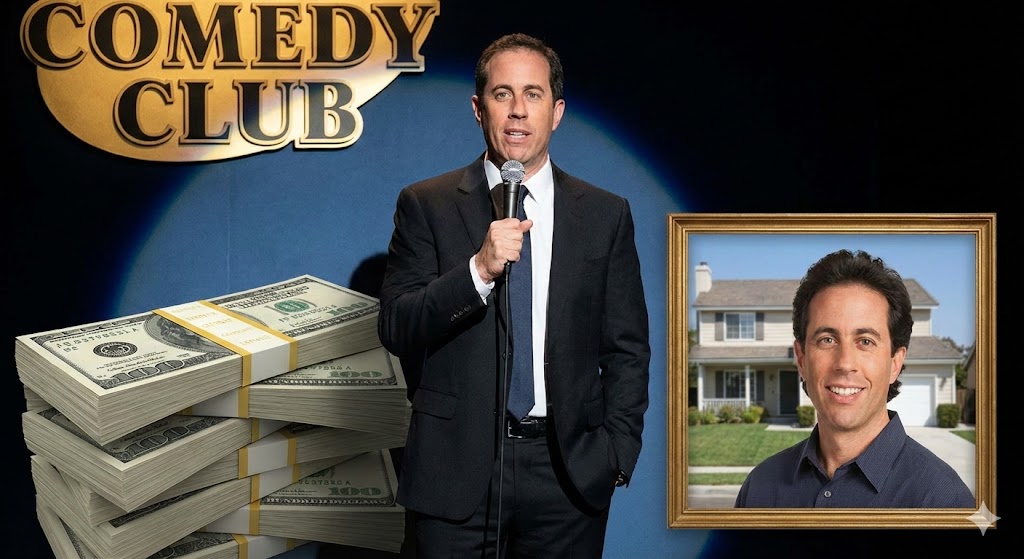
NBC paid him $1 million per episode. That’s roughly 1% of what he actually made. The show ended 28 years ago. He made $50 million last year. Welcome to the most profitable backend deal in entertainment history.
Estimated Net Worth 2026: $1 Billion+ (Forbes: $1.1B | Bloomberg: $1B+ | Celebrity Net Worth: $900M)
The Seinfeld syndication architecture represents the gold standard for entertainment wealth building. While Jerry’s NBC salary during the show’s original run made headlines, it was a fraction of his actual earnings. The real fortune emerged from deal structures that most viewers never understood and most performers failed to negotiate. For the full origin story behind the man and his billion-dollar fortune, see our complete Jerry Seinfeld Net Worth 2026 profile.
Co-creator credit. Backend ownership. Syndication participation. These weren’t just contract terms. They were wealth-building mechanisms disguised as creative control provisions. Understanding how they work reveals the mechanics that separate generationally wealthy entertainers from those who merely enjoyed high incomes.
The Deal That Built a Billion
When Seinfeld premiered in 1989, Jerry made a decision that defined his financial future. He negotiated co-creator status alongside Larry David. Most performers focus on salary negotiations. Seinfeld focused on ownership.
Co-creator status meant equity participation in the show itself. This wasn’t about getting paid more per episode. It was about owning a piece of everything the show would ever generate, in any format, on any platform, forever. This single negotiation point accounts for the majority of Seinfeld’s current fortune.
His final-season salary of $1 million per episode garnered enormous media attention. The figure seemed astronomical at the time. It proved almost irrelevant to his actual wealth accumulation. The salary totaled approximately $60 million over the show’s entire run. His backend ownership has generated more than $400 million in syndication residuals alone, with ongoing revenue continuing to flow nearly three decades after production ended.
Quick Facts: The Seinfeld Syndication Machine
- Total Show Revenue: $4+ billion since 1989
- Jerry’s Ownership Stake: 15% backend equity
- First Syndication Deal (1998): $1.7 billion valuation
- Cumulative Syndication Revenue (1995-2015): $3 billion
- Netflix Streaming Deal (2019): $500 million for 5 years
- Jerry’s Personal Netflix Take: $94-100+ million
- Annual Passive Income: $20-50 million
Seinfeld Syndication: The Complete Revenue Architecture
The math tells a story that contradicts public assumptions about celebrity wealth. His original NBC salary, the figure everyone remembers, represents roughly 6% of his lifetime Seinfeld earnings. Syndication and licensing represent the remaining 94%. The work happened once. The revenue has continued for 28 years.
| Revenue Period | Source | Estimated Earnings |
|---|---|---|
| 1989-1998 | NBC Salary (all seasons) | $60 million |
| 1998-2019 | Syndication Residuals | $400+ million |
| 2019-2024 | Netflix Licensing Deal | $94-100+ million (personal share) |
| 2012-Present | Standup Touring (annual) | $20-50 million/year |
| 2017-Present | Comedians in Cars/Netflix specials | $50+ million |
| Ongoing | Merchandising, DVD, international licensing | $10+ million/year |
The Equity Escalation Play
Both Seinfeld and Larry David started with 7.5% backend equity points. As the show became a cultural phenomenon, they renegotiated to 15% each. That single upgrade, from 7.5 to 15, roughly doubled their lifetime earnings from the show. It happened because they had leverage (NBC couldn’t replace them) and because they understood that percentage points on a hit show compound over decades.
This is the same principle that drives the celebrity brand extension ladder: ownership beats licensing, and licensing beats salary. The celebrities who build generational wealth are the ones who negotiate for equity when they have maximum leverage, not maximum salary.
The Netflix Wealth Event
In 2019, Netflix acquired streaming rights to Seinfeld for approximately $500 million. This single transaction represented one of the largest licensing deals in streaming history. Bloomberg estimated Seinfeld’s personal take from this deal at $94 million. Other sources put the figure above $100 million.
The Netflix deal illustrated a principle that sophisticated wealth builders understand: platform competition creates premium valuations for proven content libraries. Netflix, Amazon, HBO Max, and other streamers were bidding against each other. Seinfeld owned equity in the content they wanted. The bidding war enriched him without requiring any additional creative work.
This mirrors what happened across the music industry with catalog sales, a phenomenon we cover extensively in the music catalog gold rush. The same economic forces that drove Bob Dylan and Bruce Springsteen to sell their catalogs for hundreds of millions are the forces that keep enriching Seinfeld’s syndication stake. Scarce, proven IP + multiple competing buyers = premium valuations.
The Touring Revenue Stream
Despite his billion-dollar fortune, Jerry Seinfeld continues touring as a standup comedian. His performance fees range from $750,000 to over $1 million per show. Annual touring revenue consistently exceeds $20 million, reaching $50 million in years with Netflix specials attached.
Why does a billionaire continue performing in theaters? The answer reveals something about both his psychology and his wealth strategy.
Touring maintains his cultural relevance without diluting the Seinfeld IP. Each tour reminds audiences he exists. Each show generates social media mentions and press coverage. This visibility supports the ongoing value of his intellectual property without requiring him to create new television content that might compete with or diminish the original. It’s marketing disguised as art, and art disguised as marketing. Billy Joel’s Madison Square Garden residency follows the same logic: keep performing, keep the brand alive, let the catalog appreciate.
The Scarcity Strategy
Since Seinfeld ended in 1998, Jerry has consistently rejected reunion offers and reboot proposals. Given the financial success of other television revivals, his refusal appears counterintuitive. It’s strategically brilliant.
Scarcity protects value. A mediocre Seinfeld revival would diminish the perceived quality of the original. It would compete with reruns for audience attention. It would potentially reduce licensing fees by creating content that might not match the original’s cultural impact.
By refusing to dilute the property, Seinfeld maintains its premium positioning. The show remains frozen in its best version. Nostalgia continues building without any new content risking disappointment. His ownership stake in the original content continues appreciating without competition from inferior sequels. Compare this to the brand-building lessons from 90s music icons: the artists who protected their catalogs built bigger fortunes than those who chased short-term revenue.
The Alternative Asset Portfolio
Beyond syndication, Seinfeld’s wealth is diversified across asset classes that appreciate independently of entertainment industry cycles.
His East Hampton estate on Further Lane, purchased from Billy Joel in 2000 for $32 million, is now worth an estimated $70-100 million based on comparable sales in the area. The nearby 408 Further Lane sold for $115 million in 2025. His property includes 12 acres, a 24-room main house, a guesthouse, a pool, a barn, and the famous 22-car Porsche garage. For context on these valuations, see our Hamptons power players guide.
His Porsche collection of 150+ cars is estimated between $50-100 million. It includes a 1969 Porsche 917K in Gulf livery (estimated $25 million), one of 50 hand-built 1949 Porsche 356/2 Gmünd coupes, and one of 337 Porsche 959s ever made. Unlike most depreciating luxury purchases, vintage Porsches have appreciated 15-20% annually over the past decade. Like the celebrity watch collectors we profile, Seinfeld turned a passion into a performing asset class.
His Manhattan real estate includes a brownstone converted into a three-floor, climate-controlled car storage facility, plus his primary Upper West Side residence.
What the Seinfeld Syndication Model Teaches About Wealth
The Seinfeld syndication story illustrates principles that extend far beyond entertainment. Every principle here maps directly to business decisions that our readers at Social Life Magazine face regularly.
Ownership beats salary. His negotiation for co-creator status rather than maximum per-episode payment created generational wealth. Business owners and executives face similar choices: salary optimization versus equity participation. Seinfeld’s example suggests choosing equity every time.
Backend terms matter more than upfront terms. Syndication rights seemed like an afterthought in 1989. They became the primary wealth event. In any deal, identify which provisions will matter most in 20 years, not which provisions seem important today.
Scarcity protects value. Refusing to exploit an asset can enhance its worth. Seinfeld’s discipline in rejecting inferior opportunities preserved the premium positioning of his content library. The same principle applies to luxury brands, limited-edition products, and exclusive access.
Platform competition benefits content owners. The streaming wars enriched Seinfeld because he owned content that multiple platforms wanted. Owning assets that multiple buyers desire creates pricing power that pure service providers never achieve. This is the same dynamic driving the music catalog gold rush.
Cultural relevance compounds asset value. By continuing to tour and appear publicly, Seinfeld keeps the show culturally relevant, which supports syndication and licensing valuations. The asset and the artist reinforce each other in a virtuous cycle.
The Bottom Line on the Seinfeld Syndication Strategy
At $1 billion, Jerry Seinfeld’s fortune represents the apex of entertainment wealth building. His wealth emerged not from being funnier than other performers but from understanding deal structure, ownership mechanisms, and long-term asset management.
The show ended in 1998. The wealth engine he constructed continues generating returns. That’s the model worth studying, whether you’re building entertainment properties, luxury brand portfolios, or any asset designed to outlast your active participation.
The punchline was in the contract terms all along.
Get the Inside Story
Feature Your Hamptons Brand or Property: Contact Social Life Magazine — We connect luxury brands with the audiences that matter.
Polo Hamptons VIP Experiences & Brand Partnerships: Explore Polo Hamptons — Where celebrities, tastemakers, and brands converge.
Join the Hamptons Insider List: Get Our Newsletter — Celebrity sightings, real estate moves, and party intel before anyone else.
Social Life Magazine Subscription: Subscribe Now — 23 years of Hamptons authority, delivered to your door.
Support Independent Hamptons Coverage: Donate $5 — Keep the real stories coming.
Related Stories
For the complete origin story behind the fortune, read Jerry Seinfeld Net Worth 2026: The $1 Billion Comedy Empire.
How another Hamptons icon monetized a residency: Billy Joel’s Madison Square Garden Blueprint.
The wealth mechanics behind celebrity empires: The Celebrity Brand Extension Ladder.
Where entertainment fortunes settle: Who Lives in the Hamptons and What They Paid.
Complete rankings: TV Personality Net Worth Rankings 2026.
Author

Written by
Recent Posts
Where Can You Find the Best Made-to-Measure Bespoke Suits in NYC
The Financial Habits Every Successful Entrepreneur Swears By
What Happens If You Delay Hemorrhoid Treatment in New York City

James Franco Net Worth — A $30 Million Career Interrupted

Selena Gomez Net Worth — How a Disney Kid Built a $1.3 Billion Empire
Categories
- Art
- Articles
- Beauty & Skincare
- Celebrities
- Celebrities|Movies
- Celebrities|The Chronicles
- Chronicles
- Culture|Television
- Entertainment|Culture
- Event Photos
- Events
- Fashion
- Fashion & Style
- Featured
- Food & Beverage
- Food, Spirits, Wine
- Hamptons
- Hamptons Celebrities
- Hamptons Celebrities|Celebrities|The Chronicles
- Health
- Health & Beauty
- Lifestyle
- Luxury Lifestyle
- Movies
- Movies|Culture
- Movies|Hamptons Lifestyle
- Press
- Profiles
- Real Estate
- Technology
- The Chronicles
- Travel
- Uncategorized
- Weddings