
The Supermodel Who Walked Away on Her Terms
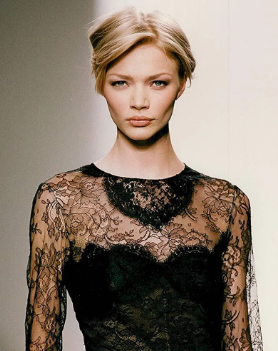
Jodie Kidd’s model career launched at 15 on a beach in Barbados. At 16, she was opening for John Galliano. At 17, British Vogue put her on the cover. Before she was old enough to legally drink in the United States, she had already walked for Chanel, Givenchy, Yohji Yamamoto, and Alexander McQueen, posed alongside Kate Moss and Naomi Campbell, and become the public face of an eating disorder she didn’t actually have. She was the most famous bones in British fashion. She was also, quietly, the most anxious person in the room at every show she ever worked. The fashion world saw a 6’2″ human coat hanger and called it a career. Jodie Kidd saw the same thing and eventually said: enough.
The Exit Nobody Predicted
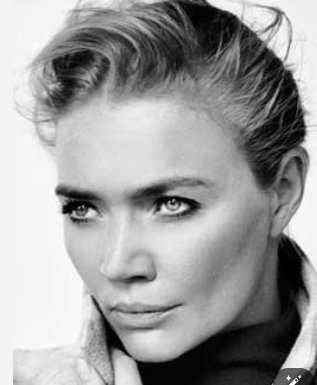
What happened next in Jodie Kidd’s model career is the part nobody expected. She didn’t collapse or spiral. Instead she pivoted — into motorsports, polo, television, pub ownership, and a small but genuine entrepreneurial portfolio. It wasn’t a clean story. The pivot lacked the PR engine it needed to scale into something significant. Nevertheless, her departure from fashion on her own schedule rather than the industry’s remains, in its quiet way, one of the most countercultural decisions a supermodel of her generation ever made.
Born Into the Right Postcode, Discovered in the Right Light
Jodie Kidd arrived in fashion with structural advantages most models don’t have. Her father was businessman and former showjumper Johnny Kidd. Maternal great-grandfather Max Aitken, 1st Baron Beaverbrook, served in the British cabinet during both World Wars. Aunt Vicki Hodge was a model. Her sister Jemma would become a prominent makeup artist. Her brother Jack plays polo professionally. Fashion, horses, and a certain kind of inherited English ease with rooms full of money — these were native languages for Jodie Kidd long before she understood what modeling actually was.
The Jodie Kidd model career began when Terry O’Neill spotted her at 15 in Barbados and introduced her to agent Laraine Ashton. Within months she was in London working fashion week. Within a year she was an international name. The timing was fortunate: the mid-1990s were an extraordinary moment for British fashion, with Galliano, McQueen, and Stella McCartney redefining the industry globally, and the culture demanding English faces to go with the English vision. Kidd provided them — angular, aristocratic, carrying the bone structure of a century’s worth of country breeding. Vogue loved her. The designers loved her. The public loved her, or at least was fascinated by her, which in the 1990s amounted to the same thing.
Controversy came fast and never really left. Kidd’s extreme slenderness became a flashpoint in the UK’s first serious public conversation about modeling and eating disorders. She stood 6’1″ and weighed 106 pounds at 16 — accused repeatedly of promoting anorexia. She denied having one, consistently and apparently truthfully. What she did have, and rarely discussed publicly until years later, was severe anxiety — the kind that made flying solo around the world for fashion weeks a quiet psychological ordeal and that eventually made the whole enterprise feel unsustainable. The public saw controversy. Kidd was managing something more fundamental: a young person being asked to carry a global narrative about body image while running on empty.
The Peak Was Real — And Brief
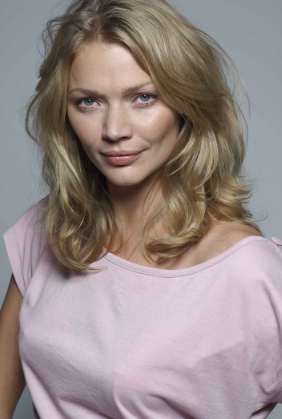
At its peak, the Jodie Kidd model career — between 1995 and 2000 — made her one of the most in-demand models in the world. Campaigns for Chloé, Chanel, and Yves Saint Laurent followed. Six-country Elle covers accumulated. She walked alongside the generation’s definitive faces at the definitive shows. Research on model career longevity consistently shows peak earning years compressed into a 5-7 year window — Kidd’s entire commercial prime was exactly that span, and she knew it was finite while she was living it.
The difference between Kidd and many of her contemporaries was that she felt the brutality rather than numbing it. The anxiety she describes from this period was not glamorous or quietly eccentric. It was a clinical reality that fashion showed no interest in accommodating. The industry’s response to a model who wasn’t coping was, as it has always been, to find someone who appeared to be. Kidd reached the end of her capacity for that particular transaction and left before it ended her. This, it turns out, is very hard to do. Most models don’t manage it.
She stepped back from the industry in the early 2000s. The departure was not a dramatic announcement — just an absence that grew permanent. Moving to the country, she had a son. She sold the Ferraris and bought a Volkswagen. She started racing Maseratis competitively — seriously enough to win races at European circuits — and played polo at a level that earned her a place on the England Women’s team. For someone the fashion world had classified primarily as a collection of useful measurements, she was building a life with impressive range.
The Pivot That Never Quite Scaled
Here is where Jodie Kidd’s model career gets instructive rather than simply admirable. Jodie Kidd’s post-modeling career is genuinely busy: television presenting, motorsports, a pub in Sussex, a food company, a sweet shop brand, a skincare investment. She has remained visible, relevant to a certain British audience, and clearly content. By most measures, this is a successful second act.
By the measures her contemporaries set, though, the business architecture is modest. The models who converted comparable fame into lasting wealth built platforms with global reach and compounding equity — products, IP, media properties that generated returns independent of their personal appearances. Kidd built local businesses that require her ongoing involvement and generate respectable but not transformative income. The distinction matters: she built a life, but not a machine. The machine is what makes generational wealth.
Why the Machine Never Got Built
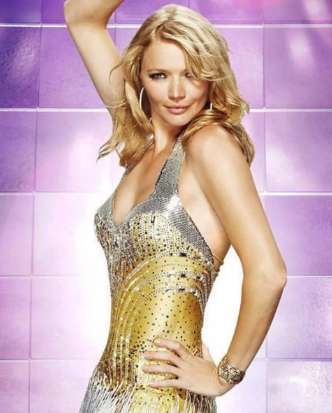
The reason is partly structural and partly temperamental. Structurally, Kidd left fashion before social media created the direct-to-consumer infrastructure that has allowed later models to build global businesses without traditional distribution. Her window for the biggest plays was narrow and the tools available were limited. Temperamentally, someone who left a global career because it was destroying her mental health was unlikely to immediately build another global career requiring the same sacrifices. Her priorities were calibrated differently, and the results reflect those priorities accurately.
This is not a failure. It is a choice. The mistake is applying a single metric to what constitutes a successful second act. Kidd’s contemporaries who built billion-dollar brands are extraordinary outliers. Most former supermodels of her generation are not running global beauty empires. Kidd is running a pub in Sussex and presenting television shows and raising her son and riding horses with Zara Tindall. Evaluated on any terms other than maximum wealth accumulation, she won.
What Jodie Kidd’s Model Career Actually Teaches
Most commentary on the Jodie Kidd model career frames it as a fade. That reading misses the specificity of what she did. — a hot face that peaked and disappeared. That reading misses the specificity of what she did. She is, in 2025, a 46-year-old woman who recognized earlier than most that the industry’s demands were incompatible with her survival. She left before the industry could remove her on its own timeline. A different life on different terms got built. Running her own businesses, raising her son, and publicly discussing the anxiety and difficult periods she navigated — which is a level of self-knowledge and self-determination that the 17-year-old on the Galliano runway could not have imagined.
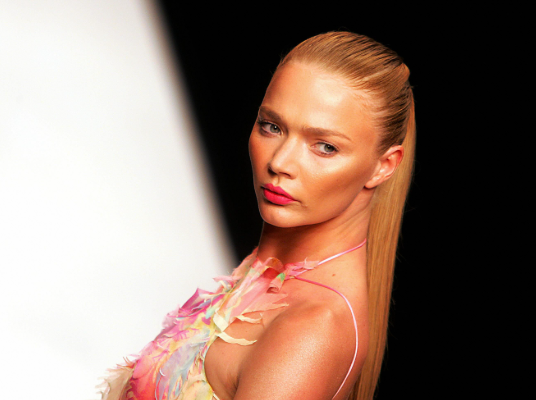
The lesson she offers is not primarily financial. It is structural in a different sense: knowing when the system’s terms are incompatible with your interests and having the courage to refuse them before the system refuses you first. This is rarer than it sounds. The industry is designed to make that refusal feel impossible. Jodie Kidd made it anyway.
For the Jodie Kidd model career, the business lesson — build the machine, not just the life — remains valid. It’s also incomplete without the prior lesson she demonstrated. You cannot build the machine if you’ve let the industry consume you before you reach the building stage. She survived. Then she built. That’s the order that matters.
The pub, for the record, has excellent reviews.
Part of Social Life Magazine’s Golden Decade series — examining the models who defined an era, the decisions that shaped their second acts, and what the industry still refuses to say out loud.
Read next: Quiet Wealth: Supermodels Who Built Empires Without Headlines | Supermodel Net Worth 2025: The Real Figures | The Transcenders: Five Supermodels Who Used the 90s as a Launchpad
Social Life Magazine reaches 25,000 readers across the Hamptons each summer issue. Advertise, subscribe, or partner with us here. Polo Hamptons tickets and sponsorships at polohamptons.com.
Author

Written by
Recent Posts
Breaking Bad Cast Net Worth. $130 Million Cooked in Five Seasons of Perfect Television

Cailee Spaeny Net Worth — From Springfield, Missouri to A24 and Alien in Three Years Flat
Wagner Moura Net Worth — He Learned Spanish to Play Escobar. Then He Learned English to Take Hollywood.

Robert Eggers Net Worth — He Made a $3.5 Million Film in Puritan English and Hollywood Listened
Brie Larson Net Worth — A $6 Million Indie Film Won Her an Oscar. Marvel Paid Her the Rest.
Categories
- Art
- Articles
- Beauty & Skincare
- Celebrities
- Celebrities|Movies
- Celebrities|The Chronicles
- Chronicles
- Entertainment|Culture
- Event Photos
- Events
- Fashion
- Fashion & Style
- Featured
- Food & Beverage
- Food, Spirits, Wine
- Hamptons
- Hamptons Celebrities
- Hamptons Celebrities|Celebrities|The Chronicles
- Health
- Health & Beauty
- Lifestyle
- Luxury Lifestyle
- Movies|Culture
- Movies|Hamptons Lifestyle
- Press
- Profiles
- Real Estate
- Technology
- The Chronicles
- Travel
- TV
- Uncategorized
- Weddings