
Most people in entertainment follow the career path: work hard, get discovered, increase your rate over time, accumulate enough to retire comfortably. This path produces millionaires. It does not produce billionaires. The empire path requires a fundamentally different approach to every negotiation, every project, and every relationship in the industry.
The Career Path vs. The Empire Path: A Structural Comparison
Understanding media mogul wealth building requires first understanding why the traditional career path, even executed brilliantly, cannot produce the same results.
| Dimension | Career Path | Empire Path |
|---|---|---|
| Income Source | Fees per project | Ownership stakes |
| Work Requirement | Must work to earn | Assets generate without labor |
| Ceiling | $500M-800M (exceptional) | $5B+ (multiple moguls) |
| Timeline | Linear accumulation | Exponential compounding |
| Legacy | Estate at death | Perpetual revenue streams |
| Risk Profile | Career dependent on relevance | Assets appreciate regardless of founder |
The math is stark. An A-list actor earning $20 million per film who works consistently for 30 years might complete 40-50 major projects. Total career earnings: $800 million to $1 billion before taxes, agents, managers, and lifestyle expenses. Net accumulation: $300-500 million. Impressive. Not transformational.
Compare to George Lucas, who accepted reduced directing fees in exchange for merchandising rights on a single franchise. Those rights generated billions over 40 years and were then sold for $4 billion more. The difference isn’t talent or work ethic. It’s structural positioning.
The Five Levels of Entertainment Wealth
Media wealth building follows a progression that most industry participants never fully understand. Each level requires different skills, different negotiations, and different relationships.
Level 1: Fee-for-Service
Actors, directors, writers, and crew members at this level exchange time for money. They’re paid per project, per day, or per year. Income stops when work stops. Most entertainment professionals spend their entire careers at Level 1, and most do quite well financially. But Level 1 wealth caps out around $50-100 million for the most successful practitioners.
Level 2: Backend Participation
At this level, talent negotiates for profit participation in addition to upfront fees. The key distinction is between net points, which rarely pay due to creative accounting, and gross points, which actually generate cash. A-list actors with gross participation can accumulate $200-400 million over a career. This is where most “wealthy celebrities” operate.
Level 3: Production Company
Forming a production company shifts the relationship from talent to business owner. Production companies negotiate overhead deals with studios, develop intellectual property, and retain participation in successful projects. Reese Witherspoon’s Hello Sunshine, Ryan Murphy’s production deal, and similar arrangements operate at this level. Wealth potential: $500 million to $1 billion.
Level 4: Library Ownership
Owning content catalogs, whether film libraries, television archives, or music masters, creates perpetual revenue streams independent of future work. Oprah’s Harpo library, Lucas’s pre-Disney merchandising rights, and similar assets generate income forever. This level enables multi-billion dollar wealth.
Level 5: Platform/Studio Equity
The highest level involves ownership in distribution infrastructure, whether studios, networks, or streaming platforms. Tyler Perry’s ownership stake in BET+, Spielberg’s DreamWorks founding equity, and similar positions create wealth that compounds with industry growth, not just individual project performance.
The Ownership Conversion Moment
Every media mogul has a defining moment when they converted from talent to owner. These moments share common characteristics.
Lucas in 1977: Accepted a smaller directing fee for Star Wars in exchange for merchandising rights. The studio thought they’d won the negotiation. Lucas was thinking 50 years ahead.
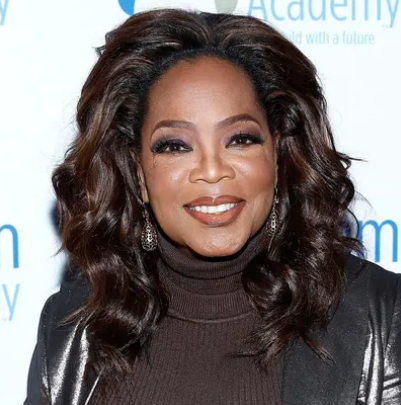
Oprah in 1988: Convinced ABC to let her own The Oprah Winfrey Show through Harpo Productions. Talk show hosts didn’t own their shows. Oprah did. That library is now worth over $2 billion.
Spielberg in 1994: Co-founded DreamWorks SKG, becoming a studio principal rather than a director-for-hire. This shifted every subsequent negotiation’s power dynamic.
Tyler Perry in 2006: Built Tyler Perry Studios in Atlanta rather than renting production space from existing studios. He now owns 330 acres of production infrastructure.
Reese Witherspoon in 2021: Sold Hello Sunshine to Candle Media for approximately $900 million, converting production company equity into liquid wealth.
The pattern is consistent: recognize the value you’re creating for others, negotiate to retain ownership of that value, then compound that ownership over time.
Why Studios Give Away Future Value
A reasonable question: if ownership is so valuable, why do studios agree to give it away? The answer reveals a structural asymmetry in how different parties evaluate risk and time.
Studios are managed by executives measured on quarterly results. They optimize for predictable costs, not long-term asset appreciation. Giving away merchandising rights that might be worth billions in 40 years doesn’t affect this quarter’s earnings report. Paying higher upfront fees does.
Additionally, studios can’t predict which projects will become franchises. Most films don’t generate meaningful ancillary revenue. The merchandising rights to a typical film are indeed worthless. Studios price these rights based on expected value across their entire slate, not the potential value of the rare massive hit.
This creates an arbitrage opportunity for talent willing to bet on their own projects. If you believe your work will outperform expectations, taking ownership instead of fees captures that excess value. If you’re wrong, you’ve simply accepted lower upfront compensation. The asymmetry favors the optimist who’s occasionally right.
The Production Company Strategy
Production companies represent the most accessible path to media mogul wealth building for established talent. The structure works like this:
A star with sufficient leverage negotiates an overhead deal with a studio or streamer. The studio pays annual costs, typically $2-10 million, covering offices, staff, and development expenses. In exchange, the studio gets first look at projects the company develops.
When projects get made, the production company retains meaningful participation, often 15-30% of backend profits. The studio gets content. The producer builds a portfolio of revenue-generating assets.
Over time, successful production companies accumulate libraries of participation rights. These rights generate revenue long after the original deals were negotiated. The overhead deal funds operations while the backend participation builds wealth.
Hello Sunshine exemplifies this model. Witherspoon’s company developed and produced content across film and television, building a library of participation rights and a development pipeline. When Candle Media acquired the company, they were buying that accumulated value, not just Witherspoon’s star power.
The Library Economics of Media Wealth
Content libraries appreciate for reasons that aren’t immediately obvious. A film or television series completed in 1995 might generate more revenue today than it did during original release.
Streaming platforms pay licensing fees for content libraries. These fees have increased dramatically as platforms compete for subscriber attention. The Friends library reportedly generates over $1 billion annually for Warner Bros. Discovery. Individual participation in such libraries creates meaningful ongoing income.
International markets expand over time. Content that performed modestly in its original release might find massive audiences in markets that didn’t exist or weren’t accessible decades ago. The global expansion of streaming makes older content more valuable, not less.
Nostalgia creates recurring value. The Star Wars franchise generates billions annually from audiences who weren’t born when the original films were released. Cultural landmarks appreciate as their audience grows across generations.
This is why ownership-focused negotiations specify perpetuity. A 2% participation in a film’s revenue might seem modest. But 2% forever, in a world where distribution channels multiply and international markets expand, compounds into significant wealth.
The Institutional Buyer Exit Strategy
Media moguls don’t just build libraries. They sell them to institutional buyers at premium valuations. Understanding who buys and why reveals the ultimate liquidity strategy.
Technology Companies: Apple, Amazon, and similar companies acquire content to drive platform engagement. They value content libraries based on subscriber acquisition and retention, not just content revenue. This creates premium valuations for strategic assets.
Private Equity: Financial sponsors like Blackstone, Apollo, and KKR have deployed billions into content acquisition. They see libraries as cash-flowing assets that can be leveraged, optimized, and eventually sold to strategic buyers at higher multiples.
Strategic Acquirers: Disney’s acquisition of Lucasfilm, Fox’s film assets, and Marvel represents strategic consolidation. These buyers pay premiums for content that fills gaps in their portfolios.
The presence of multiple buyer categories creates competitive dynamics that favor sellers. Lucas could negotiate with Disney because other buyers, including potential tech acquirers, provided leverage. Witherspoon could sell Hello Sunshine at a premium because multiple private equity firms competed for the acquisition.
The Tax Architecture of Media Wealth
Media mogul wealth building incorporates sophisticated tax planning that amplifies returns. Several strategies appear consistently among the most successful.
Stock Transactions: Taking acquirer stock instead of cash defers capital gains taxes until the stock is sold. Lucas took primarily Disney stock for the Lucasfilm acquisition. This allowed his wealth to compound without an immediate tax event.
Charitable Structures: Donating appreciated stock to charitable foundations provides deductions at fair market value while avoiding capital gains taxes. Many media moguls maintain substantial philanthropic vehicles that serve both charitable and tax planning purposes.
Installment Sales: Structuring exits as installment sales spreads recognition of capital gains across multiple tax years, potentially reducing the effective tax rate.
Opportunity Zone Investments: Reinvesting capital gains into qualified opportunity zones defers and potentially reduces taxes. Several media moguls have deployed exit proceeds into real estate and development in designated zones.
These strategies don’t reduce the fundamental value created, but they significantly affect the net wealth retained. A $1 billion exit might retain $600 million after taxes with naive structuring, or $850 million with sophisticated planning. Over decades of compounding, this difference becomes enormous.
What Media Mogul Wealth Building Teaches Everyone Else
The principles behind entertainment billionaires apply far beyond Hollywood.
Ownership beats employment, always. The entertainment industry makes this visible because the numbers are public. But the principle applies universally. Equity in a growing business beats salary from that business, even if the salary is substantial.
Negotiate from your moment of maximum leverage. Oprah negotiated for ownership when ABC needed her. Lucas negotiated for merchandising when Fox was desperate to manage costs. The best terms come from situations where the counterparty needs you more than you need them.
Think in decades, not years. Every media mogul who built a billion-dollar fortune was thinking about 30-year outcomes when their peers were thinking about the next project. This long-term orientation is perhaps the single most distinguishing characteristic.
Build multiple revenue streams. Spielberg doesn’t depend on any single source. Theme park royalties, production company profits, backend participation, and investments all generate returns. This diversification provides both security and compounding.
Create infrastructure, not just products. ILM and THX generate revenue independent of any specific Lucas film. Hello Sunshine generates value independent of any specific Witherspoon performance. Infrastructure compounds. Products depreciate.
The Bottom Line on Building Media Empires
Media mogul wealth building follows a clear playbook that separates billion-dollar fortunes from million-dollar careers. Build credibility through excellent work. Convert that credibility into ownership positions. Structure those positions for perpetuity and gross participation. Compound the revenue into diversified assets. Eventually, sell to institutional buyers who value strategic assets at premium multiples.
The highest-paid actor in history is worth less than the producer who owned his franchise because they played different games. One optimized for fees. The other optimized for ownership. The math favors ownership every time.
Related Reading
- The $10B Club: How Hollywood’s Biggest Fortunes Brunch in Bridgehampton
- From Content Creator to Content Owner: The Billionaire Pivot
- Oprah Winfrey Net Worth 2025: How $3.2B Was Built on Ownership
- Steven Spielberg Net Worth 2025: $7.1B in Dream Factory Dividends
Connect With Social Life
For features, partnerships, and advertising inquiries: sociallifemagazine.com/contact
Join us at Polo Hamptons for the season’s most anticipated events: polohamptons.com
Subscribe to our newsletter for insider access to Hamptons culture, real estate, and social intelligence.
Author

Written by
Recent Posts
Behind the Scenes of Weddings Involving Long-Distance Relationships
Why Karaoke Is the Ultimate Entertainment Choice for a Hen Party
Easy Recipes That Feed A Crowd Without The Stress
The Influence Of Social Media On Interior Style Trends
Where Can You Find the Best Made-to-Measure Bespoke Suits in NYC
Categories
- Art
- Articles
- Beauty & Skincare
- Celebrities
- Celebrities|Movies
- Celebrities|The Chronicles
- Chronicles
- Entertainment|Culture
- Event Photos
- Events
- Fashion
- Fashion & Style
- Featured
- Food & Beverage
- Food, Spirits, Wine
- Hamptons
- Hamptons Celebrities
- Hamptons Celebrities|Celebrities|The Chronicles
- Health
- Health & Beauty
- Lifestyle
- Luxury Lifestyle
- Movies|Culture
- Movies|Hamptons Lifestyle
- Press
- Profiles
- Real Estate
- Technology
- The Chronicles
- Travel
- Uncategorized
- Weddings