

This isn’t another celebrity-endorsed gadget destined for a drawer. Medicube’s parent company APR Corp. saw its stock soar 200% in 2025, pushing market value past $4 billion and making 36-year-old founder Kim Byung Hoon South Korea’s newest beauty billionaire. When Kylie Jenner posted a TikTok using the device, searches exploded. But the Kardashian bump only accelerated what was already happening: Medicube had cracked the code on bringing Seoul’s most effective skincare technology to bathroom counters worldwide.
What Korean Dermatologists Know: The Information Asymmetry
Korean skincare operates on different assumptions than the American model. Where Western dermatology often separates clinical treatments from home care, Korean philosophy treats them as a continuum. The clinic develops techniques; the consumer products deliver scaled versions of those techniques for daily maintenance. This approach explains why Korean women visit aestheticians less frequently than American women while often achieving better results.
The Seoul Advantage
South Korea functions as the global R&D lab for skincare innovation. The competition is brutal. According to Business of Fashion, Korean consumers demand results-driven products backed by clinical evidence. Brands that can’t deliver measurable outcomes don’t survive. This market pressure has produced innovations that take years to reach American shelves, if they arrive at all.
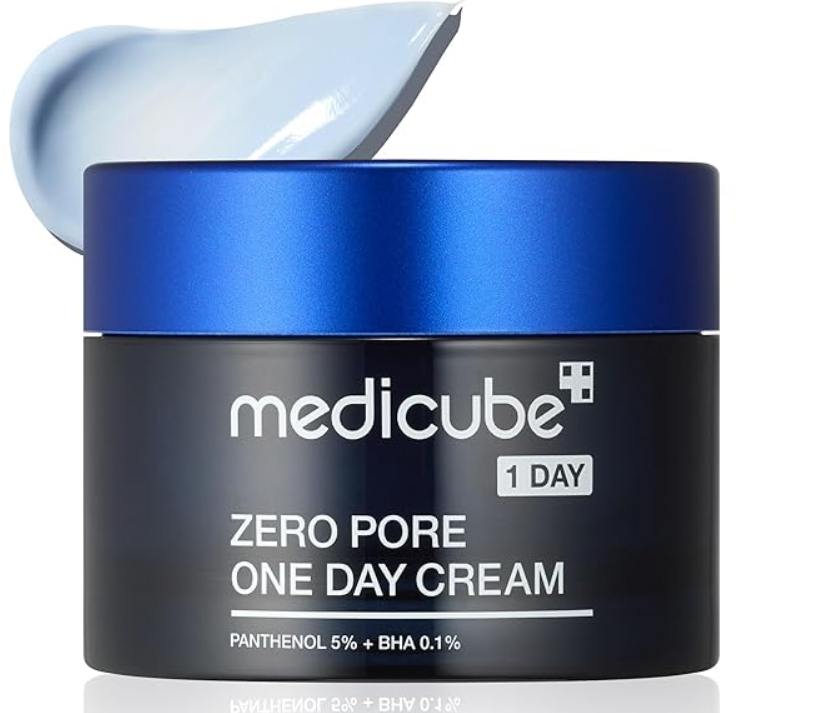
Medicube emerged from this environment. Kim Byung Hoon founded the company in 2014, initially focusing on targeted treatments for specific skin concerns. However, the pivot to beauty technology in 2021 transformed the business. The company recognized that professional-grade devices were becoming manufacturable at consumer price points, and Korean consumers were ready to adopt.
From Clinic to Counter
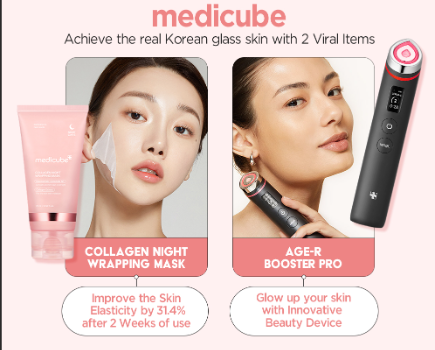
The technologies in the AGE-R Booster Pro aren’t new. EMS (electrical muscle stimulation), LED light therapy, microcurrent, and electroporation have been staples of Korean dermatology clinics for decades. What Medicube achieved was miniaturization and integration, six professional technologies consolidated into a single handheld device. The engineering required over three years of R&D under the leadership of Dr. Shin, a biomedical expert who serves as the company’s founder and head of research.
Each device undergoes testing at Medicube’s Korea-based manufacturing facility before shipping. This vertical integration allows quality control that third-party manufacturing can’t match. The company isn’t licensing technology or slapping its name on generic hardware. They’re building devices specifically designed for their formulations and use cases.
Inside the AGE-R: What the Device Actually Does
Marketing copy promises “glass skin” and “clinical results.” The relevant question is whether the technology supports those claims. Breaking down each function reveals legitimate mechanisms of action.
The Science of At-Home Professional Results
Electroporation uses electrical pulses to temporarily increase cell membrane permeability. According to research in dermatology journals, this allows active ingredients to penetrate deeper than topical application alone. Medicube’s clinical studies claim 785% improvement in product absorption during five-minute treatments. Even discounting for marketing optimism, the mechanism is sound.
Microcurrent delivers low-level electrical current that mimics the body’s natural bioelectrical field. The technology has been used in physical therapy for decades and entered aesthetics in the 1980s. Consistent use can improve muscle tone and lymphatic drainage, contributing to the “lifted” appearance users report.
EMS (electrical muscle stimulation) takes the stimulation further, causing involuntary muscle contractions that function like a facial workout. While no device replaces actual exercise, the technology can supplement natural facial muscle engagement, particularly for users who spend hours in positions that promote facial tension.
What Each Setting Actually Accomplishes
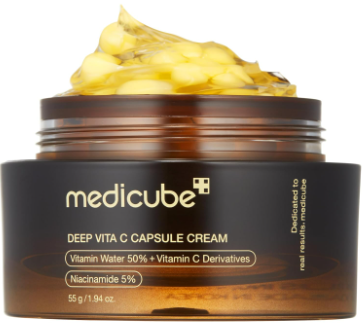
LED light therapy operates on wavelength-specific mechanisms. Red light (typically 630-660nm) penetrates the skin to stimulate collagen production and reduce inflammation. Blue light (around 415nm) targets acne-causing bacteria. The Booster Pro includes customizable LED settings through its companion app, allowing users to adjust treatment to their specific concerns.
Sonic vibration enhances product penetration while providing a massage effect that improves circulation. The combination of technologies means users aren’t choosing between treatments. They’re layering multiple modalities in a single five-minute session, an approach that would require hours and hundreds of dollars at a traditional medspa.
Why Your Medspa Is Nervous (And Why Smart Ones Are Adapting)
The economics of the medspa industry depend on information asymmetry. Clients pay premium prices partly because they believe professional-grade results require professional-grade equipment. Medicube threatens that assumption directly.
The $300 Session Problem
A typical facial treatment incorporating microcurrent and LED therapy costs $200-400 per session in major markets. Monthly maintenance adds up to $2,400-4,800 annually. The AGE-R Booster Pro retails for approximately $220, with no recurring costs beyond skincare products users would purchase anyway. The device pays for itself after a single skipped appointment.
This math explains why Medicube’s TikTok Shop revenue exceeded $102.9 million with over one million units sold. According to Glossy, the brand drove $22 million during Amazon Prime Day alone. Consumers are voting with their wallets, and the message is clear: they’ll invest in at-home technology if it delivers.
The Partnership Pivot
Forward-thinking Hamptons medspas are adapting rather than resisting. The hybrid model emerging in Seoul is starting to appear stateside: practices that incorporate at-home device recommendations into their treatment protocols. Clients use Medicube daily for maintenance and visit the office monthly for procedures that genuinely require professional oversight, injectables, lasers, and diagnostic evaluation.
This approach actually benefits both parties. The medspa retains high-value services while building trust by acknowledging what technology can accomplish outside the treatment room. Clients get better results because they’re maintaining between appointments rather than letting their skin backslide.
The Before/Afters: What Six Weeks Actually Looks Like
Managing expectations matters when evaluating any skincare technology. Medicube won’t replace Botox or surgical intervention. What it offers is cumulative improvement through consistent use.
Managing Expectations, Maximizing Results
Users report visible changes in skin texture and tone within the first week. The immediate “glow” effect comes from improved circulation and product absorption rather than structural change. According to Harper’s Bazaar editors who tested the device, professional estheticians commented on improved skin quality after several weeks of consistent use.
Longer-term benefits, improved elasticity, reduced fine lines, and more defined facial contours, require the six-to-twelve week timeline typical of collagen-stimulating treatments. The device works by supporting the skin’s natural processes rather than forcing immediate results. Patience and consistency matter more than intensity.
Hailey Bieber’s organic endorsement in late 2023, before any paid partnership, sparked initial interest. When Kylie Jenner and Kendall Jenner followed with paid content in 2024, the association with women known for flawless skin converted curiosity into sales. These celebrities have access to any treatment on earth. Their choice to use an at-home device carries weight.
The Math: Device Cost vs. Treatment Cost
The financial argument for Medicube becomes stark when calculated over time.
The AGE-R Booster Pro costs approximately $220. Assuming daily use for two years, the cost-per-use drops to about $0.30. A comparable professional treatment costs $300 per session. Monthly treatments for two years total $7,200. The device delivers similar technologies at 3% of the cost.
Even accounting for replacement (Medicube recommends updating devices every two to three years) and the skincare products used with the device, the savings remain substantial. Time savings compound the financial benefit. Five minutes at home versus an hour at a medspa, plus travel time, plus scheduling constraints.
The convenience factor particularly resonates with the demographic most likely to afford premium skincare: busy professionals who value efficiency. According to Bloomberg, Medicube now ranks as the number one selling K-beauty brand in the U.S., a position built on delivering professional results without professional inconvenience.
The Korean Innovation Pipeline
Kim Byung Hoon has stated that Medicube plans to expand into devices focused on skin aesthetics popular in Seoul clinics by late 2026. The company’s current dominance likely represents the beginning rather than the peak of at-home beauty technology.
Korean consumers have already moved past the Booster Pro to more advanced treatments. Radiofrequency devices, at-home microneedling, and diagnostic tools connected to AI analysis are the next frontier. As these technologies scale, American consumers can expect a continuous stream of innovations that further blur the line between clinic and bathroom.
Medicube’s trajectory suggests a broader shift in how we think about skincare. The question isn’t whether at-home technology will replace professional treatments. It’s how much of what we currently outsource can be done better, cheaper, and faster at home. The Korean market has been answering that question for years. American consumers are finally catching up.
The $228 device charging next to your bathroom mirror isn’t a gadget. It’s Seoul’s skincare secrets, miniaturized and democratized. Your aesthetician probably hopes you never figure that out.
Related Articles
- The Hamptons Medspa Guide: Where the Real Results Happen
- Korean Beauty Secrets: What the Gangnam Set Actually Uses
- At-Home Beauty Devices Worth the Investment (And Which to Skip)
Looking for partnerships with innovative beauty brands? Contact our team to discuss editorial features and sponsorship opportunities. For event sponsorships and lifestyle experiences, visit Polo Hamptons. Stay current with beauty technology trends by subscribing to our newsletter.
Author

Written by
Recent Posts

Civil War A24 Cast Net Worth — A24 Bet $50 Million on the End of America and Won

Midsommar A24 Cast Net Worth — The Daylight Horror That Turned Grief Into a Career Launchpad

ZOI NOMAD & TEN11 LOUNGE MARK ONE YEAR

Room A24 Cast Net Worth — The $6 Million Captivity Drama That Set Brie Larson Free

The Witch A24 Cast Net Worth — A $3.5 Million Puritan Nightmare That Created a Queen and a King
Categories
- Art
- Articles
- Beauty & Skincare
- Celebrities
- Celebrities|Movies
- Celebrities|The Chronicles
- Chronicles
- Entertainment|Culture
- Event Photos
- Events
- Fashion
- Fashion & Style
- Featured
- Food & Beverage
- Food, Spirits, Wine
- Hamptons
- Hamptons Celebrities
- Hamptons Celebrities|Celebrities|The Chronicles
- Health
- Health & Beauty
- Lifestyle
- Luxury Lifestyle
- Movies
- Movies|Culture
- Movies|Hamptons Lifestyle
- Press
- Profiles
- Real Estate
- Technology
- The Chronicles
- Travel
- Uncategorized
- Weddings