
The meeting happened in a suite at Claridge’s. No photographers. No publicists. Just a first-generation tech founder who had made $400 million selling software to banks, and a woman who had been walking runways since before he learned to code.
He wanted advice on entering fashion. She listened for exactly seven minutes. Then she told him which designers would take his calls, which wouldn’t, and why his money alone wouldn’t open certain doors. By the time he left, he understood something no business school teaches: in fashion, access is the asset. And Naomi Campbell controls who gets it.
The Myth and The Reality
The cultural story of Naomi Campbell goes something like this: a fierce Black British model who broke barriers, threw phones, dated billionaires, and somehow remained relevant across four decades. That narrative is accurate. It’s also incomplete.
What the Mythology Obscures
Behind the tabloid headlines exists a different Naomi Campbell. This version sits on advisory boards for luxury conglomerates. She maintains relationships with heads of state across Africa. She understands the flow of capital between Geneva, Dubai, and Lagos better than most private bankers. Her phone contains numbers that would make a Davos attendee nervous.
The $80 million net worth reported by Celebrity Net Worth represents only what’s visible. Real estate in Manhattan and Kenya. Fragrance royalties still generating income from deals signed in 1999. Production company stakes. Advisory fees that never appear in public filings.
The Streatham Origin
Naomi Elaine Campbell was born May 22, 1970, in Streatham, South London. Her mother, Valerie Morris, was a Jamaican dancer who performed across Europe. Her father left before she was born. She took her stepfather’s surname after her mother remarried.
At seven, she appeared in Bob Marley’s “Is This Love” music video. At twelve, she tap-danced in Culture Club’s “I’ll Tumble 4 Ya.” These weren’t accidents. Her mother enrolled her at the Barbara Speake Stage School, then the Italia Conti Academy of Theatre Arts. The performing arts education would prove more valuable than anyone realized at the time.
While window-shopping in Covent Garden at fifteen, Beth Boldt from Synchro Model Agency spotted her. Within months, she graced the cover of British Elle. Within years, she would become one of six women dubbed the first supermodels, alongside Christy Turlington, Linda Evangelista, Cindy Crawford, Claudia Schiffer, and Kate Moss.
The Leverage Moment
Every supermodel reached a point where they realized their image was worth more than their work. For Campbell, that moment came through rejection.
The Battle for the Cover
In the late 1980s, Campbell was consistently passed over for major American magazine covers. The reason was never stated explicitly, but everyone understood: Black models didn’t sell magazines. At least, that’s what advertisers believed.
Rather than accept the limitation, Campbell fought. She called editors directly, enlisted designers like Gianni Versace and Azzedine Alaïa as advocates, and made the absence of Black faces on covers a public conversation—years before such conversations were fashionable.
The result: she became the first Black model to appear on the cover of French Vogue, British Vogue, and Time magazine. Each cover wasn’t just a career milestone. It was a demonstration of what happened when someone with leverage applied pressure.
The Pay Parity Stand
According to Cosmopolitan, Campbell’s annual salary reached as high as $49 million at her peak. But she has spoken openly about refusing jobs where she was offered less than white counterparts for identical work.
“I still feel like it was right for me to stand up for my rights as a Black woman,” she told interviewers years later. The money she walked away from funded the credibility she needed to demand equal pay. That’s leverage in action.
The Compounding Effect
Campbell’s genius wasn’t in earning more per runway show. It was in understanding that visibility could be converted into forms of power that outlasted physical presence on a catwalk.
The Gatekeeper Position
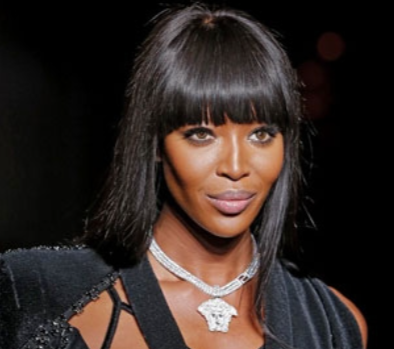
By the 2000s, Campbell had transitioned from model to cultural broker. She didn’t just attend parties. She determined whether parties mattered. Her presence at an event signaled legitimacy to a specific stratum of global wealth that cares deeply about such signals.
This positioning generated income that never appeared in modeling contracts. Advisory relationships with luxury brands. Introduction fees for connecting entrepreneurs with investors. Access to deal flow in African markets where her relationships with political leaders opened doors that money alone couldn’t buy.
The Philanthropic Leverage
In 2005, Campbell founded Fashion for Relief, staging charity shows that raised millions. The organization later faced scrutiny when an inquiry found only 8.5% of income reached partner causes, resulting in a five-year ban from serving as a UK charity trustee.
The scandal dented her public image but had limited impact on her net worth. More importantly, it revealed how deeply embedded she had become in networks where philanthropy, fashion, and political access intersect. The relationships she built through charitable work continued to generate value long after the organization’s issues became public.
The Business Portfolio
Campbell’s wealth streams diversified over decades. Understanding them requires looking beyond the obvious.
Fragrance and Licensing
Her debut perfume, Naomi, launched in 1999 and still sells in parts of Europe. Subsequent fragrance deals with Cosmopolitan Cosmetics created recurring royalty income that compounds quietly while she sleeps.
Production and Media
Campbell executive produced and mentored on reality series including The Face US, The Face UK, and The Face America. These weren’t just television appearances. They were equity positions in production companies, teaching her how media businesses generate returns.
Fashion Collaborations
Her “Naomi Campbell Designs” clothing drops, including a 2023 partnership with PrettyLittleThing, were structured as royalty splits rather than one-off buyouts. The difference matters enormously over time.
Private Investments
According to UK filings, Campbell holds minority stakes in two African travel ventures, connected to her ongoing work as a Kenyan tourism ambassador. These positions generate neither headlines nor immediate cash, but they represent bets on markets most Western investors still don’t understand.
The Real Estate Portfolio
Her property holdings reflect both taste and strategy. She owns a Manhattan apartment and a vacation home on Cleopatra Island, Turkey, known as Eco-House Horus. The Turkish property, designed to be eco-friendly and sustainable, was reportedly worth £109 million when her ex-partner, Russian billionaire Vladislav Doronin, built it for her.
Real estate for someone at Campbell’s level isn’t just shelter. It’s a store of value that appreciates while generating content for the visibility machine that maintains her cultural relevance.
The Hamptons Connection
Campbell’s relationship with the East End runs through the benefit circuit. She has been photographed at Southampton galas, Bridgehampton polo matches, and Montauk parties where the guest list reads like a merger of fashion, finance, and media.
For Social Life Magazine readers, she represents a specific archetype: the woman who transcended her original industry to become a connector across worlds. The person you’d want at your charity auction not because she’ll write a check, but because her presence will encourage others to write larger ones.
The NYC-Hamptons Circuit
Her connections to the Polo Hamptons social scene aren’t accidental. These events attract exactly the demographic Campbell has spent decades cultivating: people with money who understand that certain introductions are worth more than certain investments.
The Legacy Architecture
At 54, Campbell became a mother through surrogacy, welcoming a daughter in 2021 and a son in 2023. The children represent a new chapter, but also raise questions about legacy that Campbell has begun answering publicly.
What She Owns vs. What She Represents
The $80 million net worth captures tangible assets. It doesn’t capture what she represents: the living proof that a Black woman from South London could become one of the most powerful figures in global fashion, maintain that position for four decades, and exit the industry (whenever she chooses) with her influence intact.
That representation has value to brands, to causes, to countries trying to attract tourism and investment. It’s not quantifiable in traditional terms, but it generates real returns.
The Victoria & Albert Exhibition
In 2025, the Victoria & Albert Museum opened “Naomi: In Fashion,” a show that includes a revenue-sharing agreement on merchandise and book sales. The exhibition transforms her career into intellectual property that generates income while she attends the opening parties.
The Runway to Real Power
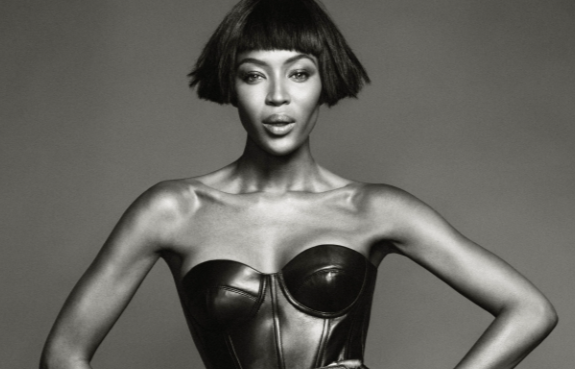
Campbell still walks shows. In Milan Fashion Week 2025, fashion press applauded her leather-corset look at Dsquared2, reportedly paid a mid-six-figure sum for exclusivity that week. Hugo Boss maintains a 12-month, multi-platform contract reportedly worth high seven figures.
But the runway appearances now serve a different purpose. They maintain visibility that makes everything else possible: the advisory relationships, the access brokering, the ability to determine who enters rooms that her approval controls.
The Paradox of Her Success
The woman who once threw phones at assistants has become the person executives call when they need to navigate fashion politics. The model who fought for covers now decides which emerging designers deserve attention. The teenager discovered in Covent Garden transformed into someone whose opinion shapes how billions of dollars flow through luxury markets.
That transformation wasn’t about becoming less fierce. It was about channeling fierceness into leverage that compounds regardless of whether she ever walks another runway.
The Bottom Line
Naomi Campbell’s $80 million net worth tells you she’s wealthy. It doesn’t tell you she’s powerful in ways that wealth alone can’t buy.
She understood, earlier than almost anyone in her industry, that the image of her was a separate asset from the work of her. She invested decades in positioning herself not as a model who sometimes did other things, but as a power broker who happened to have started on runways.
The meeting at Claridge’s? The tech founder eventually launched his fashion venture. He credits Campbell’s introduction to a specific designer as the moment everything changed. She never took a formal advisory fee. She didn’t need to. The relationship itself was the return.
That’s how gatekeepers build wealth that net worth calculations can’t capture. That’s why, thirty-five years after she first appeared in Vogue, we’re still trying to understand exactly how much Naomi Campbell is worth.
The answer is: more than the number suggests. And she knows it.
Related Articles
- Cindy Crawford Net Worth 2025: The Brand Machine Who Turned a Face Into a Fortune
- Tyra Banks Net Worth 2025: From Runway to Media Mogul
- Iman Net Worth 2025: Fashion, Marriage, Legacy, and Dignity as Capital
For features, advertising, and partnership inquiries, contact Social Life Magazine. Experience luxury networking at Polo Hamptons. Subscribe to our newsletter or support independent journalism with a $5 donation.
Author

Written by
Recent Posts

Civil War A24 Cast Net Worth — A24 Bet $50 Million on the End of America and Won

Midsommar A24 Cast Net Worth — The Daylight Horror That Turned Grief Into a Career Launchpad
ZOI NOMAD & TEN11 LOUNGE MARK ONE YEAR

Room A24 Cast Net Worth — The $6 Million Captivity Drama That Set Brie Larson Free

The Witch A24 Cast Net Worth — A $3.5 Million Puritan Nightmare That Created a Queen and a King
Categories
- Art
- Articles
- Beauty & Skincare
- Celebrities
- Celebrities|Movies
- Celebrities|The Chronicles
- Chronicles
- Entertainment|Culture
- Event Photos
- Events
- Fashion
- Fashion & Style
- Featured
- Food & Beverage
- Food, Spirits, Wine
- Hamptons
- Hamptons Celebrities
- Hamptons Celebrities|Celebrities|The Chronicles
- Health
- Health & Beauty
- Lifestyle
- Luxury Lifestyle
- Movies
- Movies|Culture
- Movies|Hamptons Lifestyle
- Press
- Profiles
- Real Estate
- Technology
- The Chronicles
- Travel
- Uncategorized
- Weddings