
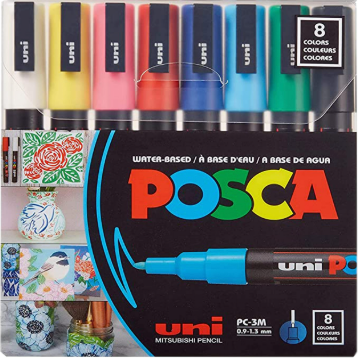
The creative director’s beach house in Amagansett has a drawer in the kitchen that guests always find eventually. It contains Posca markers, maybe thirty different colors, organized by tip size. When someone discovers them, the same conversation happens. What are these? Why do you have so many? And then, inevitably: can I use one?
Within an hour, the kitchen table has rocks from the beach, wine glasses that need labeling, a surfboard that’s been waiting for custom artwork. The children are decorating shells. The adults are trying their hands at calligraphy. Someone has figured out that these markers work on fabric and is customizing a tote bag.
This scene repeats across the Hamptons, and increasingly everywhere else. Posca markers, manufactured by Japanese company Mitsubishi Pencil since 1983, have experienced explosive growth. Search interest has increased 557% year over year. TikTok hosts 72 million posts featuring the brand. What was once a tool for graffiti artists has become the creative supply that changes how people spend their weekends.
The Gap: Why Traditional Art Supplies Limit Casual Creativity
Most art supplies require commitment. Paint needs brushes, palettes, cleanup, and drying time. Traditional markers bleed through paper and don’t work on hard surfaces. Spray paint demands ventilation and creates overspray. Each medium has constraints that discourage spontaneous use.
This matters because casual creativity depends on friction reduction. Someone who thinks “I should paint that rock” needs immediate access to materials that work simply. If the impulse requires preparation, cleanup, or special conditions, it dies before producing anything. Creative moments are often fleeting.
The Surface Limitation Problem
Traditional markers fail on non-paper surfaces. Glass, wood, ceramic, fabric, plastic, and metal all present challenges that alcohol-based or water-based ink markers cannot address. This limitation confines creativity to sketchbooks rather than the objects that fill actual life.
According to Posca’s official documentation, the brand positions itself as a “creative tool for all materials.” The claim sounds like marketing until you’ve used Posca on a wine glass, a leather sneaker, and a concrete garden stone in the same afternoon. The versatility isn’t theoretical. It’s the entire point.
The Posca Obsession: From Graffiti to Mainstream
Posca’s origin story begins in Japan in 1983. Mitsubishi Pencil designed the markers as non-toxic, high-pigment tools with paint-like coverage. The original target market was signage and industrial marking. However, graffiti writers discovered Posca first.
For street artists, Posca solved specific problems. The markers are portable, unlike spray cans that attract attention. The paint is opaque, covering dark surfaces that absorb lighter inks. The results are permanent on porous materials but removable from glass and metal, allowing artists to tag strategically. No smell, no mess, no obvious equipment.
The Crossover Moment
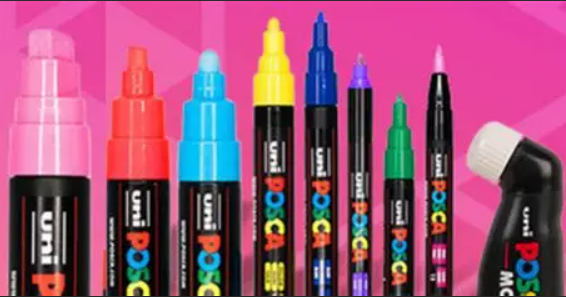
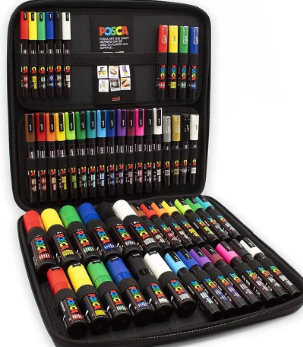
Throughout the 1990s and 2000s, Posca remained an insider tool. Street artists used them for sketching murals before committing to spray paint. Studio artists discovered that the markers enabled spontaneity that traditional paint couldn’t match. The brand expanded its color range to 71+ options, added metallic and pastel variations, and developed tip sizes from ultra-fine (0.7mm) to extra-wide (15mm).
According to market analysis from Marker Vibe, the 2020s brought mainstream adoption. Social media made creative hobbies visible. People watching others paint rocks, customize shoes, and decorate ceramics wanted to participate. Posca provided the accessible entry point that traditional art supplies couldn’t.
The Craft: What Makes Posca Different
Posca markers contain water-based acrylic paint rather than ink. This distinction matters technically. Paint provides opacity that ink cannot achieve. Layers build without the transparency that makes ink markers difficult on dark surfaces. The finish dries matte and waterproof on porous materials while remaining erasable on glass and metal.
The valve mechanism controls paint flow, preventing the flooding that makes traditional markers unpredictable. Shaking the marker mixes pigment. Pressing the tip activates the valve. Paint dispenses consistently from the first stroke to the last.
Tip Size Strategy
Posca’s range of tip sizes enables different creative applications. The PC-1MR (0.7mm ultra-fine) works for detailed line work, outlines, and nail art. The PC-3M (0.9-1.3mm fine bullet) handles journaling, labeling, and stone decoration. The PC-5M (1.8-2.5mm medium bullet) serves as the all-purpose option for most projects.
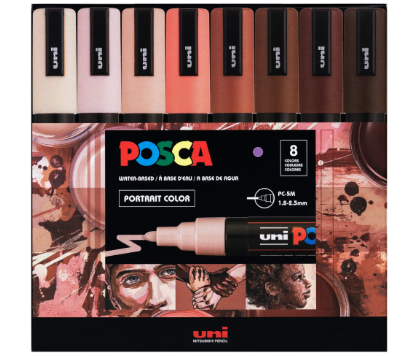
Larger sizes scale for different purposes. The PC-7M (4.5-5.5mm bold bullet) creates statement text on murals and chalkboard menus. The PC-8K (8mm chisel) fills large areas quickly. The PC-17K (15mm extra-wide) handles shopfront signs and stage props. This range means Posca works from fine jewelry decoration to building-scale murals.
The Signal: Why Search Interest Exploded
The 557% year-over-year growth in Posca searches reflects genuine cultural shift. According to business market analysis, affordable bulk sets dominate consumer purchases, with 8-color and 16-color sets accounting for 70% of B2C sales. This pattern suggests hobby adoption rather than professional use.
TikTok’s 72 million Posca-related posts demonstrate visual appeal. The markers photograph well. The application process is satisfying to watch. Completed projects showcase transformation from blank object to personalized creation. This documentation cycle drives further adoption as viewers become practitioners.
The 2025 Product Expansion
Posca continues expanding its range. 2025 brought new colors including Grape Green and Forest Green. The PC-5BR brush tip marker introduced semi-flexible application for calligraphy and variable line work. These additions maintain interest among existing users while providing entry points for newcomers.
For the brand’s positioning, Posca occupies a unique space. It’s too established to feel like a trend, too versatile to become saturated, and too useful to fade once discovered. Much like heritage brands that endure through genuine utility, Posca has built staying power from function rather than fashion.
The Hamptons Fit: Creative Culture for Coastal Weekends
The Hamptons creative scene operates differently from urban art communities. Projects tend toward decoration rather than expression. The audience includes children alongside adults. Spaces encourage casual making over serious studio practice. Posca fits this context perfectly.
Consider the host gift dilemma. Wine is expected but forgettable. Candles are generic. Flowers die. A curated set of Posca markers signals something different: the expectation of creativity rather than consumption. The gift says “use your weekend for making things” rather than “here’s something you’ll consume and forget.”
Project Applications for Beach House Life
Stone painting has become particularly popular. Beach walks yield materials. Posca provides execution. The results serve as garden decoration, paperweights, or mementos of specific weekends. Children can participate without supervision concerns since the markers are non-toxic and wash from skin easily.
Wine glass marking solves a party problem elegantly. Rather than using disposable labels, guests create personalized designs that distinguish their glasses throughout an evening. The marks wipe clean afterward. For hosts managing events at Polo Hamptons or similar gatherings, this functional decoration adds memorable detail without logistical burden.
Larger projects scale appropriately. Surfboard customization has become a summer house tradition in some circles. Outdoor furniture receives personalized touches. Garden pots transform from generic to distinctive. Unlike consumable gift items, Posca projects persist as evidence of specific times and places.
The Creative Hobby Revolution
Posca’s growth reflects broader shifts in how people spend leisure time. Passive consumption competes with active creation. Screens offer entertainment, but they don’t produce tangible results. The desire to make things has intensified precisely because so much daily life produces nothing you can hold.
Posca lowers the barrier to creation so far that the excuse “I’m not artistic” loses force. Drawing a design on a rock doesn’t require talent. Labeling a wine glass doesn’t demand training. The markers enable participation without prerequisites.
For the weekend house owner who wants guests engaged rather than distracted, Posca provides a solution. The drawer full of markers becomes an invitation. The conversation that follows creates connection. The projects that result become artifacts of time spent together.
This is why the creative director keeps restocking that drawer. Not because the markers are expensive or rare. Because every refill represents another weekend where people made things together instead of merely consuming them.
Related Articles
- The 2026 Hamptons Discovery Guide: 7 Brands Redefining Coastal Luxury
- The 2026 Hamptons Gift Guide: 15 Trending Brands Worth Knowing
- Autry Sneakers: The Italian Heritage Brand Every Hamptons Weekend Needs
Connect With Us
For brand partnerships and feature inquiries: sociallifemagazine.com/contact
Polo Hamptons tickets and sponsorships: polohamptons.com
Subscribe to our newsletter for weekly insider reports on the brands, events, and people shaping Hamptons culture.
Support independent luxury journalism: $5 contribution helps keep this reporting possible.
Author

Written by
Recent Posts

Civil War A24 Cast Net Worth — A24 Bet $50 Million on the End of America and Won

Midsommar A24 Cast Net Worth — The Daylight Horror That Turned Grief Into a Career Launchpad

ZOI NOMAD & TEN11 LOUNGE MARK ONE YEAR

Room A24 Cast Net Worth — The $6 Million Captivity Drama That Set Brie Larson Free

The Witch A24 Cast Net Worth — A $3.5 Million Puritan Nightmare That Created a Queen and a King
Categories
- Art
- Articles
- Beauty & Skincare
- Celebrities
- Celebrities|Movies
- Celebrities|The Chronicles
- Chronicles
- Entertainment|Culture
- Event Photos
- Events
- Fashion
- Fashion & Style
- Featured
- Food & Beverage
- Food, Spirits, Wine
- Hamptons
- Hamptons Celebrities
- Hamptons Celebrities|Celebrities|The Chronicles
- Health
- Health & Beauty
- Lifestyle
- Luxury Lifestyle
- Movies
- Movies|Culture
- Movies|Hamptons Lifestyle
- Press
- Profiles
- Real Estate
- Technology
- The Chronicles
- Travel
- Uncategorized
- Weddings