
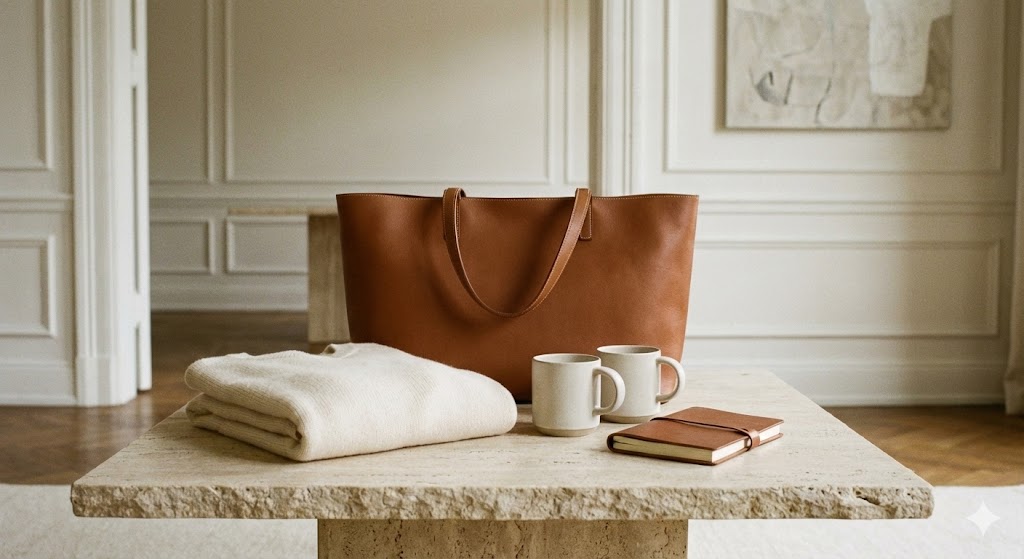
Understanding quiet luxury explained in full requires abandoning everything mainstream culture taught you about wealth signaling. The rules have inverted. What once communicated success now broadcasts insecurity. What appears ordinary to most eyes signals extraordinary wealth to those who know what they’re looking at.
The Misconception: Logos Equal Status
For decades, the formula seemed obvious. Expensive logos signal wealth. The more visible the brand, the higher the status. Louis Vuitton monograms. Gucci’s interlocking Gs. Chanel’s double Cs. These symbols functioned as shorthand for success, readable from across a room.
This logic made sense when luxury goods were genuinely scarce. Owning a designer bag meant something when only a small percentage of the population could afford one. Recognition was the reward.
Then came the democratization of luxury. Outlet malls proliferated. Entry-level products appeared at accessible price points. Logo-heavy items became attainable for aspirational buyers willing to stretch their budgets. Suddenly, the Gucci belt appeared on everyone from hedge fund managers to college students financing purchases through buy-now-pay-later apps.
The wealthy noticed. Their exclusive symbols had been diluted. The very visibility that once conferred status now suggested something else entirely: that the wearer needed validation from strangers.
The Code: Recognition by Peers, Invisibility to Masses
Quiet luxury operates on a fundamentally different logic. The goal isn’t recognition by everyone. It’s recognition by the right people only.
Harvard Business Review research on inconspicuous consumption illuminated this dynamic. Wealthy consumers increasingly prefer subtle signals that function as in-group identification. The cashmere baseball cap that costs $800 looks ordinary to most observers but signals insider knowledge to fellow members of the economic elite. Two Loro Piana wearers recognize each other without a word exchanged. That silent acknowledgment provides more satisfaction than mass admiration ever could.
The mechanism works through several channels:
Material Quality Over Brand Visibility
Quiet luxury prioritizes materials that only informed observers can identify. Vicuña wool, sourced from Andean animals that can only be shorn every three years, costs more per ounce than gold. Baby cashmere, harvested from goats under one year old, offers softness that standard cashmere cannot match. These fabrics announce nothing to casual observers but everything to those who understand textile quality.
The difference is tactile, not visual. You can’t photograph it for Instagram. You have to feel it. This creates an inherently exclusive knowledge barrier.
Absence as Statement
When The Row sells a white t-shirt for $400, the price tag isn’t buying a logo. It’s buying the absence of one. Mary-Kate and Ashley Olsen built their brand on the principle that true luxury needs no announcement. Their pieces feature no exterior branding whatsoever. The quality speaks only to those close enough to notice the weight of the fabric, the precision of the seams, the drape that cheaper alternatives cannot replicate.
This absence functions as the ultimate flex. Anyone can buy a logo. Choosing not to display one when you could afford the most expensive option signals a different relationship with wealth entirely.
Heritage Over Hype
The quiet luxury hierarchy favors houses with multi-generational histories over brands that achieved fame through marketing. Loro Piana, founded in 1924, built its reputation over a century of textile excellence. When LVMH acquired the company for €2 billion in 2013, they weren’t buying a marketing machine. They were buying authenticity that cannot be manufactured.
This heritage preference explains why old money families gravitate toward brands their grandparents wore. The continuity itself signals belonging. You didn’t discover this brand through an influencer. Your family has known it for generations.
The Evidence: How Quiet Luxury Conquered the Market
The Succession Effect
HBO’s “Succession” did more to educate mass audiences about quiet luxury than any fashion magazine. Costume designer Michelle Matland dressed the Roy family in Loro Piana, Brunello Cucinelli, and The Row. Not a single visible logo appeared across four seasons.
The effect rippled through culture. Viewers suddenly understood why billionaires might choose a $3,000 sweater that looked like nothing over a $500 jacket covered in recognizable branding. The show made quiet luxury legible to audiences who had never considered the distinction.
Search volume for “quiet luxury” increased 300% following the show’s peak seasons. The quiet luxury brands guide became essential reading for anyone seeking to understand this aesthetic shift.
Market Performance Data
Numbers confirm the cultural shift. According to Bain & Company’s research, the personal luxury goods market contracted in 2024 for the first time in 15 years. Yet within this declining market, quiet luxury brands outperformed dramatically.
Brunello Cucinelli reported revenue growth of 23.5% in their most recent fiscal year. Loro Piana’s parent company LVMH highlighted the brand’s exceptional performance in investor calls. The Row, though privately held, has reportedly achieved profitability levels that competitors envy.
Meanwhile, logo-dependent brands struggled. The contrast could not be starker.
The Psychology Research
Academic research explains why this shift has staying power. Studies published in Psychology & Marketing found that quiet luxury buyers seek connection with elite groups who share similar values. This contradicts classic theories suggesting luxury exists solely for mass status signaling.
The satisfaction comes from knowing rather than showing. When you recognize another person’s $5,000 jacket that most people would walk past without noticing, you’ve confirmed shared membership in a knowledge community. That confirmation provides psychological rewards that public recognition cannot match.
The Decoder Ring: Reading Quiet Luxury Signals
For those learning to read these signals, certain patterns emerge consistently. Understanding the old money aesthetic requires attention to details that casual observers miss entirely.
Fabric Weight and Drape
Quality textiles move differently. A $3,000 cashmere sweater has weight and drape that a $200 alternative cannot replicate. The fabric doesn’t cling. It falls. This distinction is impossible to capture in photographs but immediately apparent in person.
Construction Details
Hand-finished buttonholes. Floating canvas construction in jackets rather than fusing. Seams that lie perfectly flat. These details require proximity to notice but communicate everything to informed observers.
Fit Philosophy
Quiet luxury fits well but not tight. The clothes move with the body rather than constraining it. This ease comes from superior tailoring and more generous fabric usage. It signals someone who prioritizes comfort over display.
Condition and Patina
Old money wardrobes include pieces that are twenty years old and look it. The patina of age signals generational ownership rather than recent purchase. Pristine newness often indicates someone who just discovered wealth. Appropriate wear indicates someone for whom quality items have always been normal.
The Application: What Sophisticated Readers Can Learn
The quiet luxury shift offers lessons beyond wardrobe choices. The underlying principles apply to anyone building a brand, positioning a company, or cultivating a personal presence.
Signal to Peers, Not Masses
Effective positioning often means being recognized by your target audience while remaining invisible to everyone else. The startup founder who impresses venture capitalists doesn’t need to impress random observers. The professional seeking partnership at a prestigious firm doesn’t need strangers to understand their credentials.
Substance Over Announcement
Quiet luxury succeeds because the quality is genuinely exceptional. The strategy fails completely without underlying substance. A $400 t-shirt that falls apart after three washes destroys the entire value proposition. The lesson: build something worth recognizing before worrying about recognition.
Patience and Consistency
The quiet luxury aesthetic developed over generations. It cannot be purchased overnight. Similarly, the most durable positioning strategies emphasize long-term consistency over short-term attention. The minimalist lifestyle approach rewards those who commit fully rather than dabbling.
Exclusivity Through Knowledge
Quiet luxury creates exclusivity through knowledge barriers rather than price barriers alone. Understanding the codes requires education and exposure that money alone cannot provide. This principle applies broadly: the most valuable positioning often comes from understanding things that outsiders cannot easily learn.
The Future of Invisible Status
Economic uncertainty typically accelerates quiet luxury adoption. When times feel precarious, conspicuous consumption appears tone-deaf. Research indicates that Chinese consumers experiencing economic uncertainty demonstrate “luxury shame” behavior, avoiding ostentatious displays while maintaining quality purchases. This pattern repeats globally during periods of instability.
Younger generations show particular affinity for quiet luxury principles. Gen Z’s relationship with consumption emphasizes sustainability, authenticity, and lasting value over trend-driven accumulation. Logo fatigue has set in before most of this generation could afford logos in the first place.
The trajectory seems clear. Visibility will continue declining as a status marker. Quality, knowledge, and access will matter more. The wealthy will keep dressing to be recognized by peers while remaining invisible to masses. The codes will evolve, but the underlying logic will persist.
For those paying attention, quiet luxury explained isn’t just a fashion trend. It’s a fundamental reordering of how status communicates in an age of democratized consumption. The rules have changed permanently. The winners will be those who learned to whisper while everyone else kept shouting.
Related Articles:
- Quiet Luxury Brands: The Insider’s Guide
- The Old Money Aesthetic: A Complete Guide
- Stealth Wealth: How Billionaires Dress Broke
- Old Money Brands: The Complete List
Social Life Magazine has been the Hamptons’ authority on luxury lifestyle for over two decades. For advertising inquiries, feature opportunities, and brand partnerships, visit sociallifemagazine.com/contact. Experience where quiet luxury meets curated networking at Polo Hamptons.
Author

Written by
Recent Posts
Midsommar A24 Cast Net Worth — The Daylight Horror That Turned Grief Into a Career Launchpad
ZOI NOMAD & TEN11 LOUNGE MARK ONE YEAR

Room A24 Cast Net Worth — The $6 Million Captivity Drama That Set Brie Larson Free

The Witch A24 Cast Net Worth — A $3.5 Million Puritan Nightmare That Created a Queen and a King
A24 Genre Stars Net Worth — The Terrifying Fortunes Behind Horror, Sci-Fi, and Oscar Gold
Categories
- Art
- Articles
- Beauty & Skincare
- Celebrities
- Celebrities|Movies
- Celebrities|The Chronicles
- Chronicles
- Entertainment|Culture
- Event Photos
- Events
- Fashion
- Fashion & Style
- Featured
- Food & Beverage
- Food, Spirits, Wine
- Hamptons
- Hamptons Celebrities
- Hamptons Celebrities|Celebrities|The Chronicles
- Health
- Health & Beauty
- Lifestyle
- Luxury Lifestyle
- Movies
- Movies|Culture
- Movies|Hamptons Lifestyle
- Press
- Profiles
- Real Estate
- Technology
- The Chronicles
- Travel
- Uncategorized
- Weddings