
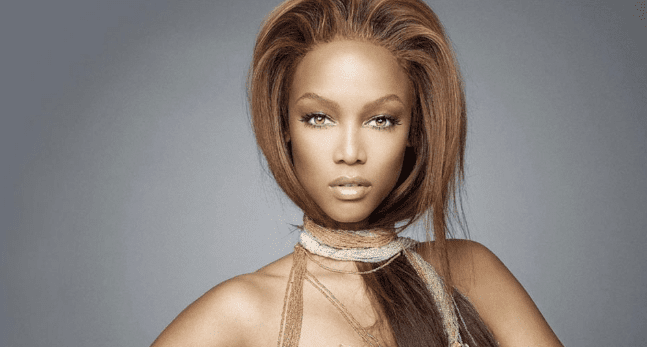
In 1991, every major Paris fashion house rejected her. The eighteen-year-old from Los Angeles received twenty-five consecutive rejections during her first European fashion week. “We already have a Black girl,” agencies told her. “We don’t need another one.” She flew home, cried, and then started planning a different kind of conquest.
Today, Tyra Banks’ net worth sits at approximately $90 million. She built it not by fighting the fashion industry’s racism but by outflanking it entirely. When runway doors closed, she walked through television doors instead. Then she bought the building. The girl who wasn’t wanted at couture shows became the woman who decided which girls would work in fashion.

The Before: Inglewood to Rejection
Banks grew up in Inglewood, California, a working-class suburb of Los Angeles with more grit than glamour. Her parents divorced when she was six. Her mother, a medical photographer, raised Tyra and her brother in modest circumstances. The affluence that would come later existed only as aspiration.
The Ugly Duckling Years
Before becoming a supermodel, Banks was a skinny, awkward teenager who endured relentless teasing. She shot up several inches in a single year, leaving her clumsy and conspicuous. Classmates called her “Olive Oyl” and “giraffe.” The wounds would fuel everything that followed.
When she began modeling at fifteen, the industry initially dismissed her too. Too commercial for high fashion. Too editorial for catalogs. The between-ness that made her hard to place would eventually become her greatest asset, enabling her to cross categories that more narrowly positioned models couldn’t access.
The Gatekeepers: The Paris Pivot
Those twenty-five Paris rejections in 1991 could have ended her career. Instead, they redirected it. When European high fashion declared it had enough Black models, Banks returned to America and focused on commercial work that paid better anyway.

The Victoria’s Secret Entry
In 1997, Banks became the first African American woman to appear on the cover of the Victoria’s Secret catalog. The milestone mattered beyond symbolism. Victoria’s Secret contracts paid multimillion-dollar annual fees. Commercial work that fashion editors dismissed as déclassé generated more income than prestige assignments.
Meanwhile, she made history with Sports Illustrated. Her 1997 swimsuit cover made her the first Black woman to appear solo on that issue. The cover generated enormous attention and established her as a crossover figure who transcended fashion industry constraints.
The Transformation: Television Instincts
Banks possessed something most models didn’t: she was interesting on camera when talking, not just posing. She delivered lines with natural timing. She displayed personality beyond beauty. Television producers noticed what fashion gatekeepers had dismissed.
The Talk Show Training
Her guest appearances on shows like The Fresh Prince of Bel-Air and talk shows throughout the 1990s functioned as training. Each appearance taught her about timing, audience engagement, and the rhythms of entertainment television. She was preparing for something bigger without fully knowing what.
By the early 2000s, reality television was exploding. Banks saw an opportunity that combined her modeling expertise with her television instincts. The concept: a competition show that would let her, rather than Paris casting directors, decide which girls deserved success.

The Empire Pivot: America’s Next Top Model
America’s Next Top Model premiered in 2003 with Banks as host, judge, and executive producer. The triple role was intentional. She had watched other models host shows while producers collected real money. Banks wanted the producer credit and the equity that came with it.
The ANTM Economics
Over 24 cycles across various networks, ANTM reportedly generated over $1.7 billion in advertising revenue. Banks’ production company stake entitled her to significant backend participation. Estimates suggest she earned over $30 million from the franchise alone, beyond her hosting fees.
The show also established her as a media mogul rather than a celebrity. She made decisions. She controlled narratives. She built a franchise that could continue without her physical presence on every episode. The transition from being the product to owning the means of production was complete.
The Bankable Productions Expansion
Banks founded Bankable Productions to house ANTM and develop additional properties. She launched The Tyra Banks Show, a daytime talk program that ran from 2005 to 2010. While less successful than ANTM, it expanded her production infrastructure and generated additional revenue streams.
Unlike Heidi Klum, who focused primarily on hosting with production credits, Banks built an actual production company with development capacity beyond her personal involvement. The approach created more scalable value, even if individual projects sometimes underperformed.
The Hamptons Connection
Banks has maintained a presence in Hamptons social circles, appearing at charity events and entertainment industry gatherings on the East End. Her media industry connections align naturally with the publishing, broadcasting, and content executives who summer in the Hamptons.
The Creator Economy Pioneer
For Social Life readers, Banks represents something specific: a Black woman who built generational wealth by creating rather than merely appearing. When fashion rejected her, she built her own platform. When modeling aged her out, she owned television franchises that didn’t depend on her appearance.
Her path offers a template for the creator economy that would emerge decades later. Own your platform. Control your narrative. Build equity rather than collect fees. Banks was practicing these principles when most models still thought success meant booking more campaigns.
Tyra Banks Net Worth 2025: The Mogul Portfolio
At 51, Banks continues developing media projects through Bankable Productions. She has invested in various ventures, including an ice cream company called SMiZE Cream and a cosmetics line. Her wealth derives from production company equity, real estate holdings, endorsement income, and investment returns.

Her estimated $90 million net worth positions her among the wealthiest model-turned-moguls in history. Unlike models whose wealth peaked with their careers, Banks’ fortune grew after she stopped walking runways. The producer credits she negotiated in her thirties continue generating returns in her fifties.
Those twenty-five Paris rejections in 1991 weren’t just obstacles. They were redirections. The industry that told her they didn’t need another Black girl watched her build an empire that decided which girls the industry needed. The ugly duckling from Inglewood became the woman holding the keys to fashion’s gates. Revenge, it turns out, compounds like interest.
Related Articles
- Naomi Campbell Net Worth 2025: Still Booking Campaigns in Her 50s
- Iman Net Worth 2025: From Somali Refugee to $200M Empire
- Heidi Klum Net Worth 2025: Runway to Reality TV Royalties
For features, advertising, and partnership inquiries, visit sociallifemagazine.com/contact. Experience exclusive Hamptons events at polohamptons.com. Subscribe to our newsletter for insider access to celebrity net worth stories and media mogul profiles.
Author

Written by
Recent Posts
The New Era of Effortless Beauty: Why Modern Wigs Are Redefining Everyday Glamour
The Pre-Summer Ritual the Hamptons Set Swears By
Ways To Overcome Addiction And Reclaim Your Life
7 Signs Professional Detox Support May Be Needed For Recovery
Mental Health and the Importance of Self-Care
Categories
- Art
- Articles
- Beauty & Skincare
- Celebrities
- Celebrities|The Chronicles
- Chronicles
- Event Photos
- Events
- Fashion
- Fashion & Style
- Featured
- Food & Beverage
- Food, Spirits, Wine
- Hamptons
- Hamptons Celebrities
- Health
- Health & Beauty
- Lifestyle
- Luxury Lifestyle
- Press
- Profiles
- Real Estate
- Technology
- The Chronicles
- Travel
- Uncategorized
- Weddings