
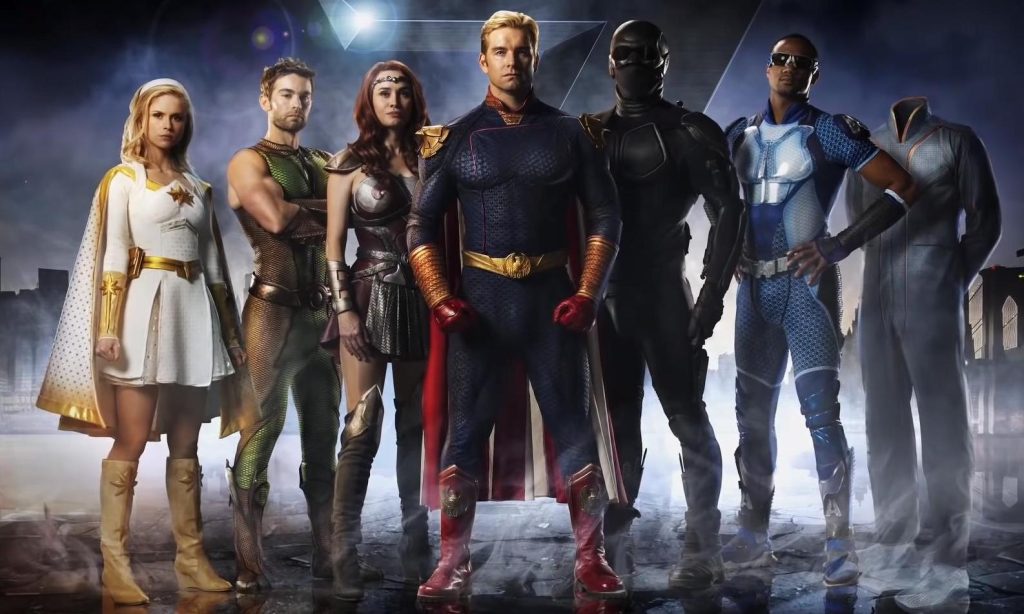
The Show That Stopped Pretending
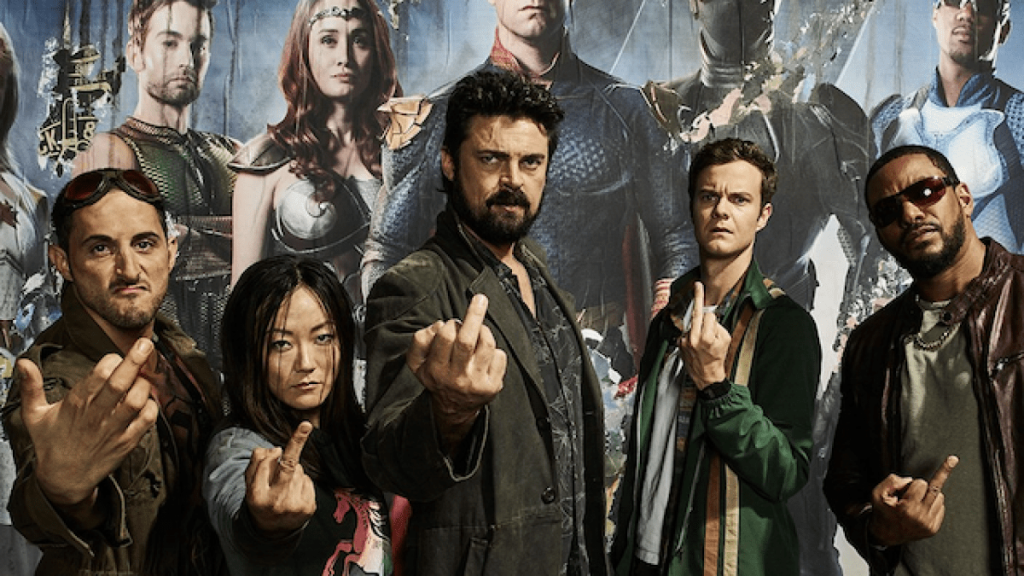
Every superhero franchise sells you the dream. The Boys sends you the invoice. The fifth and final season of Amazon’s most ruthless show premieres April 8, 2026 on Prime Video, with two episodes dropping at launch and weekly releases through the May 20 series finale. It arrives at exactly the cultural moment it was engineered for.
Crucially, this was never a show about capes. From its first episode, The Boys Season 5 predecessor seasons took every American institution worth worshipping and dismantled it on camera: celebrity culture, corporate philanthropy, political tribalism, media manipulation, and the military-industrial complex. In fact, Vought International — the fictional conglomerate that manufactures, markets, and monetizes superheroes — isn’t fiction. It’s the skeleton key to how institutional power actually operates.
Consequently, the Hamptons reader who sits on three boards and two foundations doesn’t need this explained. They need someone to finally say it out loud. Furthermore, what separates this show from every prestige drama competing for attention is its refusal to let anyone — audience included — pretend they’re on the right side. The Boys holds up a mirror. The reflection has never been flattering.
The final season picks up with Homelander ruling under authoritarian control and the resistance scattered underground. Showrunner Eric Kripke has described it as a story about fighting fascism from the margins. That’s not a superhero plot. That’s a documentary premise wearing a costume. And this season closes the book permanently — making it the most consequential finale in the streaming era. For a show that has essentially live-documented the collapse of institutional trust in real time, the ending matters more than entertainment. It matters as a cultural verdict.
Homelander and the Strongman Next Door
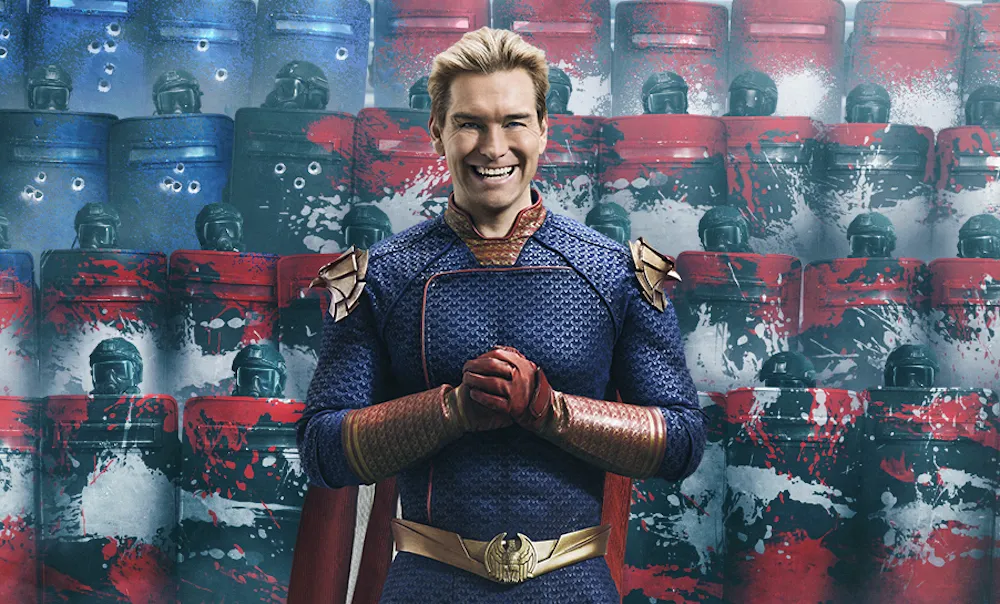
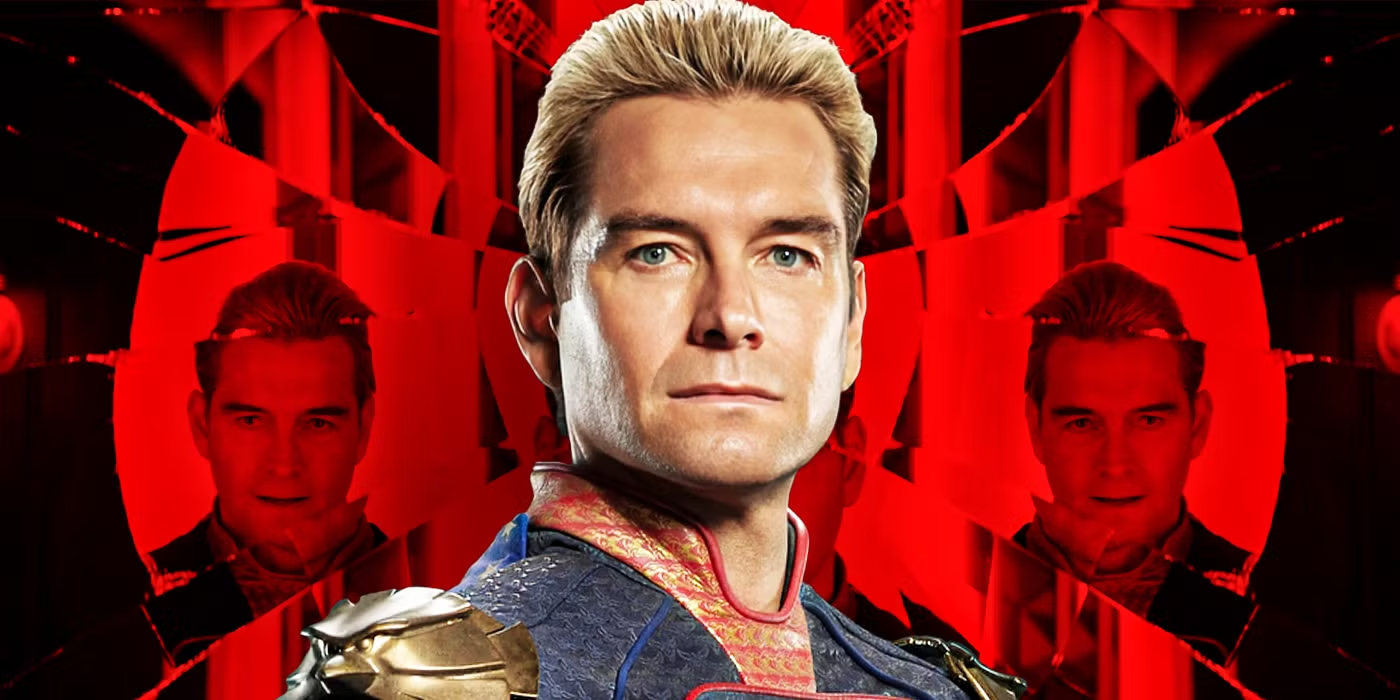
You’ve met this person. He chairs the gala. He’s on the cover of the wrong magazine. Nobody tells him no. Accordingly, Antony Starr built Homelander into the most uncomfortable character on television because he doesn’t play a villain. He plays a man who genuinely believes he deserves everything he takes.
Importantly, that distinction is what makes the performance terrifying. Homelander secured authoritarian global power heading into Season 5 and is now pursuing biological immortality through the V-One formula. However, the scary part was never the power itself. It was watching how many people handed it to him willingly. Rally by rally. Speech by speech. The show dramatized a process your readers have watched unfold in boardrooms, campaign fundraisers, and private dining rooms across the East End for years.
Notably, Starr plays the role with a specific emotional register that separates Homelander from every other screen tyrant. There’s a neediness underneath the menace. A desperation for love that curdles into punishment when it isn’t received. He wasn’t raised by parents. He was raised by a corporation. The product is a man who confuses worship with affection and obedience with loyalty. Consequently, every scene carries double voltage — you’re watching someone dangerous and someone broken at the same time.
For Hamptons readers navigating their own ecosystems of unchecked influence, Homelander isn’t a warning about superheroes. He’s a warning about what happens when charisma operates without guardrails. The show asks whether accountability is even possible once someone accumulates enough cultural capital to rewrite the rules. It never answers. Antony Starr’s portrayal of that question is the reason this show transcends its genre.
Starlight’s Revolt and the Woman Who Plays Her
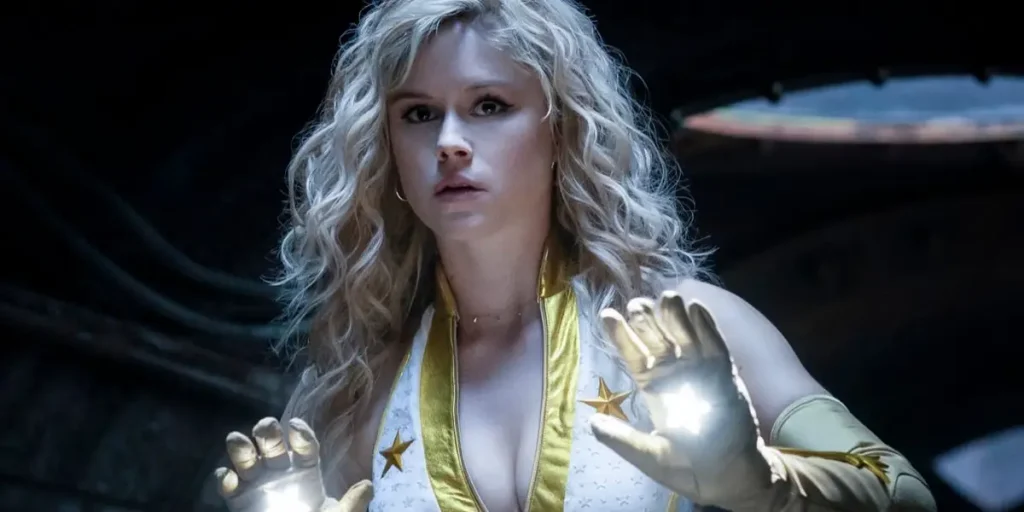
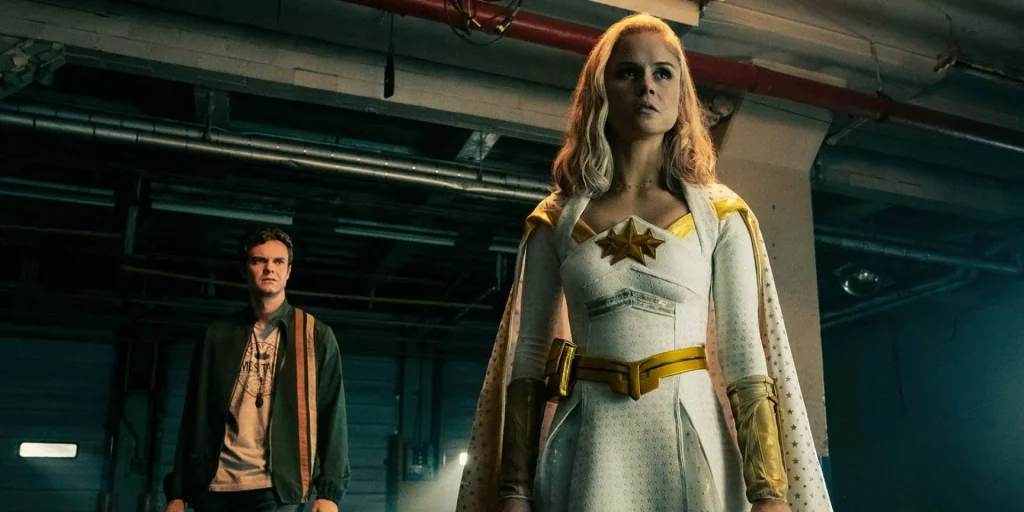
Erin Moriarty is your cover story. The timing is surgical. Her face hits newsstands the same day The Boys Season 5 premieres — April 8 — which means every entertainment search engine on the planet will be pinging her name while your readers are holding the magazine.
The character she plays earns the spotlight. In the final season, Starlight leads an underground resistance movement against Homelander’s regime in the final season. But the arc underneath is what resonates. Annie January was sexually exploited by a colleague, gaslit by the corporation that employed her, stripped of her identity for marketing purposes, and told to smile through all of it. She left. Then she came back to burn the institution down on her own terms. In the #MeToo era, that trajectory hits with documentary-level precision.
Meanwhile, Moriarty’s own story carries weight that amplifies the role. Born and raised in New York City. Started acting at 11. Skipped college to build serious indie credibility opposite Viggo Mortensen in Captain Fantastic and alongside Woody Harrelson in True Detective. Additionally, she publicly fought back against Megyn Kelly’s speculation about plastic surgery in 2024, calling it harassment and explaining that her appearance changes reflected natural aging and weight fluctuation. In May 2025, she was diagnosed with Graves’ disease.
She’s private. Substance over spectacle. A musician who wrote and performed an original song for the show’s second season. No entourage drama. No tabloid dependency. For Social Life readers, she represents something increasingly rare in celebrity culture — talent that doesn’t require a publicity apparatus to justify itself. The full origin story reveals why Starlight was the role she was born to play.
Butcher, Urban, and the Price of Scorched Earth
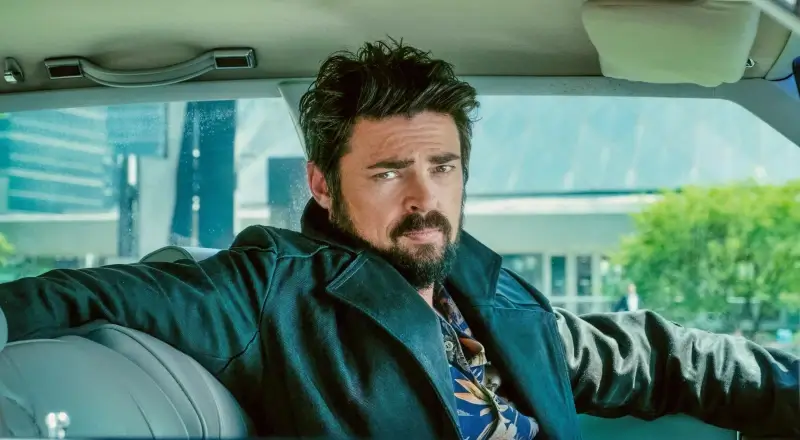
Billy Butcher plans to deploy a supe-killing virus. It will destroy every super-powered being on the planet. It will also kill Butcher himself. He knows this. He’s doing it anyway.
That’s the whole character distilled into four sentences. Yet Karl Urban plays him like a man who died years ago and simply forgot to stop moving. Butcher’s endgame in Season 5 is mutually assured destruction — the bet that eliminating the threat is worth eliminating yourself. Hemingway would’ve written this character in one paragraph and it would’ve been perfect. Urban gives him five seasons and makes every minute feel earned.
For your readership, Butcher represents a familiar archetype. He’s the partner who blows up the deal to prove a point — the founder who’d rather liquidate than compromise. Also the board member who torches relationships because being right matters more than being strategic. The show asks whether that makes him a hero or just another kind of monster. Ultimately, it refuses to answer — which is the most honest thing the writers could do.
There’s a Hemingway principle operating here: what goes unsaid carries more weight than dialogue. Urban communicates Butcher’s grief, his rage, and his exhaustion through physical performance. Clenched jaw. Dead eyes that occasionally crack open. By contrast, the moments of tenderness land harder because they arrive so rarely. Karl Urban’s journey to Butcher tracks a career built on exactly this kind of controlled intensity. The role didn’t find him by accident.
The Boys Season 5 and the Quiet Power of the Normal Guy

Jack Quaid is the son of Dennis Quaid and Meg Ryan. He could’ve coasted on legacy. Instead he plays Hughie Campbell — the most powerless person in every room who somehow keeps surviving.
That’s not accidental casting. Quaid brings something specific to Hughie that another actor couldn’t replicate: the quiet confidence of someone who grew up around power without needing to perform it. In Hamptons social physics, the person without the loudest title in the room is often the one running it. Hughie functions as the show’s connector, its moral gut-check, and the character everyone underestimates until it’s too late.
Furthermore, his character grounds the show’s more extreme elements. When Homelander gives speeches about superiority and Butcher plots extinction-level violence, Hughie asks the question the audience needs asked: is there a version of this where regular people survive? The answer has never been reassuring. Given that Season 5 opens with the resistance captured and scattered, Hughie’s survival instincts face their final test.
Quaid plays the role without vanity. No hero moments designed to make him look powerful. No redemption arcs that conveniently erase his failures. He’s scared most of the time and makes bad decisions under pressure. Still, he keeps showing up anyway. The full story of Jack Quaid’s Hollywood lineage reveals how growing up as industry royalty prepared him to play the most deliberately un-royal character on television.
Soldier Boy Returns and the Father-Son Reckoning

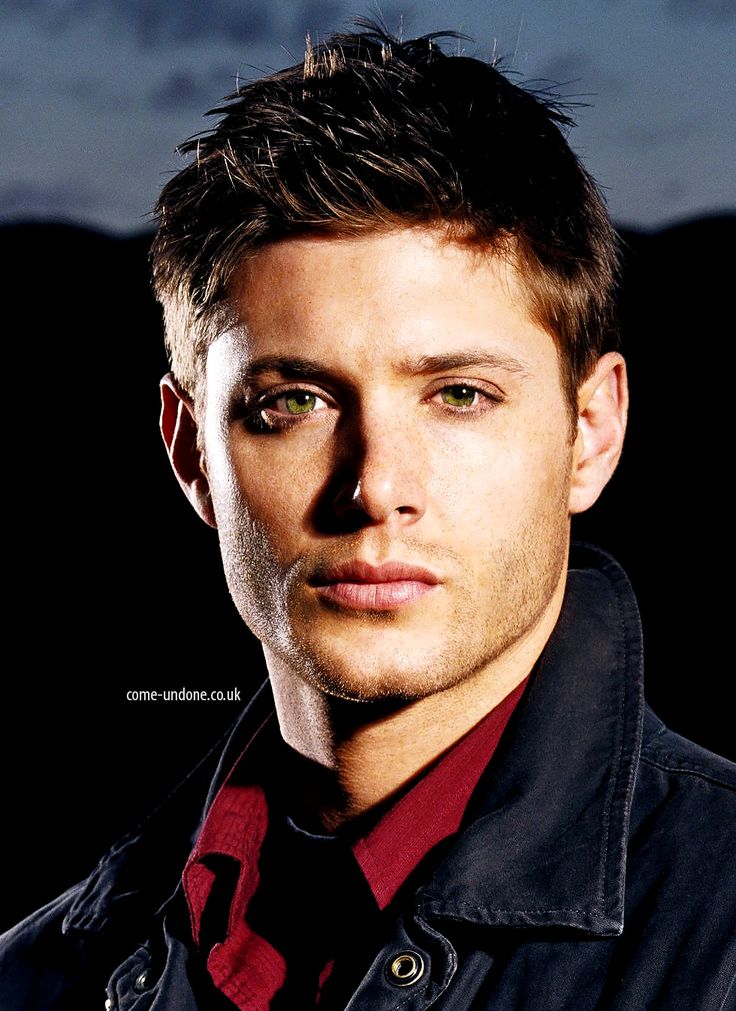
Additionally, Jensen Ackles returns as a series regular in Season 5, and the unexplored father-son dynamic between Soldier Boy and Homelander finally gets its full treatment. This is dynasty content. The absent patriarch whose legacy is violence. The heir who turned out worse than anyone predicted.
For readers who navigate family trusts, succession plans, and the weight of inherited reputation, this storyline hits with uncomfortable specificity. Soldier Boy represents old-guard power — the kind that operated through brute force and institutional protection, never faced consequences, and assumed the next generation would simply fall in line. Homelander is what happens when that assumption fails catastrophically. The son didn’t inherit the father’s discipline. He inherited the entitlement and amplified it.
Notably, Ackles built his career on 15 seasons of Supernatural, creating one of the most devoted fan bases in television history. Three Supernatural alumni now anchor The Boys — Ackles, showrunner Kripke, and recurring guest stars from the original series. That’s not trivia. That’s a case study in how fan loyalty converts across franchises. Consequently, the Soldier Boy return isn’t just a narrative choice. It’s a strategic one that brings an established audience into the final season.
The father-son reckoning gives Season 5 its emotional spine. Power doesn’t just corrupt. It reproduces. And the copy is always more dangerous than the original. Jensen Ackles’ journey from Supernatural to Soldier Boy tracks a career pivot that mirrors the show’s own evolution from genre entertainment to cultural commentary.
Why the Hamptons Should Be Paying Attention
The Boys doesn’t hate wealth. It hates what wealth does when nobody’s watching. The final season asks whether resistance is possible once the institutions have already been captured. That question isn’t hypothetical for readers who watched boards get stacked, foundations get politicized, and social capital get weaponized across the East End over the past five years.
Above all, this show earned its place as the definitive cultural text of the streaming era for a specific reason. It refused to let anyone off the hook, sparing neither the corporations nor the politicians. It held the celebrities equally accountable. Not the audience is consuming all of it. Meanwhile, every other prestige drama offered its viewers the comfort of moral distance — Succession let you laugh at the Roys, White Lotus let you judge the tourists. By contrast, The Boys puts you inside the machine and asks which part you are.
Ultimately, the answer for most honest viewers is uncomfortable. You’re not Starlight. And you’re not Butcher. Somewhere in the Vought org chart — benefiting from a system you know is broken, performing outrage at appropriate intervals, and hoping nobody looks too closely at the spreadsheet. The show’s genius is making that recognition feel thrilling instead of punishing.
The series finale airs May 20. The Boys Season 5 closes the book. The question it leaves behind is whether your readers see themselves in the heroes or the Supes. The answer — probably both — is the entire point. The show’s track record of predicting American cultural fractures suggests its final statement will age better than anything else released this year.
Experience the World That Social Life Magazine Covers
There’s a version of your life where you’re swimming in the culture and a version where you’re reading about it secondhand. Social Life Magazine exists for the first version. The stories we tell — from the Hamptons power players reshaping industries to the cultural moments that define how the elite actually live — aren’t available anywhere else. Because we don’t cover the surface. We cover the room behind the room.
If your brand, your business, or your personal story belongs in front of the audience that matters, reach out to our editorial team about being featured in Social Life Magazine. We place the people and brands that define luxury on the East End.
Want guaranteed placement on your terms? Submit a Paid Feature and secure your story in the publication that 82,000 readers trust for the definitive word on Hamptons culture.
Speaking of those 82,000 — our email list delivers exclusive content, event invitations, and insider access directly to the inboxes of the most influential people on the East End. Join the list and stop missing what matters.
Polo Hamptons returns this summer with the most exclusive luxury sporting event on the East End. Sponsorships, VIP cabanas, and brand activations that put you in front of a verified high-net-worth audience. Explore partnership opportunities at polohamptons.com.
Our print edition reaches 25,000 readers per issue across the Hamptons’ most exclusive boutiques, estates, and social venues from Memorial Day through Labor Day — plus 15,000 copies delivered to Upper East Side doorman buildings in fall and winter. Subscribe to the print edition and hold the magazine that holds the culture.
If this publication adds value to your life, consider a small contribution to support independent luxury journalism. Donate $5 and help us keep doing what nobody else will.
Related Reading
- Erin Moriarty Net Worth, Hamptons Roots & Why Starlight Is the Role She Was Born to Play
- Antony Starr and the Art of Playing the Villain Everyone Loves to Hate
- Karl Urban’s Butcher: The Anti-Hero for the Anti-Everything Era
- Jack Quaid: Hollywood Royalty Playing the Everyman
- Jensen Ackles, Soldier Boy & the Supernatural-to-Supes Pipeline
- How The Boys Predicted Everything: From January 6th to Celebrity Worship Culture
Author

Written by
Recent Posts
Jensen Ackles Net Worth: Soldier Boy and the Supes Pipeline

Jack Quaid Net Worth: Hollywood Royalty Playing Normal
Karl Urban Net Worth: The Anti-Hero Who Burns It All Down
Antony Starr Net Worth: The Villain Everyone Loves to Hate

Erin Moriarty Net Worth: Starlight Was the Role She Earned
Categories
- Art
- Articles
- Beauty & Skincare
- Celebrities
- Celebrities|The Chronicles
- Chronicles
- Entertainment|Culture
- Event Photos
- Events
- Fashion
- Fashion & Style
- Featured
- Food & Beverage
- Food, Spirits, Wine
- Hamptons
- Hamptons Celebrities
- Hamptons Celebrities|Celebrities|The Chronicles
- Health
- Health & Beauty
- Lifestyle
- Luxury Lifestyle
- Press
- Profiles
- Real Estate
- Technology
- The Chronicles
- Travel
- Uncategorized
- Weddings