
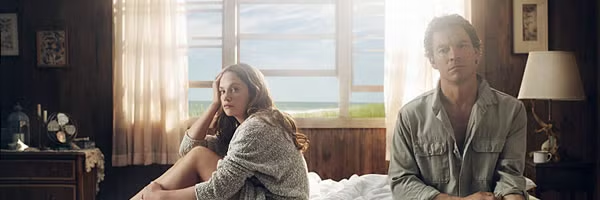
The thing about liking someone you know is going to hurt you is that the liking part and the knowing part occupy entirely different rooms in your head, and the hallway between them is long and poorly lit and lined with photographs of previous versions of yourself who also liked someone who was going to hurt them, and you walk past those photographs every single time but you never stop to look, because stopping would require you to admit that the hallway exists at all, that there’s a structural separation between what you feel and what you understand, and that the separation is, in a very precise and architectural sense, the thing that makes you who you are.
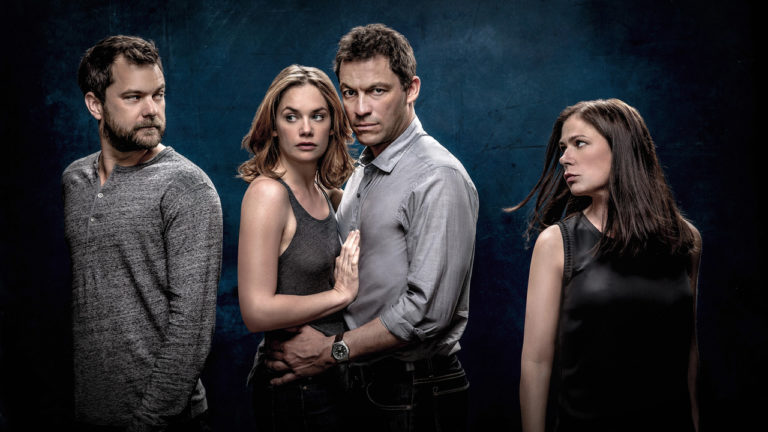
Showtime’s The Affair, which premiered in October 2014 and ran for five seasons and won three Golden Globes and filmed across Montauk, Amagansett, and East Hampton for half a decade, understood this hallway better than any American television drama before or since. It understood it because its central characters were not, in any reducible sense, bad people.
The Dinner Party Test: Why You Liked People You Should Have Feared
They were likeable people. The kind of people you’d want at your dinner party, the kind whose company made you feel slightly more interesting by proximity, the kind who remembered your drink order and asked about your sister’s surgery and laughed at exactly the right moment and touched your arm when they said something kind. Then they went home and did something so staggeringly selfish that you’d spend the next six episodes trying to reconcile the person you liked with the thing they did.
The show’s genius, its particular and irreducible genius, sat in its refusal to reconcile them for you. It just let you sit in the hallway. The show joins a growing archive of entertainment coverage on SocialLifeMagazine.com that explores how Hollywood mirrors the Hamptons back to itself, and what it mirrors, if we’re being honest, flatters nobody in the way mirrors in department store dressing rooms flatter nobody, which is to say the lighting is accurate.
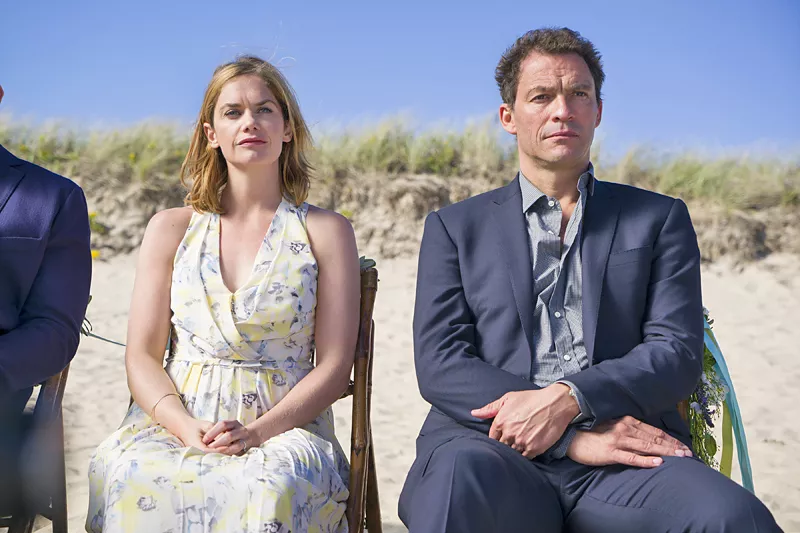
The Affair Hamptons Story Was Never About the Affair
The affair functioned as a delivery mechanism. What got delivered across five seasons amounted to an examination of the difference between what people want and what people will destroy to get it, and the space between those two things is, if you think about it for more than about forty-five seconds, the space where most of adult life actually happens.
The Likeability Problem, or: Why You Rooted for People Who Deserved to Lose
Here is what most television shows do with morally compromised characters: they give you a reason. Walter White has cancer and a family to provide for. Tony Soprano has panic attacks and a mother who qualifies, in clinical terms, as a monster. Don Draper carries a stolen identity and a childhood in a Depression-era whorehouse. The audience gets a wound, and the wound becomes the explanation, and the explanation becomes a kind of permission structure where you can root for the guy cooking meth or strangling informants because, underneath it all, there’s a wound, and wounds generate sympathy, and sympathy buys continued viewership.
This description applies to extraordinary shows. It identifies a mechanism, not a flaw. And The Affair’s most radical achievement lay in its refusal to employ that mechanism at all.
Noah Solloway Had No Wound. That Was the Point.
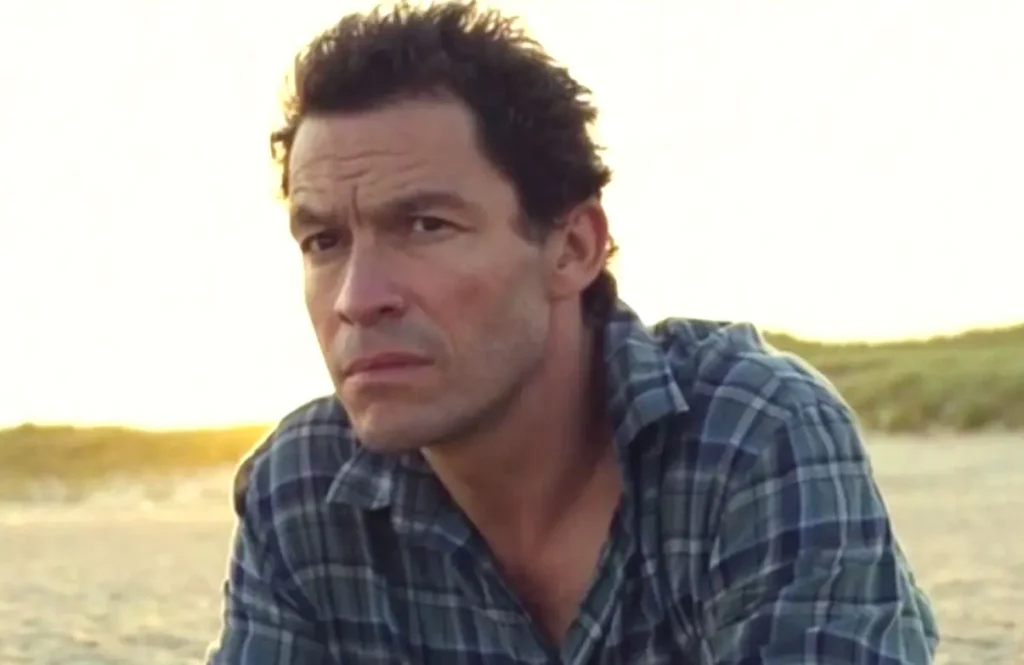
Noah Solloway, played by Dominic West with the particular swagger of a man who attended very good schools and internalized their implicit promise that the world arranges itself for his benefit (which, in West’s case, required no acting at all, since the man attended Eton and married into a family that has owned a castle in County Limerick for seven hundred years, a biographical fact that makes his portrayal of entitled weekender masculinity less a performance than a confession), carried no wound. Noah had a perfectly functional life. A wife, Helen, who brought intelligence and humor and family money. Four children who functioned, by the standards of fictional children, reasonably well.
He had a teaching job at a Brooklyn school and a novel he kept writing and a summer house in Montauk that belonged to his in-laws and a general sense that the world owed him something larger than what it had delivered. That sense, that low-frequency hum of entitlement that never reached a pitch dramatic enough to qualify as a crisis but persisted loudly enough to reshape every interaction he had, served as the only explanation the show ever offered for why he did what he did.
Taking Because Taking Was Available
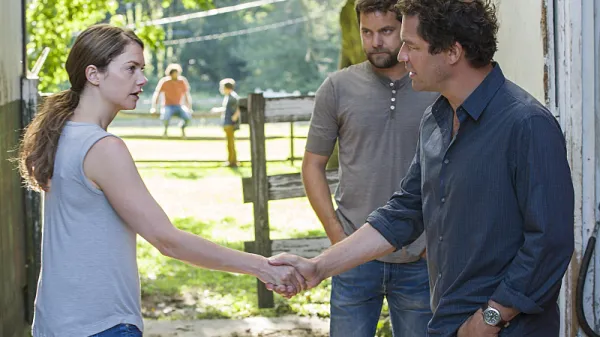
Which is to say: Noah Solloway cheated on his wife because he wanted to. Not because he carried some fracture. His marriage hadn’t failed in some catastrophic way that made the affair inevitable. And certainly not because Alison Bailey (Ruth Wilson, in a performance that won the Golden Globe and that she eventually walked away from, which is itself a story about wanting something and then understanding the cost) projected irresistibility through lighting and musical cues and slow-motion beach walks.
Alison compelled, certainly. Grief over the death of her child made her simultaneously available and unreachable, a combination that certain men find intoxicating because it allows them to believe they’re rescuing someone when they’re actually just taking. But Noah didn’t take because Alison proved irresistible. He took because taking sat available in front of him and he operated as the kind of person who, when presented with something available, took it.
Charm as Character, Not Packaging
The show’s most uncomfortable proposition, the one that most viewers could feel in their sternum even if they couldn’t articulate it, insisted that this particular quality, this willingness to take what sits available regardless of consequence, did not represent a flaw in Noah’s character. It constituted his character. The rest of it, the charm, the intelligence, the literary pretension, the ability to make you laugh at a dinner party, functioned as packaging. And the packaging worked so well that most people never opened the box.
The Rashomon Trick and the Architecture of Self-Deception
Sarah Treem, who created the show, called it “the Rashomon of relationship dramas,” which is one of those descriptions that achieves enough accuracy to prove useful and enough reduction to mislead, because Rashomon concerns itself with the impossibility of objective truth and The Affair addresses something more specific and more painful. Subjective truth, the truth you tell yourself about why you did what you did, does not distort reality. It constitutes a kind of reality, one that you inhabit fully, one that has furniture and weather and a working plumbing system.
The fact that someone else inhabits a completely different version of the same events in a completely different subjective reality with completely different furniture does not make either version false. It makes both versions true. And the space between two true versions of the same event that refuse reconciliation is, and this hits you at about 2:00 AM after you’ve finished the episode and find yourself staring at the ceiling, the space where all intimacy actually lives.
Two Halves of the Same Lie
Every episode split into two halves. The first half showed events from one character’s perspective. The second half showed the same events from another character’s perspective. Details changed. Not the big details, usually. The small ones. The ones that revealed not what happened but what each person needed to believe had happened in order to continue functioning as the person they believed themselves to be.

In Noah’s version of the first meeting at the Lobster Roll, Alison leaned forward, almost aggressive in her attention, wearing something revealing, projecting a sexual availability that made his interest in her look like a response rather than an initiation. In Alison’s version of the same scene, she wore something modest, distraction and grief clouding her face, Noah operating as the one who noticed her, who pursued, who manufactured proximity.
The Viewer as the Unreliable Narrator
Neither version arrived as the correct one. Both arrived as inhabited. And the audience, sitting in the gap between them, had to decide which version felt more true while understanding, at some level that the show made it impossible to avoid, that the decision they made about which version felt more true revealed more about them than it did about the characters.
This is, if you think about it, exactly how the East End works. Locals and weekenders live in the same geography and experience entirely different places. The Lockhart family, generational Bonackers with dirt under their fingernails and a ranch at Deep Hollow that has operated as a working cattle operation since 1658, look at Montauk and see a place that outsiders with more money and less history keep taking from them. The Solloways, Brooklyn money by marriage, summer people who arrive in June and leave in September, look at Montauk and see a destination that exists, in some fundamental way, for their enjoyment.
Both versions carry furniture. Both carry weather. And the space between them, the space where the class dynamics of the Hamptons real estate market and the social hierarchies of summer life and the unspoken rules about who belongs and who’s visiting all converge, is the space The Affair turned into fifty-three episodes of Golden Globe television.
Cole Lockhart and the Moral Weight of Staying
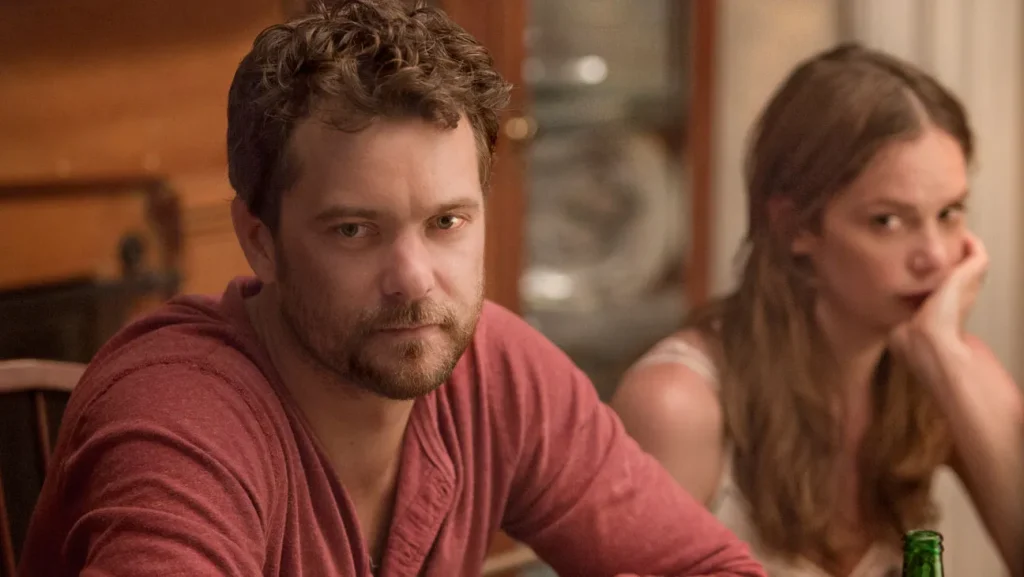
The thing about Cole Lockhart, the thing that Joshua Jackson understood in what might qualify as the most quietly devastating performance in the history of prestige television, is that Cole’s likeability carried no performance behind it. Cole operated as actually good. Not good in the television sense where a character’s goodness gets undermined by a dark secret or a hidden vice that surfaces in episode seven. Good in the way that certain people are actually good, which is to say imperfectly, inconsistently, in a manner that owes less to moral clarity than to the stubborn refusal to become someone you can’t recognize.
When Good People Run Out of Options
Cole drank too much. He made terrible decisions about women after Alison left. He got involved in his family’s cocaine operation, which the show treated not as a thriller subplot but as the kind of practical economic decision that families make when the ranch keeps failing and the property taxes keep accelerating and the idea of selling land that has belonged to your family for generations sits so categorically beyond consideration that illegal activity starts to look, in a certain light, like loyalty.
Here is where the show’s treatment of likeability turns genuinely interesting, because Cole did distasteful things, things that would disqualify him from most viewers’ sympathy if the conventional television grammar of moral accounting had framed them. But the show never framed them that way. Cole’s distasteful moments arrived as what they were: the behavior of a good person who kept running out of options and whose goodness, which stayed real and structural and not performative, could not prevent him from making choices that degraded it.
Two Kinds of Moral Failure at the Same Dinner Party
This differs from Noah. Noah’s distasteful moments extended from his character. Cole’s distasteful moments violated his character. And the distinction between those two kinds of moral failure, the distinction between doing bad things because that’s who you are and doing bad things despite who you are, separates the people at any East End dinner party into the two groups that never get discussed openly: the people who perform their values and the people who keep failing to live up to theirs.
Alison Bailey: A Woman Built From Negative Space

What Ruth Wilson did with Alison Bailey amounted to building a woman out of absence. Absence of her dead son. Of stability. Of the version of herself that existed before grief reorganized her molecular structure. Into that absence, Noah Solloway walked with the confidence of a man entering a room he assumed stood empty. The tragedy, the real tragedy, lived not in the fact that Alison let him in but in the way that letting him in felt, for a while, like fullness, like the absence finally meeting its replacement.
The replacement turned out to carry its own emptiness. Just another person’s narrative about who she should be, which constitutes a different kind of absence, a worse kind, because at least the original absence belonged to her.
The Face Between Feeling and Hiding
Wilson played this with a precision that bordered on the physically painful to watch. Moments in the first two seasons would arrive where Alison’s face did something that couldn’t quite qualify as an expression, something that existed in the territory between feeling and the decision not to show feeling. You could see, in that microsecond, the full architecture of a woman who had learned that showing pain gave other people permission to manage it, and that letting yourself get managed functioned as a form of disappearing, and that disappearing terrified her because she’d already done it once, after her son died, and the return had taken years, and she carried no certainty she could survive another disappearance.
Wilson won the Golden Globe for this. Then she asked to leave. The show killed Alison off in season four. Wilson’s departure, which later became the subject of a Hollywood Reporter investigation about on-set behavior, itself enacted a version of the show’s central theme: a woman inside a story written by other people deciding that the cost of staying in the story had exceeded what she would pay. The most honest thing anyone associated with the show ever did amounted to leaving it.
Helen Solloway: Clarity Weaponized Into Humor
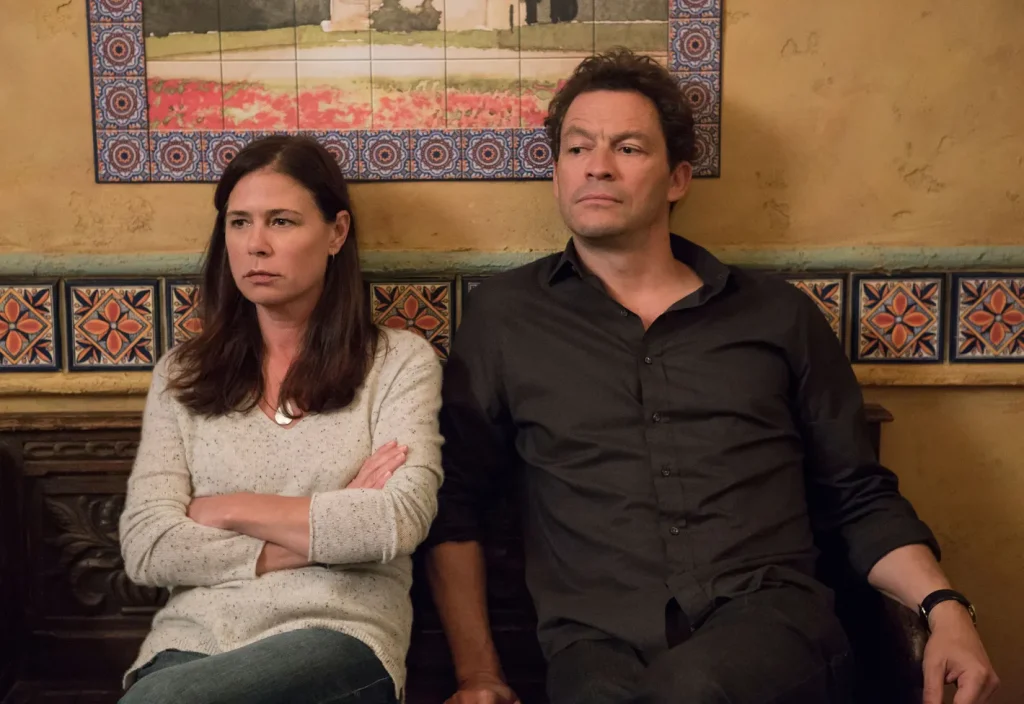
And then there stood Helen. Maura Tierney took the role of the betrayed wife, a role that exists in television grammar as essentially furniture, a moral backdrop against which the interesting people do interesting things, and she turned it into arguably the show’s most complete portrait of a human being.
Helen Solloway carried real humor. Not joke humor. Intelligence humor. The inadvertent kind that arrives as a byproduct of seeing things clearly rather than as a performance designed to make people like her. Clarity made her miserable. Misery made her funny. Funniness made people underestimate her. Underestimation made her furious. Fury made her reckless. And recklessness is where her distasteful moments lived: the prescription drug use, the sexual decisions driven less by desire than by the need to prove to herself that she still possessed agency, the parenting failures that emerged not from neglect but from the particular exhaustion of a woman who held everything together while everyone around her collected applause for falling apart.
The Third Category Nobody Names
Helen occupied a position in the show’s Hamptons class architecture that stayed unique and that Tierney played with total comprehension. Helen carried old Brooklyn money. Not Montauk local, not weekend tourist. A third category the show rarely named but Tierney embodied with every gesture and every drink she poured: the woman who married into one world, summered in another, and discovered that the freedom of belonging fully to neither also looked, in certain lighting, indistinguishable from the loneliness of belonging to nothing.
Tierney won the Golden Globe for this. She had reached 50. Breast cancer five years earlier had cost her a network television role during treatment. She just showed up to The Affair and delivered the best work in it, which is what she’d done for thirty years. The award arrived less as a surprise than as a correction.
The Weekender’s Entitlement and the Local’s Complicity
What Dominic West understood about Noah Solloway, and what most critics and most viewers missed because they kept busy categorizing Noah as either a villain or an antihero, landed in a simple observation: Noah’s likeability did not exist separate from his destructiveness. It served as the instrument of it. Noah didn’t seduce Alison through coercion or deception in the conventional sense. He seduced her by bringing genuine interest, genuine charm, genuine attentiveness. The genuineness of those qualities made the seduction so effective and so corrosive, because it meant that Alison could never fully dismiss what happened between them as manipulation.
When Genuine Warmth Does Genuine Damage
Some of it carried reality. His interest, his charm, his attentiveness all carried reality. What coexisted with those genuine qualities, in a way that Noah never examined because examining it would have collapsed the hallway between wanting and knowing, is that the interest and the charm and the attentiveness also operated as tactics, also expressed an entitlement so deeply internalized that it never registered as entitlement at all. It registered as personality.
This articulates the weekender problem. Not the malicious weekender. Not the hedge fund caricature who arrives with a helicopter and a team of lawyers and tries to buy the beach. That person invites easy identification and easy resistance. What makes a weekender dangerous is genuine wonder. Someone who learns the bartender’s name and asks about the town’s history and volunteers at the community fundraiser and genuinely loves the landscape and then, through a series of decisions that each feel individually reasonable, changes the town in ways that benefit them and diminish the people who arrived before them.
The Dinner Party That Changed Ownership
The dangerous weekender is the one you invite to dinner because the company they bring exceeds anything else on offer, and then you look up ten years later and the dinner party convenes at their house, on their terms, and you cannot remember when that happened.
Noah Solloway embodied that weekender. And the show’s most unsettling observation, the one that struck closest to the bone for anyone who has lived on the East End long enough to watch the cycle repeat, insisted that the locals carried complicity. Not coercion. Not overpowering force. Complicity. Cole sold the ranch. Not because anyone forced the sale. Because the economic logic of holding it had collapsed, and the economic logic had collapsed because the world the ranch existed in had gradually reorganized itself around people like Noah, people whose money and presence and assumptions about what the town should provide had altered the environment in ways that made the old way of living there possible only through the kind of sacrifice that starts to feel, after enough years, like stubbornness rather than principle.
Locals don’t lose because the weekender brings more strength. They lose because the weekender’s version of the world delivers more comfort, and comfort, in the end, resists harder than force.
The Inheritance Nobody Asked For
By the final season, Ruth Wilson had departed and Joshua Jackson didn’t return. Into the vacuum stepped Anna Paquin as an adult Joanie Lockhart, the daughter of Alison and Cole, returning to Montauk decades in the future to investigate her mother’s death. Paquin brought something to the final season that none of the original cast could have provided: the perspective of someone who received the consequences of other people’s likeable, distasteful, impulsive choices without ever gaining access to the reasoning behind them.
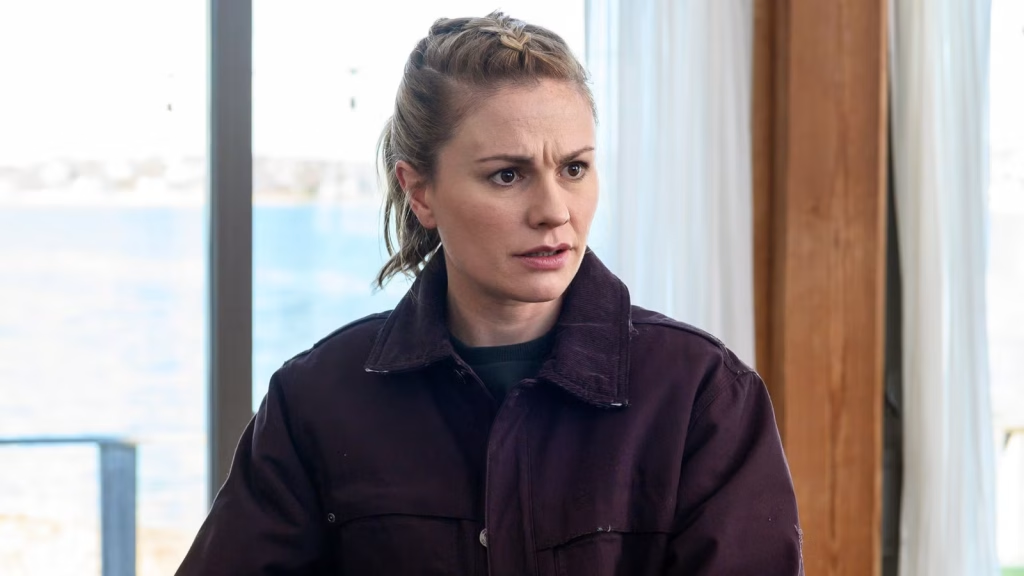
Joanie didn’t know why her mother died. The full texture of her parents’ marriage stayed hidden from her. The affair that destroyed it, the class dynamics that shaped the town she entered as an infant, none of it reached her in any usable form. Only the outcomes reached her. Absence and silence and the way her father drove away from Montauk with her in the back seat asking questions he couldn’t answer.
What Likeable People Leave Behind When They Finish Doing Damage
This is what the show addressed all along, finally. It addressed what likeable people who do distasteful things leave behind when the doing ends. Never the affair itself. Never the characters on their own. And never simply the class war between locals and weekenders that made the setting feel like a loaded weapon. The wreckage carries no drama. No cinema. Just a daughter driving back to a town she barely remembers, looking for an explanation that nobody recorded.
Just a diner on Montauk Highway that has served the same lobster roll since 1965, with a sign that reads LUNCH and a parking lot full of people who will never learn the real name of the place, and who will eat there and leave and come back next summer and believe, with the full force of their genuinely likeable personalities, that the town exists for them.
The Most Dangerous Impulse Wears a Charming Face

The Affair Hamptons drama understood that the most dangerous impulse isn’t cruelty. Cruelty stays legible. Cruelty invites identification and resistance and punishment. The most dangerous impulse is charm. Charm rewrites the rules of engagement so subtly that by the time you notice the rules have changed, you can’t remember what the old ones looked like. And the people who deploy it most effectively don’t know they’re deploying it at all, because their charm carries authenticity, because their interest carries reality, because their warmth carries genuineness, and because the destruction they cause operates, in a way that makes accountability almost impossible, as a side effect of qualities that meet, by any reasonable standard, the definition of admirable.
The show ended in November 2019. Five seasons. Fifty-three episodes. Three Golden Globes. Cast members scattered. Sets came down. And the Lobster Roll went back to serving lunch instead of hosting film crews. Deep Hollow Ranch went back to giving trail rides. The lighthouse kept standing at the edge of the island, marking the point past which nothing remains, the end of the world, welcome to it.
And the class war the show dramatized, the one between the locals who stay and the weekenders who arrive and the inherited damage that passes between them like a gene nobody tested for, kept running underneath every celebrity sighting, every real estate transaction, every dinner party where someone charming showed up with a bottle of wine and an assumption that the town had spent all year waiting for them. The Affair got one thing more right than anything else: the people who do the most damage at the dinner party are the ones you invite back.
Related Reading
- Joshua Jackson Net Worth: From Dawson’s Creek to Montauk’s Most Underestimated Actor
- Ruth Wilson Net Worth: The Golden Globe Winner Who Walked Away on Her Own Terms
- Dominic West Net Worth: From Eton to Montauk to the Crown
You’re Reading Social Life Magazine
You know that thing where a fish doesn’t know it’s in water? That’s most people in the Hamptons. They’re swimming in access, influence, and opportunity and can’t see it. Social Life Magazine exists to make the invisible visible. If this piece made you think, imagine what a feature about you could do.
Want to be featured in Social Life Magazine? Whether it’s a profile, a brand story, or an editorial spotlight, we turn relevance into permanence. Reach out to our editorial team here.
Ready to skip the pitch and go straight to placement? Submit a Paid Feature directly here.
Our email list reaches 82,000 readers who actually open, read, and act. The kind of audience that makes brand managers nervous in a good way. Join the list here.
Polo Hamptons is where deals get done in white pants. Two annual events. Fortune 500 sponsors. A guest demographic with a $3.62 million average net worth. If your brand belongs on that field, get details at PoloHamptons.com.
Our print edition drops five times each summer across boutiques from Westhampton to Montauk, with fall and winter issues hitting doorman buildings on the Upper East Side. 25,000 copies per summer issue. Subscribe to the print edition here.
If this piece gave you something, give something back. Even $5 keeps independent Hamptons journalism alive. Donate here.
Author

Written by
Recent Posts

Everyone Watched Dawson. The Smart Money Watched Pacey.
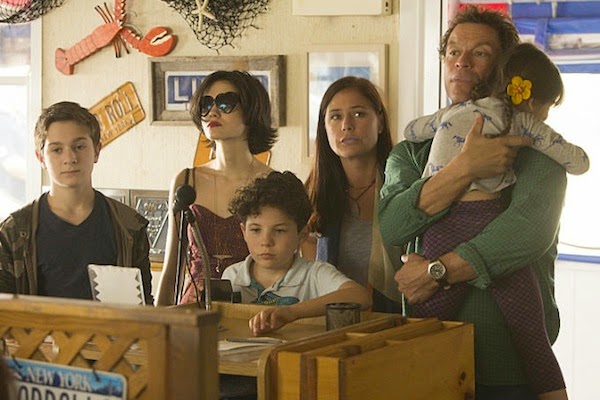
Where The Affair Was Really Filmed in Montauk and What the Show Got Wrong

The One Nobody Was Watching Won: Maura Tierney’s Golden Globe Story
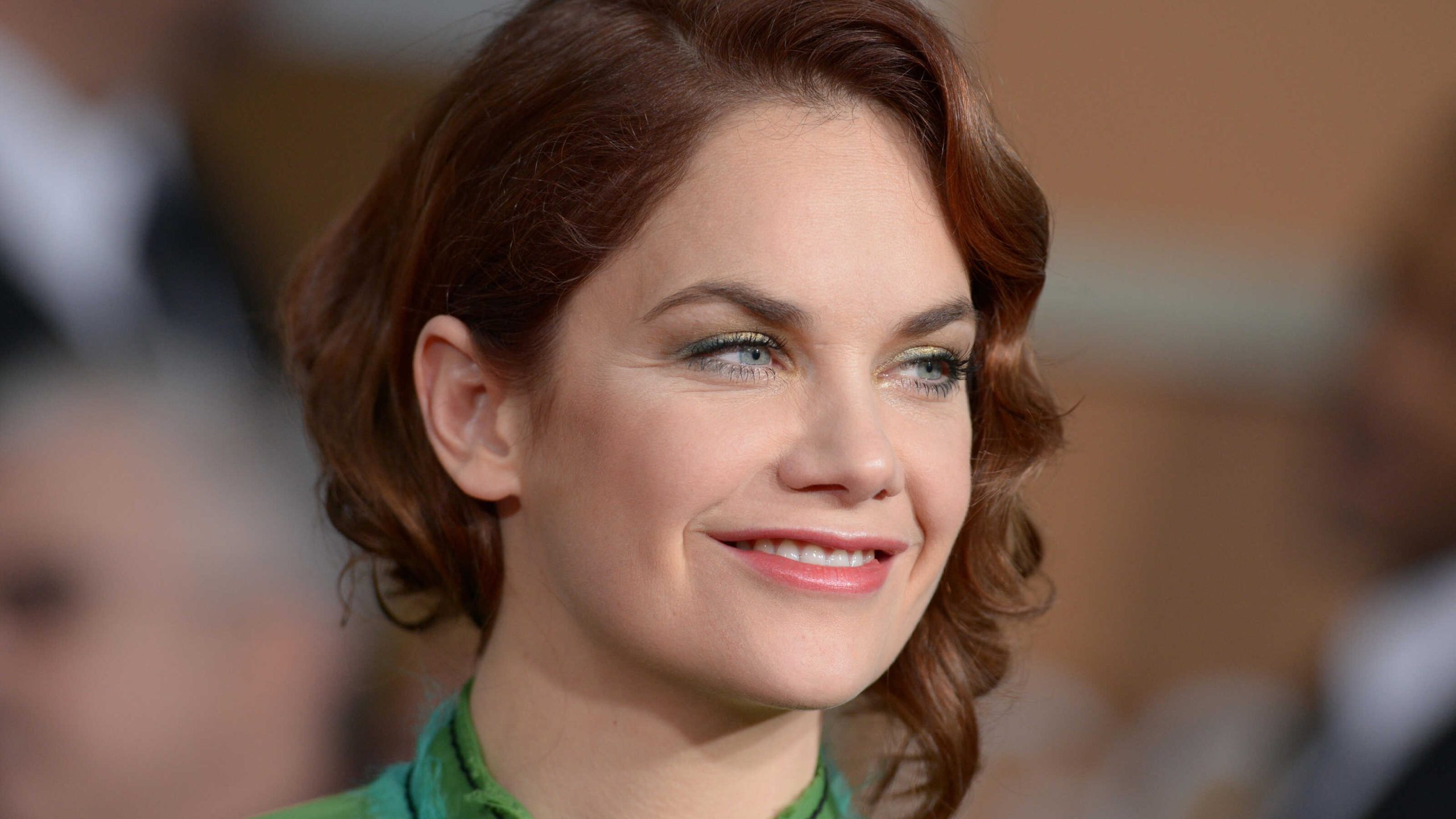
Ruth Wilson Won a Golden Globe in Montauk Then Walked Away From It
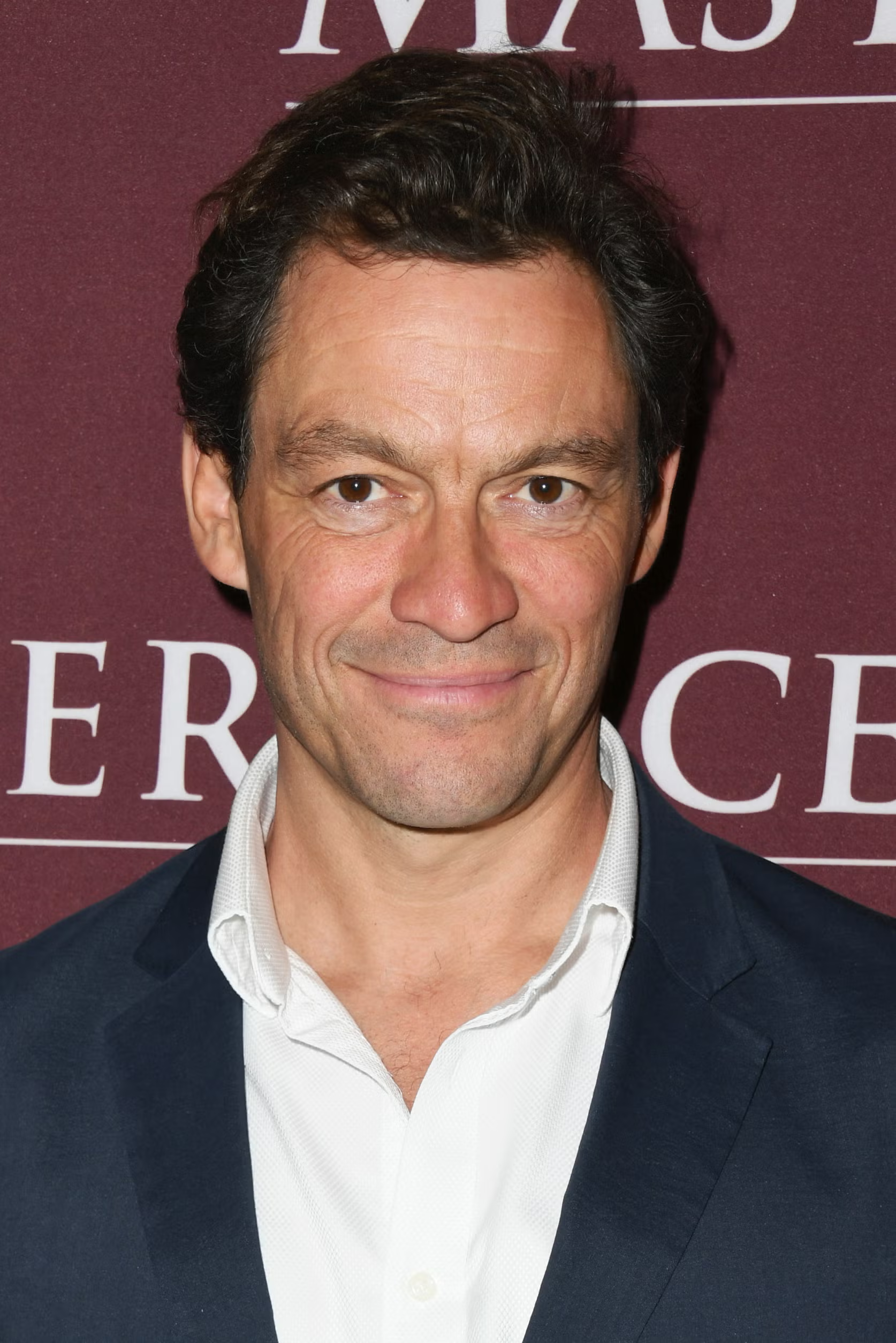
Dominic West Played TV’s Greatest Cheater Then Got Caught Playing Himself
Categories
- Art
- Articles
- Beauty & Skincare
- Celebrities
- Celebrities|The Chronicles
- Chronicles
- Entertainment|Culture
- Event Photos
- Events
- Fashion
- Fashion & Style
- Featured
- Food & Beverage
- Food, Spirits, Wine
- Hamptons
- Hamptons Celebrities
- Hamptons Celebrities|Celebrities|The Chronicles
- Health
- Health & Beauty
- Lifestyle
- Luxury Lifestyle
- Movies|Hamptons Lifestyle
- Press
- Profiles
- Real Estate
- Technology
- The Chronicles
- Travel
- Uncategorized
- Weddings