
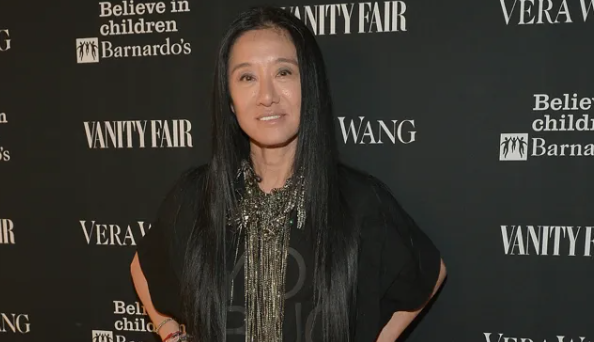
She trained for the Olympics since age eight. Thousands of hours on the ice, summers in Denver with elite coaches, winters at the Skating Club of New York. By seventeen, she appeared in Sports Illustrated’s “Faces in the Crowd.” Then she competed at the 1968 U.S. Figure Skating Championships in Philadelphia with partner James Stuart. They placed fifth. The top three went to Grenoble. Vera Wang did not.
“I was devastated when I did not qualify for the Olympic team,” she later recalled. “I had a nervous breakdown and ended up doing a semester in Paris.” The trip was meant to be a recovery. Instead, it became a revelation. In the French capital, surrounded by couture houses and fashion history, Wang discovered what would eventually replace her shattered Olympic dreams.
But first, she would fail again—spectacularly, publicly, after seventeen years of climbing the ladder at the most powerful fashion magazine in the world. Only then, at forty years old, would she finally build something of her own.
Vera Wang’s net worth has reached approximately $650 million. That fortune includes a fashion company valued at roughly $500 million, real estate holdings worth $50 million, and diversified investments totaling another $50 million. In 2024, she sold her namesake brand to WHP Global while retaining the role of Founder and Chief Creative Officer. Nevertheless, every dollar traces back to a woman who refused to let rejection define her story.
The Wound: A Warlord’s Granddaughter on the Upper East Side
Vera Ellen Wang was born June 27, 1949, in New York City to Chinese immigrants who had fled the chaos of World War II. Her mother, Florence Wu, was the daughter of one of China’s last ruling warlords—a connection that would have meant execution under the new Communist regime. Meanwhile, her father, Cheng Ching Wang, had served in the Chinese nationalist army under Chiang Kai-shek before escaping to America in 1943.
Cheng Ching arrived with nothing and subsequently enrolled at MIT to study chemical engineering. In 1947, he and three MIT classmates founded the Summit Industrial Company—a portmanteau of “sum” and “MIT.” The venture exported pharmaceuticals, telecommunications equipment, and consumer goods across Asia. As a result, by the time Vera was born, her father had become chairman of the internationally known U.S. Summit Corporation. The refugee had built a fortune.
The Education of a Perfectionist
The Wangs raised their daughter on Manhattan’s Upper East Side, enrolling her at the elite Chapin School, an all-girls academy, and the School of American Ballet. Florence Wu was considered a woman of impeccable taste who regularly attended Paris couture shows—and brought young Vera along. Consequently, the exposure planted seeds that wouldn’t bloom for decades.
However, Vera’s parents were Tiger Parents before the term existed. They emphasized discipline, academic achievement, and athletic excellence. Furthermore, they wanted their daughter to pursue practical careers, not fashion. When Vera began figure skating at age eight, she channeled into the sport the same obsessive perfectionism her father had brought to building his empire.
Training under Peter Dunfield and Sonya Klopfer, she spent summers in Denver and the rest of the year with the Skating Club of New York. By age twelve, she was winning regional championships. Her partnership with James Stuart for pairs competition made the Olympics seem inevitable.
The First Failure: Fifth Place and a Nervous Breakdown
The 1968 U.S. Figure Skating Championships in Philadelphia represented everything Vera Wang had trained for since childhood. A top-three finish would send her to the Winter Olympics in Grenoble, France. Moreover, she would become the first Asian-American Olympic figure skater—sixteen years before Tiffany Chin would claim that distinction.
Instead, Wang and Stuart placed fifth. Two spots away from glory. Close enough to taste the dream, yet far enough to know it was over.
“I was completely dedicated to it,” she later told interviewers. The rejection shattered her. As a result, she couldn’t finish her classes at Chapin and transferred to the Professional Children’s School just to graduate. Additionally, Sarah Lawrence College asked her to take an indefinite leave of absence because her Olympic training had consumed her focus. When the dream died in Philadelphia, she had nothing left.
Paris and the Discovery
Wang enrolled in Sarah Lawrence’s international program in Paris for her junior year. The city that had witnessed a century of fashion revolutions became her rehabilitation center. “That’s where I realized I had a passion for fashion,” she said. Remarkably, the breakdown had led to a breakthrough.
After returning to the United States, she completed her degree in art history in 1971. The summer before graduation, she secured a job at the Yves Saint Laurent boutique on Madison Avenue. There, she met Frances Patiky Stein, one of two fashion directors at American Vogue. Stein told her to make contact after graduation, and Wang did exactly that.
The Rise: Youngest Editor at Vogue
Vogue hired Vera Wang immediately upon graduation in 1971, making her the youngest editor in the magazine’s history. Initially, she started as a temporary assistant, but within a year—at age twenty-three—she was promoted to senior fashion editor. The position placed her at the center of the fashion universe.
For seventeen years, Wang orchestrated the editorial fashion spreads that defined American style. During this time, she worked with legends: Irving Penn, Richard Avedon, Grace Mirabella. Additionally, she traveled constantly—one year, she was home only two weekends between September and Easter, and one of those was Christmas. “The Devil Wears Prada is kind of a sanitized version of what life was like at Vogue,” she later reflected. “There were no hours.”
The Ambition and the Education
Wang learned everything at Vogue: how fabric moves, how light interacts with texture, how to command a room of photographers, stylists, and models. Most importantly, she mastered the art of identifying what women actually want versus what designers think they want. The magazine was her design school, her business education, and her social network combined.
“I got to work with Irving Penn and Richard Avedon—it is kind of insane really when I think back on it,” she told Business of Fashion. “It gives you an education that is parallel to none.” Furthermore, she befriended a British editor named Anna Wintour, who had arrived at Vogue with similar ambitions.
By the mid-1980s, Wang had spent nearly two decades at Vogue. During that time, she had earned her stripes, proven her eye, and paid her dues. Consequently, there was only one position left to pursue: Editor-in-Chief.
The Second Failure: Passed Over for the Top Job
When the Editor-in-Chief position opened in 1987, Vera Wang was the obvious internal candidate. After all, she had given seventeen years to the magazine. Moreover, she knew every contributor, every advertiser, every nuance of the operation. By any measure, she had earned the promotion.
Vogue chose Anna Wintour instead.
“I didn’t make the Olympic team. I didn’t become editor-in-chief at Vogue,” Wang later said. “I really blamed it on myself that I didn’t make the cut, and you get motivated from that.” At thirty-eight, she had been rejected twice at the pinnacle of her ambitions—first in skating, now in fashion. While some people would have accepted defeat, Wang pivoted instead.
The Ralph Lauren Education
The day before Wang was scheduled to start at Geoffrey Beene, Ralph Lauren called with an offer: four times the salary. Naturally, she took it. From 1987 to 1989, she served as design director for all of women’s accessories at Ralph Lauren, producing eighteen accessory lines. The role taught her something Vogue never could: how to actually build a fashion empire.
“When I saw what it takes to build that kind of empire, if I had been sane, I probably would have stopped there,” she admitted. However, sanity wasn’t the point. Preparation was. Every hour at Vogue, every collection at Ralph Lauren, every lesson from her businessman father—it was all leading somewhere.
The Break: A Wedding Dress Nobody Made
In 1989, Vera Wang scheduled her wedding to Arthur Becker, an investor she had met at a tennis match in Forest Hills, Queens, in 1977. At thirty-nine years old, she was considered ancient for a bride in that era. When she went shopping for a wedding dress, however, she encountered the same problem every sophisticated woman faced: the options were terrible.
“I couldn’t find anything I wanted,” she recalled. “I was 39, which today doesn’t seem that old for weddings but when I got married in 1989, it was. I just felt sort of ridiculous running around bridal departments.” The gowns were overdone with frills and lace. Nothing was simple, elegant, or remotely modern.
Ultimately, Wang hired a dressmaker to create a custom gown for $10,000. The wedding went beautifully. But she couldn’t stop thinking about all the other women suffering through the same experience. If she—a senior fashion professional—couldn’t find a decent wedding dress, what chance did ordinary brides have?
Father’s Insistence, Daughter’s Empire
Cheng Ching Wang saw his daughter’s frustration as a business opportunity. Because he had built his own empire from nothing, he recognized the signs of an underserved market. He offered startup funding and pushed her to act. Nevertheless, Vera hesitated. “I thought maybe it’s just too late for me,” she admitted.
Her father disagreed. He provided $4 million in seed capital and insisted she specialize in bridal wear—a focused niche rather than a scattered approach. In March 1990, Wang rented a two-story showroom at the legendary Carlyle Hotel on Madison Avenue. She used a quarter of the investment to renovate the space. Meanwhile, while construction continued, she and her right-hand man, Chet Hazzard, sold handmade gowns from a hotel suite.
In September 1990, Vera Wang Bridal House officially opened. She was forty years old. Her former colleagues at Vogue celebrated with a six-page feature. Ironically, the industry that had passed her over now promoted her comeback.
The Empire: From Bridal Boutique to Global Brand
Wang’s early gowns weren’t cheap. Off-the-rack prices ranged from $2,000 to $10,000, while custom creations soared to $30,000. Clearly, she wasn’t competing for budget brides. Instead, she was creating what the market desperately lacked: modern, sophisticated wedding dresses for grown women who wanted to look elegant, not infantile.
The business didn’t turn a profit for years. Fabric houses that had eagerly worked with her at Ralph Lauren suddenly didn’t recognize her name. “After working for Ralph, the same fabric houses I dealt with didn’t know me once I was trying to start a business from thin air,” she told The New York Times. Nevertheless, she persisted.
Nancy Kerrigan and the Olympic Redemption
In 1992, figure skating coach Mary Scotvold approached Wang about designing costumes for Nancy Kerrigan. Initially, Wang declined—she had never designed for skating since abandoning the sport twenty-four years earlier. Eventually, however, she agreed, creating costumes for Kerrigan’s 1992 and 1994 Olympic campaigns.
The 1994 Winter Olympics in Lillehammer made Wang internationally famous. Kerrigan’s hand-beaded ensemble sparkled on global television, thereby introducing the designer to audiences who had never heard of Vogue or Madison Avenue boutiques. The woman who had failed to reach the Olympics as a skater had finally arrived there as an artist.
“I never made the Olympics,” Wang later said. “But my dresses did.”
Subsequently, her costumes went on to grace Michelle Kwan (1998, 2002), Evan Lysacek (2010), and Nathan Chen (2018, 2022). The U.S. Figure Skating Hall of Fame inducted her in 2009 for her contributions to the sport—not as a competitor, but as a creator.
The Celebrity Machine
The celebrity client list became its own marketing engine. Wang dressed brides whose weddings made headlines: Chelsea Clinton, Ivanka Trump, Karenna Gore, Victoria Beckham, Mariah Carey, Alicia Keys, Kim Kardashian, Khloé Kardashian, Avril Lavigne, and Sarah Michelle Gellar. As a result, each celebrity wedding generated millions in free publicity.
Her evening wear similarly expanded the client base beyond brides. Michelle Obama wore Vera Wang. Viola Davis walked the 2012 Academy Awards red carpet in her designs. Moreover, Sharon Stone famously paired a Wang lavender skirt with a Gap shirt at the 1998 Oscars—an iconic moment that proved high fashion could mix with accessible style.
The Expansion Strategy
By the late 1990s, Wang had established herself as the dominant name in American bridal wear. Her father, who had served as Chairman of the Vera Wang Group from 1990 to 1998, had insisted she stay focused on weddings. Only when his health declined and his control relaxed did she finally expand into ready-to-wear clothing.
Diversification then accelerated rapidly. Her first fragrance launched in 2001, alongside Vera Wang on Weddings, a guide that became essential reading for brides. Home fashion followed in 2002 with The Vera Wang China and Crystal Collection for Wedgwood. A 2006 partnership with Kohl’s subsequently produced Simply Vera, an affordable line that brought her name to middle-class shoppers. “White by Vera Wang” debuted at David’s Bridal in 2011, with gowns priced from $600 to $1,400.
Licensing deals multiplied accordingly: Zales (engagement and wedding rings), Men’s Wearhouse (tuxedos), Kenmark (eyewear). Each partnership extended the brand’s reach while generating royalty income that didn’t require Wang to manufacture anything herself.
The Tell: What the Money Reveals
Vera Wang’s $650 million fortune reflects four decades of strategic positioning. Her fashion company carries an estimated value of $500 million, built on brand licensing agreements that span bridal, ready-to-wear, accessories, fragrances, eyewear, and home goods. Additionally, real estate holdings—including properties in Manhattan, Paris, and California—contribute approximately $50 million. Diversified investments add another $50 million to the total.
The Business Model Evolution
The business model evolved from high-margin couture to broad licensing. Consequently, Wang doesn’t need to sell $30,000 gowns to maintain her fortune. The Simply Vera line at Kohl’s, the affordable bridal collection at David’s Bridal, the tuxedo rental partnership with Men’s Wearhouse—each channel generates licensing fees while simultaneously exposing the brand to new customers who might eventually trade up.
The 2024 Sale
In December 2024, WHP Global announced an agreement to acquire the intellectual property of the Vera Wang fashion brand. The deal gave Wang access to new markets and growth capital while preserving her creative control. Importantly, she continues as Founder and Chief Creative Officer and became a shareholder in WHP Global itself. At seventy-five years old, she had structured an exit that kept her at the center of the brand she built.
The Hamptons Connection
Wang maintains the residential portfolio of someone who has arrived: Manhattan properties including her childhood home, which she purchased and renovated; a California residence; and connections to the social circuit that populates the Hamptons each summer. Furthermore, her friendships with Anna Wintour, Ralph Lauren, and the fashion establishment place her at the intersection of New York’s creative and financial elite.
Delicious irony emerged from this trajectory. After all, the woman Vogue passed over for Editor-in-Chief became one of the magazine’s most featured designers. Interestingly, Wintour and Wang remain close friends. “I first met Vera over 30 years ago, when she was working at Vogue,” Wintour said when presenting Wang with the CFDA Lifetime Achievement Award in 2013. “The only thing that has gone quicker than those three decades is Vera herself.”
The Personal Life
Wang married Arthur Becker in 1989 in an interfaith ceremony blending Baptist and Jewish traditions. Together, they adopted two daughters, Cecilia (born 1990) and Josephine (born 1993), both of whom attended Ivy League universities and maintain private lives. The couple announced their separation in 2012 after twenty-three years of marriage, although Becker had served as an informal advisor to Wang’s business from its inception.
In recent years, Wang herself has become a social media phenomenon in her seventies, posting Instagram content that frequently goes viral for her age-defying appearance. She prioritizes seven to eight hours of sleep and continues skating for exercise. “I don’t have a well-balanced, well-rounded life,” she told CNBC. “Work has been my whole life and it’s kept me honestly relevant, fascinated, passionate, frightened, worried and stressed.”
Still That Skater, Still Becoming
At seventy-six years old, Vera Wang shows no signs of retirement. Indeed, she marked her 76th birthday in June 2025 with a celebration at Le Relais Plaza in Paris—the city where she first discovered fashion after her Olympic dreams collapsed. The journey from that heartbroken nineteen-year-old to billionaire fashion icon required fifty-seven years of transformation.
Her awards fill walls: CFDA Womenswear Designer of the Year (2005), André Leon Talley Lifetime Achievement Award (2006), CFDA Lifetime Achievement Award (2013), France’s Légion d’Honneur (2017), National Medal of Arts from President Biden (2023), BBC’s 100 Women (2021). Most recently, in 2023, she received the CFDA Board of Directors’ Tribute for her impact on bridal fashion.
The Lesson in the Failures
Consider what Vera Wang’s $650 million represents. First, it represents the refusal to accept that failure is final. After all, she missed the Olympics by two spots and missed the top job at Vogue after seventeen years. Either rejection could have ended her ambitions. Instead, each one redirected her toward something greater.
Second, it represents the power of late starts. Wang launched her company at forty—an age when most fashion designers are already established or forgotten. Essentially, she proved that mastery doesn’t require youth, only obsession. Third, it represents the strategic deployment of privilege. Her father’s $4 million investment wasn’t available to most aspiring designers. Nevertheless, Wang leveraged that advantage into an empire worth 150 times the original stake.
The Legacy She Built
From warlord’s granddaughter to failed Olympian to passed-over editor—she transformed every disadvantage into fuel. Her dresses made it to the Olympics even when she couldn’t. Similarly, her designs graced Vogue covers even after the magazine rejected her. “I always sort of dreamed of being a fashion designer,” she said. “And I thought, well, if I don’t try it now, I’m never going to be able to do it.”
She was right. And wrong. She tried it at forty. Ultimately, she succeeded beyond any reasonable expectation. That nervous breakdown in Paris led to a $650 million fortune and a name synonymous with the most important dress most women will ever wear.
Interested in profiles of designers who transformed rejection into empires? Contact Social Life Magazine for features, partnerships, and advertising inquiries. Discover exclusive Hamptons events at Polo Hamptons. Subscribe to our newsletter for insider access to the stories behind extraordinary legacies.
- Related Articles:
- Pharell Williams Net Worth 2025: The Boy Who Saw Colors in the Projects
- Betsey Johnson Net Worth 2025: A Fortune Built on Cartwheels and Chaos
- Calvin Klein Net Worth 2025: The Bronx Boy Who Built a $75m Hamptons Fortress
- Tory Burch Net Worth 2025: Tomboy Builds a Billion Dollar Empire
- Reed Krakoff Net Worth 2025: Architect of American Luxury
Support independent journalism covering the intersection of fashion, wealth, and reinvention. Donate $5 to help us continue telling these stories.
Author

Written by
Recent Posts

Cailee Spaeny Net Worth — From Springfield, Missouri to A24 and Alien in Three Years Flat
Wagner Moura Net Worth — He Learned Spanish to Play Escobar. Then He Learned English to Take Hollywood.
Robert Eggers Net Worth — He Made a $3.5 Million Film in Puritan English and Hollywood Listened
Brie Larson Net Worth — A $6 Million Indie Film Won Her an Oscar. Marvel Paid Her the Rest.
Jacob Tremblay Net Worth — He Was Nine Years Old and Already Better Than Most Adults in the Room
Categories
- Art
- Articles
- Beauty & Skincare
- Celebrities
- Celebrities|Movies
- Celebrities|The Chronicles
- Chronicles
- Entertainment|Culture
- Event Photos
- Events
- Fashion
- Fashion & Style
- Featured
- Food & Beverage
- Food, Spirits, Wine
- Hamptons
- Hamptons Celebrities
- Hamptons Celebrities|Celebrities|The Chronicles
- Health
- Health & Beauty
- Lifestyle
- Luxury Lifestyle
- Movies|Culture
- Movies|Hamptons Lifestyle
- Press
- Profiles
- Real Estate
- Technology
- The Chronicles
- Travel
- Uncategorized
- Weddings