
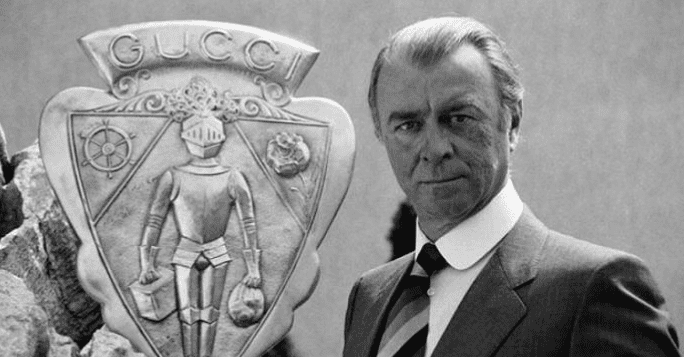

The Wound: A Florentine Boy and the Shame of Failure
Guccio Giovanbattista Giacinto Dario Maria Gucci was born on March 26, 1881, into what should have been a comfortable merchant family in Florence’s artisan district. His father, Gabriello Gucci, was a leather craftsman from San Miniato. His mother, Elena Santini, came from nearby Lastra a Signa. The family ran a modest straw hat business, catering to the Tuscan gentry who needed protection from the Mediterranean sun.
When the Bottom Fell Out
Then the business collapsed. The specific reasons are lost to history, but the outcome was not. Financial struggles forced the family into bankruptcy, and seventeen-year-old Guccio found himself with no inheritance, no trade, and no future in the city his family had called home for generations. Rather than stay and face the whispers, he fled. “We were never saddle makers,” his daughter Grimalda would later admit, puncturing the mythology her father had carefully constructed. “The Guccis come from a once-noble family in the San Miniato district of Florence.” The truth was messier, more desperate, more human.
The Savoy Education
In London, Guccio found work at the Savoy Hotel. Accounts vary wildly about what he did there. Dishwasher. Bellhop. Elevator attendant. Waiter. Perhaps all of these, sequentially or simultaneously. What matters is what he saw. Every day, wealthy guests arrived with leather steamer trunks and fine luggage that announced their status before they spoke a word. The Savoy was then, and remains now, one of the most exclusive hotels in the world. Additionally, young Guccio was invisible to these guests. He was furniture. But furniture can observe.
“The elegant upper-class hotel guests” captivated him, according to company history. He studied their luggage the way a jeweler studies gems. Brands like H.J. Cave & Sons produced pieces that weren’t merely functional. They were declarations. Status symbols. Power made portable. The bankrupt hat maker’s son from Florence began to understand something crucial: luxury wasn’t about the object. It was about the story the object told about its owner.
The Chip: Building an Empire From Nothing
Guccio returned to Florence in 1901 with his savings and his observations. He married Aida Calvelli, a dressmaker’s daughter, and began plotting. Rather than starting immediately, he apprenticed with the Italian luggage brand Franzi, learning the leather trade his own father had practiced before the bankruptcy. He was already forty years old when he finally opened his first shop in 1921 on Via della Vigna Nuova.
The Mythology Machine
The store was called Azienda Individuale Guccio Gucci, and from the beginning, it trafficked in aspiration. Guccio initially sold imported German and English luggage while developing his own workshop in the back. He targeted wealthy Florentines, particularly those who rode horses. This wasn’t accidental. The equestrian set represented old money, aristocratic connection, exactly the world that had been closed to the bankrupt hat maker’s son. Meanwhile, he employed sixty artisans crafting saddles, leather bags, and accessories.
The mythology began early. Guccio cultivated stories connecting his family to Florence’s Medici dynasty. He claimed ancestral ties to Italian royalty. He suggested a heritage of saddlemaking for the aristocracy. None of it was true. His daughter Grimalda would later debunk these stories, but by then the mythology had calcified into brand equity worth billions.

Wartime Innovation
Mussolini’s 1935 invasion of Ethiopia triggered a League of Nations embargo that made leather scarce. Lesser craftsmen might have folded. Instead, Guccio innovated. He introduced raffia, wicker, wood, linen, and jute into his designs. The rombi motif emerged during this period. His team developed a new tanning technique producing “cuoio grasso,” which became a Gucci trademark. Notably, the constraints of fascism forced creativity that would define the brand for decades.
The bamboo handle debuted in 1947, born from continued post-war material shortages. The iconic loafers followed in 1952. Each innovation emerged from limitation, necessity mothering invention. Unlike Tom Ford, who would later rescue the brand through sex appeal, Guccio built it through craft and clever mythology.
The Rise: An Empire Spanning Continents
Guccio resisted international expansion with the stubbornness of a man who remembered bankruptcy. His sons had different ideas. Just two weeks before he died on January 2, 1953, his sons Aldo, Rodolfo, and Vasco opened the first New York store against his explicit wishes. Aldo had obtained a $6,000 bank loan because his father refused to fund what he considered foolish expansion.
The American Conquest
The old man’s death unleashed his sons. Aldo became the “architect of Gucci,” opening stores in London, Paris, Tokyo, and Hong Kong. The brand became shorthand for Italian luxury in the American imagination. Jackie Kennedy carried Gucci. Grace Kelly wore Gucci. Elizabeth Taylor collected Gucci. The loafer with its distinctive horsebit became the footwear of presidents and power brokers.
By the mid-1960s, Gucci products were status symbols among the fashionable elite. The company tagline declared: “Quality is remembered long after price is forgotten.” Revenue soared. The double-G logo, designed by Aldo in 1960, became globally recognized. However, success bred exactly what Guccio had feared. Family conflict.

The Dynasty Devours Itself
The brothers fought constantly. Aldo’s son Paolo felt sidelined and launched his own Paolo Gucci brand, triggering years of litigation. In 1986, Aldo himself went to prison for tax evasion, having funneled $11 million through foreign shell companies. He served time while his own sons testified against him. The reading of Guccio’s will had sparked the first family feud. Decades later, the feuding had metastasized into criminal prosecution.
By 1993, the last Gucci family member departed the company entirely. Maurizio Gucci, grandson of the founder, sold his remaining stake to Investcorp for $170 million. The family that had built a multi-billion dollar empire walked away with relatively modest fortunes and festering resentments. Unlike Bernard Arnault, who consolidated LVMH through ruthless acquisition, the Guccis destroyed their inheritance through internecine warfare.
The Tell: Murder on Via Palestro
On the morning of March 27, 1995, Maurizio Gucci arrived at his private office at Via Palestro 20 in Milan. He carried magazines and greeted the building’s doorman, Giuseppe Onorato. “It was a lovely spring morning, very quiet,” Onorato later recalled. “Mr. Gucci arrived carrying some magazines and said good morning. Then I saw a hand. It was a beautiful, clean hand, and it was pointing a gun.”
The Black Widow
Four bullets. Three to the back, one to the head. Maurizio Gucci died on the steps of his own office building at forty-six years old. His ex-wife, Patrizia Reggiani, had hired the hitman through her personal psychic for $365,000. Reggiani’s Cartier diary contained a single word entry for March 27: “Paradeisos.” Paradise in Greek. The trial dubbed her “Vedova Nera,” the Black Widow. She served sixteen years.
When asked by journalists why she hadn’t shot Maurizio herself, Reggiani deadpanned: “My eyesight is not so good. I didn’t want to miss.” Subsequently, she received $1.2 million annually from his estate despite orchestrating his murder. She still refers to herself as a Gucci. “I still feel like a Gucci,” she told La Repubblica. “In fact, the most Gucci of them all.”
The Location: Florence, Forever
Guccio Gucci lived his final years near Rusper in West Sussex, England. Far from Florence and the workshop where he’d built his empire, where his father’s straw hat business had failed. Yet the company’s holding entity remains headquartered in Florence, the city of his birth, his shame, and his ultimate triumph.

The Return to Via delle Caldaie
The Gucci Garden museum occupies the historic Palazzo della Mercanzia in Piazza della Signoria, Florence. Visitors can trace the brand’s journey from Guccio’s first shop to global domination. What they won’t find is any mention of the bankruptcy that sent a seventeen-year-old boy fleeing to London. Some wounds get written out of history. Others become the engine that writes it.
Today, the company operates 529 stores across fifty countries. Tom Ford rescued it from the brink during the 1990s, driving revenue from $230 million to $3 billion. In March 2025, Demna Gvasalia was named creative director, bringing his Balenciaga provocations to the Florentine house. Parent company Kering values the brand at approximately $15 billion. The Gucci net worth 2025 figure represents a remarkable resurrection from near-bankruptcy in the early 1990s.
The Paradox of the Double-G
Guccio Gucci built an empire on mythology and craft, on the shame of his father’s failure and the determination to never experience it again. He succeeded beyond imagination. Then his descendants dismantled everything through greed, betrayal, and literal murder. The brand that bears his name generates billions annually. Yet no Gucci profits from it. The double-G logo represents two things now: the founder’s initials and the generational curse that destroyed his family.
Somewhere, the seventeen-year-old boy who watched his father’s business collapse might recognize the irony. He built something indestructible. His family proved considerably more fragile. The Gucci net worth today belongs to French conglomerate Kering and its shareholders. The wound that created it belonged to a Florentine boy who understood that luxury is really just status made material. The hunger never fades. It just gets inherited.
Related Articles
- Tom Ford Net Worth 2025: From Texas Outsider to Lasata’s $52 Million Lord
- Bernard Arnault Net Worth 2025: The $190 Billion Emperor Who Bought Main Street
- Giorgio Armani Net Worth 2025: The Boy Who Watched an Artillery Shell Explode
- Donatella Versace New Worth 2025: The Replacement Child That Built an Empire
For more origin stories of fashion’s most fascinating fortunes, explore The Archive at Social Life Magazine. Planning a Hamptons event? Visit Polo Hamptons for exclusive experiences. To feature your brand in our pages, contact our editorial team.
Author

Written by
Recent Posts
The Real Reason Smart, Motivated People Don’t Follow Through
Simple Eating Habits That Boost Your Wellness
When to Seek Professional Support for Persistent Mental Health Symptoms
Creative Strategies Couples Use to Pay for Their Big Day
How International SEO Helps Brands Succeed Across Borders
Categories
- 2025 Social Life Events
- Access to Digital + Physical Magazine
- Art
- Articles
- Beauty & Skincare
- Beauty & Wellness
- Business Strategy
- Celebrities
- Chronicles
- Design History
- Design History|Hamptons
- Design Process
- Design Trends
- Event Photos
- Events
- Family
- Fashion
- Fashion & Style
- Featured
- Food & Beverage
- Food, Spirits, Wine
- Hamptons
- Hamptons Celebrities
- Hamptons Design
- Health
- Health & Beauty
- Home & Design
- Home & Living
- Lifestyle
- Luxury Home Design|Design Process
- Luxury Home Design|Design Trends
- Luxury Home Design|Hamptons Design
- Luxury Home Design|Interior Design
- Luxury Lifestyle
- Luxury Living
- Luxury Living|Design Process
- Luxury Living|Hamptons
- Luxury Living|Hamptons Design
- Press
- Profiles
- Real Estate
- Technology
- The Chronicles
- Travel
- Trending
- Uncategorized
- Weddings
- Wellness