
The Foundation Principles
Quality Over Quantity
Old money wardrobes contain fewer pieces than most expect. Each item serves multiple purposes across years of wear. A camel cashmere coat attends board meetings, charity luncheons, weekend errands, and European travel. The same ballet flats work with trousers, dresses, and jeans. Versatility matters because the philosophy rejects constant acquisition.
Investment calculation differs from conventional shopping. A $3,500 Max Mara camel coat worn 300 times over fifteen years costs $11.67 per wear. A $500 fast-fashion alternative, worn 30 times before replacement, costs $16.67 per wear, yet offers inferior presentation. Old money math favors quality consistently.
Fit Before Fashion
Nothing matters more than fit. Old money clothing skims the figure without clinging or overwhelming. Blazer shoulders align with actual shoulders. Trouser hems break cleanly at the shoe. Blouses accommodate movement without gaping or billowing. These details require a relationship with a tailor, which itself signals old money values.
The fit philosophy: neither too tight nor too loose. Body-conscious clothing suggests trying to attract attention. Oversized everything suggests following trends rather than personal style. The sweet spot communicates effortless appropriateness for any context.
Condition Signals Authenticity
Everything pristine suggests recent acquisition. Old money wardrobes include pieces showing appropriate wear. A Barbour jacket with genuine patina. Ballet flats that have walked actual cobblestones. A silk scarf with softness from years of use. These signs of life prove both quality and longevity.
The distinction between worn and worn-out matters critically. Clothes should show life without showing neglect. Proper care extends piece lifespan indefinitely while developing character, impossible to purchase new.
The Essential Pieces
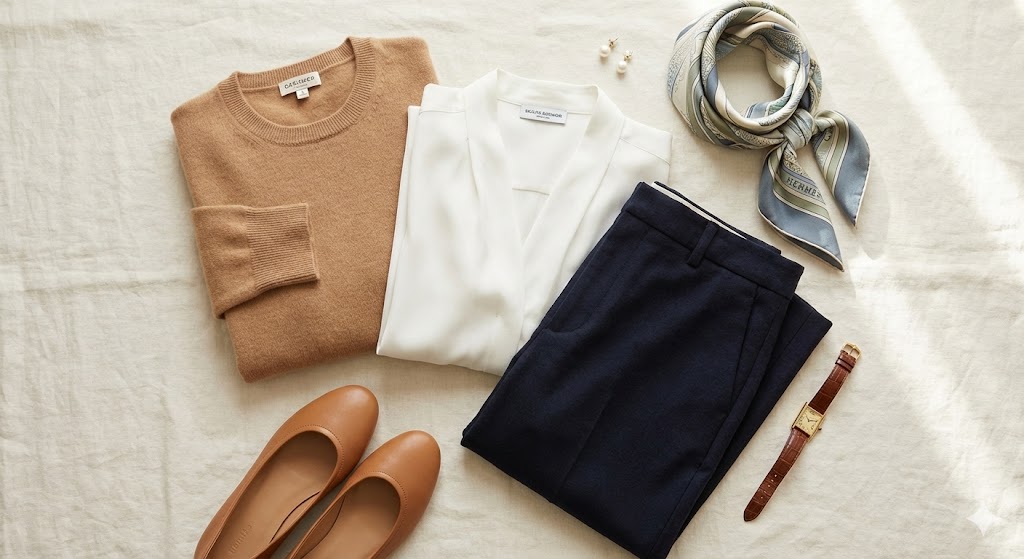
The Cashmere Sweater
The cornerstone of old money outfits women build around. Quality cashmere in the right colors works across every season and occasion, from boardroom to beach house.
Essential colors: Camel (the signature old money neutral), navy, cream, soft grey, and burgundy. These five sweaters handle virtually every situation.
Styles to own: Crewneck for layering under blazers. V-neck for wearing alone or over collared shirts. Cardigan for transitional layering. Cable-knit for weekend and country contexts.
Quality indicators: Two-ply minimum (four-ply for investment pieces). Scottish or Italian origin. No pilling after first wear. Soft hand that improves with washing rather than deteriorating.
Recommended brands: Loro Piana ($1,200-$2,500), Brunello Cucinelli ($1,500-$2,800), Johnstons of Elgin ($400-$800), The Row ($800-$1,500), Eric Bompard ($300-$600).
The Silk Blouse
The workhorse of elevated dressing. A properly selected silk blouse transitions from office to evening, from city to country, from Monday to Sunday. The fabric quality is immediately apparent and impossible to fake.
Essential colors: White (non-negotiable foundation), ivory/cream, navy, and soft pink. Black for evening only.
Style specifications: Moderate collar that lies flat. Buttons that don’t gap. Sleeves that can be worn down or rolled. Length that tucks cleanly without bunching.
Fabric requirements: Silk charmeuse or crepe de chine for dress occasions. Silk twill for structure. Avoid anything too shiny or too matte. The fabric should move and catch light without screaming.
Recommended brands: The Row ($800-$1,200), Equipment ($250-$400), Charvet ($600-$900), Vince ($275-$395), Banana Republic (budget option, $80-$120).
The Tailored Trouser
Old money women understood trousers before they became universal. The right pair communicates authority without trying. Fit matters more than any other piece because trousers frame everything above them.
Essential styles: High-waisted wide-leg for elegant occasions. Straight-leg for everyday versatility. Pleated front for relaxed sophistication. Avoid anything skinny, cropped awkwardly, or obviously trendy.
Fabric choices: Wool gabardine for year-round. Wool flannel for fall and winter. Linen for summer (wrinkles are acceptable and expected). Cotton for casual contexts only.
Color priorities: Navy, charcoal grey, cream/ivory, camel, and black. These five pairs create endless combinations with existing blouses and sweaters.
Recommended brands: The Row ($1,200-$1,800), Max Mara ($400-$700), Totême ($350-$500), Nili Lotan ($400-$550), J.Crew (budget option, $120-$180).
The Navy Blazer
Not exclusively menswear. The women’s navy blazer, properly cut, serves as the ultimate layering piece and instant elevator for any outfit beneath it.
Construction details: Single-breasted, two or three buttons. Slightly nipped waist without being costumey. Shoulders that align with actual shoulders. Gold or brass buttons for classic, covered buttons for modern.
Fit requirements: Should button comfortably over a blouse without pulling. Sleeves should show approximately half an inch of blouse cuff. Length should cover hip bones.
Styling principle: The blazer that looks slightly lived-in reads better than one that’s obviously new. Wear new blazers around the house before public debut.
Recommended brands: Ralph Lauren Collection ($1,500-$2,500), Nili Lotan ($750-$1,100), Veronica Beard ($600-$800), J.Crew (budget option, $200-$300).
The Camel Coat
The single most recognizable piece in old money women’s wardrobes. Max Mara’s 101801 coat, introduced in 1981, became the template that defines the category. Competitors exist but this specific silhouette remains the reference point.
Design specifications: Wrap style or single-breasted. Knee-length or slightly below. Minimal hardware. Belt optional but should be removable. Color should be genuine camel, neither too yellow nor too brown.
Fabric requirements: Camel hair, wool-cashmere blend, or pure cashmere. Weight should be substantial without being heavy. The coat should drape rather than stand stiffly.
Investment calculation: A quality camel coat lasts decades with proper care. The original Max Mara 101801 owners from the 1980s still wear their coats today.
Recommended brands: Max Mara ($2,500-$4,000), Totême ($900-$1,400), The Frankie Shop ($400-$600), Mango (budget option, $200-$300).
Ballet Flats
The old money alternative to heels for everything except black-tie. Proper ballet flats communicate ease and confidence. They suggest a woman who doesn’t need height to command attention.
Style requirements: Rounded or almond toe (never pointed). Minimal or no hardware. Leather sole for dress, rubber for practical. Color should be classic: black, nude, navy, or red.
Quality indicators: Italian leather that softens with wear. Construction that supports the arch. Lining that doesn’t deteriorate. These flats should improve over years, not months.
The Chanel question: The quilted ballet flat with cap toe is recognizable and expensive. It communicates status clearly but perhaps too clearly for some old money contexts. Consider whether identification is the goal.
Recommended brands: Chanel ($950), Repetto ($350-$450), Mansur Gavriel ($395), The Row ($700-$900), Everlane (budget option, $115-$145).
The Watch
Old money women’s watches tell time rather than display wealth. Slim, elegant, often inherited. The aesthetic favors vintage or vintage-appearing pieces over obviously new luxury.
The Cartier principle: The Cartier Tank has been the default old money women’s watch since its introduction in 1917. The design is immediately recognizable to those who know and invisible to those who don’t.
Appropriate alternatives: Jaeger-LeCoultre Reverso, Patek Philippe Twenty~4 or Calatrava, vintage Rolex (Datejust or Oyster Perpetual in modest sizes).
What to avoid: Anything too large too obviously new. Anything with diamonds unless they’re inherited. Anything that announces itself from across the room.
Pearl Studs
The default earring choice. Pearl studs work with everything and make a subtle statement. They communicate that jewelry decisions were made long ago and don’t require daily reconsideration.
Quality specifications: 7-8mm for everyday, slightly larger for evening. Akoya or South Sea for quality. Freshwater acceptable if well-matched. Should be actual pearls, not simulated.
The inheritance factor: Ideally, pearl studs were the grandmother’s. This isn’t possible for everyone, but the aesthetic preference shapes appropriate selection. Choose pieces that could have been inherited.
Seasonal Wardrobes
Spring and Summer
Warm weather requires lighter fabrics while maintaining the same principles. Linen wrinkles are acceptable. Cotton breathes. Silk flows. The goal remains looking appropriate without appearing to have tried.
Essential pieces:
Linen trousers in white, stone, or navy. Linen or cotton blouses in white and pale blue. Shift dresses in solid colors (navy, white, coral, pale yellow). Tennis dress for actual tennis at clubs that maintain standards. Straw tote for beach and casual contexts. Espadrilles with a modest heel. White jeans (quality denim, never distressed).
The Hamptons formula: White jeans, striped cotton shirt, navy blazer draped over shoulders, ballet flats or espadrilles. Gold jewelry kept minimal. This combination works from lunch to cocktails without adjustment.
Fall and Winter
Cooler months allow the layering and texture that define old money style. Cashmere, wool, tweed, and velvet enter rotation. Colors deepen but remain sophisticated.
Essential additions:
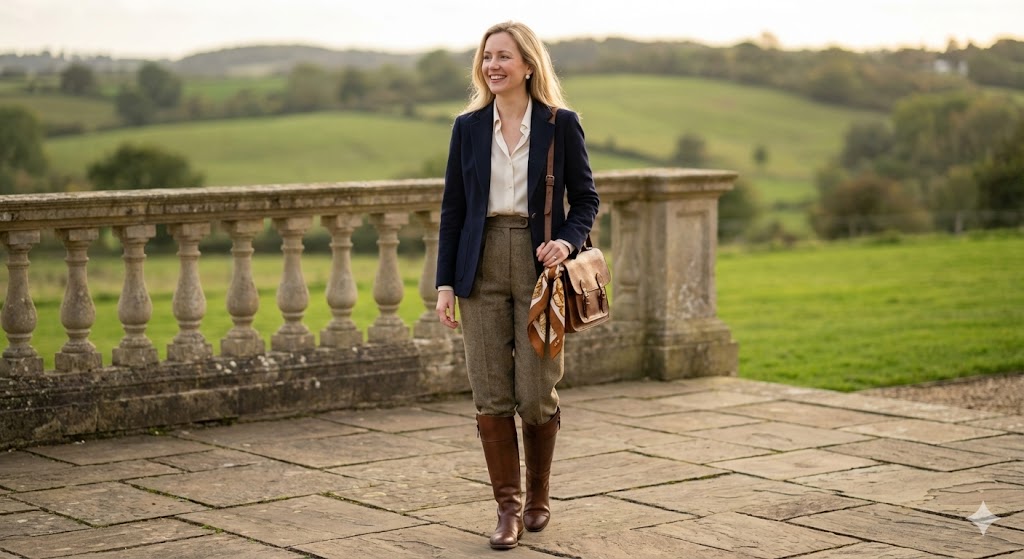
Tweed blazer or jacket (Chanel-style but not necessarily Chanel). Wool skirts in A-line or pencil cuts. Cashmere turtlenecks in cream, camel, and charcoal. Riding boots in brown leather. Velvet pieces for evening (blazer, trousers, or headband). Quilted jacket (Barbour or similar) for country weekends.
Layering principles: Silk blouse under cashmere sweater under blazer represents the classic formula. Each layer should be visible at the collar and cuff. Colors coordinate without matching exactly.
Occasion Dressing
The Office
Old money women in professional environments default to overdressing slightly rather than matching current casual trends. The philosophy: dress for the position of authority, which, for old money, means positions requiring no costume.
Standard formula: Silk blouse, tailored trousers, blazer or cardigan, ballet flats or modest heels. Jewelry kept simple: watch, studs, perhaps a signet ring. Hair is controlled but not stiff.
What succeeds: Looking like you could attend a board meeting, client lunch, and charity committee in the same outfit without changing.
The Charity Luncheon
The core old-money social event. Dress codes vary but the goal remains consistent: looking appropriate without trying to outshine anyone. The women who’ve attended for decades set the standard.
The formula: Dress or skirt suit in seasonal fabric. Modest heel or elevated flat. Real jewelry kept tasteful. Hair styled but not overdone. The Hamptons gala circuit follows similar principles at higher elevation.
What to avoid: Anything that photographs better than it looks in person. Anything requiring explanation. Anything that draws attention from the cause to the wearer.
The Country Club
Club environments have specific dress codes, but old money presentation works across all of them. The goal is looking like you’ve belonged forever, because many of these women have.
Golf: Polo shirt or modest golf dress. Tailored shorts or skort. Visor or cap optional. Avoid athletic wear that prioritizes performance over tradition.
Tennis: Traditional whites at clubs maintain standards. Otherwise, a modest tennis dress in appropriate colors. The best private clubs in the Hamptons enforce these standards.
Pool: One-piece swimsuit or modest bikini. Cover-up that functions as actual clothing. Straw hat. Minimal jewelry. The goal is to look polished even while swimming.
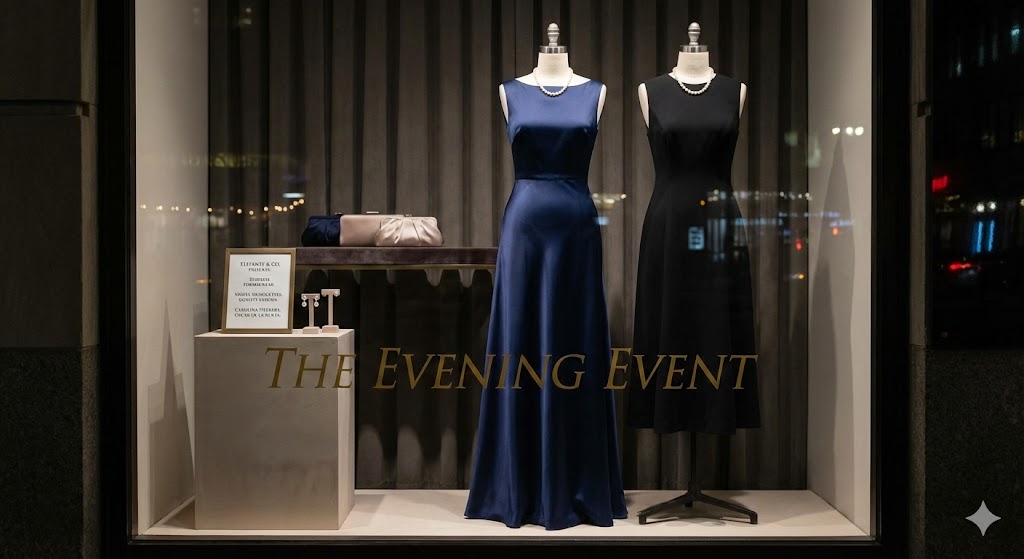
The Evening Event
Black tie and formal occasions require elevation without a costume. The dress should be beautiful but not memorable. The woman wearing it should be remembered, not what she wore.
The formula: Simple silhouette in quality fabric. Floor-length or elegant midi. Color kept to navy, black, ivory, or jewel tones. Minimal embellishment. Family jewelry if available.
What succeeds: Carolina Herrera, Oscar de la Renta, and similar designers who understand the assignment. The dress that photographs well from every angle is the cut is correct, not because the styling is dramatic.
Weekend Casual
Even casual old money outfits women select maintain quality and fit standards. The difference is fabric weight and formality, not attention to detail.
Saturday formula: Quality denim (never distressed), cashmere sweater or silk blouse, ballet flats or clean sneakers. Tote bag for errands. Hair pulled back simply.
Sunday formula: Similar but potentially more relaxed. Linen in summer, cashmere in winter. The L.L. Bean heritage look serves genuine country weekends. Barbour jacket for anything outdoors.
The Color Palette
Foundation Colors
Navy, white, camel, grey, and black form the core. These colors mix infinitely and never date. An entire wardrobe built on these five colors requires no additional planning.
Navy: Blazers, trousers, dresses, sweaters. The most versatile and forgiving color. Reads serious without severity.
White: Blouses, summer trousers, dresses. Requires confidence and care but signals both.
Camel: Coats, sweaters, trousers. The signature old money neutral. Specific shade matters critically.
Grey: Sweaters, trousers, coats. Charcoal for winter, light grey for versatility.
Black: Evening wear, professional contexts, winter. Used more sparingly than contemporary fashion suggests.
Accent Colors
Burgundy, forest green, coral, and pale pink serve accent functions. These appear in specific pieces without dominating wardrobes.
Burgundy: Sweaters, accessories, evening pieces. Rich without demanding attention.
Forest green: Blazers, country wear, accessories. Signals countryside heritage.
Coral/Salmon: Summer dresses, blouses. The Hamptons summer color.
Pale pink: Blouses, sweaters, spring pieces. Softer than expected but works universally.
What to Avoid
Neon tones, trendy colors, anything that identifies its season immediately. The goal is timelessness. Someone looking at a photograph shouldn’t be able to identify the decade from color choices alone.
Accessories and Details
Handbags
Quality over quantity, function over fashion. Old money women own fewer bags than expected, but each one works across multiple contexts and years of use.
Essential styles: Structured tote for daily use. Crossbody for travel and errands. Clutch for evening. Each in quality leather that develops patina rather than deteriorating.
The Hermès question: The Birkin and Kelly communicate status clearly. Perhaps too clearly for contexts where identification is the goal. Consider whether the bag should speak or stay quiet.
Recommended brands: Hermès (investment), Bottega Veneta (understated luxury), Mansur Gavriel (quality without logos), Cuyana (accessible quality), L.L. Bean Boat and Tote (genuinely old money for casual contexts).
Scarves
The Hermès silk scarf became the default old money accessory for good reason: versatility, quality, and identification that only the initiated recognize. A collection builds over decades, often including inherited pieces.
Wearing options: Tied at neck, wrapped around handbag handle, worn as headband, used as belt. Each method communicates different contexts and confidence levels.
Quality indicators: Silk that holds color decades after purchase. Hand-rolled edges. Prints that remain current because they were never trendy to begin with.
Jewelry
Less is more, always. Old money jewelry should look like it was never really selected, just inherited and worn without overthinking. As detailed in our Old Money Brands guide, the best pieces come from heritage houses or family vaults.
Essential pieces: Pearl studs (worn daily), simple gold hoops (alternative to pearls), watch (Cartier Tank or equivalent), signet ring (family crest if applicable), simple gold chain (worn alone or layered sparingly).
What to avoid: Statement pieces that demand attention. Trendy styles that date immediately. Anything requiring explanation or compliment-fishing.
Brands That Signal Old Money
American Heritage
Ralph Lauren Collection: The elevated line that captures old money American aesthetic without the polo player logo. Investment pieces for occasions requiring polish.
Nili Lotan: Modern interpretation of old money ease. Cashmere, silk, tailoring that feels relaxed rather than stiff.
J.Crew: Accessible entry point for building foundation pieces. Quality varies; shop selectively for fabrics and construction.
European Quiet Luxury
The Row: Mary-Kate and Ashley Olsen’s exercise in stealth wealth. No logos, exceptional quality, prices that reflect both.
Loro Piana: The benchmark for cashmere and quiet luxury. LVMH acquisition (2013, €2 billion) validated what old money already knew.
Max Mara: Italian tailoring with heritage dating to 1951. The 101801 coat remains the camel coat against which all others are measured.
Totême: Swedish minimalism that aligns with old money principles. Clean lines, quality fabrics, nothing demanding attention.
British Heritage
Barbour: The Bedale and other waxed jackets define country dressing. Appropriate patina develops over years of actual use.
Burberry: The trench coat remains definitive despite brand evolution. Heritage check best kept hidden, per old money principles.
Common Mistakes
Visible Logos
The primary rule violation. Nothing should announce its brand from across the room. If strangers can identify what you’re wearing, it’s probably wrong for old money contexts. This eliminates most contemporary luxury regardless of price point.
Everything Too New
Wardrobes appearing purchased last week signal recent acquisition rather than inherited style. Mix new pieces with vintage finds. Break in new items before prominent wear. Develop pieces over time rather than replacing constantly.
Following Trends
The aesthetic specifically rejects fashion. If something is obviously current-season, it’s probably wrong. Old money style should be undatable. Photographs from twenty years ago should be indistinguishable from photographs taken today.
Over-Accessorizing
Too much jewelry, too many scarves, too-perfect coordination all signal trying too hard. The goal is looking like you didn’t think about it much, even when you did.
Discussing Clothing
Nothing reveals performance faster than talking about brands, prices, or where things came from. Authentic old money considers such conversations vulgar. Accept compliments graciously and change the subject.
Style Icons to Study
Understanding the aesthetic requires studying women who embodied it naturally rather than performatively.
Jackie Kennedy: The American template. Simple silhouettes, quality fabrics, minimal accessories, hair always controlled. Her influence on old money American style remains foundational.
Princess Diana: British aristocracy with modern edge. The ability to look expensive in relatively accessible pieces. The casual elegance that made blazers and jeans acceptable.
Grace Kelly: Hollywood glamour translated to actual royalty. The restraint required when every photograph becomes historical record.
Carolyn Bessette-Kennedy: The modern update. The Row before The Row existed. Proof that minimalism communicates wealth more effectively than maximalism.
Contemporary references include the women at Polo Hamptons who’ve attended for decades, the charity luncheon regulars at Southampton, and anyone whose style you notice precisely because it’s unremarkable in its perfection.
Connect With Social Life Magazine
Get Featured: Contact Social Life Magazine for advertising, features, and brand partnership opportunities.
Polo Hamptons 2026: See these styles in context at Polo Hamptons. Tickets, cabanas, and sponsorship opportunities available.
Stay Connected: Subscribe to our email list for exclusive event invitations and insider access.
Print Subscription: Get Social Life Magazine delivered—the Hamptons’ luxury lifestyle authority since 2000.
Support Independent Journalism: Donate $5 to support our coverage.
Related Reading
The Old Money Playbook: How Generational Wealth Actually Works
Old Money Outfits Men: The Complete Wardrobe Guide
Old Money Brands: The Complete List of What Generational Wealth Actually Wears
Author

Written by
Recent Posts
Must-Have Items for Your Wedding Gift Registry
What Mental Health Challenges Can Look Like Over Time
Quiet Luxury: The Rise of the Smart Motorized Pergola
Sleek Cosmetic Upgrades That Refresh Your Natural Beauty
Durable Vinyl Poster Printing in NYC That Turns Heads and Drives Results
Categories
- Art
- Articles
- Beauty & Skincare
- Celebrities
- Celebrities|Movies
- Celebrities|The Chronicles
- Chronicles
- Entertainment|Culture
- Event Photos
- Events
- Fashion
- Fashion & Style
- Featured
- Food & Beverage
- Food, Spirits, Wine
- Hamptons
- Hamptons Celebrities
- Hamptons Celebrities|Celebrities|The Chronicles
- Health
- Health & Beauty
- Lifestyle
- Luxury Lifestyle
- Movies|Culture
- Movies|Hamptons Lifestyle
- Press
- Profiles
- Real Estate
- Technology
- The Chronicles
- Travel
- Uncategorized
- Weddings