
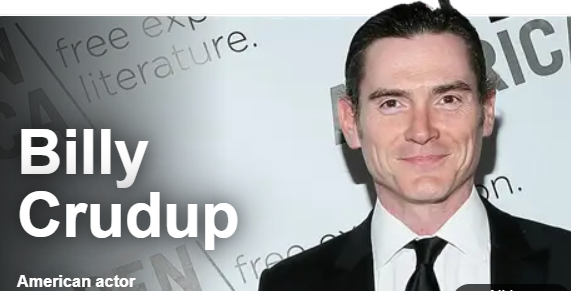
Manhasset, Long Island, 1982. A fourteen-year-old boy sits in the audience of a regional theater production, watching his older brother perform in a play. The boy has spent his childhood being shuttled between parents after their divorce, living in Texas with his father, then Florida, then back to New York with his mother. Nothing stays. Nothing holds. But tonight, watching his brother transform into someone else entirely, he understands something for the first time: acting is the art of being nowhere and everywhere at once.
The boy would become Billy Crudup, and he would spend the next four decades perfecting that disappearing act. He would turn down certain fame for uncertain art. He would choose Broadway over blockbusters, integrity over income. The Billy Crudup net worth of $8 million in 2025 is modest by Hollywood standards. It’s also exactly what happens when you refuse to sell what you’re not willing to lose.
The Wound: A Boy Between Coasts
Thomas Henry Crudup III and Georgann Gaither divorced when Billy was young. What followed was the familiar American shuffle of custody arrangements and coast-to-coast relocations. His father, a businessman, kept Billy in Texas and Florida. His mother, a former actress, eventually brought him back to Long Island. The geography of his childhood reads like a flight itinerary.
The Invisible Child
He was the middle child of three boys, neither the eldest with his authority nor the youngest with his charm. In a fractured family, the middle child learns to read rooms, to sense tension, to make himself useful or invisible depending on what the moment requires. These skills would later make him an extraordinary actor. First, they made him a lonely kid.
His mother’s theatrical background planted a seed, but it was watching his brother Tom perform that germinated it. According to The New York Times profile, Crudup found in theater what his childhood had denied him: a controlled environment where chaos was scripted, where endings were written, where you could leave everything on stage and walk away intact.
The St. Thomas More Years
He attended St. Thomas More School in Connecticut, a boarding school for boys who needed structure. The institutional setting suited him. Rules were clear. Expectations were explicit. Furthermore, the drama program gave him a legitimate outlet for the intensity building inside him. He wasn’t just good at acting. He was consumed by it.
The Chip: Choosing the Harder Path
Most actors with Crudup’s looks would have sprinted toward Hollywood. Chiseled features, piercing blue eyes, the genetic lottery ticket that opens casting office doors. He went to NYU’s Tisch School of the Arts instead, then directly to graduate school for acting. The decision was deliberate. He wanted to be respected, not just desired.
The Lincoln Center Crucible
His breakout came on stage, not screen. Lincoln Center Theater. Tom Stoppard’s Arcadia. He was twenty-six, playing a genius opposite a cast of veterans. Per Playbill’s archival coverage, critics noticed immediately. Here was an actor who didn’t perform emotion but seemed to actually feel it. The technique was invisible. The effect was devastating.
Hollywood came calling. He mostly declined. The parts offered were pretty-boy roles, romantic leads, the kind of work that would have made him rich and bored him to death. Instead, he chose plays that terrified him. Consequently, he built a reputation as the actor other actors admired and casting directors couldn’t quite figure out how to sell.
The Almost Famous Paradox
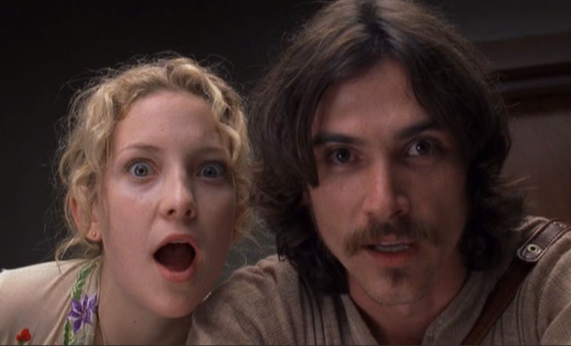
Cameron Crowe’s Almost Famous should have made him a movie star. He played Russell Hammond, the golden rock god, with such charisma that the role seemed designed as a launching pad. The film became a cult classic. Crudup became a cult actor. He followed it not with studio tentpoles but with more theater. The Billy Crudup net worth remained modest while his artistic credibility soared.
The Rise: $8 Million Built on Respect
The first two decades of his career established a pattern. Critically acclaimed stage work punctuated by occasional film roles that never quite connected commercially. He won a Tony for The Coast of Utopia in 2007, played Dr. Manhattan in Watchmen, and disappeared into supporting roles in films that tanked and plays that triumphed.
The Financial Reality
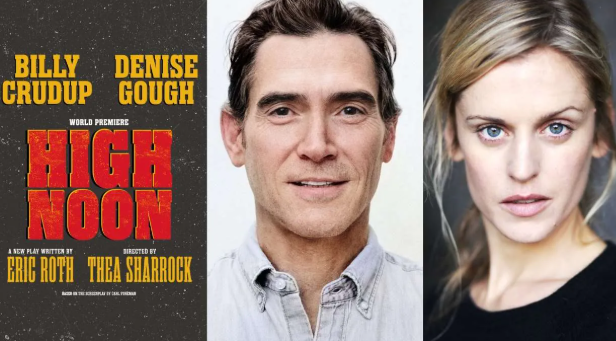
Broadway doesn’t make anyone rich. According to Forbes’ analysis of theater economics, even Tony-winning lead actors earn a fraction of what a supporting player makes on a network sitcom. Crudup’s commitment to the stage was a financial sacrifice disguised as artistic principle. By his forties, he had accumulated critical mass in prestige but modest mass in net worth.
The calculation changed with television. Premium streaming platforms were rewriting the rules of prestige, paying film-level salaries for TV-level commitments. Crudup was perfectly positioned. His theater training meant he could handle complex dialogue. His relative anonymity meant audiences would see the character, not the star. This shift mirrors the trajectory of other stage-trained actors finding TV success.
The Morning Show Breakthrough
Apple TV+ came calling with The Morning Show. Cory Ellison, the network executive he plays, is exactly the role Hollywood never knew how to give him: charismatic, manipulative, impossible to pin down. Per Variety’s assessment, his performance is the show’s secret weapon. The Emmy followed. So did the raise.
At fifty-six, Billy Crudup finally started making money commensurate with his talent. The irony wasn’t lost on him. The industry that couldn’t categorize him for decades suddenly couldn’t get enough. Television did what film never could: it gave him time to build a character, the same luxury he’d always had on stage.
The Tell: The Relationships That Reveal
You can’t discuss Billy Crudup without discussing the tabloid moment that defined his public image for years. In 2003, he left Mary-Louise Parker while she was seven months pregnant with their child. The relationship with Claire Danes that followed became Hollywood shorthand for a certain kind of cruelty.

The Crucible of Public Judgment
He has never defended himself publicly, which is either wisdom or cowardice depending on your perspective. What’s clear is that the man who grew up between households, never quite belonging anywhere, struggled with the permanence of partnership. The pattern of his childhood repeated in his adult relationships. Until it didn’t.
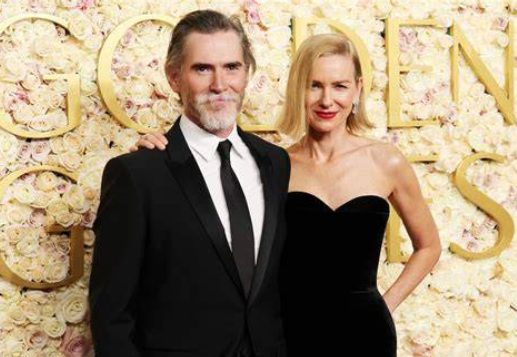
His marriage to Naomi Watts in 2023 represents something different. Two people in their fifties, each with enough history to know better, choosing each other deliberately. She understood rejection. He understood restlessness. Together, they represent the possibility of stability found late.
The Tribeca Life: Where Billy Crudup Net Worth Lives
He lives in Tribeca, the downtown Manhattan neighborhood that transformed from artist colony to billionaire enclave. The choice suits him perfectly. Close enough to Broadway to walk to rehearsal. Far enough from Hollywood to forget it exists. Urban but not anonymous, exclusive but not ostentatious.
The Anti-Hamptons Philosophy
Unlike many of his contemporaries, Crudup has never cultivated a Hamptons presence. No compound in East Hampton. No cottage in Sag Harbor. The beach scene, with its hierarchies and social performance, holds no appeal for someone who spent his career avoiding exactly that kind of visibility. As The Wall Street Journal noted, Tribeca offers urban anonymity that beach communities cannot.
His connection to the Hamptons comes through Watts, whose Amagansett presence gives him beach access without the burden of ownership. It’s a fitting arrangement for someone who never needed property to prove his worth. Compare this approach to the estate-building strategies of more commercially focused actors.
The Meaning of $8 Million
Eight million dollars. One Tony. One Emmy. A marriage at fifty-five. The math doesn’t compute by Hollywood standards. It computes perfectly by Billy Crudup’s.
Somewhere in Tribeca, there’s a man walking to rehearsal for a play no one will see except the people in the room. He’s made his money, won his awards, and he’s found his person. The fourteen-year-old watching his brother perform would be stunned by the trajectory. He would also, somehow, understand exactly why it had to be this way: the long road, the lean years, the late arrival at something like contentment.
Related Articles
- Ethan Hawke Net Worth 2025: The Anti-Celebrity Who Bought a Town
- Naomi Watts Net Worth 2025: The Australian Outsider Who Found Amagansett
- Laura Linney Net Worth 2025: The Theater Discipline That Built an Empire
For stories of artists who chose craft over commerce, subscribe to Social Life Magazine. Experience the intersection of culture and luxury at Polo Hamptons.
Author

Written by
Recent Posts
Where Can You Find the Best Made-to-Measure Bespoke Suits in NYC
The Financial Habits Every Successful Entrepreneur Swears By
What Happens If You Delay Hemorrhoid Treatment in New York City

James Franco Net Worth — A $30 Million Career Interrupted

Selena Gomez Net Worth — How a Disney Kid Built a $1.3 Billion Empire
Categories
- Art
- Articles
- Beauty & Skincare
- Celebrities
- Celebrities|Movies
- Celebrities|The Chronicles
- Chronicles
- Culture|Television
- Entertainment|Culture
- Event Photos
- Events
- Fashion
- Fashion & Style
- Featured
- Food & Beverage
- Food, Spirits, Wine
- Hamptons
- Hamptons Celebrities
- Hamptons Celebrities|Celebrities|The Chronicles
- Health
- Health & Beauty
- Lifestyle
- Luxury Lifestyle
- Movies
- Movies|Culture
- Movies|Hamptons Lifestyle
- Press
- Profiles
- Real Estate
- Technology
- The Chronicles
- Travel
- Uncategorized
- Weddings