
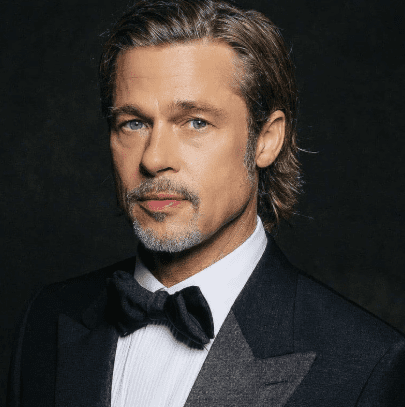
He arrived in Los Angeles with $325 in his pocket and a Datsun that barely ran.
Two credits short of a journalism degree from the University of Missouri, William Bradley Pitt had abandoned everything stable for a dream that made no practical sense. His family was devoutly Southern Baptist, his father ran a trucking company, and his childhood in Springfield, Missouri, was defined by church on Sundays, Boy Scout meetings, and the quiet expectation that he’d settle into something respectable.
Instead, he found himself dressing as a giant chicken for El Pollo Loco, driving strippers in limousines, and moving refrigerators just to pay rent. The guy who’d been an Eagle Scout was now hustling in Hollywood’s shadows, waiting for a break that might never come.
Four decades later, Brad Pitt is worth $400 million. He’s won two Academy Awards. His production company has backed some of the most important films of the century. He owns a winery in France worth half a billion dollars. But the most revealing thing about his fortune isn’t how he built it. It’s how he kept rebuilding after watching it crumble.

2026 Update: F1, Four Oscar Nominations, and the Lawsuit That Won’t End
Three developments define the year since this article was first published: a blockbuster film that became the highest-grossing of his career, a legal war that just scheduled its next battle for 2027, and a relationship that quietly became the steadiest thing in his life.
F1: $630 Million, Four Oscar Nominations, and a $30M Payday
Joseph Kosinski’s F1 opened in June 2025 with Pitt playing Sonny Hayes — a nomadic comeback driver dragged back to Formula One by an old teammate. The film opened to $146.3 million worldwide, became Apple’s first box office hit, and crossed $630 million globally by late summer. By August 2025, it had surpassed World War Z to become the highest-grossing Brad Pitt film in history.
Pitt was paid $30 million for the role — the highest salary of his career. He also carried a producer credit alongside Jerry Bruckheimer, with Plan B co-producing. The film earned four Academy Award nominations at the 98th ceremony: Best Picture, Best Film Editing, Best Sound, and Best Visual Effects. It will not win Best Picture — One Battle After Another and Sinners dominate that race — but its nomination confirms something the industry has occasionally forgotten: Brad Pitt, at 61, is still capable of opening a $600 million film on the strength of his name alone. Very few actors alive can say the same. Sequel talks have already begun, with director Kosinski telling Variety in late 2025 that the team was actively developing the next chapter for Sonny Hayes.
The Miraval War: Trial Set for February 2027
The Château Miraval legal battle entered its most consequential phase yet. The full trial over Miraval and the $35 million damages claim is now set for February 2027, nearly five years after Pitt first filed his lawsuit following Jolie’s sale of her stake to the Stoli Group. Pitt currently maintains a 60/40 majority ownership, with his stake held in escrow pending resolution. The most recent filing dispute centered on whether Jolie must release internal communications that Pitt’s lawyers argue would prove the sale was made with deliberate malice. Although Pitt and Jolie finalized their divorce in 2024, the Miraval lawsuit continues with no clear end in sight. Sources close to Pitt indicate he wants resolution in 2026 — whether through negotiated settlement or the courtroom in February 2027 is the central unresolved question on his financial horizon.
Ines de Ramon: Fully Moved In, No Altar in Sight
Three years into their relationship, Brad Pitt and Ines de Ramon are described by sources as genuinely committed, with de Ramon having moved fully into their shared home. In early March 2026, the couple was photographed together in Hydra, Greece, where Pitt is currently filming The Riders. Sources describe him as in a “great headspace,” calmer and healthier than he has been in years. His mother, Jane, died in August 2025 at 84; de Ramon was reportedly a significant source of support through that loss. No wedding plans are on the table. The man who arrived in Los Angeles with $325 and has spent three decades rebuilding himself from various forms of wreckage appears, at 61, to have found something that doesn’t require reconstruction.
The Wound: The Boy Who Didn’t Fit
Brad Pitt was born in Shawnee, Oklahoma, in 1963, though his family relocated to Springfield, Missouri, before he could remember the place. His father, Bill, managed a trucking company. His mother, Jane, was a school counselor. They raised three children in a conservative Southern Baptist household where faith, family, and hard work weren’t suggestions but commandments.
Young Brad played sports and earned his Eagle Scout badge. He participated in school musicals at Kickapoo High School. On the surface, he was the ideal Midwestern son. Beneath that surface, however, something restless was stirring. The church services felt confining. The small-town expectations felt suffocating. Movies, he later admitted, became his portal to different worlds — places where people lived larger, stranger, more interesting lives.
The Escape That Changed Everything
At the University of Missouri, Pitt majored in journalism with a focus on advertising. He joined a fraternity. He acted in fraternity shows. And somewhere in his final semester, watching his classmates prepare for sensible careers, he realized he couldn’t do it. He couldn’t settle into the life everyone expected him to live.
The moment of decision came suddenly. Films weren’t made in Missouri, so he had to go where they were made. Two weeks before graduation, he withdrew and drove west. His family was bewildered. His future was uncertain. But for the first time in his life, he was following something that felt genuine to him.
The Chip: Years of Beautiful Obscurity
Los Angeles didn’t care that Brad Pitt was handsome. Plenty of handsome men drove the same freeways, waited at the same auditions, slept on the same borrowed couches. Pitt took acting lessons from coach Roy London. He worked odd jobs that would become legendary in later profiles: the chicken costume, the limo driving, the furniture moving.
His first credited work came in 1987, uncredited bits in films like No Way Out and Less Than Zero. Television offered slightly more traction, with small roles on Another World and Dallas. None of it amounted to anything. For years, he was simply another aspiring actor, distinguished only by cheekbones that casting directors couldn’t quite forget.
The Hitchhiker Who Changed Hollywood
In 1991, Ridley Scott cast Pitt in a small role in Thelma & Louise. He played J.D., a charming hitchhiker who seduces Geena Davis’s character and steals her money. His screen time was minimal. His impact was seismic.

Suddenly, everyone wanted to know who this guy was. The role paid just $6,000, but it purchased something more valuable than money: undeniable visibility. Pitt’s career accelerated rapidly. A River Runs Through It. Legends of the Fall. Interview with the Vampire. Seven. By mid-decade, he was commanding multi-million-dollar paychecks and appearing on magazine covers worldwide.
The kid from Springfield had become the most wanted actor in Hollywood. But what made him different wasn’t the fame. It was what he chose to do with it.
The Rise: From Actor to Architect of Culture
In 2001, Pitt co-founded Plan B Entertainment with his then-wife Jennifer Aniston. The production company wasn’t a vanity project but a genuine creative engine. After buying out Aniston’s stake following their divorce, Pitt transformed Plan B into one of Hollywood’s most prestigious independent production houses. Unlike George Clooney, who pivoted to tequila, Pitt doubled down on the art form that first rescued him from Missouri.
The results speak for themselves. Plan B produced The Departed, which won the Academy Award for Best Picture. Then came 12 Years a Slave, another Best Picture winner. Moonlight won too. The Big Short earned critical acclaim. These weren’t commercial cash grabs but films that challenged audiences, films that mattered.
The Architecture Obsession
What few casual fans realize is that Pitt became genuinely obsessed with architecture. He studied computer-aided design under the tutelage of Frank Gehry himself. The obsession manifested in Make It Right, a foundation he launched in 2007 to build sustainable, affordable housing in New Orleans’s Lower Ninth Ward after Hurricane Katrina.
He recruited Pritzker Prize winners like Gehry, Thom Mayne, and Shigeru Ban to design homes for displaced families. The project built over 100 LEED Platinum-certified houses. The ambition was genuine, even if the execution ultimately proved flawed. Construction defects emerged, lawsuits followed, and the foundation eventually paid $20.5 million to settle claims from residents.
The failure of Make It Right reveals something important about Pitt. He wasn’t content to simply write checks and appear at galas. He wanted to build things, to shape physical space, to leave something tangible behind. The impulse was noble. The reality was messier.
The Tell: Rebuilding After the Wreckage
In 2016, Angelina Jolie filed for divorce. What followed was one of the most brutal celebrity separations in modern memory. Custody battles over their six children dominated tabloid coverage. Legal fees reportedly exceeded $15 million. The couple’s shared assets, including a French château worth potentially half a billion dollars, became battlegrounds.
Pitt retreated from public view for extended periods. He spoke openly in interviews about struggling with alcohol, about therapy, about the painful process of confronting his own failings as a partner and parent. The confession was unusual for a star of his magnitude. Most would have hidden behind publicists and carefully crafted statements.
The Sculptor Who Emerged
In 2022, Pitt exhibited sculptures at a museum in Finland. The works were described as brutally honest, including a miniature house assembled from tree bark and tape. Art critics noted the pieces seemed to reflect personal struggle — the attempt to construct meaning from broken materials.
The exhibition revealed a man still processing damage, still trying to build something beautiful from wreckage. Whether the medium was film production, architecture, or now sculpture, Pitt kept returning to the same impulse: creation as therapy, construction as redemption.
Château Miraval: The Half-Billion-Dollar Battleground
In 2008, Pitt and Jolie purchased Château Miraval, a 1,200-acre estate in the south of France. The property includes 35 rooms, a recording studio where Pink Floyd once worked, and extensive vineyards that produce world-class rosé. At the time, it represented a romantic vision: two global superstars building a legacy together in the French countryside. Similar to how European family offices approach legacy assets, the château was meant to be generational.
Today, the winery is valued at approximately $500 million. Miraval rosé has become one of the most successful celebrity wine brands in history. But the property has also become the central battleground in Pitt and Jolie’s ongoing legal warfare. Jolie sold her stake to a subsidiary of the Stoli Group without Pitt’s consent, triggering lawsuits and countersuits that continue to this day. The full trial is now scheduled for February 2027.
The Empire Diversifies
Beyond Miraval, Pitt’s real estate portfolio spans multiple continents. His Los Feliz compound in Los Angeles was valued at approximately $40 million before he sold portions of it. He maintains properties in Beverly Hills and Santa Barbara. In 2022, he sold a 60% stake in Plan B Entertainment to French media conglomerate Mediawan for a deal reportedly valuing the company at $300 million.

The diversification strategy mirrors his approach to acting itself. Pitt never limited himself to a single genre or persona. He played Tyler Durden in Fight Club and Benjamin Button in the same career. He took on supporting roles when the material warranted it, winning his first acting Oscar for Once Upon a Time in Hollywood. The financial portfolio follows the same logic: multiple streams, multiple mediums, multiple ways to create value.
The Paradox of Brad Pitt
At 61, Brad Pitt commands $30 million for a single film — as F1 proved in 2025, the highest payday of his career. The film crossed $630 million globally, becoming Apple’s first box office hit and his most successful commercial release ever. Sequel conversations are underway. Meanwhile, The Riders is currently in production in Greece, with de Ramon by his side.

The kid who fled Springfield to escape a predetermined life created one of the most extraordinary careers in modern entertainment. The man who arrived with $325 now controls assets approaching half a billion dollars. But the restlessness that drove him west never fully disappeared. He keeps producing films, designing spaces, sculpting objects, building and rebuilding as if stillness itself were the enemy.
Château Miraval produces award-winning wine. Plan B produces award-winning films. Brad Pitt produces versions of himself, each one a reconstruction of the last, each one an attempt to build something that might finally feel complete.
The Datsun is long gone. The $325 multiplied by more than a million. But somewhere inside the architect of all this wealth, a restless kid from Missouri is still driving west, still looking for something that can’t quite be named.
Feature your brand in Social Life Magazine: Contact our editorial team for features, advertising, and partnership opportunities.
The East End’s premier sporting event: Polo Hamptons — sponsorships, tickets, and brand activations.
Get the Hamptons insider list: Subscribe to Social Life Magazine
Support independent luxury journalism: Donate $5
Read next:
Leonardo DiCaprio Net Worth 2026: The $300M Blueprint
Celebrity Net Worth 2026: The Ultimate Hollywood Wealth Guide
Author

Written by
Recent Posts

Cary Grant Net Worth: Bristol Boy to $60M Hollywood Icon

Peter Sellers Net Worth: The Man With No Face Who Made Millions

Buster Keaton Net Worth: The Greatest Comedian Who Signed It All Away

Charlie Chaplin Net Worth: The Workhouse Kid Who Built a $500 Million Empire

Oscar’s Snub Comedy: Don’t Laugh
Categories
- Art
- Articles
- Beauty & Skincare
- Celebrities
- Celebrities|The Chronicles
- Chronicles
- Event Photos
- Events
- Fashion
- Fashion & Style
- Featured
- Food & Beverage
- Food, Spirits, Wine
- Hamptons
- Hamptons Celebrities
- Health
- Health & Beauty
- Lifestyle
- Luxury Lifestyle
- Press
- Profiles
- Real Estate
- Technology
- The Chronicles
- Travel
- Uncategorized
- Weddings