
The boy sat in the empty house, eleven years old, listening to the silence where his father used to be. Joseph Cranston had walked out that morning in 1967, leaving behind a wife, three kids, and a stack of unpaid bills. He wouldn’t return for eleven years. Meanwhile, young Bryan learned something that would define his entire career: how to become invisible. How to watch. How to study the adults around him for clues about what they might do next.
Today, Bryan Cranston net worth 2025 stands at approximately $50 million. Yet every role he’s ever taken traces back to that abandoned boy in Canoga Park, California. The child who learned that the surest way to survive was to become someone else entirely.
The Wound: When Father Became a Stranger
Joe Cranston was a struggling actor and sometime boxer who couldn’t hold a job. The family moved constantly, always one step ahead of landlords and creditors. Bryan grew up watching his father chase Hollywood dreams that never materialized, a pattern that should have terrified him away from acting forever. Instead, it planted something else: a determination to succeed where his father had failed.
The Day Everything Changed
When Joe finally left, the family descended into poverty. Audrey Cranston worked multiple jobs while her children learned to fend for themselves. Bryan has described coming home from school to an empty house, making his own meals, essentially raising himself. The absence created a hypervigilance that actors dream of possessing. He watched everyone. Studied how they moved, what they said, what they really meant beneath the words.
Furthermore, the abandonment taught him something about transformation. His father had been present, then gone. People could simply cease to exist in your life. Conversely, you could cease to exist as yourself. You could become someone new.
Finding Refuge in Performance
School offered the first escape. Cranston discovered acting in a police training film at age twelve, earning $50 for a day’s work. The money mattered, certainly. Yet what mattered more was the revelation that he could step outside himself. He could inhabit someone else’s skin and, for those hours, his own life didn’t exist. The abandoned boy could disappear.
The Chip: Proving His Father Wrong
Where Joe Cranston had been undisciplined and unreliable, Bryan became obsessively prepared. Where his father chased fame, Bryan chased craft. The distinction would take decades to pay off, but it eventually made all the difference. He didn’t want to be famous. He wanted to be undeniable.
The Early Grind
After studying at Los Angeles Valley College, Cranston spent years in the wilderness of commercial acting. He appeared in ads for Preparation H, Shield soap, Coffeemate, and voiced characters in Power Rangers. He took every job that came his way, not because he lacked selectivity but because he understood something his father never did: showing up matters. Reliability is a form of rebellion against chaos.
Consequently, Cranston built a reputation as the actor who arrived early, knew his lines, and made everyone else’s job easier. Directors remembered him. Casting agents noted his professionalism. In an industry full of difficult personalities, he became the easiest call to make.
The Long Wait for Recognition
Throughout his thirties, Cranston accumulated a resume of forgettable guest spots. He appeared on Airwolf, CHiPs, and Murder, She Wrote. Each role paid bills without advancing his career. Most actors would have grown bitter. Instead, Cranston treated every part as a masterclass. He was still watching, still studying, still preparing for something he couldn’t yet name.
The Rise: Three Acts of Reinvention
Bryan Cranston’s career breaks into three distinct chapters, each one a complete transformation that built upon the last. The journey from sitcom dad to meth kingpin to Broadway leading man represents one of television history’s most remarkable reinventions. It also reveals a pattern: Cranston succeeds precisely when others underestimate him.
Malcolm in the Middle: The Goofball Father
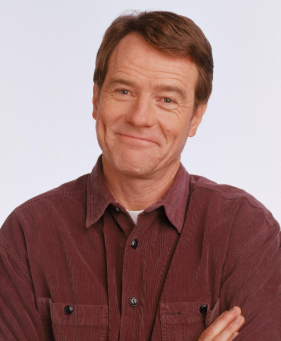
When Fox cast him as Hal in Malcolm in the Middle, Cranston was forty-three and largely unknown. The role could have been a thankless straight-man part. Instead, he turned Hal into a physical comedy masterpiece, appearing in roller skates, covered in bees, and dancing in his underwear. The show ran seven seasons and earned him three Emmy nominations. More importantly, it proved he could carry a series.
According to Forbes, Malcolm in the Middle established Cranston’s bankability while simultaneously typecast him as a comedic actor. Hollywood couldn’t imagine him as anything else. That blindness would become his greatest advantage.
Breaking Bad: The Transformation
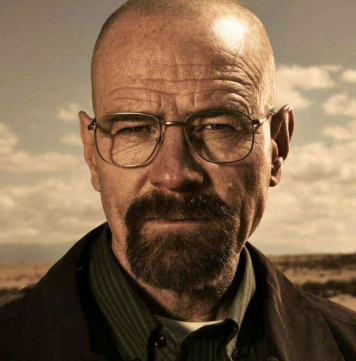
Vince Gilligan fought to cast Cranston as Walter White against AMC’s objections. The network wanted a recognizable dramatic actor. They got the dad from Malcolm in the Middle. Gilligan saw what others missed: Cranston’s ability to disappear into a character so completely that the actor vanished. Over five seasons, Walter White’s descent from dying chemistry teacher to drug lord became the defining performance of prestige television.
The role earned Cranston four Emmy Awards for Outstanding Lead Actor. Significantly, it also tripled his asking price. Breaking Bad transformed him from working actor to cultural phenomenon. His catchphrases entered the lexicon. His bald head became iconic. The abandoned boy from Canoga Park had become impossible to ignore.
Broadway and Beyond
Rather than coast on television success, Cranston pivoted to theater. His portrayal of Lyndon B. Johnson in All the Way earned a Tony Award. Subsequently, his turn in Network delivered another acclaimed performance. Each choice reflected the same principle: never repeat yourself. Always transform.
Film work followed, including Argo, Trumbo, and the Power Rangers reboot. The range was deliberate. Cranston refused to be defined by any single role because he’d learned young that identity itself was flexible. You could be anyone. You could be no one. The key was committing completely to whoever you chose to become.
The Tell: The Father Who Stayed
In interviews, Cranston returns obsessively to fatherhood. He speaks about his daughter Taylor with a tenderness that borders on defiance. He was determined to be present in ways his own father never was. The wound shows in the healing.
Reconciliation and Its Limits
When Joe Cranston finally reappeared after eleven years, Bryan chose to rebuild the relationship. He’s described it as necessary but complicated. His father lived long enough to see Malcolm in the Middle, though he died in 2014, just as Breaking Bad was cementing his son’s legacy. The reconciliation happened, but the wound never fully closed.
Similarly, Cranston’s choice of roles reveals the scar. Walter White was a provider who failed his family. Hal was a loving but hapless father. LBJ was a towering figure whose personal relationships suffered for his ambition. Each character wrestles with the question: What does a man owe the people who depend on him?
The Location Connection: Homes That Stay Put
Bryan Cranston net worth 2025 supports a lifestyle deliberately different from his childhood. He owns property in Los Angeles and maintains a house in the same region where he grew up poor. The geography is intentional. He didn’t run from Canoga Park. He conquered it.
Building Permanence
Unlike the cramped apartments and frequent moves of his childhood, Cranston’s current properties represent stability. He’s been married to actress Robin Dearden since 1989. They raised their daughter together. The contrast with his parents’ failed marriage couldn’t be sharper.
As reported by Architectural Digest, Cranston personally designed aspects of his home, treating the space as another form of creative control. The house isn’t just shelter. It’s proof that roots can hold.
The Paradox of Disappearance
Bryan Cranston built a $50 million fortune by perfecting the art of vanishing. Every iconic role required him to erase himself so completely that only the character remained. Yet this gift for disappearance grew from the most painful kind of visibility: being the child who got left behind.
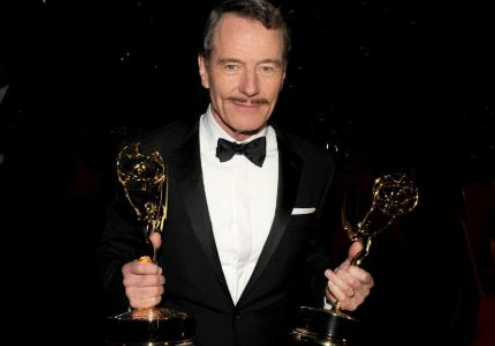
Somewhere inside the Emmy winner, the Tony recipient, the man whose face launched a thousand Halloween costumes, there’s still an eleven-year-old boy listening to silence. The difference is that now, whenever he wants, he can become someone else. He can slip into another life, another skin, another story. He mastered transformation because standing still felt too dangerous. The abandoned child became the escape artist. And the escape made him a legend.
Related Articles
- Bob Odenkirk Net Worth 2025: The Comedy Writer Who Became an Action Star
- Elisabeth Moss Net Worth 2025: The Child Actor Who Survived Hollywood
- Kieran Culkin Net Worth 2025: Stepping Out of Macaulay’s Shadow
Connect With Social Life
For features, advertising, and partnership inquiries: sociallifemagazine.com/contact
Experience Polo Hamptons 2025: polohamptons.com
Subscribe to our print edition for insider access to Hamptons society, celebrity profiles, and cultural coverage delivered to your door.
Join our email list for weekly updates on events, features, and exclusive content.
Support independent journalism: Donate $5 to help us continue delivering premium content.
Author

Written by
Recent Posts
Behind the Scenes of Weddings Involving Long-Distance Relationships
Why Karaoke Is the Ultimate Entertainment Choice for a Hen Party
Easy Recipes That Feed A Crowd Without The Stress
The Influence Of Social Media On Interior Style Trends
Where Can You Find the Best Made-to-Measure Bespoke Suits in NYC
Categories
- Art
- Articles
- Beauty & Skincare
- Celebrities
- Celebrities|Movies
- Celebrities|The Chronicles
- Chronicles
- Entertainment|Culture
- Event Photos
- Events
- Fashion
- Fashion & Style
- Featured
- Food & Beverage
- Food, Spirits, Wine
- Hamptons
- Hamptons Celebrities
- Hamptons Celebrities|Celebrities|The Chronicles
- Health
- Health & Beauty
- Lifestyle
- Luxury Lifestyle
- Movies|Culture
- Movies|Hamptons Lifestyle
- Press
- Profiles
- Real Estate
- Technology
- The Chronicles
- Travel
- Uncategorized
- Weddings