
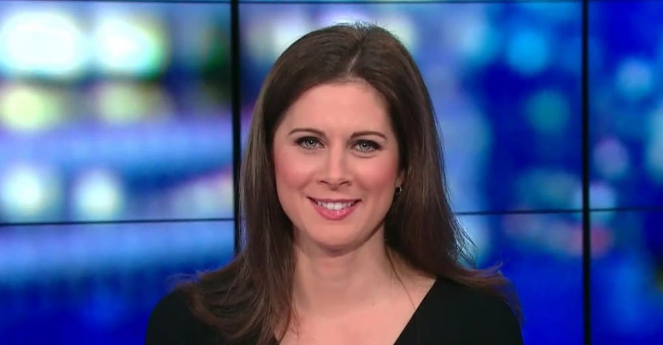
Mardela Springs, Maryland. Population: 420. A girl with two older sisters grows up on a farm where her father, a corporate attorney, has chosen a different kind of life. Kenneth King Burnett had met Esther Margaret Stewart in New York City, but he dreamed of being a country lawyer with land under his feet. So they moved to a place so small it barely registers on most maps.
“Their eyes still light up when they talk about it,” Erin would later recall of her parents’ idealism. Meanwhile, she was learning something essential on that farm: discipline, hard work, and the particular hunger that comes from growing up far from where things happen.
That hunger would eventually carry her from Maryland cornfields to Goldman Sachs trading floors to CNN primetime. It would build a fortune that most people from towns like Mardela Springs never imagine.
Erin Burnett Net Worth: Wall Street Roots, Cable News Crown
The Erin Burnett net worth currently sits at approximately $20-22 million. Her CNN salary reaches $6 million annually, making her one of the highest-paid women in broadcast news. Additionally, she serves as CNN’s Chief Business and Economic Correspondent, moderating presidential debates and anchoring coverage of global financial crises.
Yet here’s what makes her story different from most cable news anchors: before she ever appeared on television, she understood how money actually moves. That foundation—built at Goldman Sachs, refined at Citigroup, and polished at Bloomberg—gives her something many of her colleagues lack. When markets crash or economies wobble, Erin Burnett doesn’t just read the teleprompter. Instead, she actually knows what the numbers mean.
The Wound: Too Far From Everything
Growing up in Mardela Springs meant growing up invisible. The Eastern Shore of Maryland offered natural beauty, certainly, but it also meant existing at a considerable distance from power, influence, and the kind of opportunities that change trajectories.
Kenneth Burnett worked as a corporate attorney, so the family wasn’t struggling financially. Nevertheless, choosing rural life over Manhattan meant his daughters would have to work harder to reach the same places their suburban peers took for granted. Erin understood this calculation early, perhaps even unconsciously.
As the youngest of three girls, she also learned to fight for attention. Her older sisters, Mara and Laurie, were people she idolized—”The best part of growing up there was playing with my sisters,” she would later say. But being the baby meant having to prove herself constantly. Furthermore, that competitive instinct would serve her well in the male-dominated worlds she’d eventually conquer.
By the time she enrolled at St. Andrew’s School, a boarding school in Delaware, Erin had developed the particular drive of someone who knows she’ll have to earn every opportunity twice. Boarding school meant leaving home at 14, which is young to be on your own. However, it also meant access—to connections, to college prep, to the pipeline that feeds elite institutions.
Williams College came next, where she studied political economy while playing lacrosse and field hockey. The combination reveals something essential about her character: she wasn’t content to just be smart. Consequently, she needed to compete physically too, to prove herself in arenas where talent alone wouldn’t guarantee victory.
The Chip: Refusing to Wait Her Turn
Most journalism careers begin in journalism. Erin Burnett’s began on Wall Street.
After graduating from Williams in 1998, she took a job as a financial analyst at Goldman Sachs, working in mergers and acquisitions. The position was grueling, competitive, and overwhelmingly male. Rather than shrinking from the challenge, she thrived on it. Subsequently, the experience gave her something no journalism school could provide: genuine expertise in how money works.
Then came the pivot that changed everything. Her sister and brother-in-law sent her a newspaper article about Willow Bay, whom Erin remembered as an Estée Lauder model. Bay had transformed herself into a co-host of CNN’s Moneyline. If a model could become a financial journalist, Erin reasoned, surely an actual financial analyst could too.
What happened next demonstrates the particular boldness that defines her career. Erin wrote directly to Willow Bay, calling herself a “stalker” in her pursuit of a job. Bay hired her as an assistant. Most people would have viewed this as a step backward—leaving Goldman Sachs to answer phones at CNN. Nevertheless, Erin saw the trajectory, not the title.
The CNN position didn’t last long, though. She left to become vice president of CitiMedia, Citigroup’s digital media division. From there, she moved to Bloomberg Television as Stocks Editor and anchor. Each move built on the previous one, creating a résumé that blended genuine financial expertise with on-camera experience.
CNBC came calling in 2005. She co-anchored Squawk on the Street with the legendary Mark Haines and hosted Street Signs. Both shows’ ratings climbed under her watch, and industry insiders began calling her “The Street Sweetie”—a nickname she tolerated because the alternative was invisibility.
The Rise: From CNBC Darling to CNN Primetime
In 2010, everything accelerated. Erin’s investigative report on chemical company Transammonia’s business dealings with Iran resulted in the company agreeing to stop Iranian operations entirely. The report earned an Emmy nomination and proved she could do more than read stock tickers. As a result, she had genuine journalistic instincts.
CNN noticed. In May 2011, Erin left CNBC after more than five years. By October, she was headlining her own primetime show: Erin Burnett OutFront. The program filmed at CNN’s New York studios and aired right before Anderson Cooper’s slot—prime real estate in cable news.
Joe Scarborough had dubbed her “the International Superstar” during her NBC days, and CNN clearly agreed with the assessment. Since then, she has reported from Afghanistan, Rwanda, Mali, Israel, Ukraine, Pakistan, and China. She moderated the 2020 Democratic Presidential Primary Debate and hosted Town Halls with both Joe Biden and Kamala Harris.
Her documentaries—City of Money and Mystery, India Rising: The New Empire, Dollars and Danger: Africa, The Final Investment Frontier—demonstrate range that most anchors can’t match. She’s equally comfortable explaining derivatives to confused viewers and interviewing warlords in conflict zones. Moreover, that versatility is exactly what CNN was buying when they handed her the primetime slot.
The Erin Burnett net worth reflects this trajectory: approximately $20-22 million built over two decades of relentless climbing. Her $6 million annual CNN salary places her behind only Anderson Cooper and Jake Tapper at the network. In addition, speaking engagements and media appearances add supplementary income streams.
The Tell: The Farm Girl Who Made Good
Watch Erin Burnett long enough and you’ll notice something: she never forgets where she came from. Her parents’ idealism—that decision to leave New York for a Maryland farm—shaped her understanding of what matters. Consequently, she chose substance over flash at every career turning point.
In 2003, she met David Rubulotta on a blind date arranged by a mutual friend. Rubulotta was a trader at Lehman Brothers; later he would become a managing director at Citigroup. When Erin saw him walk into the restaurant, she thought, “I hope that’s him.” As it turned out, it was.
They dated for eight years before getting engaged in 2011. The wedding, held in December 2012, took place at City Hall—no extravagant ceremony, no celebrity circus. “We’re very casual,” Erin explained to People magazine. “I love how at City Hall people come in everything from wedding gowns to jeans. It’s so mellow and chill, just how we like it.”
Instead of a white gown, she wore red. The reception at Atlantic Grill had a Christmas theme because, as she put it, “Christmas is our favorite time of year.”
Three children followed in quick succession: Nyle Thomas in 2013, Colby Isabelle in 2015, and Owen Thomas in 2018. “We are so excited for number three,” Erin told People when pregnant with Owen. “As one of three myself, I think it’s a lucky number.”
Together, she and David have been named to the “Top 22 Biggest Power Couples on Wall Street.” He manages leveraged credit at one of the world’s largest banks while she explains global markets to millions of viewers. Neither sought the spotlight for spotlight’s sake. Both simply excelled at difficult things until the spotlight found them.
What the Erin Burnett Net Worth Really Means
The $20 million figure represents something more than accumulated salary. It represents what happens when someone from a town of 420 people refuses to accept the limitations that geography and gender might impose.
Erin Burnett could have stayed at Goldman Sachs. Many financial analysts build entire careers in investment banking, accumulating wealth through bonuses and promotions. However, she wanted something different—visibility, influence, the chance to explain complex things to ordinary people. That desire led her to write a letter to a stranger, to take a job answering phones, to rebuild her career from scratch multiple times.
At 48, she anchors one of CNN’s flagship programs. Her expertise spans war zones and trading floors. Her family includes a Wall Street executive husband and three children who will never know what it means to grow up invisible in rural Maryland.
Meanwhile, her parents still live near that farm where they started. Their eyes still light up when they talk about choosing country life over city ambition. Perhaps that idealism, that willingness to take unconventional paths, is exactly what their youngest daughter inherited.
The Erin Burnett net worth is $20 million. The lesson is simpler: sometimes the longest journey begins in the smallest town, and sometimes the girl from Mardela Springs ends up explaining the world to millions.
Discover more profiles of influential media personalities in The Archive.
For partnership opportunities, advertising inquiries, or to be featured in Social Life Magazine, contact our team. Join us at Polo Hamptons, where media and finance converge.
Related Reading:
Author

Written by
Recent Posts
The Real Reason Smart, Motivated People Don’t Follow Through
Simple Eating Habits That Boost Your Wellness
When to Seek Professional Support for Persistent Mental Health Symptoms
Creative Strategies Couples Use to Pay for Their Big Day
How International SEO Helps Brands Succeed Across Borders
Categories
- 2025 Social Life Events
- Access to Digital + Physical Magazine
- Art
- Articles
- Beauty & Skincare
- Beauty & Wellness
- Business Strategy
- Celebrities
- Chronicles
- Design History
- Design History|Hamptons
- Design Process
- Design Trends
- Event Photos
- Events
- Family
- Fashion
- Fashion & Style
- Featured
- Food & Beverage
- Food, Spirits, Wine
- Hamptons
- Hamptons Celebrities
- Hamptons Design
- Health
- Health & Beauty
- Home & Design
- Home & Living
- Lifestyle
- Luxury Home Design|Design Process
- Luxury Home Design|Design Trends
- Luxury Home Design|Hamptons Design
- Luxury Home Design|Interior Design
- Luxury Lifestyle
- Luxury Living
- Luxury Living|Design Process
- Luxury Living|Hamptons
- Luxury Living|Hamptons Design
- Press
- Profiles
- Real Estate
- Technology
- The Chronicles
- Travel
- Trending
- Uncategorized
- Weddings
- Wellness