

Bell’s palsy had struck at the worst possible moment. Classmates called him Frankenstein. For nine months, George Clooney couldn’t smile without looking like he was having a stroke. In a small Kentucky river town where everyone knew everyone, there was nowhere to hide.
That year, according to Clooney himself, changed everything. Rather than retreat, he learned to weaponize humor against himself before anyone else could. He made the jokes first. He controlled the narrative. Four decades later, that paralyzed teenager is worth $500 million, owns a villa on Lake Como, and built a tequila empire that sold for a billion dollars.
The face healed. The chip never did.

The Wound: Famous Name, Modest Means
George Timothy Clooney was born into a peculiar kind of American limbo. His aunt Rosemary was a genuine celebrity, a cabaret singer who’d performed with Bing Crosby and starred in White Christmas. His father Nick hosted local television shows in Cincinnati. The Clooney name carried weight in certain circles.
But weight doesn’t pay mortgages. The family bounced between Kentucky and Ohio throughout George’s childhood, chasing his father’s broadcasting career. They eventually settled in Augusta, a town of barely 1,100 people on the Ohio River. Their rambling Victorian home was charming but far from glamorous. Despite the name recognition, the Clooneys lived modestly.
The Dinner Table Education
Nick Clooney worshipped Edward R. Murrow. Consequently, dinner conversations weren’t about sports or gossip but about politics, current events, and moral responsibility. George made his television debut at age five, playing sketch characters on his father’s local talk shows. The camera felt natural. However, so did the understanding that talent alone wasn’t enough. His famous aunt struggled with addiction and professional setbacks. Therefore, fame without foundation meant nothing.
Young Clooney absorbed a specific lesson: you could come from entertainment royalty and still end up cutting tobacco in Kentucky summers. Success wasn’t inherited. It was built through relentless work and strategic positioning.
The Chip: When the Reds Said No
Before Hollywood ever entered the picture, Clooney wanted baseball. He played throughout high school at Augusta and was good enough to try out for the Cincinnati Reds in 1977. The scouts watched him throw. They watched him bat. They didn’t offer a contract.
That rejection could have been devastating. Instead, it became clarifying. Clooney enrolled at Northern Kentucky University to study broadcast journalism like his father. He spent two years there, then transferred briefly to the University of Cincinnati. Neither institution saw him graduate. He was two credits shy when something clicked.
The Summer That Changed Everything
In 1982, his cousin Miguel Ferrer got him a small role on a movie being filmed nearby. For three months, Clooney hung around the set, working as an extra and delivering occasional lines. The film never got released, but the experience ignited something dormant.
He had just finished another summer cutting tobacco, a miserable job under brutal Kentucky sun. The choice crystallized: endless manual labor in a small town, or gambling everything on a dream in Los Angeles. He packed his Datsun and drove west with almost nothing.
Before success found him, Clooney sold women’s shoes at a department store. He hawked insurance door to door and moved refrigerators. He dressed as a giant chicken for El Pollo Loco. Each humiliation became fuel. The kid who’d survived Bell’s palsy and Reds rejection wasn’t going to let a chicken costume break him.
The Rise: A Decade of Near-Misses
For ten years, Clooney worked constantly and achieved almost nothing. He landed guest spots on The Facts of Life and Roseanne. He starred in failed sitcoms that no one remembers. His first credited role came in a 1984 CBS show called E/R, not to be confused with ER, the long-running medical drama.
Hollywood is littered with handsome actors who never broke through. Clooney could have been one of them. Instead, he kept showing up, kept working, kept refining his craft. Meanwhile, he took acting lessons from coach Roy London and studied his heroes: Gary Oldman, Sean Penn, Mickey Rourke.
Dr. Doug Ross and the Breakthrough
In 1994, at age 33, Clooney was cast as Dr. Doug Ross on NBC’s ER. The show became a cultural phenomenon. Suddenly, the guy who’d spent a decade in obscurity was being called the sexiest man alive. Two Emmy nominations followed. Film offers flooded in.
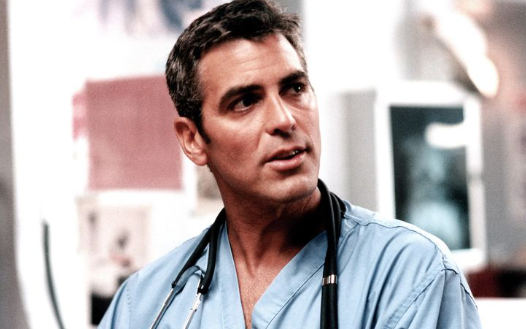
His transition to movies included Batman & Robin, which critics savaged but audiences watched. More significantly, he built relationships with filmmakers like Steven Soderbergh, who cast him in Out of Sight, Three Kings, and eventually the Ocean’s franchise. Unlike Brad Pitt, who’d broken through a decade earlier, Clooney arrived in Hollywood as a fully formed adult. He knew who he was. The chip had given him that.
The Tell: Never Forgetting the Friends
When Clooney sold Casamigos Tequila to Diageo for $1 billion in 2017, he did something remarkable. He gathered 14 friends, people who’d known him when he was selling shoes and dressing as a chicken. He gave each of them $1 million in cash.
His explanation revealed the wound beneath the wealth. These were people who’d loaned him money when he was broke, let him sleep on their couches, helped him when no one else would. Without them, none of this existed. Why wait until he died to share it?
The Activist Streak
Nick Clooney’s dinner-table lessons never faded. George has spent years advocating for Darfur, co-founding Not On Our Watch with Brad Pitt, Matt Damon, and Don Cheadle. He’s been arrested protesting at the Sudanese embassy. He addressed the United Nations Security Council. In 2012, he personally traveled into war zones in South Sudan to document atrocities.
The activism isn’t performance. It’s the manifestation of those Kentucky dinner conversations, the belief that privilege demands responsibility. The famous name means nothing without moral action behind it.
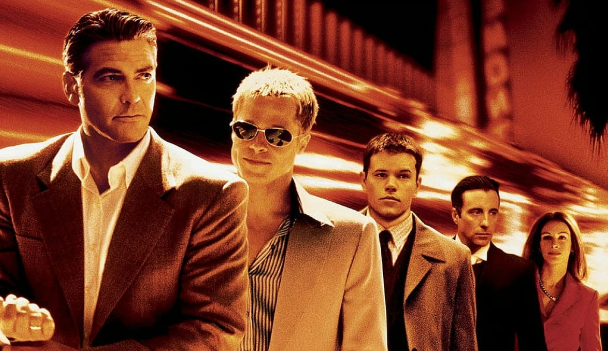
The Lake Como Connection: An Ocean Away from Augusta
In 2002, Clooney paid approximately $10 million for Villa Oleandra, an 18th-century estate on Lake Como’s western shore. The 25-room property sits in Laglio, a commune so small it makes Augusta look like a metropolis. He later acquired the neighboring Villa Margherita for additional privacy. Today, the compound is valued at over $100 million. For context, Bernard Arnault controls a luxury empire worth hundreds of billions, but even he might envy Clooney’s lakeside serenity.
The property choice speaks volumes. A man who spent his childhood bouncing between rental houses chose a permanent sanctuary in one of the world’s most beautiful locations. A man who watched his famous aunt struggle chose to build wealth that doesn’t depend on the whims of casting directors.
The Tequila Billionaire
Casamigos wasn’t supposed to be a business. Clooney and Rande Gerber were building vacation homes next to each other in Cabo San Lucas. They drank a lot of tequila. Most of it burned going down. So they decided to make their own.
For two years, Casamigos existed only as a private label, roughly 1,000 bottles annually for personal use. Then their distiller called with a problem: they needed to get licensed or they were drinking too much tequila. The brand launched publicly in 2013. Four years later, Diageo paid a billion dollars for it.
Clooney’s pre-tax cut was approximately $230 million. After taxes, around $150 million in pure profit. Forbes named him the highest-paid actor of 2018, not for acting, but for selling tequila. Much like Tom Ford selling his fashion empire to Estée Lauder, Clooney proved that celebrity could be converted into permanent capital.
The Paradox of George Clooney
Today, Clooney splits time between Lake Como, a mansion in Los Angeles, and properties in France and England. He’s married to Amal Alamuddin, a human rights lawyer who arguably outshines him in intellectual circles. They have twins and recently received French citizenship.
But look closely at any interview and you’ll still see the kid with the paralyzed face, the one who learned to make fun of himself before anyone else could. The $500 million fortune, the billion-dollar tequila brand, the Lake Como villa, they’re all beautiful. They’re also all armor, built by someone who learned early that the world can take everything away if you’re not prepared.
The face healed decades ago. But George Clooney is still telling jokes before anyone else can, still working harder than he needs to, still giving away millions to the friends who knew him when he had nothing.
Some wounds never fully close. Some chips never quite dissolve. Sometimes that’s exactly what builds an empire.
Related Articles
- Brad Pitt Net Worth 2025: The Architect Who Rebuilt a $400 Million Empire From the Wreckage
- Julia Roberts Net Worth 2025: America’s Rarest Sweetheart and Her $250 Million Disappearing Act
- Nicole Kidman Net Worth 2025: The Shy Australian Who Became Hollywood’s $250 Million Chameleon
Want to be featured alongside Hollywood’s elite in Social Life Magazine? Contact us at sociallifemagazine.com/contact for advertising, features, and partnership opportunities.
Experience the social event of the Hamptons summer at Polo Hamptons, where deal-making happens between chukkers.
Subscribe to our print edition to receive Social Life Magazine delivered to your Hamptons residence or Manhattan pied-à-terre.
Author

Written by
Recent Posts
Rebel Wilson Net Worth: Named the Drug. Wrote the Memoir. Built $22M Anyway.

Celebrities on Ozempic: Six Women, Six Choices, One Brutal Verdict
Lana Del Rey Net Worth: $60M Empire Built on Refusal

Ashley Graham Net Worth: $10M. The Industry Said No. She Said Watch.
How Can You Create a Warm and Inviting Wellness Space at Home?
Categories
- Art
- Articles
- Beauty & Skincare
- Celebrities
- Celebrities|The Chronicles
- Chronicles
- Event Photos
- Events
- Fashion
- Fashion & Style
- Featured
- Food & Beverage
- Food, Spirits, Wine
- Hamptons
- Hamptons Celebrities
- Health
- Health & Beauty
- Lifestyle
- Luxury Lifestyle
- Press
- Profiles
- Real Estate
- Technology
- The Chronicles
- Travel
- Uncategorized
- Weddings