
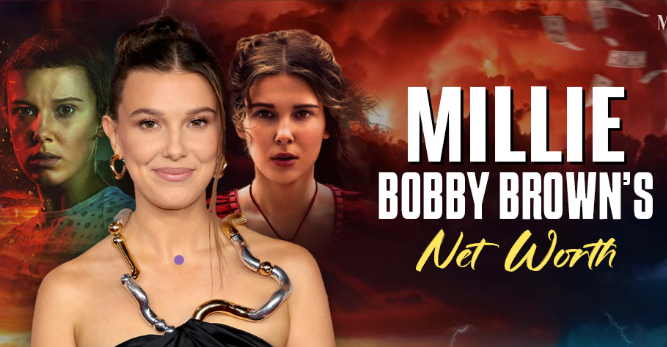
From Eleven to Empire Builder at Twenty
Bournemouth, England, 2013. A nine-year-old girl sits in a cramped flat, having just learned that her family has lost everything. Her father, Robert Brown, invested the family’s entire savings into her acting career. Headshots. Acting classes. Flights to Los Angeles for auditions. Relocating the family of six across an ocean. All of it based on the belief that this child was special.
The money is gone. The auditions have led nowhere. The family is facing financial ruin. Millie Bobby Brown, not yet a teenager, understands with devastating clarity that her family’s future depends on her success. That her failure isn’t just personal. That if she can’t book a job, people she loves will suffer.
Three years later, she would be the breakout star of Netflix’s Stranger Things. Today, at twenty, she has an estimated net worth of $20 million, a beauty empire, producer credits, and a marriage to the son of a Bon Jovi. The terrified girl whose family bet everything on her won spectacularly. Yet the pressure of that childhood bargain never disappeared. It simply evolved into empire.
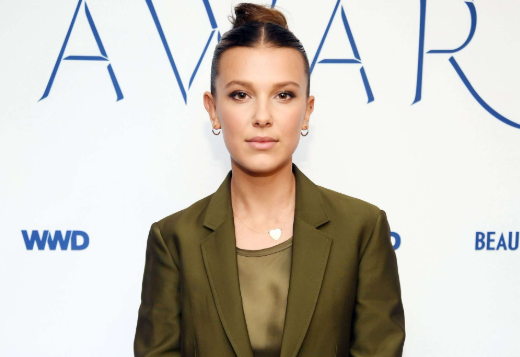
The Wound: The Weight of a Family’s Dreams
Millie Bobby Brown was born on February 19, 2004, in Marbella, Spain, to English parents. Her father ran a property business. Her mother, Kelly, managed the household. There were four children. The family lived comfortably until Robert Brown noticed something in his youngest daughter: a performance instinct that seemed preternaturally mature.
What happened next either demonstrates remarkable faith or concerning ambition, depending on perspective. The Browns moved from Spain to Bournemouth, England. Then, when Millie was eight, they relocated to Orlando, Florida, chasing proximity to the American entertainment industry. Robert Brown liquidated savings to fund acting lessons, headshots, agency fees, and the endless expenses of pursuing child stardom.
When the Money Ran Out
By the time Millie was nine, the family was broke. According to interviews she has given with The Guardian and other outlets, they were living in virtual poverty. The gamble had failed. The auditions weren’t converting. A child who had been told she was exceptional now faced the possibility that exceptional wasn’t enough.
“I felt like I had to make money for my family,” she told Glamour UK. “I was nine years old and I felt that pressure.” This isn’t standard child-star backstory. This is a specific kind of wound: the understanding that your value is tied to your earning potential, that love and financial survival are entangled, that failure has consequences beyond yourself.
The Chip: The Girl Who Couldn’t Fail
Before Stranger Things, Millie appeared in minor roles. Guest spots on shows like Once Upon a Time in Wonderland and NCIS. Small parts that paid small money and led nowhere special. Each booking probably felt like relief. Each rejection probably felt existential.
The chip that developed wasn’t the typical child-star narcissism. It was hypervigilance. She learned to read rooms, deliver what casting directors wanted, and accept that her emotional wellbeing was less important than booking work. These are survival skills that serve careers and damage psyches.
The Audition That Changed Everything
In 2015, the Duffer Brothers were casting a mysterious girl with supernatural powers for their new Netflix series. They needed someone who could convey trauma, resilience, and otherness with minimal dialogue. Eleven, the character, barely speaks in the first season. Her performance would be almost entirely physical and emotional.
Millie Bobby Brown walked into that audition as an eleven-year-old who understood, viscerally, what it felt like to carry weight too heavy for her frame. She understood isolation, being tested, and the weight of everything depending on this moment. The Duffer Brothers saw it immediately.
The Rise: Eleven and the Birth of a Phenomenon
Stranger Things premiered on Netflix in July 2016. The show became a cultural phenomenon almost overnight, blending 1980s nostalgia with genuine scares and surprisingly deep emotional stakes. At the center was Eleven, a shaved-head mystery girl whose nosebleeds and telekinetic powers made her instantly iconic.
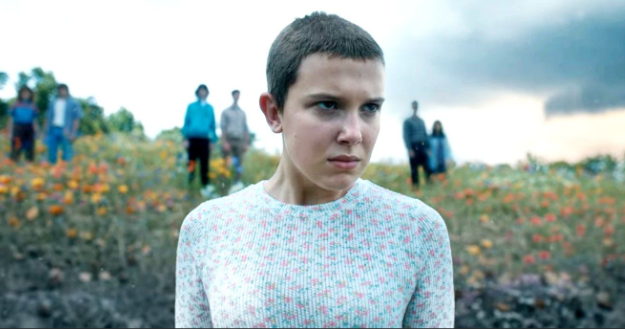
Millie Bobby Brown was twelve years old and suddenly one of the most famous young actors in the world. According to Variety, her salary grew from approximately $10,000 per episode in Season 1 to $300,000 per episode by Season 3. Season 4 reportedly pushed her earnings to around $450,000 per episode, making her among the highest-paid child actors in television history.

The Youngest Emmy Nominee in History
In 2017, at thirteen, she became the youngest person ever nominated for an Emmy in the Outstanding Supporting Actress category. The record previously belonged to no one her age because no child had delivered that level of dramatic performance in a major series. The industry was forced to take her seriously as an artist, not merely a charming kid.
UNICEF appointed her as their youngest-ever Goodwill Ambassador. Time Magazine named her one of the world’s most influential teenagers. Before she could drive, she had achieved recognition most actors never experience.
Building Beyond Acting
Here’s where Millie Bobby Brown diverged from the typical child-star trajectory. Rather than simply accumulating acting roles, she began building businesses. In 2019, at fifteen, she launched Florence by Mills, a clean beauty brand targeting Gen Z consumers. According to WWD, the brand achieved significant retail distribution including Ulta Beauty and Boots UK.
The brand’s name comes from her great-grandmother Florence. Its positioning reflected something genuine about its founder: a teenager who wanted makeup and skincare that didn’t feel like adult products imposed on young skin. By some estimates, Florence by Mills generated tens of millions in revenue within its first years.
Enola Holmes and Producer Credits
In 2020, Brown starred in and produced Enola Holmes, a Netflix film about Sherlock Holmes’s teenage sister. The film was a hit. She reprised the role in a sequel while maintaining her producer credit. According to Deadline, these producing arrangements gave her creative control and backend participation that significantly enhanced her earnings.
The math of Hollywood favors producers over pure talent. Actors get paid once. Producers share in profits. By establishing herself as a producer before reaching adulthood, Brown positioned herself for the kind of long-term wealth that acting salaries alone rarely provide.
The Tell: The Exhaustion Beneath the Empire
Millie Bobby Brown has been unusually candid about the darker aspects of child stardom. She has discussed being sexualized by adult fans from an early age. She has talked about inappropriate comments and behavior she experienced as a teenager. In 2020, she briefly left social media citing bullying and negativity.
“I was so ready to be an adult,” she told Allure. “I wanted to skip my teenage years.” This desire to accelerate past adolescence isn’t unusual for child stars. What’s unusual is Brown’s articulation of it. She understands, with remarkable clarity for her age, that her childhood was transactional. That the girl who saved her family never really got to be just a girl.
The Drake Controversy and Boundary Setting
In interviews, Brown has mentioned that rapper Drake was a close friend who texted her regularly when she was fourteen. She characterized the relationship innocently. The public’s reaction was concerned. Whether or not anything inappropriate occurred, the situation highlighted how normalized adult attention toward child stars can become.
More recently, Brown has become increasingly protective of her privacy. She speaks less about personal relationships. She controls her image with business precision. The open, enthusiastic child who loved meeting fans has become a guarded young woman who understands that accessibility is dangerous.
The Connection: The Beckham Marriage and Beyond
In 2024, Millie Bobby Brown married Jake Bongiovi, son of Jon Bon Jovi. The wedding received significant media attention. She was twenty years old. The marriage placed her within a specific social stratum: second-generation celebrity wealth, families who understand fame’s peculiarities, connections that open doors beyond entertainment.
According to People Magazine, she has acquired property in London and maintains a lifestyle appropriate to her earnings. Her parents, once broke and desperate, are now financially secure through her success. The family bet paid off spectacularly.
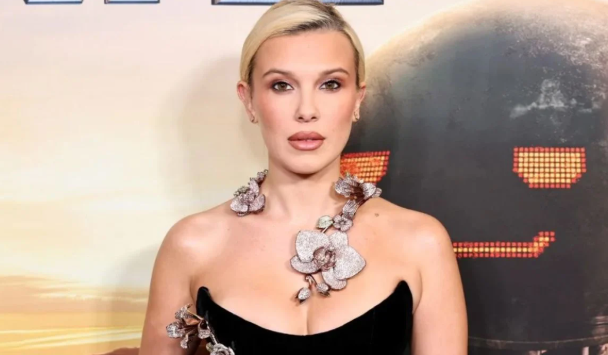
Twenty Years Old With a Lifetime Already Lived
At twenty, Millie Bobby Brown has already experienced a complete career arc. Child discovery. Breakthrough success. Critical acclaim. Business expansion. Marriage. Most people don’t accumulate this much biography in twice her years. Her $20 million net worth represents more than money. It represents compressed time.
The nine-year-old whose family lost everything on her dreams grew into the twenty-year-old who turned those dreams into an empire. Millie Bobby Brown’s fortune is exceptional. Her trajectory is more complicated. She was never allowed to be ordinary, never permitted to fail without consequence—learning to perform, produce, protect her image, and build businesses all before reaching adulthood. The wound of that childhood pressure shaped an adult who operates with exhausting efficiency. Eleven escaped the laboratory. Millie Bobby Brown built her own. The compound may be beautiful. The girl inside is still working.
Related Articles
- Pedro Pascal Net Worth 2025: The Chilean Refugee Who Became Television’s Most Beloved Father Figure
- Jenna Ortega Net Worth 2025: How the Weird Girl from Coachella Valley Became Gen Z’s Scream Queen
- Anya Taylor-Joy Net Worth 2025: The Girl Nobody Wanted Became Everyone’s Queen
Want the full story on streaming’s biggest stars? Subscribe to Social Life Magazine for exclusive profiles and origin stories. Experience the intersection of entertainment and society at Polo Hamptons.
Author

Written by
Recent Posts
Behind the Scenes of Weddings Involving Long-Distance Relationships
Why Karaoke Is the Ultimate Entertainment Choice for a Hen Party
Easy Recipes That Feed A Crowd Without The Stress
The Influence Of Social Media On Interior Style Trends
Where Can You Find the Best Made-to-Measure Bespoke Suits in NYC
Categories
- Art
- Articles
- Beauty & Skincare
- Celebrities
- Celebrities|Movies
- Celebrities|The Chronicles
- Chronicles
- Entertainment|Culture
- Event Photos
- Events
- Fashion
- Fashion & Style
- Featured
- Food & Beverage
- Food, Spirits, Wine
- Hamptons
- Hamptons Celebrities
- Hamptons Celebrities|Celebrities|The Chronicles
- Health
- Health & Beauty
- Lifestyle
- Luxury Lifestyle
- Movies|Culture
- Movies|Hamptons Lifestyle
- Press
- Profiles
- Real Estate
- Technology
- The Chronicles
- Travel
- Uncategorized
- Weddings