
The eight-year-old’s painting hung in the Weston, Massachusetts art show, a stencil of numbers that echoed early Robert Indiana. Judges awarded it second prize. Then they discovered the artist’s age and withdrew the award. They were not pleased that a child had fooled them. However, Reed Krakoff’s mother Sandra remembers the moment differently. What she saw was a boy who understood that design was a language, one he had been speaking fluently since before he could articulate what he was doing.
The Privilege and Its Price
Weston, Connecticut in the 1970s was not merely affluent. It was a specific type of affluent, populated by corporate executives who read Interior Design magazine at breakfast and collected contemporary art as naturally as other families collected stamps. Reed Krakoff was the youngest of three children born to Robert L. Krakoff, who would become CEO and chairman of Nielsen Business Media, and Sandra Gusky Krakoff, a consultant and interior designer who cultivated her son’s eye from toddlerhood.
A Childhood Steeped in Design
Both parents hailed from Pittsburgh, where they met as teenagers before building their prominent life in the Northeast. They relocated to Weston and immersed their children in an environment that emphasized refined aesthetics as a first language. The family had access to networks that most Americans never glimpse. In a detail that speaks volumes about their social positioning, Martha Stewart catered young Reed’s bar mitzvah, years before Stewart became a household name.
Sports and Summer Jobs
Summers meant caddying at Aspetuck Valley Country Club, stringing tennis rackets in sporting goods shops, and cleaning swimming pools. Krakoff harbored dreams of becoming a professional hockey goalie, playing youth league games across New England and winning an outstanding player award at a tournament in Sweden. But the art shows kept calling, and the design magazines scattered around the house kept whispering.
The Parsons Revelation
When Krakoff enrolled at Parsons School of Design, he encountered something that would shape his entire philosophy. Fellow students had panic attacks about paying bills, hyperventilating over their uncertain futures. “It wasn’t the life I wanted to live,” he has said. He had the luxury of choosing design without desperation. Yet he also had something to prove. Anyone can appreciate beauty with a trust fund. Creating beauty that sells, beauty that transforms companies, beauty that matters, that requires a different kind of fire.
The Chip Becomes the Code
After Parsons, Krakoff spent five years at Ralph Lauren, absorbing the master’s approach to lifestyle branding. Then he moved to Tommy Hilfiger as creative director during the brand’s explosive 1990s growth, learning how to translate aesthetic vision into commercial success at scale. By 1996, he was 32 years old, packed and ready to move to Italy for a new direction. Then Lew Frankfort called.

The Coach Gamble
Frankfort, Coach’s CEO, saw something in Krakoff that others had missed. Complete control over Coach’s products, advertising, store design, and merchandising was on the table. It was an enormous gamble on both sides. Coach in 1996 was a respectable leather goods company with about $500 million in annual sales. It was, in Krakoff’s own words, “an East Coast bread brand.” Everyone in his Connecticut childhood had owned Coach. His father took the train to Grand Central for 25 years carrying a Coach briefcase, while his sister had a Coach bag.
The question was whether this reliable, somewhat dowdy brand could become something more, something that belonged in the same sentence as Hermès.
The $5 Billion Transformation
For the next 17 years, Krakoff answered that question definitively. First, he introduced the signature C logo pattern that became ubiquitous. Then he moved Coach into exotic skins, new fabrics, and fashion-forward designs while maintaining accessible price points. Store designs and advertising received complete overhauls. According to industry analysts at McKinsey, Coach became the dominant force in accessible luxury, with 36% market share in premium handbags sold in the United States.
By 2008, Krakoff was taking home $22.4 million in annual compensation, more than twice what his boss Lew Frankfort earned. Sales had grown to $3.18 billion. The leather goods company had become a fashion empire. But the fashion world’s establishment still whispered. One designer called Coach “Hermès for housekeepers.” The snobs never let Krakoff forget where the brand sat in their mental hierarchy.
The Rise and the Reckoning
In 2010, Krakoff did what the fashion world’s gatekeepers thought he would never dare. Launching his own eponymous label, Reed Krakoff, he positioned it at the very top of the luxury market. The $695 fragrance, the $5,000 python halter dresses, the sprawling Madison Avenue boutique opened during uncertain economic times. He was betting that his name, his eye, his vision could command prices that matched the European houses.
Critical Reception
The collections received mixed reviews. Detractors called him “a brand architect who made a fortune at Coach by marketing middlebrow goods to barely fashionable consumers.” They questioned whether he had any right to reinvent himself as “a real designer.” Ariel Levy’s devastating profile in The New Yorker laid bare the contradictions: the 10,000-book library with a staff member to keep them catalogued, the insistence that he was in design rather than fashion, the resistance to admitting he made skirts and pants and purses.
The Fall and the Comeback
By 2013, Krakoff announced he would leave Coach to focus on his label full-time. By 2015, the Reed Krakoff label had folded, liquidating its assets. The defeat was public and expensive. But Krakoff had learned something that his privileged upbringing never fully taught him. What it meant to fail on the biggest possible stage became clear.
Then came the call from Tiffany.

The Tell: Buying Jackie’s Dreams
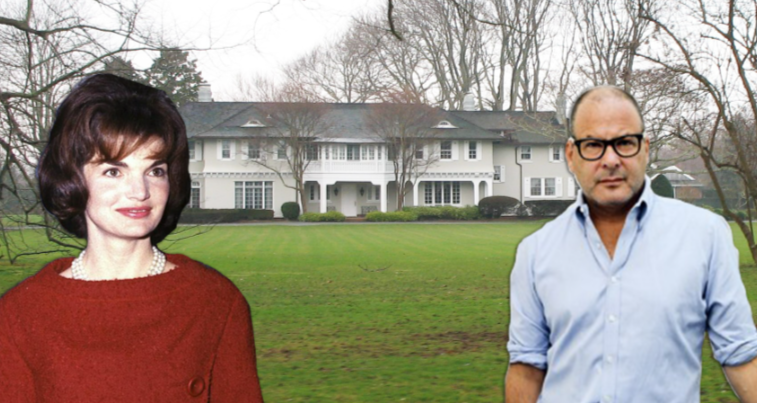
In 2007, Reed and his wife Delphine, a French-born interior designer who runs the firm Pamplemousse Design, paid $20-25 million for Lasata, the East Hampton estate where Jacqueline Kennedy Onassis spent her childhood summers. The property had not been renovated in decades. The Arts and Crafts mansion at 121 Further Lane sat on 11 acres, surrounded by the ghosts of the Bouvier family.
The Painstaking Restoration
With architect Mark Ferguson, the Krakoffs embarked on a painstaking restoration. They were, in Delphine’s words, “very disciplined about getting rid of whatever wasn’t house-appropriate and bringing in things that were.” Using 200-year-old reclaimed oak floors retained “that creaky feeling.” Original grid-pattern millwork walls that had appeared in books about Jackie Kennedy were unearthed. The house became a marriage of American history and European connoisseurship, filled with pieces ranging from Diego Giacometti to Karl Springer to Queen Anne period furniture.
Jackie’s Lasting Influence
When Jackie Kennedy planned her husband’s funeral in 1963, she insisted on decorating St. Patrick’s Cathedral with sprays of summer flowers in white wicker baskets. “I want everything to look like a summer garden, like Lasata in August,” she said. Decades later, Reed Krakoff was living in that same August.
The Pattern of Properties
The Krakoffs sold Lasata in 2018 for $24 million. Tom Ford, another design titan, bought it for $52 million in 2023. But the pattern was set. The Krakoffs have transformed nine properties in their 25-year marriage, including a seven-story Upper East Side townhouse (sold for $51 million), a French-style chateau in New Canaan, Connecticut that once belonged to reclusive heiress Huguette Clark (purchased for $14.3 million in 2014), and homes in Paris and Palm Beach.
Their art collection is equally formidable. Alexander Calder mobiles, Claude Lalanne sculptures, works by Morris Louis and Mark Rothko fill their homes. It is collecting as identity formation, as if each acquisition proves something about who they are. “We only buy things that to us are extraordinary,” Delphine has said. “Each house has a different history, architecture and personality.” They have written a book about their interiors, Houses That We Dreamt Of, with tributes from Martha Stewart, Simon Doonan, and Hamish Bowles.
The Tiffany Transformation
When Tiffany hired Krakoff as its first Chief Artistic Officer in 2017, the storied jeweler was in crisis. Sales had slumped. The brand felt dated. Younger shoppers were not interested in their grandmother’s jewelry store. Krakoff’s mandate was total: oversee jewelry, accessories, stores, e-commerce, and advertising.
Honoring the Archive
He approached the archive first. “I looked at every single one” of the Blue Books dating back to 1845, he has said. “I spent time in the marketing archive, with products, everything, just to kind of absorb what it was.” Then he put that research away and began building something new.
Bold New Directions
The “Everyday Objects” collection featured $165 pizza cutters and $425 protractors made of sterling silver, items that generated both mockery and massive sales. The Paper Flowers collection brought fresh jewelry designs. The Blue Box Café opened on the fourth floor of the flagship store. Perhaps most audaciously, he recreated scenes from Breakfast at Tiffany’s with Elle Fanning wearing a hoodie. The message was clear: your grandmother’s Tiffany was beautiful, but this Tiffany belongs to you.
Then LVMH acquired Tiffany for $16 billion in 2021, and the rules changed. While Krakoff’s exact current role has evolved, his impact on the brand’s repositioning remains visible throughout the flagship renovation and product lines. Recently named creative chairman at John Hardy, he continues his pattern of reshaping legacy brands for contemporary audiences.
Why Amagansett Makes Perfect Sense
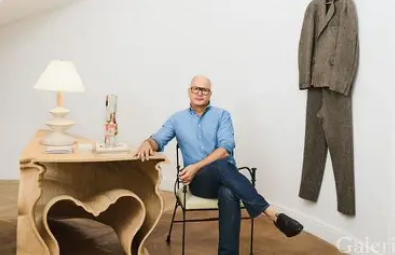
The $49.5 million Amagansett estate that Reed and Delphine Krakoff listed in September 2025 represents something different from Lasata. Where the East Hampton property was about history and restoration, the new property at 55 Dunes Lane is about creation from nothing. Designed by Thomas Phifer and Partners, the compound consists of ultra-modern bunker-like glass and concrete pavilions sitting on 2.8 acres with 200 feet of ocean frontage.
Architecture as Statement
Five years of design and construction produced what the listing describes as “a pale-concrete platform embedded within the dunes.” The 7,200-square-foot interior is surrounded by native pine, bayberry, and beach plum. A heated gunite pool faces the water. The primary suite occupies its own glass pavilion. It is architecture as sculpture, a home that exists in deliberate contrast to everything historic about the Hamptons.
The Drive Behind Every Purchase
For the Krakoffs, this has always been the point. They do not simply live in houses. They make statements about taste, about permanence, about what it means to possess beautiful things. The boy who entered adult art shows became the man who buys Jackie Kennedy’s summer home. The designer who was dismissed as middlebrow now lives next door to Tom Ford.
Those seeking to experience the Hamptons’ intersection of design, heritage, and new money can explore events through Polo Hamptons, where the aesthetic sensibilities Krakoff represents are on full display.
The Architecture of Aspiration
Reed Krakoff’s net worth, estimated at over $100 million based on his Coach stock holdings, real estate portfolio, and ongoing design work, tells only part of the story. The financial success is real. When Coach paid him $22 million in a single year, when he cashed out $94 million in stock in 2010 alone, when he sells estates for eight figures, the numbers speak clearly.
But something else speaks too. “Perhaps his most abiding aesthetic interest is the use of design to convey privilege,” wrote Ariel Levy in her New Yorker profile. It was meant as criticism. Yet Krakoff might take it as a compliment. Growing up, he watched his mother curate their Connecticut home with the same care he would later apply to Coach stores and Tiffany windows. Objects tell stories about who we are, about who we want to become, about who we hope others will believe us to be.
The eight-year-old whose award was withdrawn because he was too young never stopped entering competitions above his weight class. The Parsons graduate who could afford not to panic still needed to prove that his success was earned, not inherited. The Coach designer dismissed as a mass-market merchant built a home in Jackie Kennedy’s childhood sanctuary.
Some wounds never heal. They just get very, very expensive dressing.
For more on the Hamptons’ design elite and the properties that define East End luxury, contact Social Life Magazine about features and partnerships. Visit Polo Hamptons for exclusive events, or subscribe to our print edition. Your $5 donation supports independent Hamptons journalism.
Related Articles:
- Pharell Williams Net Worth 2025: The Boy Who Saw Colors in the Projects
- Vera Wang Net Worth 2025: From Top Failures to Fashion Empire
- Betsey Johnson Net Worth 2025: A Fortune Built on Cartwheels and Chaos
- Donna Karan Net Worth 2025: Taylor’s Daughter Builds $600m Empire
- Tory Burch Net Worth 2025: Tomboy Builds a Billion Dollar Empire
- Calvin Klein Net Worth 2025: Bronx Boy Builds $75m Hamptons Fortress
Author

Written by
Recent Posts

Midsommar A24 Cast Net Worth — The Daylight Horror That Turned Grief Into a Career Launchpad

ZOI NOMAD & TEN11 LOUNGE MARK ONE YEAR

Room A24 Cast Net Worth — The $6 Million Captivity Drama That Set Brie Larson Free

The Witch A24 Cast Net Worth — A $3.5 Million Puritan Nightmare That Created a Queen and a King
A24 Genre Stars Net Worth — The Terrifying Fortunes Behind Horror, Sci-Fi, and Oscar Gold
Categories
- Art
- Articles
- Beauty & Skincare
- Celebrities
- Celebrities|Movies
- Celebrities|The Chronicles
- Chronicles
- Entertainment|Culture
- Event Photos
- Events
- Fashion
- Fashion & Style
- Featured
- Food & Beverage
- Food, Spirits, Wine
- Hamptons
- Hamptons Celebrities
- Hamptons Celebrities|Celebrities|The Chronicles
- Health
- Health & Beauty
- Lifestyle
- Luxury Lifestyle
- Movies
- Movies|Culture
- Movies|Hamptons Lifestyle
- Press
- Profiles
- Real Estate
- Technology
- The Chronicles
- Travel
- Uncategorized
- Weddings