
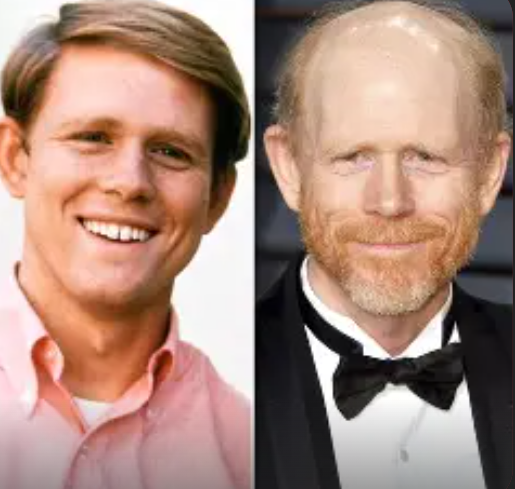
The boy was five years old, holding a toy turtle, trying to make himself cry.
On the set of The Andy Griffith Show in 1960, little Ronny Howard had been told to pretend the plastic turtle in his hands was real and dead. Andy Griffith knelt beside him, speaking softly about loss and sadness, coaxing genuine tears from a kindergartener who barely understood what death meant. The scene worked. However, something else was happening inside that child’s mind, something that would drive sixty years of relentless achievement.
Ron Howard was learning that performance was survival. That the camera required something real from you, even when everything around you was pretend. Furthermore, he was discovering that his family’s entire livelihood depended on his ability to deliver.
Born Into the Grind: Oklahoma Roots and Hollywood Hunger
Ron Howard’s net worth of $200 million in 2025 traces back to Duncan, Oklahoma, where his father Rance was born Harold Engle Beckenholdt on a Depression-era farm. The elder Howard got bitten by the acting bug during a seventh-grade Christmas play and never recovered. He changed his name, married actress Jean Speegle, and dragged his young family to Hollywood with nothing but ambition and a touring children’s theater resume.
This wasn’t the glamorous origin story people imagine. The Howards were working-class strivers in an industry that devours them by the thousands. Rance spent years scraping for bit parts while Jean auditioned between raising two boys. At eighteen months old, Ron made his film debut in Frontier Woman because his father asked the director if they could make the baby cry for a scene.
They made him cry. The family needed the paycheck.
Meanwhile, young Ron grew up understanding that security was conditional. Work dried up between gigs. Consequently, his parents’ anxiety about money, about the next role, about staying relevant in a town that forgets you the moment you stop working, became the ambient noise of his childhood. This instilled a work ethic that his collaborators still marvel at decades later.

The Child Star’s Paradox: Famous Yet Trapped
When The Andy Griffith Show made six-year-old Ron Howard a household name, it simultaneously created his defining wound. He was suddenly famous, financially essential to his family, yet completely at everyone’s disposal. Directors told him where to stand, what to say, how to feel. His childhood became a commodity.
“It was always my dream to be a director,” Howard has explained. “A lot of it had to do with controlling my own destiny, because as a young actor you feel at everyone’s disposal.” This wasn’t mere career planning; it was survival strategy. The kid who learned to cry on command was already plotting his escape from dependence.
His father Rance became fiercely protective, shielding Ron from the exploitation that destroyed so many child stars. Rance was present on every set, negotiating fair treatment, ensuring his son could attend normal schools between shoots. This protection gave Ron something rare in Hollywood: the stability to think long-term while the pressure to perform never let up.
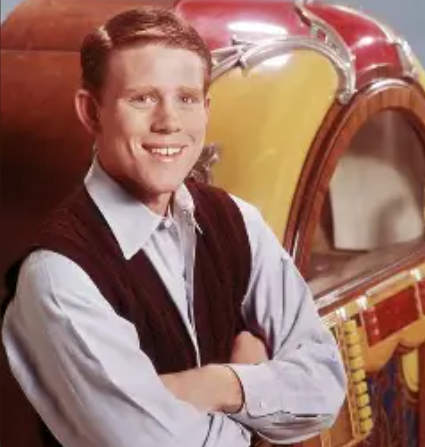
By the time Ron landed Happy Days in 1974, he’d been working professionally for fifteen years. He was twenty years old with the resume of a veteran and the ambitions of a mogul. While playing all-American Richie Cunningham, he was already directing episodes, learning the craft that would eventually make him one of Hollywood’s most bankable filmmakers.
From Richie Cunningham to Oscar Winner: The Strategic Climb
Ron Howard’s transition from actor to director wasn’t luck. It was calculated. He cut a deal with Roger Corman, agreeing to star in Eat My Dust! in exchange for directing Grand Theft Auto in 1977. The low-budget comedy he co-wrote with his father wasn’t prestigious, but it proved he could deliver a film on time and under budget.
The 1980s and 1990s became Ron’s money-printing decades. Splash launched Tom Hanks. Cocoon proved Howard could handle ensemble drama. Apollo 13 demonstrated his ability to deliver blockbuster spectacle with emotional depth. Each success built leverage for the next project, and each project moved him further from the vulnerability of being a hired actor.
Then came A Beautiful Mind in 2001. The film about mathematician John Nash won four Academy Awards, including Best Picture and Best Director for Howard. That golden statue didn’t just validate his artistic vision; it meant he could name his price for future projects. According to industry analysts, Howard now commands approximately $2 million monthly from his filmmaking, directing, and various business ventures.
Building the Machine: Imagine Entertainment and Strategic Wealth
In 1985, Ron Howard made the move that would ultimately secure generational wealth. He partnered with producer Brian Grazer to co-found Imagine Entertainment. The production company became one of Hollywood’s most prolific hit factories, generating over $15 billion in worldwide theatrical grosses.
Imagine produced television hits like 24, Arrested Development, and Friday Night Lights. Meanwhile, film successes ranged from 8 Mile to The Da Vinci Code franchise. In 2016, the Raine Group invested $100 million in Imagine, further boosting Howard’s net worth and confirming the company’s value in the streaming era.
This wasn’t just diversification. It was the farm boy from Oklahoma ensuring he’d never again depend on anyone’s approval to eat. The child who once held a toy turtle and cried on command now controlled an empire that would keep producing income whether he directed another film or not.
The Wound That Still Shows: Work Ethic as Armor
Ron Howard is seventy years old and still hustling. Recent projects include Thirteen Lives, Hillbilly Elegy, and his first animated feature The Shrinking of Treehorn for Netflix. Most people his age enjoy retirement. Howard keeps directing, producing, occasionally appearing in cameos.
“You could not outwork my dad,” Ron has said of Rance Howard. “No one could. That was his Oklahoma roots.” The son absorbed that lesson completely. Colleagues describe Howard as relentlessly prepared, unfailingly professional, incapable of coasting. The anxiety that drove his childhood performances never really left; it just found more sophisticated outlets.
Furthermore, he keeps his family close. Daughter Bryce Dallas Howard became a successful actress and director. His father appeared in seventeen of Ron’s films before passing in 2017. His mother Jean appeared in productions until her death in 2000. The Howards work together because they survived together, and the patriarch’s protective presence still echoes in everything Ron builds.
The $27 Million Real Estate Portfolio: Where Oklahoma Meets Manhattan
Ron Howard’s property holdings reveal the psychological journey from Duncan, Oklahoma to Hollywood royalty. His real estate portfolio reportedly exceeds $27 million, with holdings scattered across New York, Connecticut, and Santa Monica.
In 2004, Ron and wife Cheryl paid $5.6 million for a 3,000-square-foot apartment in New York City’s exclusive Eldorado Building. They poured additional millions into renovations. In 2014, the couple sold their 33-acre estate on a lake in Greenwich, Connecticut for $27.5 million. Their Santa Monica ocean-view apartment, purchased in 2006 for $2.75 million, offers Pacific sunsets far from the dusty Oklahoma farmland where his father learned to work.
Each property represents distance from precarity. The boy whose family moved to Hollywood with theatrical dreams now owns pieces of America’s most expensive real estate markets. However, Howard maintains the discipline of someone who remembers what insecurity felt like.
Ron Howard Net Worth 2025: The Full Picture
Ron Howard’s net worth of $200 million in 2025 represents far more than box office receipts and production deals. It represents the accumulated determination of three generations of Howards who refused to quit.
His father Rance came from a Depression-era Oklahoma farm with nothing but theatrical ambition. His mother Jean toured children’s theater circuits before settling in Hollywood to raise two boys who would both become actors. They created a family business that survived an industry designed to destroy families.
Ron Howard took that foundation and built something permanent. The child star became the director. The director became the producer. The producer became the mogul. At every stage, the same wound drove him forward: the knowledge that in Hollywood, you’re only as good as your last success, and security requires relentless forward motion.
Inside the $200 million fortune, behind the Academy Awards and the production company and the real estate portfolio, there’s still a five-year-old boy holding a toy turtle, trying to make the adults believe he’s feeling something real. The difference is that now he owns the set, employs the crew, and decides when the cameras roll.
Ron Howard achieved control. But the work ethic that got him there suggests the wound never fully healed. It just became productive.
For more celebrity net worth stories and Hamptons lifestyle coverage, explore our archive at SocialLifeMagazine.com. Interested in exclusive events? Visit PoloHamptons.com for tickets and sponsorship opportunities.
Want features like this for your brand? Contact us about editorial partnerships and advertising opportunities.
Related Articles:
Noah Baumbach Net Worth 2025: From Park Slope Divorce to $16 Million Director
Greta Gerwig Net Worth 2025: From Rejection to Top Female Director
Author

Written by
Recent Posts
Where Can You Find the Best Made-to-Measure Bespoke Suits in NYC
The Financial Habits Every Successful Entrepreneur Swears By
What Happens If You Delay Hemorrhoid Treatment in New York City
James Franco Net Worth — A $30 Million Career Interrupted
Selena Gomez Net Worth — How a Disney Kid Built a $1.3 Billion Empire
Categories
- Art
- Articles
- Beauty & Skincare
- Celebrities
- Celebrities|Movies
- Celebrities|The Chronicles
- Chronicles
- Culture|Television
- Entertainment|Culture
- Event Photos
- Events
- Fashion
- Fashion & Style
- Featured
- Food & Beverage
- Food, Spirits, Wine
- Hamptons
- Hamptons Celebrities
- Hamptons Celebrities|Celebrities|The Chronicles
- Health
- Health & Beauty
- Lifestyle
- Luxury Lifestyle
- Movies
- Movies|Culture
- Movies|Hamptons Lifestyle
- Press
- Profiles
- Real Estate
- Technology
- The Chronicles
- Travel
- Uncategorized
- Weddings