
The gunshots came first. Then the command.
“Get down.” Richard Williams’ voice cut through the California afternoon like a backhand down the line. His daughters dropped flat onto the cracked asphalt of East Compton Park, cheeks pressed against a court surface more pothole than baseline. Above them, the stray rounds from a gang dispute whistled past, indifferent to the tennis prodigies practicing their serves between the violence.
Serena was four years old. Already, she was absorbing the game’s most important lesson: keep playing no matter what’s coming at you.
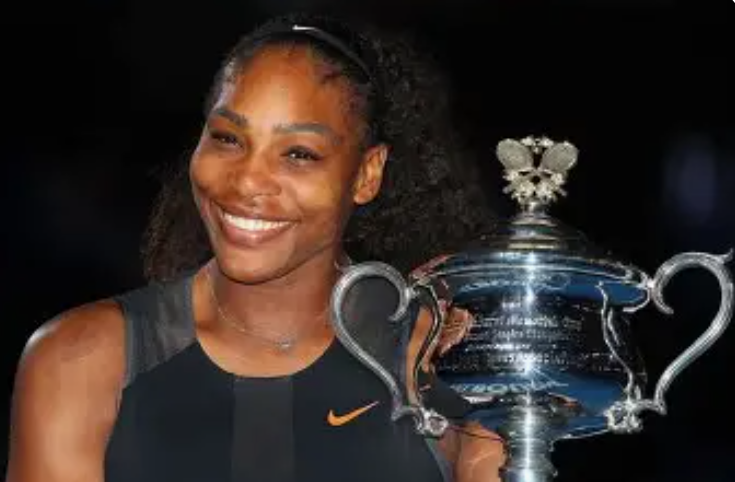
Today, Forbes estimates Serena Williams’ net worth at approximately $350 million, making her the wealthiest female athlete in history. Her fortune spans $95 million in career prize money, a venture capital empire backing 14 unicorn companies, minority stakes in NFL and soccer franchises, and a real estate portfolio stretching from Jupiter, Florida to Paris. Additionally, she commands endorsement deals with Nike, Gatorade, and Wilson that continue flowing years after her final match.
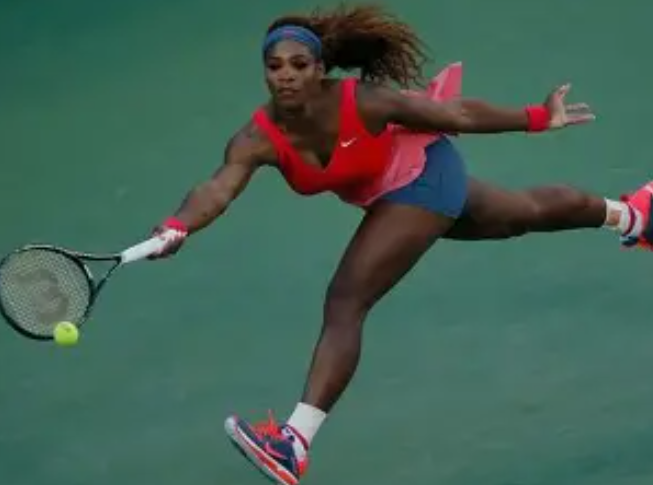
However, the numbers don’t tell the real story. Instead, the real story is how a kid from the most dangerous zip code in Los Angeles became the greatest tennis player who ever lived, then rebuilt herself into something even more formidable.
The Compton Blueprint: How Richard Williams Engineered Greatness
Richard Williams was watching television in 1978 when he saw something that changed everything. A tennis player named Virginia Ruzici collected a $40,000 check for winning the French Open. In that moment, the former sharecropper from Shreveport, Louisiana had what he would later call his “epiphany.”
He turned to his wife Oracene and said the words that would alter sports history: “Let’s have kids and make them tennis players.”
The plan was audacious, to say the least. Richard had never played tennis, and neither had Oracene. Instead, they learned from books and VHS tapes, teaching themselves a sport dominated by country club whites so they could coach their unborn children to dominate it instead. According to the Smithsonian’s National Museum of African American History and Culture, Richard even wrote a 78-page plan outlining exactly how he would create two world champions.
Why Compton? A Deliberate Choice
The family moved to Compton deliberately, because Richard wanted his daughters to understand what happened to people who didn’t work hard, who didn’t fight for something better. As a result, the public courts became their classroom, the gunfire became their soundtrack, and the gang members who hung around the fences became an unlikely audience, respecting the hustle even if they didn’t understand the game.
“We had to learn to lie flat when we heard gunshots,” Serena would later recall. As a result, the lesson embedded itself into her competitive DNA: chaos doesn’t stop you, external circumstances don’t define you, and above all, you finish the point.
The Wound That Made Her: Indian Wells and the 14-Year Exile
Every empire is built on a wound. For Serena Williams, that wound came on March 17, 2001, in the California desert.
She was 19 years old and already a Grand Slam champion when she walked onto the court at Indian Wells for the final against Kim Clijsters. Her sister Venus had withdrawn from their semifinal match just minutes before it was scheduled to start, citing a knee injury. The predominantly white crowd didn’t believe it. Russian player Elena Dementieva had publicly suggested their father fixed matches between the sisters.
When Richard and Venus took their seats to watch the final, the crowd erupted in boos. But it wasn’t just booing. Richard Williams later told USA Today what he heard as they walked down the stairs: “People kept calling me n*****. One guy said, ‘I wish it was ’75; we’d skin you alive.'”
Serena won the match anyway. In three grueling sets, she prevailed while the crowd cheered her double faults and groaned at her winners. Throughout it all, her family endured racial abuse in the stands. After the final point, she retreated to the locker room and cried for hours.
“I’ll never forget driving back, and Yetunde was there,” Serena later told Will Smith on Red Table Talk. “I remember just getting in the car and I was just bawling. I was at the gas station, there was no celebration. I was just crying and crying and crying.”
The Williams family boycotted Indian Wells for 14 years as a result. When Serena finally returned in 2015, she admitted she sat in the bathroom before her match thinking about turning around. By then, the trauma had calcified into something permanent. “Even when I went back 14 years later, it was very traumatizing,” she said. “Talk about post-traumatic stress and mental anxiety.”
Turning Pain Into Power
That wound never fully healed. However, it became fuel instead.
The Loss That Shaped Everything: Yetunde’s Murder in Compton
September 14, 2003. Serena’s oldest half-sister Yetunde Price was sitting in a white SUV with her boyfriend, driving through the Compton neighborhood where the Williams sisters had learned to play tennis. A gang member named Robert Maxfield mistook the vehicle for a rival’s. Yetunde was shot in the back of the head. She was 31 years old.
The violence that Serena had learned to duck as a child had finally found her family. Yetunde left behind three children. Just two months earlier, she had been at Wimbledon watching her famous sisters compete. Throughout their careers, she had been their personal assistant, their biggest supporter, and the sister who called them every night no matter where in the world they were playing.
Maxfield served 12 years for voluntary manslaughter before being released on parole in 2018. Serena learned about his release through Instagram, just ten minutes before a match she would lose 6-1, 6-0.
“No matter what, my sister is not coming back for good behavior,” Serena told TIME.
In response to this tragedy, Serena and Venus opened the Yetunde Price Resource Center in Compton in 2016, providing support services for families affected by violence. The organization’s tagline reads: “Committed to helping others heal.” In this way, the wound became a foundation.
The $350 Million Empire: Breaking Down Serena’s Fortune
Serena Williams didn’t just become the highest-paid female athlete in history. She rebuilt the model for what athlete wealth could look like.
Career Prize Money: $95 Million
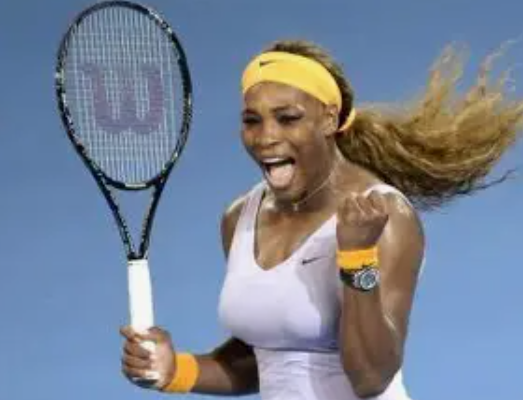
Her 23 Grand Slam singles titles represent the most in the Open Era. Additionally, she spent 319 weeks ranked number one in the world. According to the Women’s Tennis Association, no female tennis player has earned more prize money. Furthermore, her four Olympic gold medals add to a competitive legacy that may never be matched.
Endorsements: $40+ Million Annually at Peak
Nike’s deal with Serena was reportedly worth $55 million over eight years. When you add Gatorade, Beats by Dre, Wilson, Rolex, Gucci, and Audemars Piguet, it becomes clear why Forbes consistently ranked her among the world’s highest-paid athletes even in years when injuries limited her court time. Notably, these relationships continue post-retirement.
The Venture Capital Revolution
Serena Ventures: 85+ Startups, 14 Unicorns
In 2014, Serena launched her venture capital firm with a mission that felt deeply personal. According to Business Insider, she started investing when she learned that less than 2% of venture funding went to women and less than 1% to people of color. “Whether it’s venture people saying that I shouldn’t be doing it, or it’s tennis when people said I’ll never be good at it, I do think there’s a part of me that always will enjoy proving people wrong.”
Since then, the firm raised $111 million in its inaugural fund and has backed companies including Tonal, MasterClass, Esusu, and Parfait. Remarkably, seventy-nine percent of portfolio companies are led by underrepresented founders. In essence, Serena brought the same relentless competitive instinct from tennis into Silicon Valley, and consequently, the returns have been extraordinary.
Ownership Stakes and Media Ventures
Sports Team Ownership
Serena and Venus Williams became the first Black women to invest in an NFL team when they purchased stakes in the Miami Dolphins. Beyond that, she also owns pieces of Angel City FC in the National Women’s Soccer League and the Los Angeles Golf Club, part of Tiger Woods’ TGL league. Notably, her daughters Olympia and Adira hold stakes in Angel City as well, meaning the next generation is already building equity.
Media and Beauty: WYN Beauty and Nine Two Six Productions
Following her retirement, Serena launched WYN Beauty, a makeup brand emphasizing inclusive representation. Similarly, she runs Nine Two Six Productions, a multimedia company that has partnered with Amazon Studios and produced the documentary series “Being Serena” for HBO. As a result, the empire keeps expanding.
The Real Estate Portfolio: From Cracked Courts to Waterfront Estates
The contrast tells the story clearly. Serena Williams learned tennis on public courts with potholes and missing nets. Today, however, she owns properties that would make most hedge fund managers envious.
Her primary residence sits in Jupiter, Florida, where she purchased a 10,433-square-foot waterfront mansion for $8 million in 2020 from former Cardinals catcher Yadier Molina. The property features an infinity pool, a guesthouse, and a combined tennis and basketball court. Moreover, sister Venus, through her design firm V Starr, helped transform the space into an ultramodern retreat complete with a karaoke room hidden behind a secret bookcase door.
Coast to Coast Holdings
The Beverly Hills holdings came next. Specifically, a $6.7 million Spanish-style mansion in the Summit Estates gated community featured Britney Spears and Gwen Stefani as neighbors. In addition, previous properties included an $8.1 million Bel-Air estate she sold in 2019 after extensive renovation.
Meanwhile, in Paris, she owns a two-bedroom apartment in the 7th arrondissement with a view of the Eiffel Tower, purchased in 2007. Interestingly, Serena is reportedly fluent in French, adding linguistic capital to the real estate variety.
Ultimately, the woman who learned to hit forehands while dodging bullets now relaxes on a private beach in South Florida. Nevertheless, she built the whole thing on court.
The Marriage: Tech Wealth Meets Athletic Royalty
Alexis Ohanian co-founded Reddit with his college roommate Steve Huffman, eventually selling it to Condé Nast in 2005 for what reports suggest was around $10 million. Currently, his estimated net worth sits at approximately $70 million, making him the rare spouse who’s dramatically out-earned by his partner. Together, the Ohanian-Williams household controls assets approaching $420 million.
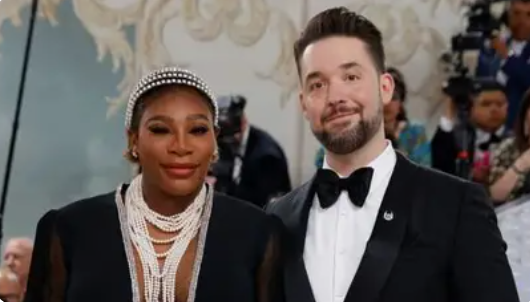
Their story began in Rome in 2015 when Ohanian sat at her breakfast table and she tried to get him to leave. Since then, their daughter Olympia was born in September 2017, followed by Adira in 2023. These days, the family splits time between Florida and Silicon Valley, navigating the intersection of sports legacy and tech future.
Throughout their relationship, Ohanian has been vocal about supporting Serena’s career and publicly advocating for working mothers. For instance, when she returned to competition after Olympia’s birth, he was in the players’ box wearing matching outfits with their daughter. As a result, the image went viral, proving that this partnership truly works.
The Impossible Victory: Winning a Grand Slam While Pregnant
January 28, 2017. Melbourne, Australia. Serena Williams stood across the net from her sister Venus in the Australian Open final. The temperature was brutal, the stakes were historic, and unbeknownst to nearly everyone, Serena was eight weeks pregnant.
Initially, she didn’t know it when the tournament started. However, her friend Jessica Steindorff suspected something and pushed her to take a test. The result shocked her completely. According to her essay in ELLE, she tried to deny it, tried to pretend it wasn’t real, and tried to focus on the tennis instead.
“I don’t know how I did that, honestly,” Williams told a private equity conference in Berlin in 2025. “I don’t know what I was doing then. I was nine weeks pregnant. I do remember not being able to run for a long time.”
A Near-Death Experience
Yet she won anyway. The final score read 6-4, 6-4 against Venus. Remarkably, she didn’t drop a single set the entire tournament. At 35, she became the oldest player to win a Grand Slam while simultaneously surpassing Steffi Graf’s Open Era record with her 23rd major title.
All of this happened while battling morning sickness, fatigue, and the knowledge that she was carrying a life inside her while competing at the highest level of her sport. Now, when Olympia asks why her mother is famous, Serena has a specific answer: “You were inside me when I won the Australian Open.”
The childbirth, however, nearly killed her. Serena experienced a pulmonary embolism after her emergency C-section, requiring multiple surgeries and close monitoring. Consequently, she had to fight for her own medical care, insisting on tests that nurses initially dismissed. “Being heard and appropriately treated was the difference between life or death for me,” she wrote. The experience highlighted alarming disparities in maternal mortality rates among Black women.
Nevertheless, she came back. Despite the trauma, she reached four more Grand Slam finals. Although she never won another major, Serena proved that motherhood doesn’t end athletic careers. Instead, it transforms them.
The Legacy: What $350 Million Really Means
Serena Williams’ net worth is not simply a number. Rather, it’s a rebuttal.
First, it rebuts the country club gatekeepers who never imagined two Black sisters from Compton would dominate their sport for two decades. Moreover, it answers the Indian Wells crowd that thought racial abuse would break her. Finally, it challenges the venture capitalists who fund founders who look like themselves instead of the future.
Ultimately, the $350 million represents something that can’t be quantified in spreadsheets: the transmission of generational wealth from a sharecropper’s son to his granddaughters, accomplished through sheer competitive will and strategic brilliance. In the end, Richard Williams’ 78-page plan worked beyond his wildest projections.
Today, Serena Williams invests in founders the traditional VC world ignores. In addition, she owns pieces of teams in leagues that barely existed when she turned pro. Beyond that, she builds communities for violence survivors in the neighborhood where her sister was murdered. Most importantly, she raises daughters who already hold equity in professional sports franchises.
Without question, the cracked courts of Compton produced something the tennis establishment never saw coming. Furthermore, the empire she built after the rackets went silent may prove even more consequential than the 23 trophies that made her famous.
That’s the thing about Serena Williams. Essentially, she was never just playing tennis. Instead, she was building something that would outlast every opponent she ever faced.
And clearly, she’s still not finished.
Want to explore more stories of extraordinary achievement? Contact Social Life Magazine for features, partnerships, and exclusive content. Subscribe to our print edition or join our email list for the stories that define success in the Hamptons and beyond.
Related Articles:
Author

Written by
Recent Posts
Civil War A24 Cast Net Worth — A24 Bet $50 Million on the End of America and Won
Midsommar A24 Cast Net Worth — The Daylight Horror That Turned Grief Into a Career Launchpad
ZOI NOMAD & TEN11 LOUNGE MARK ONE YEAR
Room A24 Cast Net Worth — The $6 Million Captivity Drama That Set Brie Larson Free
The Witch A24 Cast Net Worth — A $3.5 Million Puritan Nightmare That Created a Queen and a King
Categories
- Art
- Articles
- Beauty & Skincare
- Celebrities
- Celebrities|Movies
- Celebrities|The Chronicles
- Chronicles
- Entertainment|Culture
- Event Photos
- Events
- Fashion
- Fashion & Style
- Featured
- Food & Beverage
- Food, Spirits, Wine
- Hamptons
- Hamptons Celebrities
- Hamptons Celebrities|Celebrities|The Chronicles
- Health
- Health & Beauty
- Lifestyle
- Luxury Lifestyle
- Movies
- Movies|Culture
- Movies|Hamptons Lifestyle
- Press
- Profiles
- Real Estate
- Technology
- The Chronicles
- Travel
- Uncategorized
- Weddings