
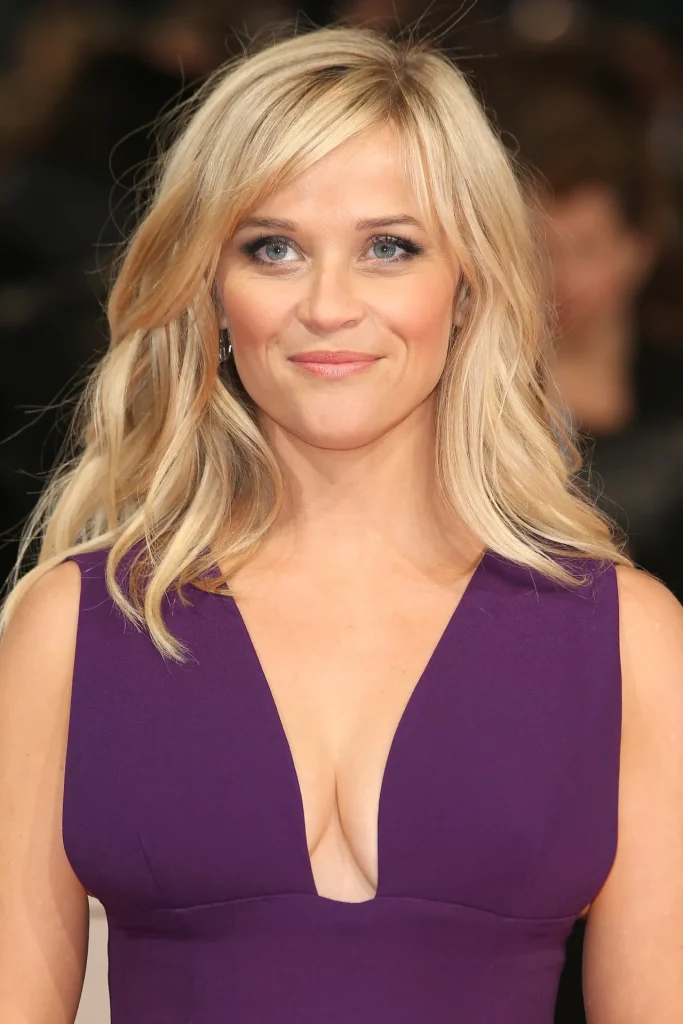
The most interesting thing about Reese Witherspoon is not that she played Elle Woods. It’s that everyone assumed Elle Woods was the ceiling.
Reese Witherspoon’s net worth stands at $400 million. Moreover, the number arrived not through franchise sequels or brand deals but through a decision most people in her position would never have made: she looked at a career that was working and decided to own the next one instead. Consequently, the $400 million has nothing to do with Legally Blonde and everything to do with what she built the decade after everyone stopped expecting anything new from her.
This is the pivot story. Furthermore, it’s the one the Hamptons crowd actually respects — not the fame, but the architecture underneath it.
The Before: Cheerleader, Stanford, and the First Bet
Laura Jeanne Reese Witherspoon was born March 22, 1976, in New Orleans, Louisiana. Her father, John, was completing medical school at Tulane — he would become an otolaryngologist in private practice. Her mother, Betty, earned a Ph.D. in education and became a nursing professor at Vanderbilt University. When the family eventually settled in Nashville, they brought with them the specific combination of Southern manners and academic ambition that would define everything Reese did afterward.
Nashville suited her. She graduated from Harpeth Hall, an all-girls school where she was a cheerleader and a genuinely exceptional student. She enrolled at Stanford as an English literature major. Additionally, she had already been working: her first film role came at fourteen in The Man in the Moon, and by the time she arrived at Stanford, she had spent seven years in front of a camera. The dropout decision, when it came, was less rebellion than arithmetic.
The Dropout Logic
Witherspoon left Stanford not because she was failing but because she was succeeding elsewhere. The offers were real, the momentum was real, and waiting four years felt like the kind of caution that made sense for people who didn’t already have options. She left. Pleasantville followed. Election followed. Cruel Intentions followed. Meanwhile, her Stanford classmates were still reading Chaucer. The math was correct even if the optics were uncertain. That willingness to bet on herself before the evidence was conclusive would become the defining pattern of everything that followed.
The Wound: Married Young, Divorced Younger
In 1999, Witherspoon married Ryan Phillippe. She was twenty-three. By twenty-seven, she had two children — daughter Ava and son Deacon. The marriage was a high-visibility relationship in a high-visibility industry, and when it ended in 2006, the divorce proceedings dragged publicly for two years. Phillippe later reflected that the age at which they married probably doomed the relationship before it had a real chance. Witherspoon said essentially the same thing.

However, the divorce did something the marriage never could. It clarified her. Suddenly, the question wasn’t who Reese Witherspoon was as Ryan Phillippe’s wife. The question was who she was as the sole architect of her own story. Additionally, she had two children to support and a career that, post-Legally Blonde, Hollywood had cheerfully decided was decorative rather than substantial. The combination of those pressures produced a different kind of focus.
What the First Divorce Actually Did
Notably, Witherspoon has credited anxiety — not talent — as the engine of her early success. She told Harper’s Bazaar that she had pressured herself to extreme levels, that the perfectionism which drove her was inseparable from the fear that drove it. Rather than managing that anxiety, she redirected it. She formed Type A Films in 2000, the year she turned twenty-four. The production company was quiet at first. Consequently, few in Hollywood recognized it as the foundation of what would become one of the most valuable media companies in entertainment history. That invisibility suited her. She was building something they weren’t watching.
The Rise: Legally Blonde and the Identity Trap
Legally Blonde arrived in 2001 and grossed $141 million on an $18 million budget. The film made Witherspoon one of the most bankable actresses in Hollywood and simultaneously created a problem she would spend the next decade solving. Elle Woods was irresistible and limiting in equal measure. Furthermore, the character fit so perfectly that Hollywood immediately began offering Reese Witherspoon versions of Elle Woods for the rest of her natural career.
She resisted the obvious move. Walk the Line in 2005 demonstrated that she could disappear into a character as completely as any serious actress — her portrayal of June Carter Cash earned the Academy Award for Best Actress. Moreover, Wild in 2014 earned her a second Oscar nomination for a performance that had nothing to do with charm or likability. Between those two films, she was making a case that Elle Woods was a role, not a definition. Hollywood was slow to update the file. Meanwhile, she was updating the business.

The Oscar Nobody Predicted
The Walk the Line Oscar mattered strategically as well as artistically. In practical terms, it proved that her range was credible at the highest level of industry recognition. Additionally, it gave her leverage that Legally Blonde alone never could — the kind of leverage that opens doors at studios and streaming platforms when a producer, rather than an actress, walks through them. She understood this before most people watching her career did. By the time the Oscar arrived, Type A Films had already been producing for five years. The award was confirmation. The company was the actual play.
The Pivot: Hello Sunshine and the $900 Million Correction
In 2016, Witherspoon founded Hello Sunshine with a clear thesis: there was an enormous, underserved audience for stories about women that weren’t written as supporting characters in men’s narratives. Furthermore, the streaming revolution had created the infrastructure to reach that audience at scale. Consequently, she hired Sarah Harden as CEO and began acquiring books with the same obsessive precision she’d applied to script selection for twenty years.
Big Little Lies came first. The Morning Show followed. Little Fires Everywhere. Daisy Jones and the Six. Each project arrived with her producing credit and, increasingly, her equity position. By 2021, Hello Sunshine was valued at $900 million when Blackstone-backed Candle Media acquired a majority stake. Witherspoon retained an ownership position and collected approximately $120 million after taxes. Forbes subsequently named her the richest actress in the world. Notably, the ranking had nothing to do with Legally Blonde.
The Sale That Changed Everything
In March 2023, two years after the Hello Sunshine sale, Witherspoon announced her divorce from Jim Toth, her husband of twelve years. Reports suggested the $900 million sale had sent them in different directions — that the scale of her success had clarified an incompatibility that proximity had previously obscured. Rather than becoming the story it might have in another era, the divorce barely registered. Instead, the narrative around Witherspoon in 2023 was entirely about what she was building next. That is a specific kind of power. It doesn’t happen by accident. Moreover, it doesn’t happen to women who spent their careers waiting to be cast.
The Hamptons Chapter: Southampton and the Right Rooms
Witherspoon’s East End presence is firmly in the category of purposeful rather than performative. She attended the G9 Ventures Summit in Southampton — an invitation-only gathering of female founders and investors including Gwyneth Paltrow and Laura Dern that operates well below the radar of the standard Hamptons social circuit. Additionally, she has screened films at the UA Theater in East Hampton, where after parties drew Christie Brinkley, Paul McCartney, and Joy Behar — the specific overlap of entertainment and cultural capital that defines the East End’s real social tier.
The Hamptons dining scene that hosts this crowd at its best restaurants understands what Witherspoon represents: not Hollywood celebrity, but something more durable. A founder. A builder. Someone whose name on a production means the project was actually developed rather than assembled. For more on the women rewriting what forty-plus looks like in this moment, see our full hub on female celebrities over 40 and the glow-up generation.

The Network She Built Here
The G9 Summit appearance is the tell. That event — organized by investor Amy Griffin, whose Southampton home hosted it — exists specifically to connect women building companies with women who fund them. Witherspoon didn’t attend as a celebrity lending her face to someone else’s event. Rather, she attended as a peer. In the Hamptons, that distinction matters more than almost anywhere else. The East End has always been where money meets the people it wants to become. For context on the real estate landscape these women navigate, see our Hamptons luxury real estate guide.
What She Built: The Empire After the Pink
Hello Sunshine was the centerpiece, but the architecture extends considerably further. Draper James, her lifestyle brand launched in 2015, secured $10 million in funding from Forerunner Ventures on its first day. Reese’s Book Club now has over 2.1 million followers, and forty-two of its fifty picks have reached the New York Times bestseller list. Furthermore, her Apple TV+ deal for The Morning Show reportedly pays $2 million per episode in combined acting and producing fees. Additionally, her Morning Show producing credit comes with ownership points — a negotiation she conducted with Jennifer Aniston as a collective, mirroring exactly the leverage play that made the Friends cast generationally wealthy.
The through-line is consistent across every venture: she controls the intellectual property. The books she selects for the club become the projects Hello Sunshine develops. The projects Hello Sunshine develops become the shows that command $2 million per episode. Each stage feeds the next. Consequently, Reese Witherspoon’s net worth of $400 million is a compound interest story more than a Hollywood story.
The Book Club Nobody Saw Coming
Reese’s Book Club is worth understanding as infrastructure rather than hobby. Each selection functions as a market test — if 2.1 million followers respond to a book, the adaptation risk is already de-risked before Hello Sunshine spends a dollar in development. Moreover, forty-two bestsellers out of fifty picks is a hit rate that most acquisition editors would trade their careers for. The club is simultaneously a media platform, a development pipeline, and a direct relationship with the exact demographic that Hello Sunshine produces content for. Furthermore, it costs almost nothing to operate relative to what it returns. That is not an accident. That is someone who dropped out of Stanford still doing the math.
The Soft Landing: Nashville, Divorced Again, Completely Fine
After the Toth divorce, Witherspoon remained in Nashville. She kept the kids, kept the company, kept the book club, and kept working. In early 2026, she advised a young woman publicly to stop chasing dreams and start chasing talents instead. The clip collected 245,000 likes. It was exactly the kind of moment that arrives naturally to someone who built $400 million by being precise about what she was actually good at rather than what the industry wanted her to remain.
The second divorce, unlike the first, arrived without crisis. Additionally, it arrived without the narrative question that follows most divorced actresses at forty-nine: what happens to her now? The answer was already visible. She runs a company. She produces television. She selects books that become shows that become assets that compound. The pink stopped being the point a long time ago.

The Verdict at 49
Two divorces. One Oscar. One $900 million company sale. A book club with 2.1 million subscribers. A lifestyle brand. A production slate. Real estate across Tennessee, California, and the Bahamas. A career that grew more valuable every year Hollywood spent assuming it had peaked.
The Gladwell reveal here is the counterintuitive one: the most financially successful actress of her generation built her fortune by being less famous, not more. By moving behind the camera. By developing intellectual property rather than performing it. By treating Elle Woods as a starting point rather than a destination. Ultimately, Reese Witherspoon’s net worth is not the story of Legally Blonde. It is the story of what a woman does when she understands that the character who made her famous is not the most interesting character available to her.
The most interesting character was always the one she was building off-screen. Moreover, that one is worth $400 million and still compounding.
Related Reading
- The Glow-Up After 40: Women Who Peaked When Everyone Thought They Were Done
- Nicole Kidman Net Worth: $250M and Zero Regrets
- Jennifer Lopez Net Worth: The $400M Warning Nobody Heeded
- It Girls of the Early 2000s: Where Are They Now?
- Jennifer Aniston Net Worth 2026: The Most Elegant Passive Income Machine in Entertainment
Social Life Magazine has spent 23 summers documenting the people, brands, and ideas that shape how serious wealth lives and plays on the East End. The ones who matter aren’t chasing access. They’re already inside.
Place your brand inside the conversation: A select number of feature partnerships, print placements, and digital sponsorships are available each season — reserved for brands that belong in the room. Inquire at sociallifemagazine.com/contact
Join us at Polo Hamptons 2026: One afternoon. The right 2,000 people. Deals that don’t happen in conference rooms. polohamptons.com
The print edition arrives where it matters: 25,000 copies distributed Memorial Day through Labor Day, from Westhampton to Montauk — and 15,000 more delivered to Upper East Side doorman buildings each fall. Subscribe at sociallifemagazine.com/subscription
Keep independent luxury journalism alive: Support with $10 here. The publications that last are the ones their readers decide to protect.
Author

Written by
Recent Posts

Reese Witherspoon Net Worth: The $400M Pivot Nobody Saw Coming

Female Celebrities Over 40 Net Worth: The Glow-Up Generation

From Artist to Atelier
Stress Relief Tips That Fit Into Any Busy Lifestyle
How to Choose the Best Mattress and Pillow for Better Sleep
Categories
- Art
- Articles
- Beauty & Skincare
- Celebrities
- Celebrities|The Chronicles
- Chronicles
- Event Photos
- Events
- Fashion
- Fashion & Style
- Featured
- Food & Beverage
- Food, Spirits, Wine
- Hamptons
- Hamptons Celebrities
- Hamptons Celebrities|Celebrities|The Chronicles
- Health
- Health & Beauty
- Lifestyle
- Luxury Lifestyle
- Press
- Profiles
- Real Estate
- Technology
- The Chronicles
- Travel
- Uncategorized
- Weddings